

Are Marigolds Perennials or Annuals? A Complete Growing Guide
Are marigolds perennials or annuals? The honest answer is both, depending on the type you plant. Most marigolds live for one season, bloom brightly, then die back at the first frost.
A smaller group of marigolds build root systems that survive winter and return on their own.
This post explains which marigolds fall into each group, why annual types often reappear anyway, and how to plant, grow, and care for marigolds so your garden looks good every year.
Are Marigolds Perennials or Annuals?
Most marigolds are annuals. French marigolds (Tagetes patula) and African marigolds (Tagetes erecta), the varieties sold at nearly every nursery, complete their life cycle in one growing season and die back with the first hard frost.
A small number of species, mainly Mexican marigold (Tagetes lemmonii) and Mexican mint marigold (Tagetes lucida), are true perennials that survive winter and regrow from the same root system, but only in warm climates such as USDA hardiness zones 8 through 11.
What’s the Difference Between an Annual and a Perennial?
Before going further, it helps to know what these two words actually mean in gardening terms. The difference comes down to lifespan and root behavior, not looks.
|
Feature |
Annual Plants |
Perennial Plants |
|---|---|---|
|
Lifespan |
One growing season |
Multiple years |
|
Root System |
Dies completely at season’s end |
Survives underground through winter |
|
Regrowth |
Must be replanted from seed each year |
Regrows on its own from the same roots |
|
Common Marigold Examples |
French, African, Signet marigold |
Mexican marigold, Mexican mint marigold |
Types of Marigolds

Marigold is a common name for several different plants in the Tagetes genus, and each type behaves a little differently. Here’s a quick look at the five you’re most likely to come across.
1. French Marigold (Tagetes patula)
French marigolds are the compact, bushy plants most people think of when they hear the word marigold. They grow six to twelve inches tall, bloom in shades of red, orange, and yellow, and are strictly annual, meaning they finish their life cycle in one season.
2. African Marigold (Tagetes erecta)
African marigolds are taller and bolder than their French cousins, often reaching up to three feet with large, pom-pom style blooms. Like French marigolds, they’re annuals native to Mexico and Central America, despite the misleading common name.
3. Signet Marigold (Tagetes tenuifolia)
Signet marigolds have finer, lacy foliage and smaller, single-layer flowers than other types. They’re also annuals, but their edible petals make them a popular choice for herb gardens and salad borders.
4. Mexican Marigold (Tagetes lemmonii)
This is one of the true perennial marigolds, growing as a woody, lemon-scented shrub in USDA zones 8 through 11. It can reach four to six feet tall and comes back from the same root system year after year in the right climate.
5. Mexican Mint Marigold (Tagetes lucida)
Also called Mexican tarragon, this perennial variety produces small yellow flowers and aromatic foliage often used as a tarragon substitute in cooking. It behaves as a perennial in zone 8 and warmer, but as an annual in colder zones.
Annual vs. Perennial Marigolds at a Glance
With five types covered, a side-by-side comparison makes the differences easier to remember. Use this table when picking marigold seeds or starts at the nursery.
|
Marigold Type |
Lifecycle |
Hardiness Zone |
Typical Height |
Comes Back on Its Own? |
|---|---|---|---|---|
|
French Marigold |
Annual |
All zones (grown as annual) |
6 to 12 in |
No, self-seeds only |
|
African Marigold |
Annual |
All zones (grown as annual) |
Up to 3 ft |
No, self-seeds only |
|
Signet Marigold |
Annual |
All zones (grown as annual) |
6 to 12 in |
No, self-seeds only |
|
Mexican Marigold |
Perennial |
Zones 8 to 11 |
4 to 6 ft |
Yes, in warm zones |
|
Mexican Mint Marigold |
Perennial (zone 8+) |
Zones 8 to 11 |
1 to 2 ft |
Yes, in warm zones |
Why So Many “Annual” Marigolds Seem to Come Back Anyway
Annual marigolds often appear to return each spring because they self-seed. Toward the end of the season, spent flower heads dry out and drop hundreds of tiny seeds into the surrounding soil.
If those seeds survive winter undisturbed, they sprout the following spring in roughly the same spot, giving the impression that the original plant survived. It didn’t.
A true perennial regrows from the same root system, while a self-seeded annual is an entirely new plant grown from last year’s seed.
How to Grow Marigolds So They Thrive Each Season

Annual and perennial marigolds share the same basic care needs, no matter which type ends up in your garden. Get these four factors right, and you’ll see steady blooms all season.
- Sunlight: Marigolds need full sun to perform well, ideally six to eight hours of direct light each day. In too much shade, plants get leggy and produce far fewer flowers.
- Soil: These plants aren’t picky, but they do best in well-draining soil with a slightly acidic to neutral pH, around 6.0 to 7.0. Heavy, waterlogged soil is one of the main causes of root rot.
- Watering: Water marigolds at the base rather than overhead, and let the soil dry out slightly between waterings. Consistent moisture is good; soggy soil is not, especially for potted plants.
- Frost Protection: Annual marigolds die at the first hard frost, so there’s little point protecting them once temperatures drop. For perennial types in borderline zones, a layer of mulch over the root zone can help them survive a mild winter.
Best Time to Plant Marigolds
Timing matters more than most gardeners think, especially if you want blooms as early as possible. Here’s when to plant depending on your method.
- Direct Sowing Outdoors: Plant seeds directly in the ground about two weeks after your last spring frost date.
- Starting Seeds Indoors: Start seeds indoors 4 to 6 weeks before your last expected frost for earlier blooms.
- Warm-Climate Fall Planting (Zones 9-11): In frost-free areas, you can also plant marigolds in early fall for winter and spring color.
Marigolds in Pots vs. in the Ground
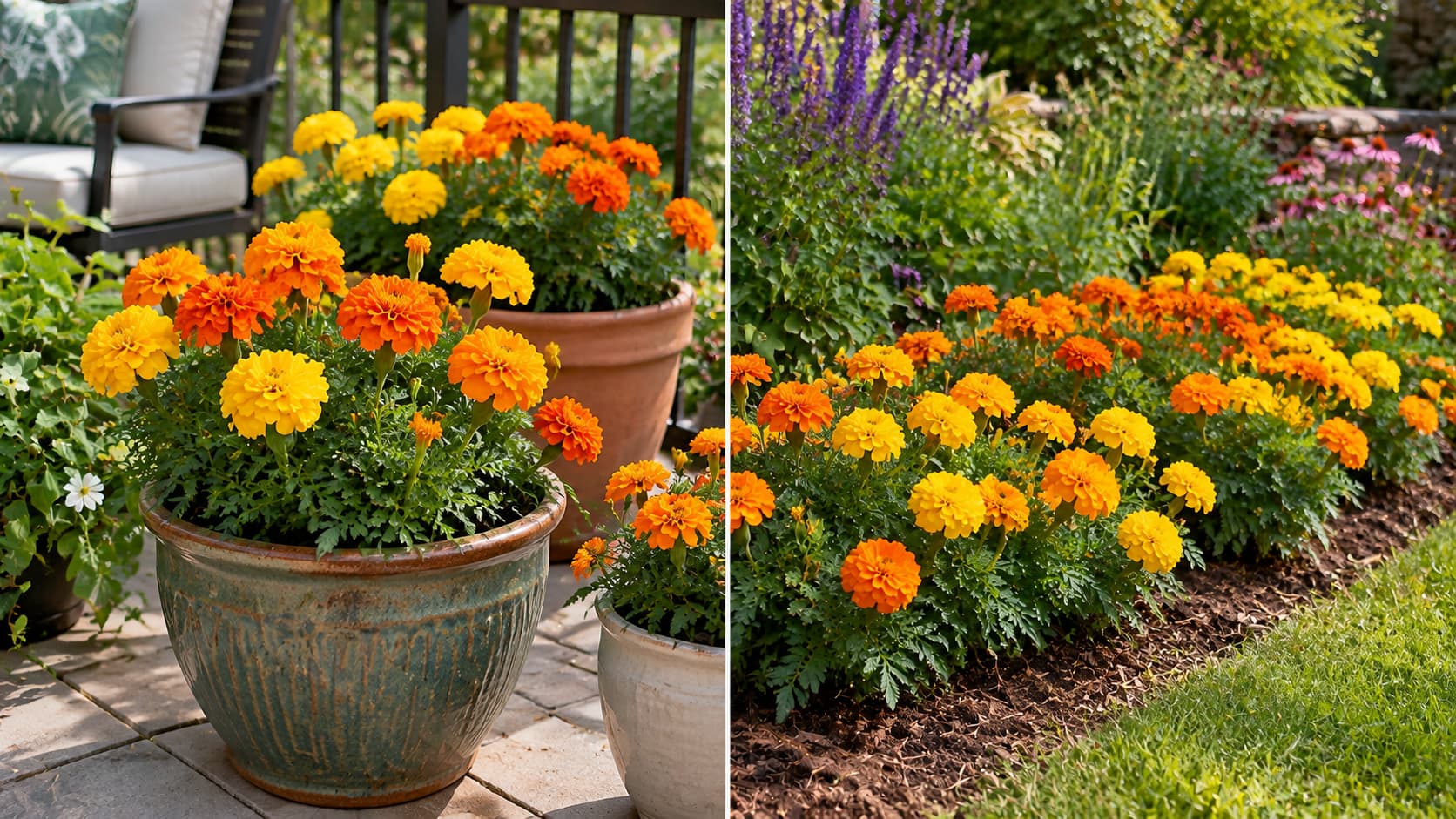
Marigolds grow well in both containers and garden beds, but each option comes with its own trade-offs. This table breaks down what to expect from each.
|
Factor |
Pots / Containers |
In the Ground |
|---|---|---|
|
Drainage Control |
Easy to control with well-draining potting mix |
Depends on native soil quality |
|
Watering Frequency |
Needs more frequent watering, dries out faster |
Holds moisture longer, less frequent watering |
|
Portability |
Can move indoors before frost or to chase sun |
Fixed in place once planted |
|
Companion Planting |
Limited to nearby pots |
Easy to pair with vegetables and other beds |
|
Best For |
Patios, balconies, small spaces |
Larger gardens and vegetable beds |
Are Marigolds Perennials in Zone 7?
No, most marigolds are not perennials in Zone 7. French, African, and signet marigolds are annuals and die when freezing temperatures arrive.
Even true perennial types such as Mexican marigold (Tagetes lemmonii) and Mexican mint marigold (Tagetes lucida) are generally better suited to Zone 8 and warmer, so they may not reliably survive a Zone 7 winter.
However, annual marigolds can self-seed before frost. Those seeds may germinate the following spring, making it look as though the same plants returned. Gardeners in Zone 7 should usually treat marigolds as annuals and replant them each year for dependable blooms.
Companion Planting: What to Grow (and Avoid) Near Marigolds
Marigolds aren’t just decorative. Their scent and root chemistry make them useful, or occasionally unhelpful, neighbors in the garden.
- Tomatoes: A classic pairing; marigolds may help deter some soil pests near tomato roots.
- Peppers: Grow well alongside marigolds, with similar sun and water needs.
- Roses: Marigolds planted at the base can help mask their scent from certain pests.
- Cucumbers: Benefit from marigolds’ pest-deterring reputation without competing for nutrients.
- Beans and Legumes: Best planted at a distance, since marigold roots release compounds some gardeners report can slow legume growth. If you’re unsure, check with your local extension office.
Is Marigold High-Maintenance?
Marigolds are about as low-maintenance as flowering annuals get. They tolerate poor soil, need only moderate water, and rarely require fertilizer to bloom well.
Deadheading spent flowers isn’t required for survival, but it does encourage more blooms and a tidier appearance. For most home gardeners, marigolds are a beginner-friendly plant that asks for very little in return.
Conclusion
Marigolds don’t have one simple answer. Most types sold at garden centers are annuals that live for a single season, while a few types, like Mexican marigold, return year after year in warm climates.
Either way, marigolds are easy to grow, forgiving of mistakes, and reliable bloomers once you meet their basic needs.
Give them enough sun, decent soil, and steady water, and you’ll always get bright color from spring through fall, whichever kind of marigold you grow this year.
Frequently Asked Questions
Do marigolds come back every year?
Most marigolds are annuals and don’t return on their own, though they often self-seed. Only true perennial types, like Mexican marigold, regrow from the same root each year in warm climates.
Can marigolds survive a light frost?
Annual marigolds are frost-sensitive and usually die back once temperatures drop below freezing. Perennial types can handle occasional cold snaps but not extended freezes.
Do marigolds need deadheading to keep blooming?
Deadheading isn’t required, but removing spent blooms regularly encourages the plant to produce more flowers through the season.
Is a marigold a permanent garden plant?
Only in warm regions and only for true perennial species like Mexican marigold. Everywhere else, marigolds are grown as reliable annuals.
Are marigolds easy for beginner gardeners to grow?
Yes. Marigolds tolerate average soil, need only moderate water, and are one of the most forgiving flowering plants for new gardeners.


