How to Prune Roses: Timing and Cutting Tips
Pruning roses at the right time helps bushes grow stronger stems, healthier foliage, and more flowers throughout the season. Many gardeners hesitate because they worry about cutting too much or damaging the plant.
The process becomes much easier when you know which branches to remove, where to make each cut, and when your rose needs attention.
Learning how to prune roses starts with proper timing, clean tools, and a simple method that works for most home gardens.
What Month Should You Prune Rose Bushes?
The best time to prune rose bushes is usually late winter to early spring, after the harshest frost has passed and before the plant begins heavy new growth. In most areas, this means pruning between February and April. Gardeners in warmer climates often prune earlier, while those in colder regions may need to wait longer.
A useful sign is when rose buds begin to swell, but leaves have not fully opened. Many gardeners also use forsythia blooming as a seasonal reminder because it often appears around the same time pruning conditions are suitable.
The timing changes for some rose varieties. Old garden roses that bloom once a year and rambling roses usually flower on older stems, called old wood. Prune these right after they finish flowering instead of in early spring. Cutting them during winter can remove the stems that would have produced flowers.
Tools You Need Before You Start
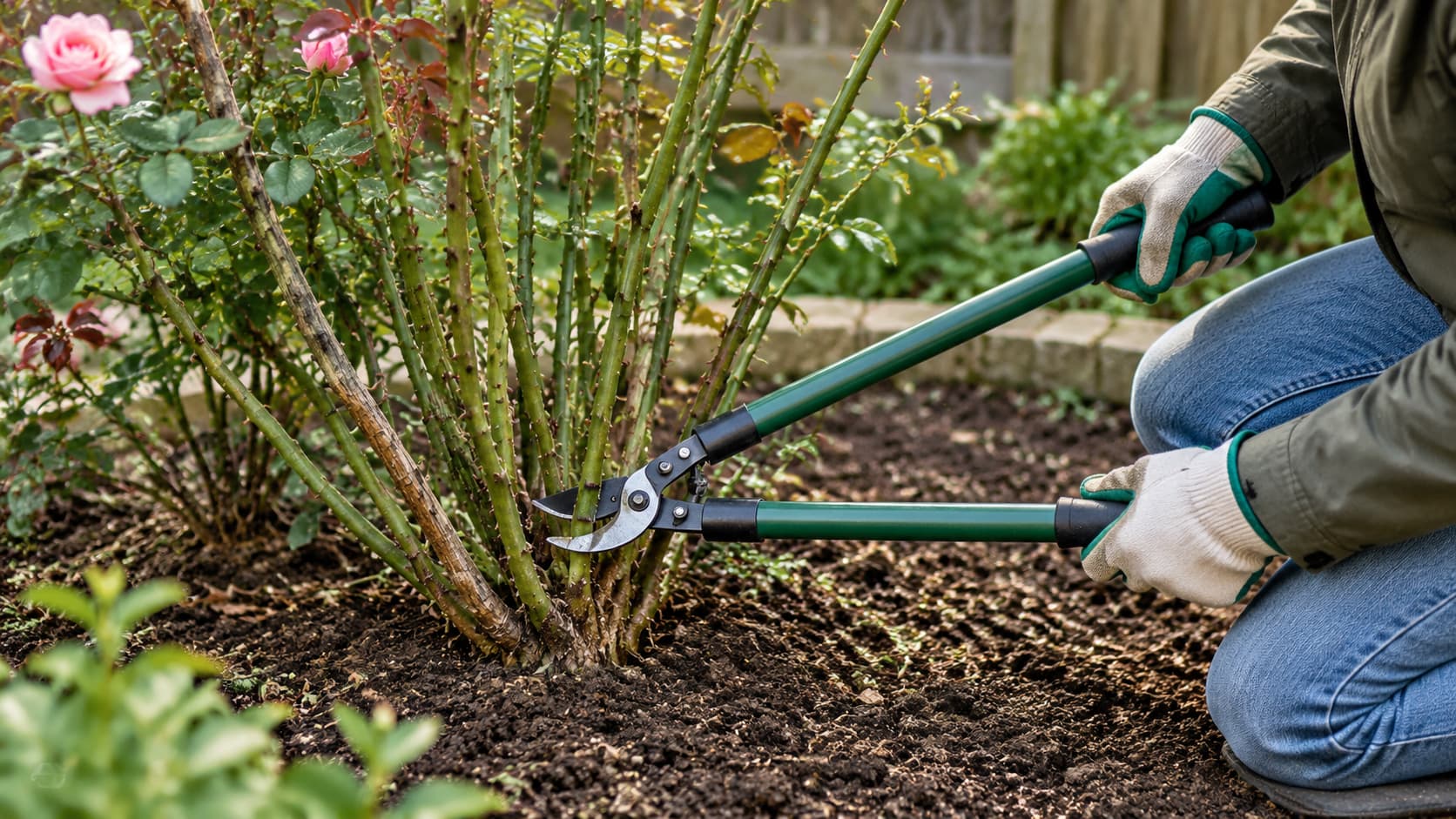
Good pruning starts with the right equipment. Sharp, clean tools create smoother cuts, which heal faster and reduce stress on the plant. Before you begin, check your tools and clean the blades, especially if you have recently worked on another rose bush.
|
Tool |
What It Is Used For |
|---|---|
|
Bypass pruners |
Best for smaller rose canes and creating clean cuts without crushing stems |
|
Loppers |
Useful for thicker canes that are too large for hand pruners |
|
Pruning saw |
Helps remove old, woody stems that are difficult to cut |
|
Thick gardening gloves |
Protect hands and arms from thorns while working inside the bush |
|
Rubbing alcohol or disinfectant wipes |
Used to clean blades and reduce the chance of spreading diseases between plants |
Cleaning your tools matters because diseases such as canker can move from one rose bush to another through contaminated blades. Wiping the cutting surface with rubbing alcohol before moving between plants is a simple step that protects your garden.
How to Prune Roses Correctly: Step-by-Step

Start by removing unhealthy growth first, then shape the bush gradually. Avoid making many cuts at once without checking the plant structure. A healthy rose bush should have an open center with enough space for air and sunlight.
Step 1: Remove Dead, Damaged, and Diseased Wood
Start with the three types of stems you should always remove: dead, damaged, and diseased canes. Cut these back until you reach healthy tissue. A healthy cane usually has a white or pale green center when you slice it.
If the inside of a cut stem appears brown or dry, continue cutting lower until the cane shows healthy color. This quick check helps confirm that you have removed the damaged section completely.
Step 2: Remove Crossing or Inward-Growing Canes
Look at the middle of the rose bush and remove stems that cross each other or grow toward the center. These branches can rub together in the wind, creating wounds where pests and diseases can enter.
Removing inward-growing canes also opens the plant structure, allowing better airflow through the bush.
Step 3: Remove Weak or Thin Growth
Thin, weak stems often struggle to support large flowers. Remove any cane that is thinner than a pencil, especially if it grows from the crowded center of the plant.
Keeping stronger stems helps the rose focus its energy on producing healthier growth.
Step 4: Keep the Strongest Canes
After removing unwanted growth, choose around 3 to 5 strong, healthy canes to form the main structure of the bush. Look for stems that grow outward rather than directly into the center.
These canes will support new shoots and help create a balanced shape as the plant grows.
Step 5: Make Cuts Above an Outward-Facing Bud
Make each cut about ¼ inch above an outward-facing bud eye at a slight 45-degree angle. The bud eye is the small bump on the stem where new growth will develop.
The outward direction matters because the new branch will usually grow away from the center, keeping the bush open.
Step 6: Check the Cut Surface
After cutting, look at the inside of the cane. Healthy tissue should appear light-colored. If the center looks brown, continue trimming until you reach fresh, healthy wood.
This extra check prevents leaving damaged sections behind.
How Far Down Should You Prune Roses?
How much you cut depends on the rose variety. No single height works for every bush.
|
Rose Type |
How Much to Cut Back |
|---|---|
|
Hybrid tea roses |
Cut back strongly to about 12 to 18 inches from the ground for larger blooms |
|
Floribunda roses |
Remove about one-third to one-half of the plant height |
|
Shrub and landscape roses |
Light pruning of around one-third of the total height is usually enough |
|
Keep main framework canes and trim flowering side shoots back to a few buds |
Healthy, established roses can handle a hard pruning. Many gardeners worry they will kill the plant, but roses are generally resilient when cuts are made correctly. Strong plants may tolerate a severe cutback to about 6 to 12 inches, though the ideal amount depends on the rose type.
Deadheading vs. Pruning: What’s the Difference?

Deadheading and pruning both involve cutting a rose plant, but they serve different purposes. Deadheading is done during the growing season to remove old flowers, while pruning shapes the plant and removes unwanted wood.
|
Task |
Deadheading |
Pruning |
|---|---|---|
|
Purpose |
Removes faded flowers and encourages more blooms |
Improves structure and removes unhealthy growth |
|
Timing |
Throughout the blooming season |
Usually once a year, depending on rose type |
|
Cuts |
Usually made above a healthy leaf set |
Removes full canes or larger sections of growth |
|
Main benefit |
Keeps flowers coming |
Creates a stronger, healthier plant |
To deadhead roses, cut the faded flower back to the first set of leaves with five leaflets. When possible, make the cut above an outward-facing bud so new growth develops in the right direction.
What Should Pruned Roses Look Like When You’re Done?
A properly pruned rose bush often looks smaller and more open than beginners expect. The finished plant should have a vase-like shape with space in the middle, several strong outward-growing canes, and no branches crossing through the center.
Cuts should look clean and angled, with no torn or crushed stems. A freshly pruned rose may look bare, but this lets the plant put energy into stronger new growth once the growing season begins.
Common Rose Pruning Mistakes to Avoid
Even experienced gardeners make mistakes when pruning roses, especially when they are unsure about timing or how much growth to remove. Most problems come from cutting at the wrong time, using poor tools, or leaving unhealthy stems behind.
|
Mistake |
Why It Causes Problems |
Better Approach |
|---|---|---|
|
Pruning too early |
New growth may appear before a late frost and become damaged |
Wait until severe frost has passed and buds begin swelling |
|
Cutting once-blooming roses at the wrong time |
Removing old wood can remove the stems that carry future flowers |
Prune after flowering instead of during late winter |
|
Using dull pruners |
Dull blades crush stems and create uneven cuts that heal slowly |
Sharpen tools regularly and replace damaged blades |
|
Using dirty tools |
Contaminated blades can spread diseases between rose bushes |
Clean blades with rubbing alcohol before moving between plants |
|
Cutting straight across stems |
Flat cuts can hold moisture and create a weak healing area |
Cut at a slight angle above an outward-facing bud |
|
Keeping weak or diseased canes |
Poor growth stays crowded and takes energy from stronger stems |
Remove thin, damaged, or unhealthy wood completely |
|
Ignoring suckers |
Rootstock shoots can take energy away from the desired rose variety |
Remove suckers from below the graft area as soon as they appear |
Another common mistake is removing too little because the plant looks bare after pruning. A rose bush may look smaller at first, but removing unnecessary wood gives healthy canes more room to grow.
Is There a Wrong Way to Prune Roses?
Yes, there are wrong ways to prune roses. Cutting at the wrong time, using dirty or dull tools, and removing healthy flowering stems from the wrong rose variety can create problems.
The safest method is to remove damaged growth first, keep strong outward-facing canes, and make clean angled cuts above healthy buds.
If you accidentally remove more than planned, do not panic. Established rose bushes can usually recover and produce fresh growth.
Frequently Asked Questions
What month should you prune your rose bushes?
Most roses should be pruned between late winter and early spring, usually from February to April depending on local weather conditions.
Is there a wrong way to prune roses?
Yes, pruning during the wrong season, cutting incorrectly, or removing healthy flowering wood can affect blooms and plant health.
How far back can you cut a rose bush without killing it?
Healthy rose bushes can tolerate heavy pruning, with some established plants recovering after being cut back to 6 to 12 inches.
Should you deadhead roses or prune them?
Both tasks are useful. Deadheading removes old flowers during the growing season, while pruning shapes the plant and removes unwanted wood.
What are the common rose pruning mistakes?
Common mistakes include pruning too early, using dirty tools, cutting too much, leaving weak stems, and removing flowering wood from the wrong rose type.
What not to do when pruning roses?
Avoid cutting without checking the rose variety, using blunt tools, leaving diseased stems, or making flat cuts that collect moisture.
What should pruned roses look like?
A pruned rose bush should have an open center, strong outward-growing canes, clean angled cuts, and enough space for air movement.
Conclusion
Learning how to prune roses becomes easier when you understand the timing, tools, and cutting method.
The right pruning routine removes unhealthy growth, improves airflow, and prepares your rose bush for stronger blooms. Check your rose type before cutting, as some varieties need different care.
A well-pruned rose may look small at first, but healthy new growth will quickly fill the plant during the growing season. With careful cuts and regular attention, your roses can stay productive and beautiful year after year.