
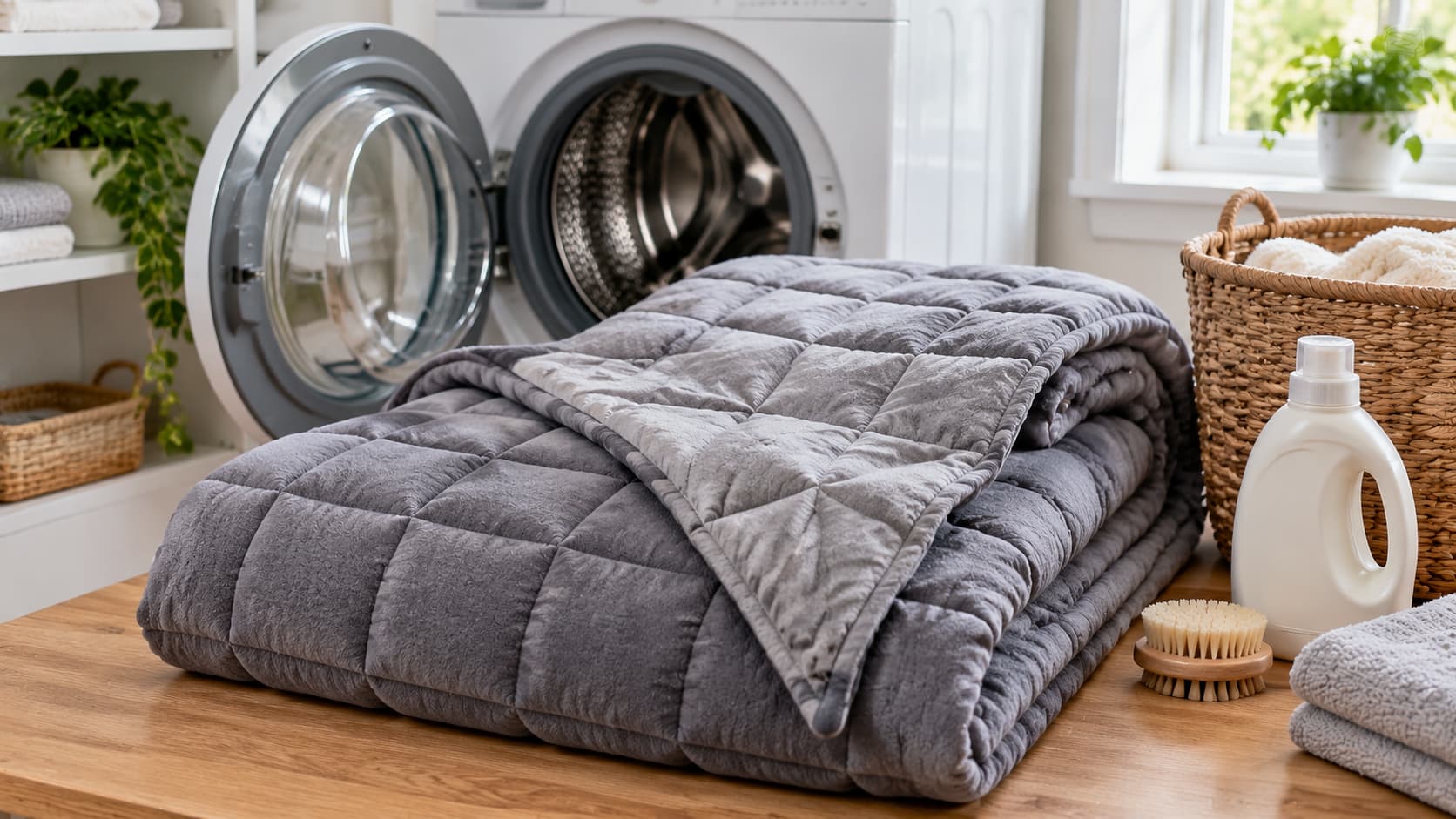
How to Clean a Weighted Blanket by Weight and Fill
Weighted blankets feel great until wash day. The care tag rarely explains what to do with a blanket that weighs 15, 20, or 25 pounds, and the wrong wash can ruin the fill inside.
Most weighted blankets can be cleaned safely at home once you know a few key basics about weight, fill type, and washer size.
This post covers how to clean a weighted blanket, spot clean stains, dry it the right way, and skip the mistakes that damage it.
Can You Machine Wash a Weighted Blanket?
Yes, most weighted blankets can be machine washed when the care label allows it. The key is to make sure your washer can handle the blanket’s size and weight without straining the machine.
Always check the manufacturer’s instructions before washing, as some blankets require hand washing or special care. When machine washing is approved, use a gentle cycle with mild detergent and avoid harsh laundry products that may damage the fabric or filling.
Check These 3 Things Before You Wash Anything
Before you load anything into the wash, a few quick checks can save your blanket and your washer. Here is what to look at first.
-
Read the care label: The tag on the seam or the manufacturer’s site tells you the exact wash method the maker recommends.
-
Check the fill type: Poly pellets, glass beads, and steel shot can get wet, but sand, rice, corn, and dried beans cannot.
-
Match the weight to your washer: A machine rated for a normal load may not handle a blanket over 15 to 20 pounds without strain.
How to Clean a Weighted Blanket by Weight

Weight is the biggest factor in how you should clean a weighted blanket. Here is what changes as the pounds go up.
Cleaning a 15 Pound Weighted Blanket
A 15-pound blanket is usually light enough for a standard home washer. Wash it alone on a cold, gentle cycle with a mild detergent, and skip the fabric softener since it can build up on the fill over time.
Cleaning a 20 Pound Weighted Blanket
Twenty pounds sits right at the edge of what most home washers can handle well. Check your machine’s listed load capacity first. Appliance makers like Maytag put the cutoff for a standard home washer around 20 pounds, so if yours is close to that limit, a large-capacity machine at a laundromat treats the blanket, and your washer, better.
Cleaning a 25 Pound Weighted Blanket
At 25 pounds, hand washing in a bathtub or a trip to the laundromat is the safer route. A wet blanket at this weight can easily double in heaviness, so plan for how you will lift and move it before you begin.
How to Spot Clean a Weighted Blanket
A full wash is not always needed for one stain or a bit of dirt. Spot cleaning keeps the rest of the blanket dry and undisturbed.
-
Use a mild detergent: Mix a small amount with cool water rather than applying it straight from the bottle.
-
Dab, do not rub: Work the stain with a soft cloth or toothbrush in small circles instead of scrubbing hard.
-
Rinse the spot only: Wipe the area with a clean, damp cloth to lift out the soap.
-
Air dry before use: Let the treated area dry fully so damp fill does not sit inside the blanket.
How to Machine Wash a Weighted Blanket

Once you confirm that your weighted blanket’s fill type and weight are safe for machine washing, follow these steps to protect both the blanket and your washer.
Step 1: Treat Stains Before Washing
Check the blanket for spills, dirt, or stains before putting it in the machine. Apply a small amount of mild detergent to the affected area and let it sit for a few minutes before washing.
Step 2: Wash the Blanket Alone
Place the weighted blanket in the washer by itself. Adding other clothes or bedding can make the load uneven and put extra pressure on the washer drum.
Step 3: Select a Gentle Wash Cycle
Use cold water with a gentle or delicate cycle. Cold washing helps protect the fabric, prevents color fading, and reduces the chance of the filling shifting or clumping.
Step 4: Avoid Harsh Laundry Products
Do not use bleach or fabric softener. Bleach can weaken the outer fabric, while softeners may leave residue that affects the blanket’s texture and filling.
Step 5: Remove Excess Water Before Drying
If your washer has an extra spin option, run it after the wash cycle ends. Removing more water helps the blanket dry faster and prevents moisture from staying trapped inside the filling.
Step 6: Check the Blanket After Washing
Before drying, inspect the blanket for uneven filling or areas where beads or pellets may have shifted. If needed, gently spread the filling back into place.
How to Dry a Weighted Blanket
Drying a weighted blanket properly is just as important as washing it. The safest method for most blankets is air drying. Lay the blanket flat on a clean, dry surface and spread it evenly so the filling can dry without clumping.
Turn the blanket over every few hours to help moisture escape from both sides. Depending on the thickness and weight, it may take 24 to 48 hours to dry completely. Avoid folding or storing it while any moisture remains inside, as trapped dampness can lead to odors or mildew.
Some weighted blankets filled with microglass beads may be safe for low-heat tumble drying, but only use a dryer if the care label specifically allows it. High heat can damage certain fabrics or fillings, so always check the manufacturer’s instructions first.
Weighted Blanket Washing Mistakes That Reduce Its Lifespan
A few small missteps cause most of the damage to weighted blankets. This table breaks down what to skip and why.
|
Mistake |
Why It’s a Problem |
|---|---|
|
Using bleach or fabric softener |
Breaks down the fill and leaves buildup that makes the fabric feel stiff |
|
Washing an organic fill blanket in a machine |
Sand, rice, and beans get soggy and can rot or clump inside the blanket |
|
Overloading a small washer |
Puts strain on the drum and bearings, and the blanket may not rinse clean |
|
Using high heat in the dryer |
Can melt plastic pellets or damage steel shot fill |
|
Storing it before it is fully dry |
Traps moisture inside, which leads to a musty smell or mildew |
How Often Should You Wash a Weighted Blanket?
How often you wash a weighted blanket depends on how you use it. If you sleep under it every night without a cover, wash it every two to four weeks.
For occasional use, such as a lap blanket on the couch, three to four times a year is enough. A removable duvet cover cuts down on washing since you can clean just the cover between full washes.
Final Thoughts on Cleaning a Weighted Blanket
Cleaning a weighted blanket comes down to three things: checking the label, knowing the fill, and matching the method to the weight.
A 15-pound blanket usually handles a home washer fine, while heavier ones do better by hand or at a laundromat. Skip the mistakes above and your blanket will hold up for years.
Next time wash day comes, check the tag first, pick the right method, and your blanket will thank you for years to come.
Frequently Asked Questions
Can you machine wash a weighted blanket?
Yes, in most cases. As long as the fill is poly pellets, glass beads, or steel shot and the blanket sits under about 20 pounds, a home washer works fine on a gentle, cold cycle. Always check the care label first, since fill and weight limits vary by brand.
How do I clean a 20 lb weighted blanket?
Twenty pounds is close to the limit for many home washers, so check your machine’s rated capacity before loading it. If your washer cannot handle the load comfortably, a laundromat with a large-capacity machine is the safer choice, using the same cold, gentle cycle.
How do you clean a 15 pound weighted blanket?
A 15-pound blanket usually fits a standard home washer without issue. Wash it alone on a cold, gentle cycle with mild detergent, skip the fabric softener, and let it air-dry flat afterward.
How to clean a 25-pound weighted blanket?
At 25 pounds, hand washing in a bathtub or a trip to the laundromat works better than a home washer. Fill a tub with cool water and mild detergent, submerge the blanket, rinse it well, and air-dry it flat since it will be much heavier once wet.
Can I put my 15 lb weighted blanket in the dryer?
Only if it is filled with microglass beads and the care label allows heat. Most other fills, like poly pellets or steel shot, air-dry better when laid flat, since heat can cause the fill to clump or melt.
How often should you replace your weighted blanket?
Replace your weighted blanket when the filling becomes uneven, the fabric wears out, or it no longer provides comfortable, consistent weight.


