
Choosing Christian Art for Prayer Rooms, Bedrooms, and Family Spaces
Christian art is most effective when it supports the purpose of the room rather than functioning as decoration alone. A prayer room may call for imagery that encourages stillness, repentance, gratitude, or contemplation. A bedroom often benefits from art that communicates reassurance and peace at the beginning and end of each day. Family spaces usually require a broader visual language that can speak to adults, children, relatives, and guests without making the room feel formal or institutional. Before considering colors, frames, or dimensions, homeowners should identify the spiritual response they hope the artwork will encourage. That decision provides a practical standard for evaluating every piece that follows.
The search process becomes more focused when homeowners consider how they expect to interact with the artwork each day. A piece intended for private devotion should support sustained reflection rather than attract attention only through dramatic color or scale. Art placed in a bedroom may need to feel calming under both daylight and soft evening illumination. A work selected for a living room should remain visually compelling when viewed from across the space. Homeowners should also consider whether the artwork will inspire prayer, encourage conversation, preserve a family memory, or express a central belief. Defining that role makes it easier to distinguish a meaningful choice from a piece purchased merely to fill an empty wall.
A room’s spiritual purpose should also shape the number of artworks displayed. A single focal piece can create clarity and prevent a prayer area from becoming visually crowded. A small grouping may work better in a family room where several stories, themes, or generations are represented. Homeowners should resist filling every empty wall simply because space is available. Christian art carries emotional and symbolic weight, so too many competing images can weaken the impact of each one. A selective approach gives the household room to notice, remember, and reflect on what has been chosen.
Choosing Art for a Dedicated Prayer Room
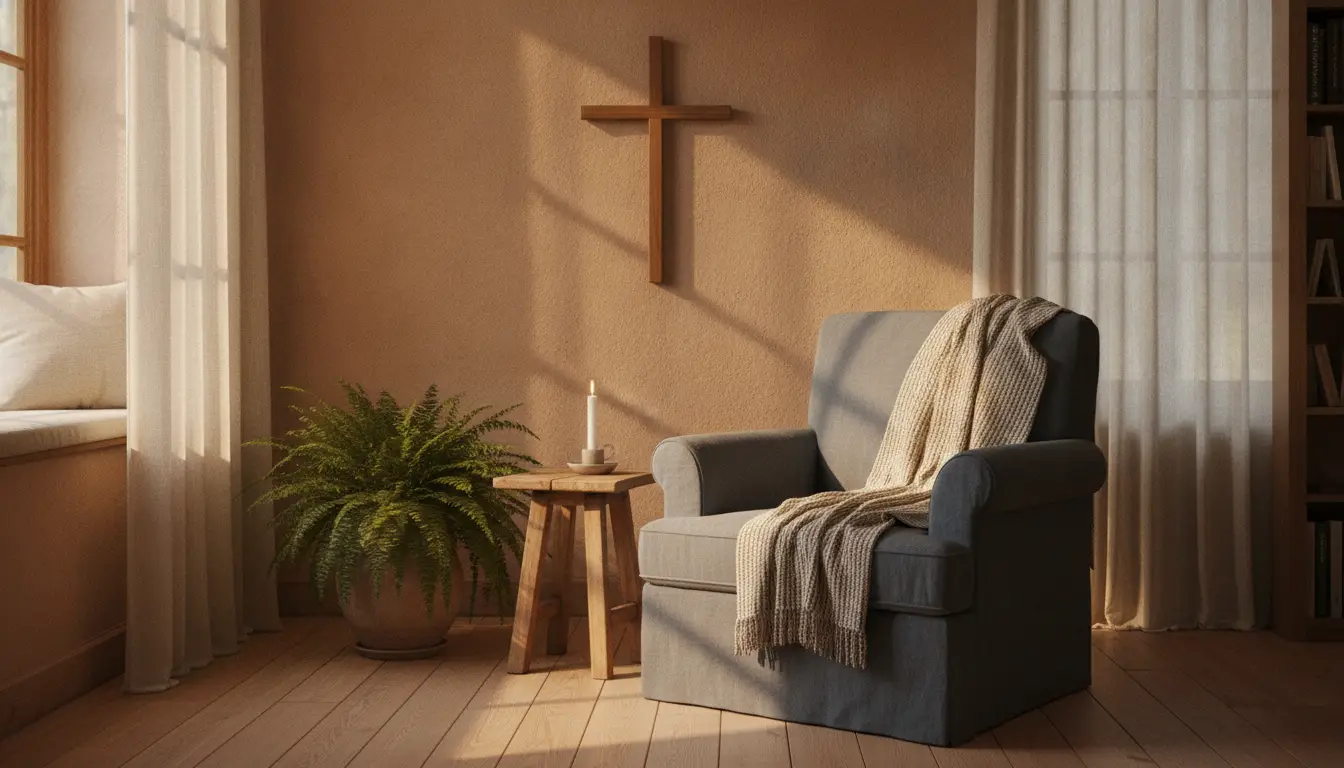
A dedicated prayer room should feel separate from ordinary household activity, even when it occupies only a small corner or converted closet. Art can establish that distinction immediately by signaling that the space is reserved for attention, silence, and spiritual practice. Images of Christ, the cross, open hands, light, water, or a quiet landscape can help direct the mind away from distraction. The subject should support the household’s form of prayer, whether that practice emphasizes meditation, Scripture reading, intercession, confession, or praise. Highly dramatic scenes may inspire some worshippers, but they can feel emotionally demanding during long periods of quiet prayer. A calm composition with a clear center often provides a more sustainable visual anchor.
After defining the room’s spiritual purpose, buyers can begin comparing artists, materials, sizes, and presentation styles from sources that offer enough variety for a thoughtful choice. A wall art marketplace such as iCanvas can be useful at this stage because it brings together ready-to-hang work from independent artists, licensed estates, and cultural institutions. The Chicago-based company offers artwork on canvas, fine art paper, acrylic glass, wood, and metal, giving homeowners several ways to shape a prayer room’s atmosphere. Those seeking imagery rooted in faith can explore its selection of Christian wall art and canvas prints, which features crosses, Scripture-inspired designs, biblical scenes, and contemporary spiritual imagery. This variety helps buyers choose a piece that feels sincere, visually fitting, and suited to quiet reflection and daily prayer.
The location and lighting of the artwork should be planned with equal care after the piece has been selected. A work placed directly in front of a prayer chair, kneeler, or cushion becomes part of the worshipper’s regular line of sight. It should hang at a height that feels natural from the position in which prayer usually takes place, rather than at a conventional standing eye level. Indirect lamps, adjustable wall lights, or filtered natural light usually preserve a quieter atmosphere than a strong overhead fixture. Homeowners should consider how the artwork appears before sunrise, after sunset, and during the hours when the room is used most often. The best arrangement keeps the image visible and meaningful without making it feel like a spotlighted display object.
Selecting Christian Art for Bedrooms
Bedrooms require a different emotional register because they are associated with vulnerability, rest, and personal reflection. Christian art in this setting should generally lower anxiety rather than intensify it. Images that communicate protection, grace, hope, or divine presence often work better than scenes of conflict, judgment, or suffering. This does not mean difficult biblical subjects have no place in a home, but the bedroom may not be the best location for them. A peaceful work can serve as the final visual impression before sleep and the first reminder of faith in the morning. That repeated exposure gives even a simple image unusual significance over time.
Text-based artwork is particularly common in bedrooms, but the wording should be chosen carefully. Short passages about peace, trust, strength, or God’s faithfulness are easier to absorb than long blocks of Scripture. Typography must remain legible from the bed, especially when the piece is intended to be read as part of a morning or evening routine. Decorative lettering can be attractive, but elaborate scripts sometimes reduce clarity or make familiar words feel overly sentimental. The typeface, spacing, and background should suit the room’s overall design while preserving the seriousness of the message. A verse should feel integrated into the space rather than added as a label after the room has been furnished.
Shared bedrooms call for additional consideration because both occupants should feel represented by the choice. One person may prefer a traditional depiction of Christ, while another may favor landscapes, abstract symbolism, or simple calligraphy. The most successful solution often begins with a shared theme rather than a shared artistic taste. Peace, covenant, gratitude, mercy, and steadfast love can be expressed through many different visual styles. Couples should discuss not only what they like, but also what they are comfortable seeing during private moments of rest and conversation. Agreement matters because bedroom art becomes part of the emotional environment of the relationship.
Choosing Art for Living Rooms and Family Spaces
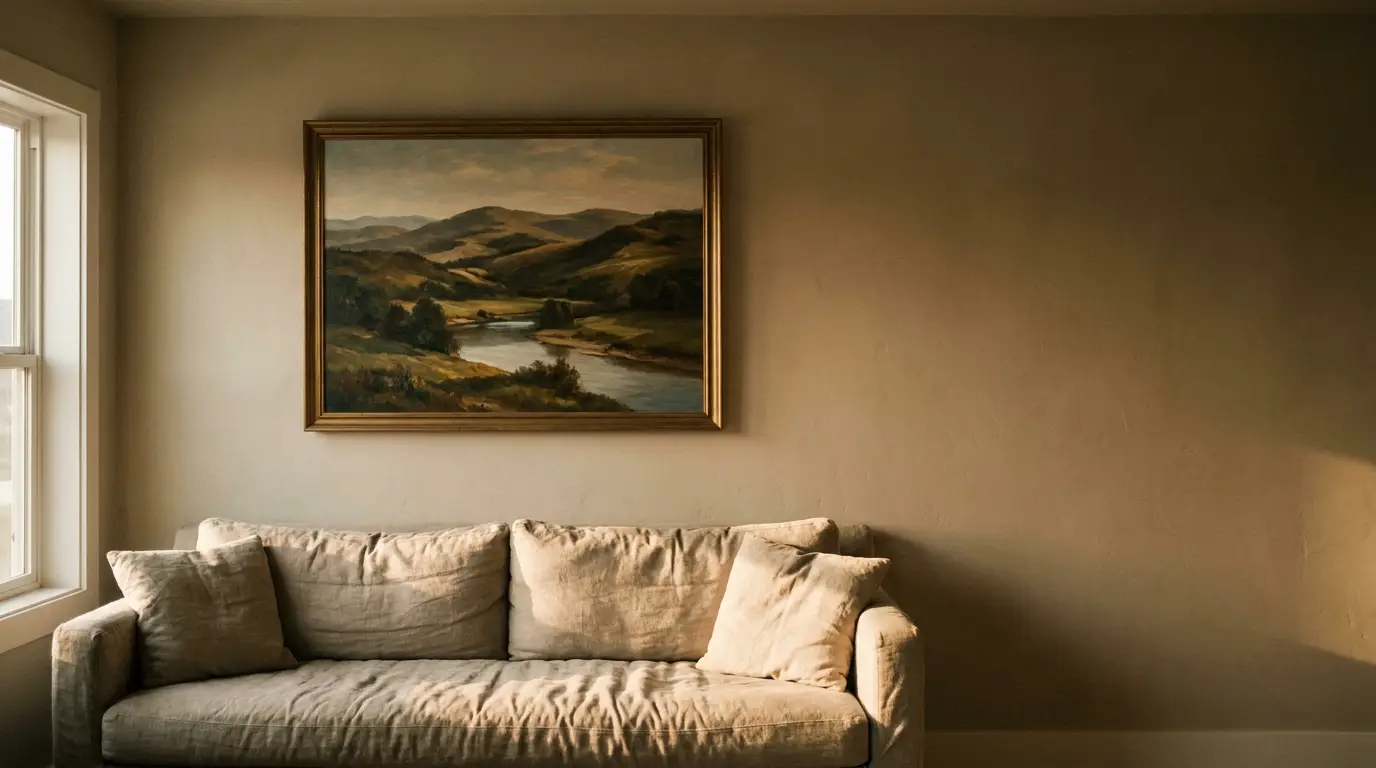
Family rooms usually carry the greatest number of responsibilities within a home. They may host conversation, television, games, celebrations, homework, meals, and visits from people with different beliefs. Christian art in these spaces therefore needs to be spiritually meaningful without competing aggressively with everything else in the room. A strong focal piece above a sofa, console, or fireplace can communicate the family’s values with confidence and restraint. It should be readable from a distance and visually balanced with the furniture around it. Large-scale landscapes, contemporary biblical interpretations, or dignified text compositions often work well because they can hold their own in an active setting.
The family space is also a natural place to tell a broader story about faith. A gallery wall might combine a biblical image, a family photograph, a handwritten prayer, a historical church print, and a small work created by a child. This approach prevents Christian art from feeling detached from the household’s actual life. It also shows that faith is not confined to formal worship but is connected to memory, relationships, and everyday experience. The arrangement should still have a visual logic through repeated colors, frame finishes, or consistent spacing. Without that structure, a meaningful collection can quickly look accidental or cluttered.
Homeowners should also consider how the art will be received by guests. The goal need not be to dilute the family’s convictions or hide explicitly Christian content. Thoughtful selection, however, can make a room feel welcoming rather than confrontational. Images centered on hospitality, compassion, creation, sacrifice, or hope often invite conversation without demanding immediate agreement. A guest may not share the household’s theology, but can still recognize beauty, craftsmanship, and moral seriousness. Good Christian art can communicate conviction and generosity at the same time.
Matching Imagery to Theology, Tradition, and Personal Conviction
Christian art draws from a wide range of traditions, and those traditions do not always treat sacred imagery in the same way. Some households are comfortable with detailed portrayals of Christ, Mary, angels, saints, and biblical events. Others prefer crosses, Scripture, natural imagery, or abstract symbols because of denominational teaching or personal conviction. These differences should be addressed before a purchase is made, particularly in homes where family members come from different church backgrounds. A work that appears inspiring to one person may feel theologically uncomfortable to another. Respectful discussion can prevent art from becoming a recurring source of tension.
Accuracy is another consideration when selecting narrative biblical scenes. Artists interpret clothing, architecture, geography, facial features, and historical settings through the lens of their own time and culture. No devotional image should automatically be treated as a literal record of how a biblical person or event looked. Viewers can appreciate artistic interpretation while remaining aware of the difference between Scripture and visual imagination. This distinction is especially important when children encounter biblical stories through household art. Parents can use the image as a starting point for conversation rather than presenting it as definitive evidence.
Symbolic works require their own kind of discernment. Familiar motifs such as the lamb, dove, fish, vine, crown, anchor, flame, and living water carry layers of biblical meaning. Their visual simplicity can make them suitable for modern interiors where realistic religious scenes might feel stylistically disconnected. Yet symbols are most effective when the household understands what they represent. A decorative object loses much of its spiritual value when it is selected only because its shape or color is fashionable. The strongest symbolic art combines aesthetic appeal with a meaning the family can explain and remember.
Balancing Color, Scale, Material, and Interior Design
Color has a powerful effect on the way Christian art is experienced. Soft neutrals, muted blues, warm earth tones, and gentle greens often support prayerful or restful environments. Deep reds, golds, blacks, and saturated blues can create drama and may suit formal living rooms, libraries, or traditional interiors. Bright contemporary palettes can bring energy to family rooms, children’s spaces, and informal gathering areas. The palette should complement the room without becoming so coordinated that the art looks like a matching accessory. Sacred subject matter deserves to retain its own visual identity within the design.
Scale should be determined by the wall, furniture, and viewing distance rather than by the emotional importance of the subject alone. A small work above a large sofa can appear weak even when the image itself is beautiful. An oversized piece in a narrow prayer corner may feel imposing and reduce the sense of calm. As a practical guide, art above furniture often looks balanced when it occupies a substantial portion of the furniture’s width without extending beyond it. Multi-panel works require additional spacing calculations because the gaps become part of the total composition. Measuring the full arrangement before ordering is more reliable than estimating from a product image on a screen.
Material changes both the appearance and the physical presence of an artwork. Canvas offers texture and a familiar gallery look, while fine art paper can provide sharper detail when properly framed. Acrylic glass tends to produce strong color and a polished surface, though reflections should be considered in bright rooms. Wood can add warmth and a handcrafted character, especially in rustic or traditional interiors. Metal may suit contemporary spaces and can give high-contrast imagery a crisp, modern finish. The right material supports the mood of the room while remaining practical for its light, humidity, traffic, and maintenance conditions.
Choosing Art for Children, Teenagers, and Multigenerational Homes
Christian art for children should communicate spiritual ideas clearly without reducing them to visual clichés. Warm illustrations of biblical stories, creation, courage, kindness, prayer, and God’s care can help children connect belief with daily life. The artwork should be developmentally appropriate, emotionally reassuring, and durable enough for an active room. Parents may prefer pieces that invite questions instead of simply presenting a command or moral slogan. An image of Noah’s ark, David’s courage, Jesus welcoming children, or the natural world can lead to meaningful conversations. The aim is to create familiarity with faith while leaving room for curiosity.
Teenagers often respond better when they participate in the selection. A piece chosen without their input may be interpreted as decoration imposed by an adult rather than an expression of personal belief. Contemporary photography, graphic typography, street-art influences, abstract symbolism, or minimalist designs may feel more authentic to a young person’s developing taste. The message should avoid sounding patronizing or overly simplified. Themes such as identity, purpose, justice, endurance, doubt, and hope often have particular relevance during adolescence. Giving teenagers a budget and a defined wall area can turn the purchase into an exercise in ownership and discernment.
Multigenerational homes require art that can carry different memories and devotional associations. Grandparents may value traditional sacred images, while younger adults may prefer modern design and children may connect with illustration. A layered collection can honor these differences without forcing every room into one style. Heirloom crosses, framed hymn pages, contemporary prints, and family-made pieces can coexist when color or framing creates continuity. The resulting display may be less uniform than a professionally matched set, but it often has greater emotional depth. In such homes, Christian art can become a visible record of faith passed through several generations.
Curating a Cohesive Collection Without Overcrowding the Home
A Christian art collection benefits from a clear editorial point of view. Homeowners can begin by identifying several recurring themes, such as grace, creation, prayer, resurrection, family, or service. Those themes can then guide future purchases and reduce the temptation to buy every appealing piece. Consistency does not require using one artist, one color palette, or one visual style throughout the house. It means that each work has a reason for being present and a relationship to the household’s beliefs. A curated home feels intentional because the art reflects convictions rather than shopping habits.
Rotation is an effective way to keep the collection fresh without filling every wall. Certain works may be displayed during Advent, Christmas, Lent, Easter, or family anniversaries. Others may become meaningful during seasons of grief, transition, illness, celebration, or renewed commitment. Storing and rotating art allows the household to respond to the Christian calendar and to changing personal circumstances. It also gives familiar pieces renewed impact when they return after a period away. Seasonal rotation should be planned with proper storage so canvases, frames, and paper works are protected from moisture, dust, and pressure.
Budget decisions should account for quality, longevity, and placement. A family may choose to invest in one prominent piece for the living room while using smaller, less expensive prints in hallways or bedrooms. Framing, hanging hardware, lighting, and shipping can materially increase the total cost, so they should be considered at the beginning. Buyers should also examine artist information, licensing details, production methods, and return policies before making a significant purchase. Supporting working artists can add another layer of meaning because the acquisition becomes part of a creative and economic relationship. The goal is not to build the largest collection, but to choose works that remain spiritually and visually valuable over time.
Placing and Living With Christian Art Intentionally
Final placement should be evaluated in the context of daily movement through the home. A piece may look attractive in isolation but become obscured by an open door, reflected in a television, or crowded by furniture. Homeowners should observe the wall at different times of day before committing to a permanent location. They should also consider which images will be seen during routines such as waking, eating, leaving for work, welcoming visitors, and preparing for sleep. Art gains influence through repeated encounters, not merely through the importance assigned to it at the time of purchase. Placement determines which messages become part of the household’s visual rhythm.
The family’s relationship with the artwork should remain active after installation. Parents can discuss a biblical scene with children, couples can select a verse for a shared season, and guests can be invited to ask about an unfamiliar symbol. A prayer room image may become associated with a particular intercession or period of spiritual growth. A living room piece may serve as a reminder of the family’s commitments during conflict or change. These associations deepen slowly and cannot be manufactured by design alone. Christian art becomes most meaningful when the household allows it to participate in memory, conversation, and practice.
The best choices combine beauty, conviction, and suitability for the room in which they appear. They do not need to be expensive, historically important, or immediately understandable to every visitor. They should be well made, thoughtfully placed, and consistent with the beliefs of the people who live with them. A prayer room calls for focus, a bedroom for peace, and a family space for shared meaning and hospitality. When those distinctions guide the selection process, Christian art can contribute more than color or visual interest. It can help shape the atmosphere of the home and quietly reinforce the values practiced within it.


