

Clover Lawn: Benefits, Growth & Real Experiences
Tired of a lawn that takes too much water, effort, and money but still looks patchy? Many people feel stuck maintaining grass that never really improves.
A clover lawn offers a simpler shift. It stays greener with less fertilizer, handles dry conditions better, and fills bare spots naturally over time.
It also supports a more balanced, low-input yard without constant upkeep.
Instead of fighting the lawn every season, many people are now choosing a ground cover that works with nature rather than against it.
Here you will find out what a clover lawn is, how it develops, and what changes happen when you replace grass with clover.
What Is a Clover Lawn?
A clover lawn is a type of ground cover made mainly from white clover or micro-clover. It is used as an alternative to traditional grass lawns.
It spreads across the soil using low-growing stems and gradually fills empty spaces. This creates a dense, green surface that stays low to the ground.
Unlike grass-only lawns, it naturally improves soil by working with nitrogen-fixing bacteria. This helps the lawn stay greener with less added fertilizer.
In simple terms, it is still a lawn, just not a grass-dominant one.
Why Are People Moving Away from Traditional Grass?
Most people switch to clover out of frustration, not trends. Endless watering, feeding, and mowing often bring no lasting progress, making the effort feel wasted.
Rising water bills and persistent bare patches add to the strain, pushing people toward lower-maintenance alternatives like clover.
At the same time, expectations are shifting; lawns are seen less as manicured turf and more as natural ecosystems.
Clover fits this shift well, supporting bees and biodiversity where grass offers little ecological value, entering the conversation when grass feels like effort without reward.
How Does a Clover Lawn Grow Over Time?
Most confusion around clover lawns comes from expectations. People often expect instant coverage or a perfectly even lawn. That is not how it works.
Clover spreads using creeping stems called stolons that root into the soil as they move. Over time, it naturally fills open spaces between grass or bare soil.
1. The Early Stage: What Usually Surprises People

The first stage of a clover lawn often feels different from what people expect. It doesn’t look uniform right away and takes time to settle.
The first few weeks are where most expectations get challenged:
- Germination is not uniform
- Some areas look thin at first
- Grass may still dominate visually
- Growth feels slower than expected
This is where many online discussions come from, especially “Is my clover lawn failing?” posts. In most cases, it is simply still being established.
2. Long-Term Behavior: What It Looks Like After a Full Season

After a full season, a clover lawn starts to feel more settled and self-sustaining. The changes become less about rapid growth and more about steady balance.
Once established, clover lawns tend to stabilize:
- Less fertilizer dependence becomes noticeable
- Growth feels more predictable
- Seasonal changes become part of the rhythm
- Mowing frequency often reduces
It does not become maintenance-free, but it does become lower input.
Common Problems People with Clover Lawns Have
Clover lawns are not without issues, but the problems tend to look different from traditional grass lawns and usually relate to how they establish and adapt over time.
| Problem | Solution |
|---|---|
| Patchy growth in early stages | Overseed bare spots lightly and keep soil consistently moist during germination for better coverage |
| Uneven mix with grass | Overseed after aerating to thicken clover in weaker patches and balance the mix over time |
| Seasonal fading or browning | Expect slower growth in cold months; this is normal and clover typically bounces back with warmer weather |
Clover naturally fills bare patches on its own, so most of these issues correct themselves within a season or two without extra intervention.
When a Clover Lawn Works Best in Real Life
Low-to-moderate traffic areas are where clover lawns tend to perform best in everyday use, especially in spaces that are not under constant pressure.
- Casual Use Tolerance: Clover handles light walking and everyday garden activity well, but heavy foot traffic can gradually thin the coverage.
- Recovery Through Spread: Damaged areas often recover as clover naturally spreads into open gaps, depending on soil and moisture conditions.
- Mixed Sun Conditions: It performs best in full sun to partial shade, where growth stays dense and balanced. Deep shade can reduce spread and density.
- Natural Variation Acceptance: Clover lawns are not meant to stay perfectly uniform and work best in spaces where slight variation is acceptable.
Overall, clover lawns thrive when conditions align with their natural growth patterns, providing a softer, more adaptable ground cover in the right environments.
Clover Lawns: What Reddit Really Thinks
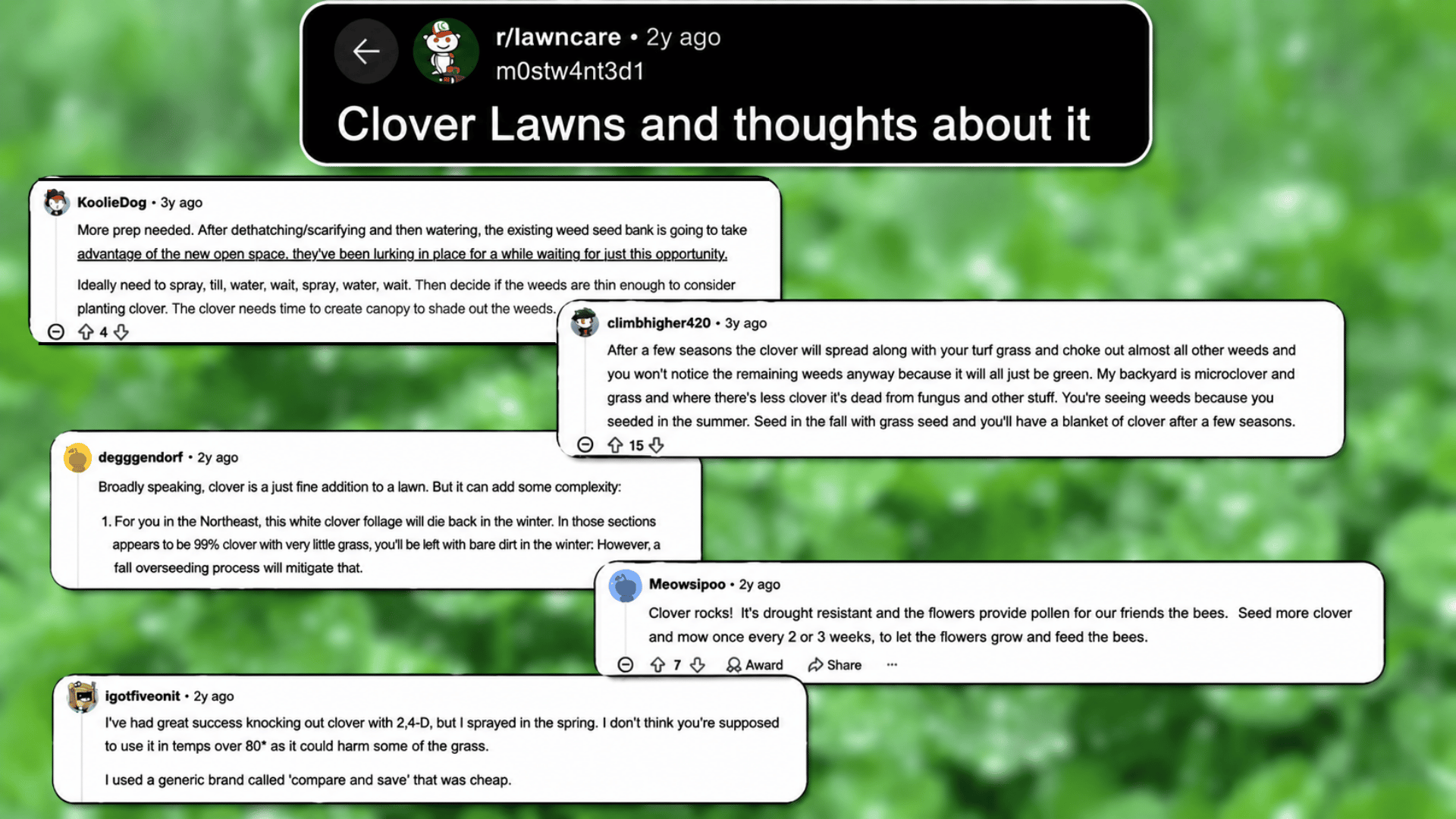

Clover lawns are increasingly seen as a low-maintenance and eco-friendly alternative to traditional grass, though not without trade-offs.
The discussion on r/lawncare reflects mixed opinions, weighing benefits like resilience against seasonal challenges, especially in colder regions where growth patterns can vary.
Many users highlight clover’s strong drought resistance and its ecological value for pollinators like bees, making it a favorite among those prioritizing sustainability.
Others, however, point out practical concerns such as winter dieback, patchy spring regrowth, and uneven lawn appearance in certain climates. They suggest that results can depend heavily on local conditions.
Conclusion
A clover lawn offers a simple way to enjoy a greener yard with less effort and fewer inputs than traditional grass.
It supports healthier soil, reduces ongoing maintenance, and adapts naturally through the seasons without constant intervention.
Instead of chasing a perfect, high-maintenance lawn, many people now prefer a more balanced and resilient outdoor space.
The key takeaway is that success comes from understanding how clover behaves and working with its natural growth pattern rather than against it.
Ready to rethink your lawn? Start planning your clover lawn today and see how small changes can make a big difference.
Leave a comment below and share your experience or questions about switching to clover Lawn.
Frequently Asked Questions
Does a Clover Lawn Attract More Bees than A Regular Grass Lawn?
Yes, clover lawns naturally attract more bees because they produce small, nectar-rich flowers. This supports pollinators and increases biodiversity compared to traditional grass lawns.
Can Clover Lawns Survive Winter Conditions?
Clover is a perennial plant, so it survives winter and regrows in spring. It may look less active in colder months, but it returns quickly when temperatures rise.
Can I Just Throw Clover Seed on My Lawn?
Yes, you can scatter clover seed on your lawn, but it grows best with good soil contact. Light raking and watering improve germination and lead to more even coverage.


