Is Your Fridge Trying to Tell You Something? Small Signs Worth Acting On
The refrigerator is the quiet workhorse of the home. It runs every hour of every day, holds hundreds of dollars of food, and asks for almost nothing in return. Which is exactly why it is so easy to ignore until the morning you open the door to warm milk and a puddle on the floor.
The good news is that fridges rarely fail without warning. They drop hints for weeks. Learn to read them and you can usually fix a small problem before it becomes a spoiled-groceries emergency.
The Early Warning Signs
A few changes are worth paying attention to:
- It is running constantly. A healthy fridge cycles on and off. One that hums without pause is working too hard, often because of dusty coils, a failing seal, or a struggling fan.
- The back or sides feel hot. Some warmth is normal. Heat that is uncomfortable to touch suggests the condenser or coils need attention.
- Condensation or frost where there should not be any. Water pooling inside, or a freezer caked in ice, usually points to a worn door seal or a blocked defrost drain.
- New noises. Clicking, buzzing, or loud humming are the fridge equivalent of a cough. Worth investigating before it turns into a breakdown.
- Food spoiling early. If things are going off before their date, the temperature is drifting even if the display says otherwise.
None of these mean disaster. They mean the appliance is asking for a little care.
The Five-Minute Checks You Can Do Yourself
Before you call anyone, a few simple things solve a surprising number of fridge complaints:
- Check the temperature. The fridge should sit around 3 to 4 degrees, the freezer at minus 18. A knob knocked by a tall bottle is a common culprit.
- Clean the door seals. Wipe the rubber gaskets with warm soapy water and check they still grip. A slip of paper closed in the door should hold firmly; if it slides out easily, the seal is failing.
- Give it room to breathe. A fridge crammed against the wall or packed solid inside cannot circulate air. Leave a gap behind and do not block the internal vents.
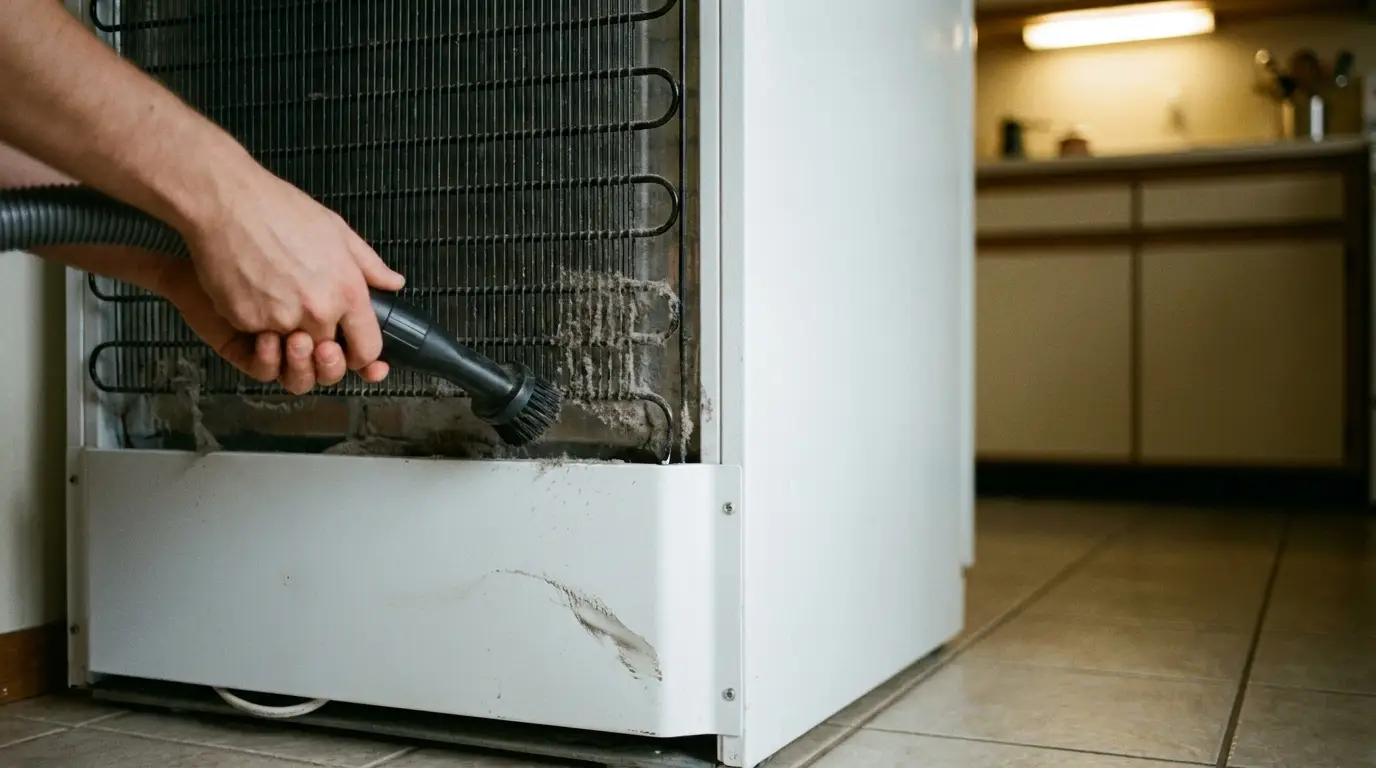
- Vacuum the coils. Dust on the condenser coils (usually at the back or underneath) makes the fridge work far harder than it needs to. A once-a-year clean can add years of life.
When It Is Time to Call a Professional
Some fridge faults are genuinely not DIY territory, and pushing on can turn a fixable problem into a replacement:
- Anything involving the compressor, refrigerant, or sealed cooling system
- A fridge that will not cool at all despite running
- Electrical smells, sparking, or a unit that trips the power
- Repeated faults after you have done the basic checks
A qualified technician can diagnose the actual fault in about an hour, quote the exact part, and tell you honestly whether the repair makes sense. That last part matters: a good tech will not sell you a fix on a fifteen-year-old fridge that is on its last legs, and they will not push you towards a whole new appliance when a forty-dollar thermostat would do.
If you are in Western Australia, a specialist fridge repair perth service can assess most common faults quickly, from failing seals and fans to cooling issues, and get your fridge holding temperature again before the weekly shop goes to waste.
A Little Care Goes a Long Way
Most fridges are built to run for a decade or more, and the ones that reach that milestone tend to belong to people who did the small things: kept the coils clean, replaced a tired seal, and called someone the moment a noise seemed off rather than waiting for the breakdown.
Your fridge is not glamorous, but it is one of the hardest-working things you own. Give it the occasional bit of attention and it will keep your food cold, your bills reasonable, and your mornings free of unexpected puddles.