
Buying a Fixer-Upper: How We Budgeted for the Home We Dreamed Of
A fixer-upper promises something rare in today’s housing market: a chance to buy below the neighborhood average and shape a place around your own taste. The catch is that the listing price is only the beginning. Behind every dated kitchen and worn floor sits a second number, and that number can grow quietly if you let it.
Budgeting is what turns a risky purchase into a smart one. It forces you to look past cosmetic charm and price out the work that actually stands between you and the finished home. This is the story of how careful planning, honest math, and the right financing helped a run-down house become exactly what we wanted.
Why a Fixer-Upper Is Worth the Math
The appeal is simple. You pay less up front, and you get to decide what the finished product looks like. There is no builder-grade compromise, and no paying a premium for someone else’s renovation choices.
But the savings are not automatic. A house that needs work can either reward you or drain you, and the difference almost always comes down to how well you understood the costs before signing. We learned early that the goal was not to spend the least money possible. The goal was to know, as precisely as we could, what every stage of the project would require — and to make sure the finished value would still outrun everything we put in.
Knowing the Real Price Before You Bid
Our first move was to stop thinking about the asking price as the cost of the home. It was the cost of the shell. The real number was the purchase price plus everything we would pour in afterward.
We toured the house twice with a notebook and once with an inspector. That inspection was the best few hundred dollars we spent. It flagged a tired roof, outdated wiring, and a furnace near the end of its life — none of which we would have priced correctly on our own.
Separating the Purchase Price From the Project Cost
Once we had the inspection report, we built two columns. One held the offer we were comfortable making. The other listed every repair, broken into rough dollar ranges based on contractor quotes and local averages.
Adding those columns together gave us our true ceiling. If the combined figure pushed past what the finished home would realistically be worth, we were prepared to walk away. Discipline at this stage protects you from the most common fixer-upper mistake: falling in love with potential and ignoring the arithmetic.
Building the Renovation Budget Room by Room
With a signed contract in hand, we moved from estimates to a working plan. We listed every room and every system, then assigned each one a priority and a price.
Structural and safety items came first. A leaking roof or a faulty electrical panel is not negotiable, and skipping it to chase a prettier kitchen only invites bigger bills later. Cosmetic upgrades — paint, fixtures, finishes — went to the bottom of the list, where they could wait until cash allowed.
Wants vs. Needs
The hardest part was being honest about the difference between what the house needed and what we simply wanted. The needs kept us safe and dry. The wants made the place feel like ours.
So we gave the needs firm budgets and the wants flexible ones. That way, if a project ran over, the overage came out of the marble-countertop fund, not the new-wiring fund. It is a small rule, but it kept our priorities from quietly flipping when the pressure was on.
Padding for the Surprises You Can’t See
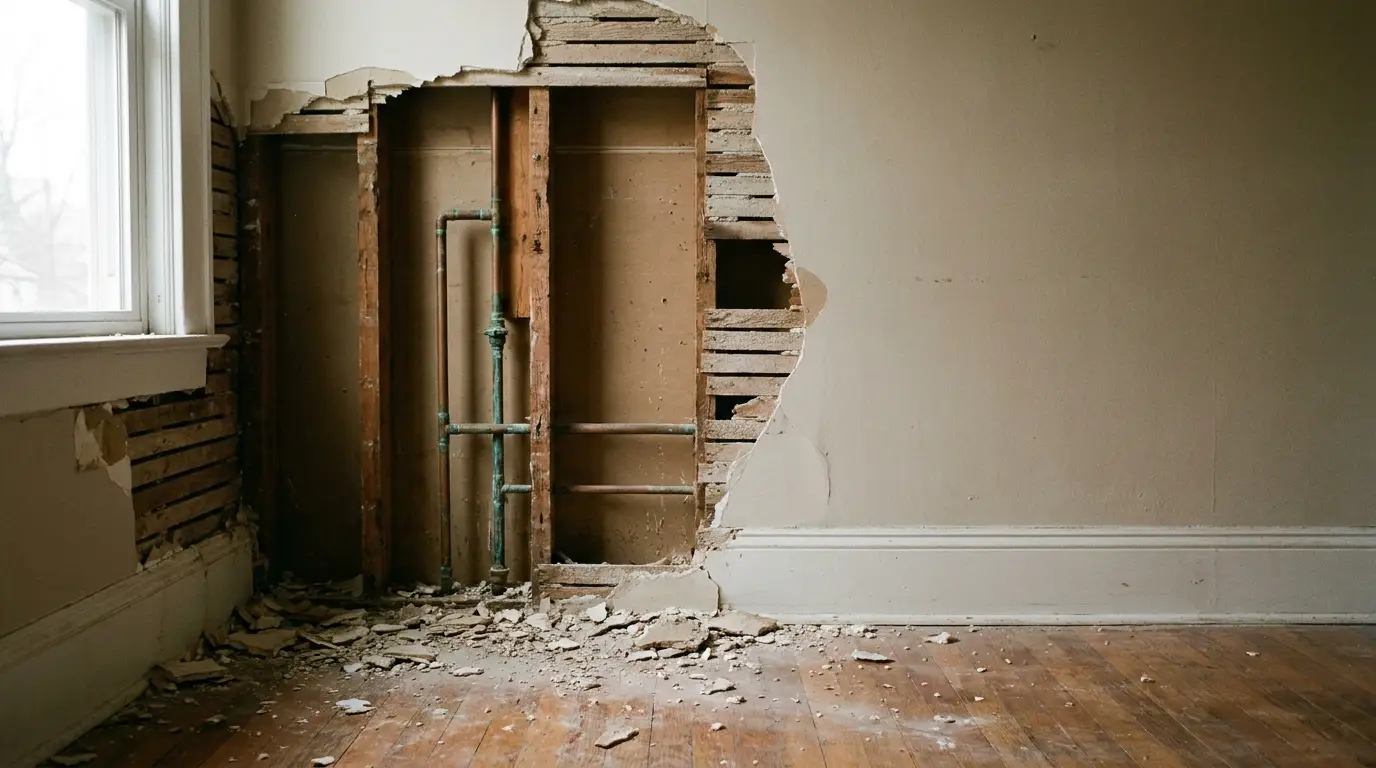
Every older home hides something. Open a wall and you may find old plumbing, water damage, or a wiring job that predates modern code.
So we built a contingency fund worth roughly fifteen percent of our total renovation budget, and we refused to touch it for anything optional. When the bathroom demolition revealed a slow leak nobody had spotted, that cushion absorbed the hit without derailing the rest of the plan. A buffer is not pessimism. It is the part of the budget that keeps every other part on schedule.
Financing the Work: Where a HELOC Comes In
Saving cash covered our down payment and the first round of repairs, but a full renovation needed more than our savings account could carry. We looked at several options, including the FHA’s 203(k) rehabilitation mortgage, which folds repair costs into the home loan itself.
In the end, we leaned on a home equity line of credit. A HELOC lets you borrow against the equity you build, drawing only what you need, when you need it, and paying interest on that amount rather than on a lump sum. The Consumer Financial Protection Bureau describes it as a revolving line secured by your home, much like a credit card but tied to the value you have earned. That structure fit our project perfectly, because renovation spending arrives in waves rather than all at once. Once we had enough equity and a clear repayment plan, we decided to apply for HELOC loan financing through a lender we trusted, which gave us a flexible reserve to pull from as each phase of work began.
The flexibility mattered. We drew funds for the roof, paid the balance down, then drew again for the kitchen. Because we borrowed in stages, our interest stayed manageable and our monthly obligations never spiked all at once. A HELOC is not free money, though, and the same equity that backs it is the equity at risk if payments slip. So we treated every draw as a deliberate decision rather than a convenience.
Tracking Every Dollar as You Go
A budget only works if you check it. We kept a simple spreadsheet with three running totals: what we planned to spend, what we had actually spent, and what remained.
Every receipt went in the same week we received it. That single habit caught small overruns before they became large ones, and it showed us, in plain numbers, when a category was heading off course. Watching the figures weekly removed the guesswork — and with it, most of the stress that usually comes with a long renovation.
We also revisited the whole plan at the end of each phase. If one room came in under budget, we moved the savings forward to cover the next surprise instead of treating it as a windfall. Small corrections, made often, kept the project honest from start to finish.
The Home We Dreamed Of
A fixer-upper rewards the people who plan for it. The house does not care about good intentions; it responds to budgets, contingencies, and steady tracking. Every dollar we mapped in advance bought us a little more certainty once the work began.
Buying below market and building up to your own standard is still one of the most reliable ways to own more home for your money. It asks for patience and honest arithmetic rather than luck. Do the math early, protect your cushion, choose financing that matches how the work unfolds, and the home you dreamed of stops being a gamble — and becomes a plan you can actually follow.