Are Stucco Cracks Serious? A Guide for Sacramento Homeowners
Few exterior issues cause as much uncertainty for homeowners as stucco cracks. Some people notice a thin line running along a wall and assume it’s normal. Others see a crack near a window and immediately worry about foundation problems. In reality, the cause usually falls somewhere between cosmetic and structural.
A professional, like a Sacramento stucco repair contractor, will often tell homeowners that the crack itself is only part of the story. Size matters. Location matters. The pattern of the crack matters. And most importantly, understanding why the crack formed is the key to a lasting fix. Two homes can have nearly identical-looking cracks and require completely different repairs.
Not Every Stucco Crack Signals a Major Problem
Stucco is a cement-based material. Like concrete, it expands and contracts as temperatures change. It also responds to minor movement within the structure. Small surface cracks are therefore quite common. Many homes develop small hairline cracks over time, especially around corners, window openings, and transitions between different building materials. Often, these cracks are cosmetic and do not point to a serious structural problem.
The issue is that homeowners cannot always tell the difference between harmless cracking and the early signs of a bigger problem. A crack that looks insignificant today may look very different after a rainy season or several years of continued movement.
The Location of the Crack Usually Tells More Than Its Size
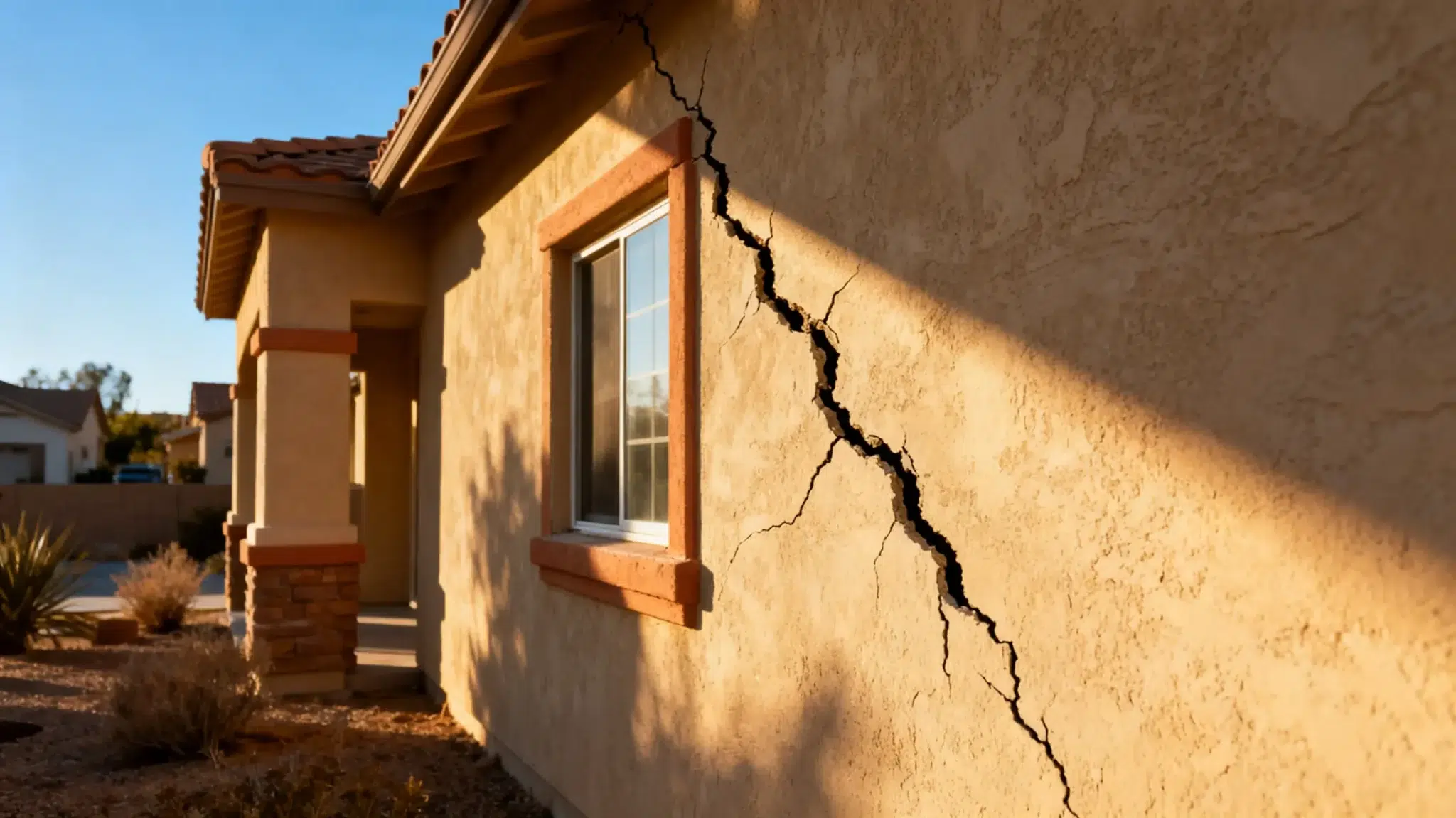
Contractors and homeowners mostly judge cracks by width alone. The location of a crack can provide important clues about what is happening behind the stucco. For example, cracks around doors and windows are usually related to movement around the framed opening. Horizontal cracks may point to different causes than long vertical cracks. Stair-step patterns can indicate stress being transferred through the wall assembly. A crack running diagonally from the corner of a window tends to attract more attention than a small hairline crack in the middle of a wall because it may suggest movement concentrated around that opening. This does not automatically mean expensive repairs are required. It simply means further evaluation is warranted.
Climate Change Also Plays a Role
Many homeowners associate exterior damage with harsh winter conditions, but temperature and moisture fluctuations can affect stucco in almost any region. Long periods of summer heat cause building materials to expand. Cooler temperatures bring contraction. This cycle repeats year after year.
Soil can also shift as moisture levels change. During dry periods, some oils shrink. When moisture returns, expansion can occur. That movement affects foundations, hardscaping, and exterior finishes alike. Over time, stucco absorbs the effect of those small changes. The crack visible on the surface may simply be evidence of movement that occurred months or even years earlier.
When Moisture Becomes Part of the Equation
A crack becomes significantly more concerning when water enters the picture. Stucco serves as part of a home’s weather-resistant barrier. Once an opening develops, moisture gains a potential path behind the exterior finish. The crack itself may only be an inch wide. That is often enough. Water intrusion can contribute to:
- Wood rot
- Mold growth
- Damaged sheathing
- Interior staining
- Deterioration around windows and doors
The frustrating part is that these issues frequently develop out of sight. A homeowner may see a relatively small crack, while hidden damage worsens behind the wall for months. That is one reason experienced contractors tend to investigate surrounding conditions rather than focusing solely on the visible defect.
Looking Beyond the Surface
The question is not simply whether a stucco crack is serious; the better question is why the crack appeared in the first place. Some cracks are little more than maintenance items. Others serve as an early warning sign that moisture, settlement, or structural movement is affecting the exterior system. Distinguishing between those scenarios requires more than a quick visual assessment.
For homeowners, the smartest approach is to treat stucco cracks as information rather than assumptions. The crack itself may be small, but it often provides insight into how the exterior of the home is performing. Understanding that distinction helps homeowners make informed repair decisions before a minor issue can become a larger one.