Closed Staircase Ideas: Design Choices and Measurements to Check First
A closed staircase can be one of the most awkward spots in a home. It is narrow, often dim, and usually treated as a pass-through instead of a room with its own character. Yet it is also one of the few areas everyone uses every day. That makes it worth more attention than a quick coat of paint or a runner picked at the last minute.
The trick is to start with the space you actually have, not the staircase you saved on Pinterest. Closed staircases are less forgiving than open ones. Walls limit light, railings affect usable width, and even a small change to tread depth or flooring thickness can make the stairs feel different underfoot. Before thinking about colors, panels, lighting, or storage, spend a little time with a tape measure.
Start With the Structure, Not the Style
The first question is simple: are you decorating the staircase, refreshing it, or changing how it is built?
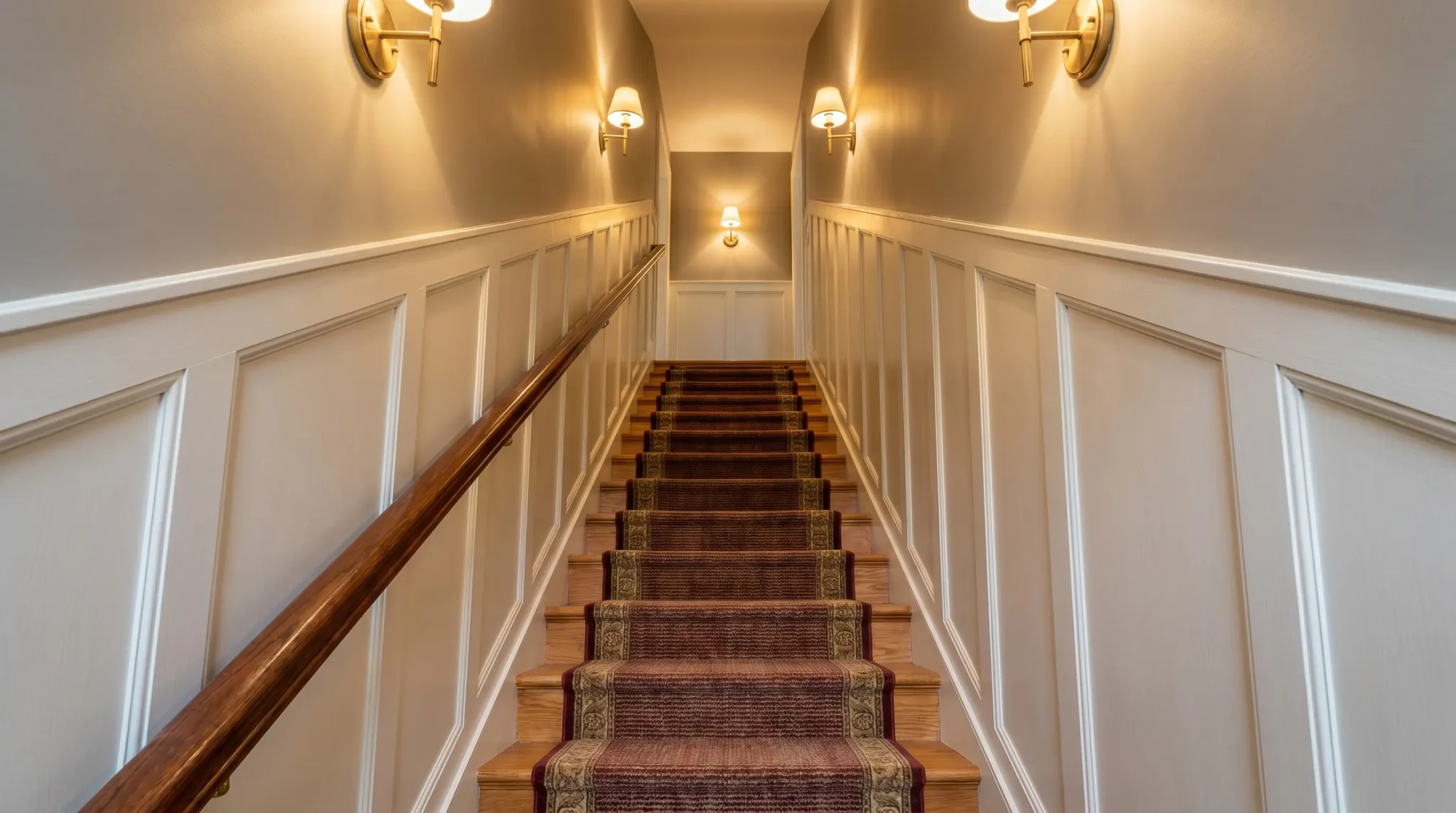
Decorating is usually the safest and easiest route. Paint, wallpaper, framed art, stair runners, lighting, and trim can completely change the feel of an enclosed staircase without touching the structure. If you need visual inspiration, these enclosed stairway decorating ideas show how much can be done with walls, lighting, mirrors, shelving, and runners.
A refresh goes a step further. This might include replacing worn treads, repainting risers, adding new handrails, updating balusters, or covering damaged surfaces. These projects still need careful measuring because stairs are repetitive. One uneven riser can feel annoying every single day.
A structural change is different. Opening a wall, changing the stair direction, widening the staircase, adding a landing, or rebuilding the stairs should involve a qualified professional. Stairs are not just decorative features. They are part of how people move safely through the home.
Measure the Rise and Run Before Choosing Materials
Two measurements matter more than most homeowners expect: rise and run.
The rise is the vertical height from one step to the next. The run is the horizontal depth where your foot lands. Together, they decide whether the staircase feels comfortable, cramped, steep, or easy to climb. A staircase can look beautiful and still feel wrong if these numbers are off.
If you are replacing treads, adding new surface material, or rebuilding part of the stairs, check these dimensions early. A thicker tread cover, tile layer, or flooring transition at the top or bottom can slightly change the first or last step. That tiny difference is exactly the kind of thing people trip on because the body expects every step to feel the same.
Before planning a bigger change, use a stair calculator to get a clearer sense of the rise, run, stair angle, and number of steps. It will not replace a contractor or local building rules, but it can help you understand whether your idea is practical before you fall in love with a finish.
Do Not Forget Headroom and Width
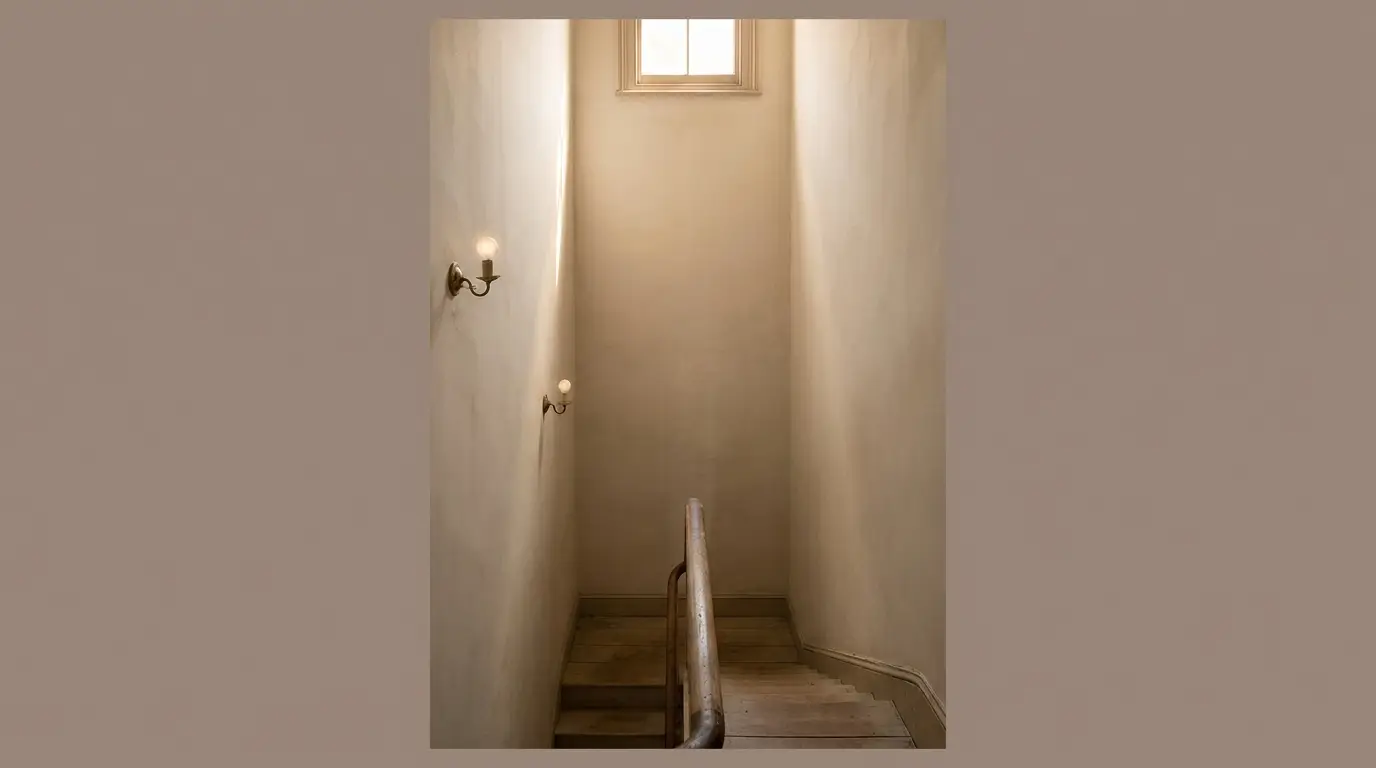
Closed staircases often feel tight because the walls and ceiling are doing a lot of visual work. Dark paint, heavy paneling, or bulky lighting can make them feel even narrower. That does not mean you have to keep everything white, but it does mean you should measure first.
Check the clear width between finished surfaces, not just the rough wall-to-wall distance. If you add paneling, a thick handrail, storage, shelving, or trim, you may reduce the usable walking space. A beautifully built-in shelf along the stairs sounds clever until bags, elbows, and laundry baskets start hitting it.
Headroom matters too. In older homes, basement stairs, attic stairs, and stairs under sloped roofs can already feel low. A pendant light, ceiling treatment, or decorative beam may look good in a photo but become irritating in real life if it hangs into the path of travel. In a tight stairwell, wall sconces, recessed lighting, or low-profile fixtures are often smarter than anything that drops down.
Use Diagonal Measurements for Tricky Spots
Not every staircase measurement is straight up or straight across. This is where many DIY plans get fuzzy.
The diagonal length of a stair stringer, the opening between floors, the slant of a stair wall, or the path needed to move furniture through a stairwell all involve angled measurements. You may know the height and horizontal distance, but still need the diagonal. That is a basic geometry problem, but nobody wants to do mental math while standing on the stairs with a tape measure.
A Pythagorean theorem calculator is useful when you know two sides of a right triangle and need the third. For example, if you know the vertical rise and horizontal run, you can estimate the diagonal. That can help when thinking about stair stringers, angled trim, long boards, or whether a large item has enough clearance to turn through the stairwell.
Match the Design to the Limits of the Space
Once the measurements make sense, the design choices become much easier.
For narrow, closed staircases, keep the sides visually calm. Picture-frame molding, slim wainscoting, vertical stripes, or a single accent wall can add detail without making the stairwell feel busy. Mirrors can help reflect light, but place them where they will not distract someone walking up or down.
For dark staircases, lighting should come before color. A pale paint shade will not fix poor lighting by itself. Add layered lighting if possible: a fixture at the top, a fixture at the bottom, and gentle wall lighting along the run. Motion-sensor lights can be especially useful in homes where people use the stairs at night.
For worn stairs, a runner is often the most practical upgrade. It softens sound, adds texture, and gives the staircase a finished look. Just make sure it is properly secured and not so thick that it changes how each step feels. On painted stairs, use durable floor paint and think about slip resistance, especially if children, older adults, or pets use the stairs often.
Know When Style Should Wait
There is nothing wrong with wanting a dramatic stairwell. Dark walls, tiled risers, patterned runners, gallery walls, and custom railings can all look beautiful. But if the stairs are uneven, dim, loose, or awkward to walk on, fix those issues first.
A closed staircase works best when the design follows measurements. Once the rise, run, width, headroom, lighting, and diagonal clearances are understood, the decorative choices feel less risky. You can choose the runner with more confidence, hang the gallery wall at the right height, pick lighting that fits the space, and avoid changes that make the stairs harder to use.
The best staircase makeovers are not the ones that only look good in photos. They are the ones that still feel comfortable when you are carrying laundry, helping a child downstairs, moving a chair, or walking to the kitchen half-awake in the morning.