Steel Structure vs Concrete: Which One Should You Actually Build With?
We’ve been making steel buildings since 1997, and there’s one question we hear more than any other. Steel or concrete? People ask it about factory sheds, warehouses, showrooms, and homes. It’s a fair question, and the honest answer is: it depends on what you’re building.
So let’s skip the sales talk for a minute. Here’s how we’d explain the difference to a friend who’s about to start a project.
First, What Are We Even Comparing?
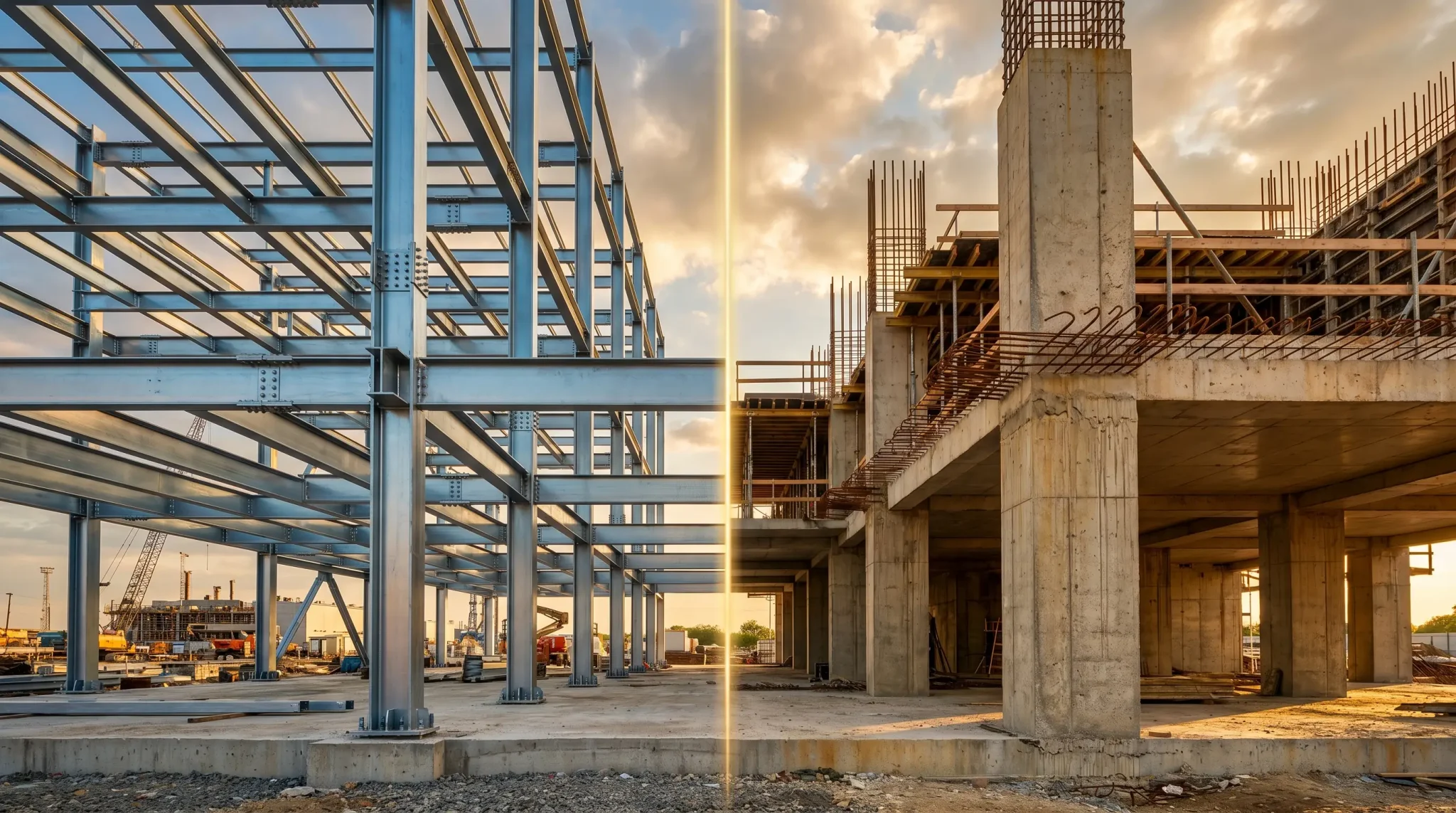
When we say “steel structure,” we mean a frame built from steel members. H-beams, I-sections, channels, angles. They’re bolted or welded together, and the roof and walls are usually metal sheeting or panels. Most industrial sheds, warehouses, and pre-engineered buildings are made this way.
When most people in India say “concrete structure,” they mean an RCC frame. Concrete columns, beams, and slabs, with steel bars hidden inside for reinforcement. Brick or block walls fill the gaps.
So really, we’re comparing two ways of holding up a building. A steel frame, or a concrete frame. That’s the whole question.
Speed: This Is Where Steel Wins Big
This is the difference that surprises people the most.
Our steel parts are made in the factory, cut to exact size, then shipped to your site and bolted together. Think of it like assembling a kit. There’s no waiting around for concrete to dry. Once your foundation is ready, the frame goes up fast. On big projects, this can cut total build time by 30 to 50 percent.
Concrete doesn’t work that way. You pour a slab, then you wait for it to cure. Then you do the next floor and wait again. Add a rainy season and the delays pile up.
If you’re racing a deadline, a factory that needs to open, a warehouse with a lease starting, steel usually wins on time.
Strength and Wide Open Spaces
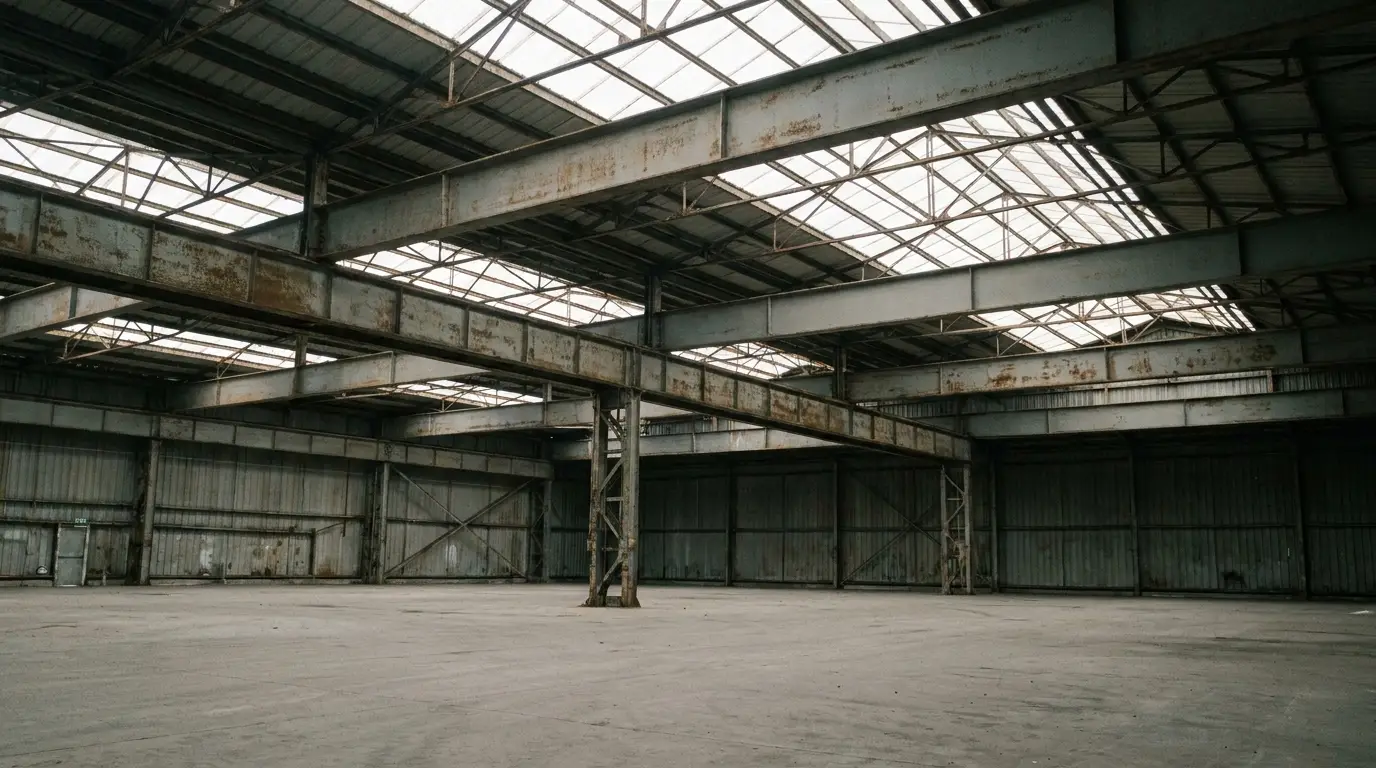
Steel is strong for its weight. Very strong. That’s why it’s the go-to for buildings that need big open spaces with no columns in the middle. Warehouses, workshops, hangars, large sheds.
Want a 30 or 60 metre span with nothing blocking the floor? That’s easy in steel. Doing the same in concrete is possible, but it gets heavy and expensive fast.
Concrete has its own strength. It’s rigid, it handles compression well, and you can pour it into almost any shape. For homes and offices with normal-sized rooms, that flexibility is a real plus.
What About Cost?
There’s no single winner here, and anyone who says there is probably wants to sell you something.
For low, wide, single-floor buildings like sheds and warehouses, steel usually costs less in the end. It’s lighter, so the foundation is cheaper. It goes up faster, so you pay for less labour time.
For a regular two or three storey house in India, concrete is usually the cheaper and easier path. The workers, the materials, the know-how are all everywhere.
One thing to keep in mind: steel prices move with the global market, so quotes can change month to month. Concrete prices stay steadier. Always compare the full cost of the project, not just the price of the frame.
Fire, Rust, and How Long It Lasts
Both materials have a weak spot, so let’s be straight about them.
Concrete handles fire well on its own. It takes a lot of heat for a long time before it weakens.
Steel loses strength in a long, hot fire, so it needs fire protection, usually a special coating. That’s a real cost, not something to ignore.
As for rust, plain steel can corrode. But the steel we use is hot-dip galvanised with a thick zinc coating, and it resists rust for decades, even near the coast. Concrete needs good quality control to protect the steel bars inside it. Done right, both can last 50 years or more.
Earthquakes and Strong Winds
Steel bends without breaking. In an earthquake, that’s a good thing. It can flex and absorb the shaking, and it gives a warning before it fails. Our buildings are designed to handle strong winds, well over 150 km/h, along with snow and seismic loads.
Concrete is stiffer and heavier. Done properly, it also holds up well in earthquakes. Done badly, it cracks and fails suddenly. With both materials, good engineering matters more than the name on the material.
A Quick Side-by-Side
| Factor | Steel | Concrete (RCC) |
|---|---|---|
| Build speed | Very fast | Slower |
| Best for | Sheds, warehouses, big spans | Homes, offices |
| Open space | Wide, no columns | Limited |
| Weight | Light | Heavy |
| Fire | Needs coating | Resists on its own |
| Shape options | Standard sections | Any shape |
| Earthquakes | Bends, gives warning | Depends on quality |
| Cost (big single-floor) | Usually lower | Usually higher |
| Cost (normal house) | Usually higher | Usually lower |
| Recycling | Easy | Hard |
So, Which One?
Here’s the simple rule we give people.
Building a home or a small multi-storey? Concrete is usually the practical, affordable choice in India.
Building a factory shed, a warehouse, a workshop, or a showroom that needs open space and a fast finish? Steel is almost always the better call.
For industrial and commercial steel buildings, the company you build with matters as much as the design. We make our buildings in the factory to exact measurements, then ship them out for assembly on site, which is a big part of why they go up so fast and last so long.
We’ve been doing this for 28 years, our work is certified to EN1090 (CE) and ISO9001, and we’ve shipped projects to more than 130 countries. If you want to see the kind of sheds, warehouses, and workshops we build, you can take a look at our work at chinasteelbuildsales.com and use it as a benchmark when you compare your local options.
Whatever you pick, get the structure engineered properly for your loads, your soil, and your weather. The material is only as good as the work behind it.
Final Word
Steel and concrete aren’t really rivals. They’re tools for different jobs. Concrete is the backbone of Indian homes, and for good reason. Steel is the clear winner for big, fast, industrial, and commercial buildings. Match the material to the building, talk to a good structural engineer, and you’ll make the right call.