How Industrial HVAC Systems Work
Have you ever stepped foot inside a big factory, warehouse, or commercial building and thought to yourself how nice the air feels? That’s thanks to a properly tuned industrial HVAC system. These powerful systems keep workers comfortable but also help protect sensitive equipment and processes. Keep reading to learn more about how they work.
What Is an Industrial HVAC System?
HVAC stands for heating, ventilation, and air conditioning. Residential systems help condition the air in your home, but industrial systems do so much more. These systems are engineered to condition air throughout massive buildings. They also regulate temperatures hot enough to melt metal while removing chemical contaminants and dust from the air all while managing hundreds or thousands of workers.
Industrial HVAC systems are built much larger and stronger than residential units. They run 24/7/365 and move volumes of air you probably can’t imagine. They also face rigorous safety and environmental regulations. However, the basic function of an industrial HVAC system is the same as a residential one: control temperature, humidity, and air quality.
The Components of an Industrial HVAC System
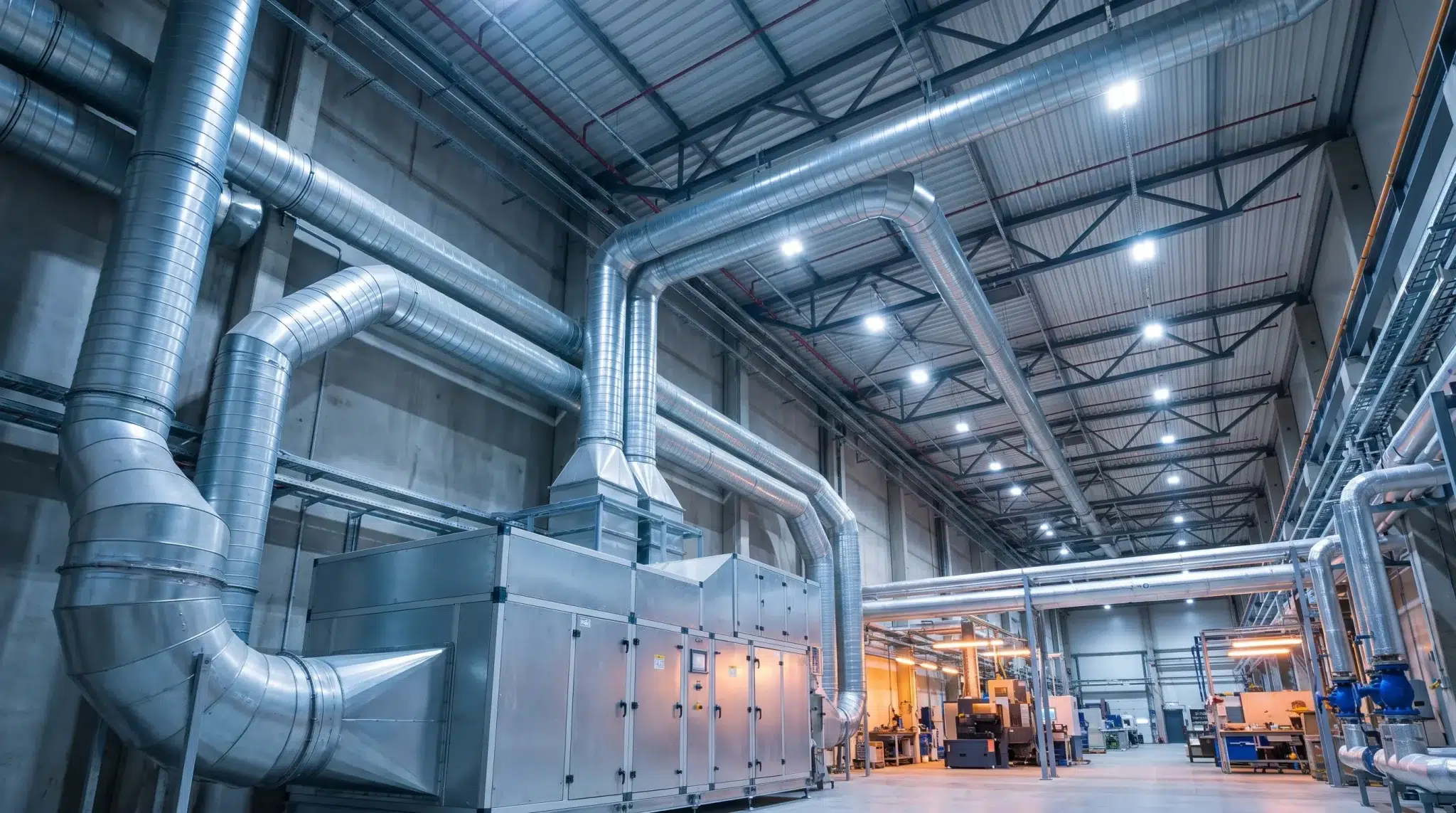
- Air Handling Units (AHUs): These are essentially giant air conditioners that sit inside your building. An air handling unit draws in outside air and conditions it using a built-in fan, coils, filters and dampers before sending it out through ductwork.
- Chillers: Chillers cool thousands of gallons of water at a time. Water is pumped through buildings to absorb heat like with an air conditioner. You’ll usually find chillers on rooftops or in special mechanical rooms. Chillers consume more energy than any other component.
- Boilers: As you may have guessed, boilers heat water and send it through pipes like chillers do. Some boilers can also generate steam that moves through pipes to heat up different areas.
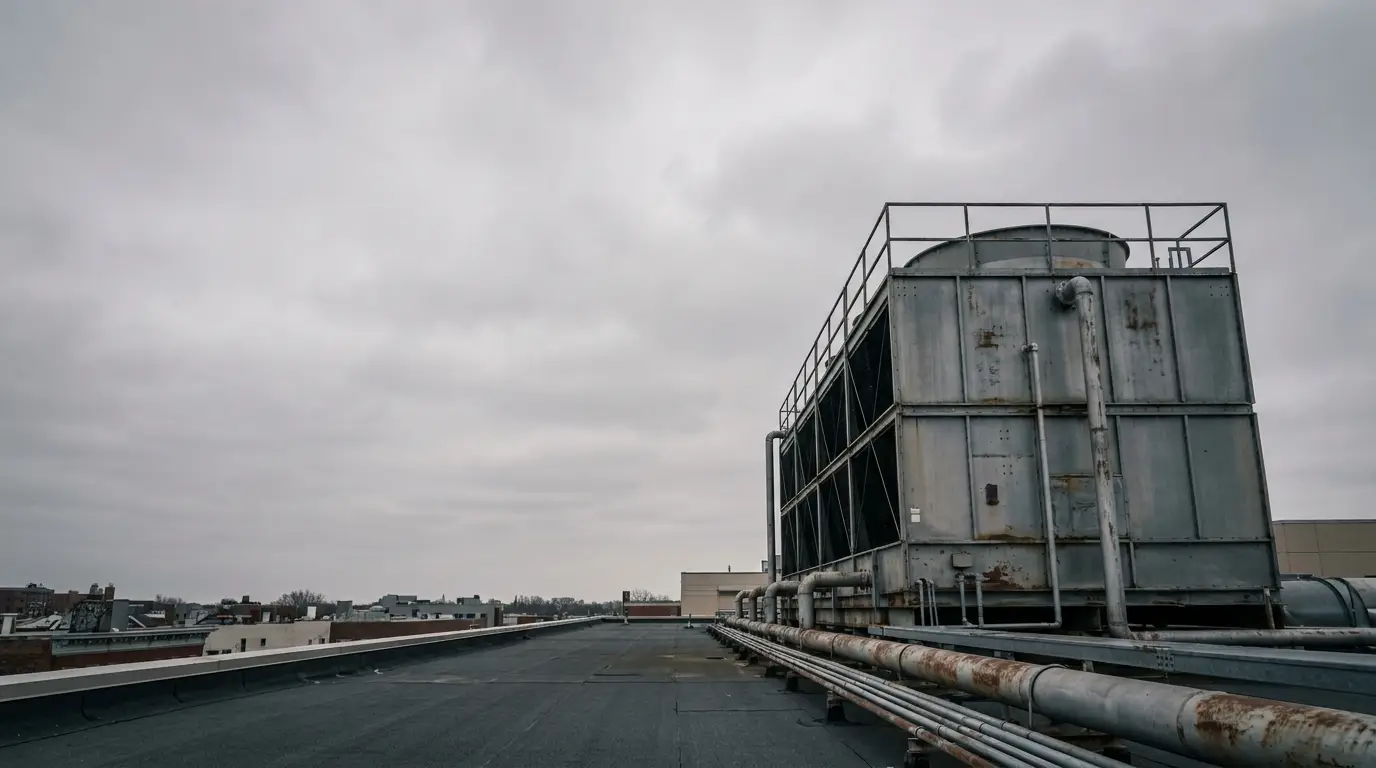
- Cooling Towers: Cooling towers work with chillers to expel heat absorbed from inside your building to the outdoors. Coolant water flows over trays inside the tower while a fan blows outdoor air through it. The air evaporates some of the water and removes the heat in the process.
- Ductwork and Piping: Large commercial buildings use ductwork to deliver conditioned air to every corner. Pipes move hot and cold water between components. Size and layout are important for efficiency.
- Exhaust and Ventilation Systems: Few industries generate as many airborne contaminants as manufacturing plants do. These systems remove smoke, fumes, dust, and other hazardous byproducts from the air.
How Industrial Heating Works
If a building’s temperature drops below a certain point, it will trigger the industrial heating system to activate. The boiler will heat water to a set temperature and distribute it through a closed loop piping system. From there, hot water will travel to air handlers or smaller terminal units located around the building.
A fan blows building air across hot coils inside the AHU while cooled air is pushed back into the space through ducts. Some factories use steam heating instead of hot water. Since steam holds more energy than water, it can heat larger spaces more efficiently. The steam travels through pipes and releases its heat when it converts back into water.
Radiant heating systems are another popular option. These systems use panels or tubes near the ceiling to send infrared heat down to people and objects in space. It doesn’t heat all of the air like a traditional system. This is ideal for spaces like warehouses with very high ceilings.
How Industrial Cooling Works
Cooling industrial buildings starts with the chiller unit. A chiller uses refrigerant to absorb heat and cool down water. That chilled water then gets sent to air handling units like with heating. However, now a fan will blow warm air from the building across cold coils. The water absorbs that heat and continues on to be cooled down by the cooling tower.
Heat removed from inside the building doesn’t just disappear. It is expelled into outdoor air by a cooling tower. The chilled water travels from chiller to cooling tower where it is exposed to outdoor air rushing by a fan. The air carries heat with it while cooled water returns to the chiller.
Direct expansion systems (DX) are less common in large facilities but work much like a residential air conditioner. Instead of sending chilled water to air handlers, they run refrigerant coils right in the airstream.
Ventilation and Indoor Air Quality
Ventilation is one of the biggest differences between industrial systems and residential systems. Manufacturing plants, factories, and warehouses create all kinds of air quality hazards. Welding produces dangerous fumes. Shops cut and shape materials like wood, metal, or plastic which kicks up dust. Engine generators emit carbon monoxide.
No matter the industry, ventilation systems must capture contaminants at the source and exhaust them safely out of your building. One common method is called local exhaust ventilation (LEV). Local exhaust systems include hoods and ductwork that go right at the source of contamination.
General dilution ventilation uses large amounts of fresh outdoor air to dilute contaminants throughout the entire space. Most facilities use a combination of the two.
Air filters within your HVAC system also play a large role in air quality. High efficiency air filters can trap fine particles, allergens, and even airborne pathogens in certain industries. These get regularly inspected and changed to ensure proper airflow.
Controls and Automation
Building automation systems, or BAS, are software platforms that control a building’s HVAC systems. The sensors measure temperature, humidity, air pressure, and more. When sensors detect changes or problems they can automatically adjust dependent HVAC components.
If one area of a facility gets too hot, the BAS increases air flow to that specific zone without affecting other areas. This type of zone control saves money and keeps every area exactly where it needs to be.
Many systems are also set up with preventive maintenance schedules. Alerts will notify you when it is time to change the filters, recharge refrigerant levels, or check electrical draw on motors. Preventive maintenance can stop big issues before they happen.
Why Proper HVAC Is Important?
Industrial HVAC does more than keep you comfortable. It helps businesses stay safe and efficient while protecting workers and critical equipment.
One faulty part in the food manufacturing industry can spoil hundreds of thousands of dollars’ worth of product in one day. Losing cooling in a data center could overheat computers and cause millions of dollars in downtime. Industrial HVAC is very important and shouldn’t be taken for granted.
Industrial HVAC Systems Case Study: Improving Cooling Efficiency in a Large Distribution Warehouse
Problem: An industrial warehouse near Dallas was spending too much money on cooling their distribution centre. They also had areas of the building that felt hotter than others.
The business operated a traditional industrial HVAC system with multiple air handling units (AHUs), chillers, cooling towers and a basic building automation system (BAS).
Despite having properly sized HVAC equipment for their building size (>60,000 square metres), there were still three main complaints from their facility managers:
- Warehouse spaces too hot during peak afternoon hours
- High energy bills due to chiller and fan energy
- Equipment running wide open during off-hours/low occupancy times
Solution: The facility hired an industrial HVAC specialist engineer who performed an audit of their entire system. The engineer found opportunities to improve airflow distribution, chiller load balancing and improve control logic.
Improvements made to their HVAC system included:
- Added Variable Frequency Drives (VFDs) to AHU fans and chilled water pumps
- Upgraded BAS for smarter airflow and zone control
- Optimised chiller setpoints for varying load requirements
- Duct balancing to reduce hot and cold spots
- Predictive filter and coil maintenance alerts
- Scheduled ventilation for varying occupancy schedules
Results: Within 6 months of optimizing their system, the client saw:
- 18–25% reduction in energy use associated with HVAC
- Even cooling across warehouse spaces
- Decreased strain on chillers/cooling towers during peak hours
- Reduced maintenance calls and emergency shutdowns
- Increased comfort for loading/packaging workers
Why did these results happen? By adding smarter controls to the BAS, they were no longer cooling the entire warehouse at 100% all the time.
Essentially, they went from “cooling unoccupied space” to only cooling areas that were hot or had high-density staff working there.
Moral of the story: In many cases, industrial HVAC systems do not need to be completely replaced to operate more efficiently. There are many cost-effective upgrades that can be made to reduce energy consumption and improve comfort.
Source: https://newsome.ltd.uk/cooling-a-hot-warehouse/
Frequently Asked Questions About Industrial HVAC Efficiency
What Is Industrial HVAC?
Industrial HVAC systems refer to large-scale heating, ventilation, and air conditioning systems used in commercial buildings. This includes warehouses, factories, data centres, retail stores and more.
How Is Industrial HVAC Different From Residential HVAC?
Commercial systems typically manage higher volumes of air, include chillers & cooling towers, boilers and are often used 24/7. Most homes do not require this level of cooling capacity.
Why Do Commercial HVAC Systems Use So Much Energy?
HVAC systems account for a large percentage of energy used in commercial facilities. Components like chillers, compressors, air handlers and fans use electricity to move massive amounts of air and water.
How Can Industrial HVAC Systems Improve Efficiency?
Upgrades like variable frequency drives (VFDs), smart building automation and enhanced cooling schedules can help reduce energy consumption.
What’s the Most Important Part of an Industrial HVAC System?
All of the components are important, but if one area is ignored it will typically be the air handling units (AHUs). Ensuring proper filter maintenance, airflow and equipment calibration is key.
What Does an AHU Do?
An air handling unit moves conditioned air throughout a building via the ductwork.
What Does a Chiller Do?
The chiller unit is responsible for removing heat from water. Think of it as similar to a refrigerator but for water instead of air.
What’s the Difference Between Chillers and Cooling Towers?
A cooling tower helps remove heat from the water returned to the chiller. This process involves evaporating the water and passing air through the cooled water to keep it cycling.
What Does a Cooling Tower Do?
A cooling tower removes heat from water after it returns from the facility. As the hot water travels through the cooling tower, heat is dissipated through evaporation and airflow.
How Does a Building Automation System Help With Efficiency?
A BAS monitors HVAC system operation in real time and makes adjustments on the fly to maximize efficiency.
Why Does My Facility Have an Air Hangover?
HAVC systems run constantly and typically manage much larger areas than a residential system. They’re just bigger and more complicated.
What Causes HVAC Inefficiency?
Some of the most common causes include lack of maintenance, dirty coils, outdated controls, leaky ducts or piping and running equipment wide open when not needed.
Can You Increase Industrial HVAC Efficiency?
Yes! There are many things that can be done to reduce your facility’s energy consumption. Check out our free guide for more ideas.
Why Is HVAC Important for My Business?
If you have employees, proper ventilation, humidity control and temperature are crucial for safe working conditions. Additionally, some equipment may require specific environmental conditions to prevent damage and keep production levels high.