A Complete Mannual For Closet Dimensions
Did you know that most closet frustrations, like crammed clothes, wasted corners, and rods at the wrong height, come down to just a few inches? Getting the dimensions wrong can turn even a generous closet into a daily hassle.
If renovating, building from scratch, or just trying to make better use of what you already have, understanding standard closet dimensions is the first step.
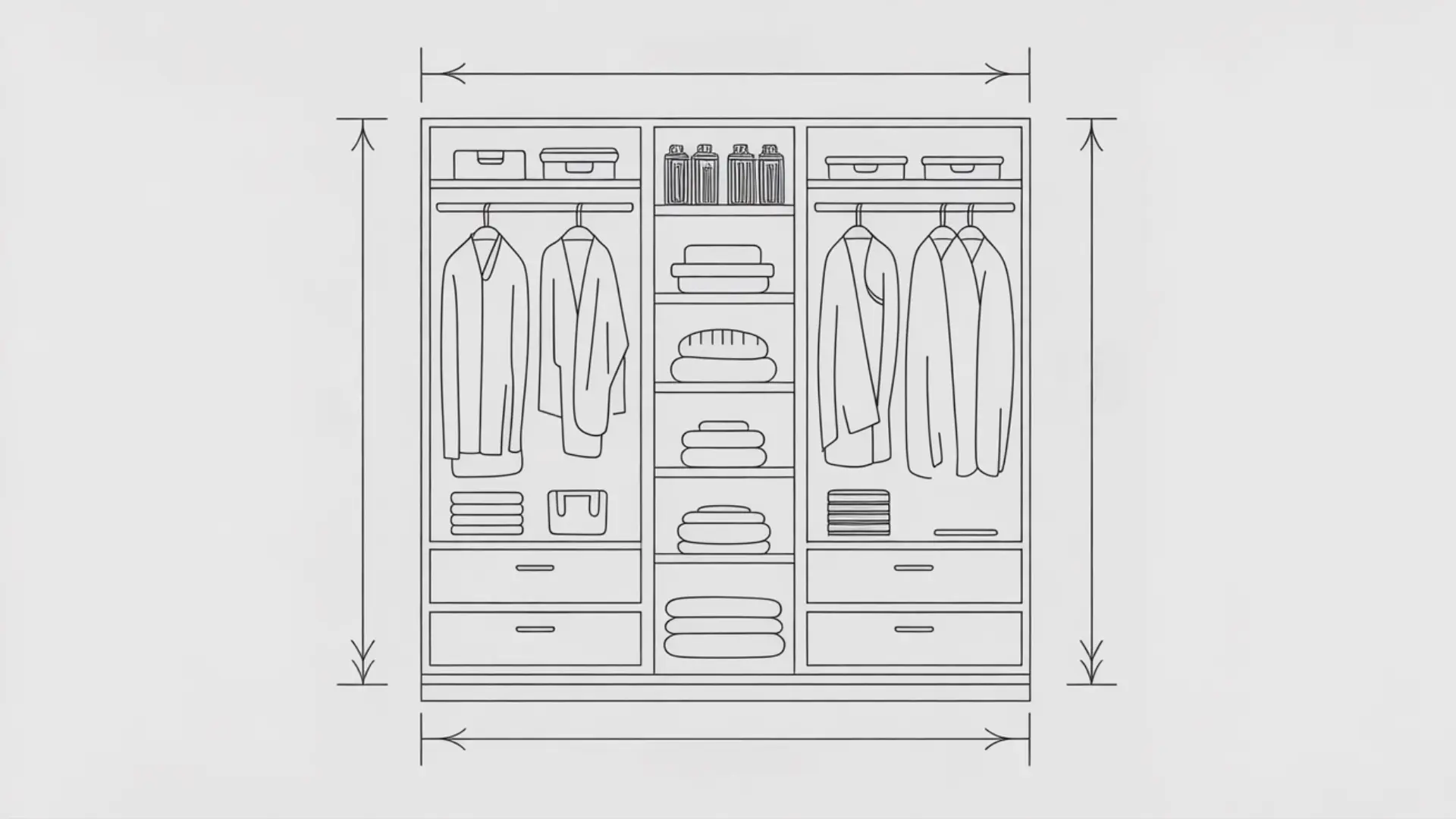
This blog covers everything: reach-in closet sizes, walk-in closet layouts, rod heights, shelf spacing, and how to measure your space correctly.
By the end, you’ll have the exact numbers and the confidence to build a closet that genuinely works for you.
U.S. Closet Size Guide
The dimensions listed below for reach-in closets, walk-in layouts, double-hanging rods, and more are benchmarks that balance storage capacity with comfortable, everyday access.
Use them as your starting point, not just a reference.
1. Standard Closet
Most closets follow standard measurements. These dimensions make it easy to plan storage, buy organizers, and make the most of your space.
| Dimension | Standard Size | Min. Size | Notes |
|---|---|---|---|
| Depth | 24 inches | 20 inches | Deeper than 30 inches makes items hard to reach |
| Width – Single Door | 24 to 36 inches | 24 inches | Even a few extra inches adds meaningful hanging space |
| Width – Double Door | 48 to 72 inches | 48 inches | More room for hanging rods and shelves |
| Width – Reach-In | 48 to 72 inches | 48 inches | Allows for double hanging or shelf configuration |
| Width – Walk-In | 60 inches or wider | 60 inches | Needs enough room for a walkway plus storage |
| Height | 84 inches | 80 inches | 96+ inches allows extra top shelf storage |
2. Reach-In Closet
Reach-in closets are the most common type found in bedrooms and hallways. Knowing the right measurements helps you get the most storage out of a smaller space.
| Dimension | Minimum Size | Standard Size | Notes |
|---|---|---|---|
| Width | 48 inches (4 feet) | 48 to 72 inches (4 to 6 feet) | Wider closets allow more hanging and shelf space |
| Depth | 20 inches | 24 inches | 24 inches fits standard hangers without brushing the door |
| Height | 80 inches | 84 inches | Anything smaller makes it hard to hang clothes comfortably |
3. Double-Hanging Reach-In Closet
A double-hanging layout lets you fit twice the clothing in the same space by stacking two shorter rods instead of a single full-length rod.
| Measurement | Size | Notes |
|---|---|---|
| Upper Rod Height | 80 to 84 inches from the floor | Keeps full clearance for upper garments |
| Lower Rod Height | 40 to 42 inches from the floor | Easy access for shorter items |
| Space Between Rods | 38 to 40 inches | Enough room to hang without crowding |
| Best For | Shirts, jackets, folded pants, kids’ clothing | Not suitable for long dresses or full-length coats |
4. Walk-In Closet

Walk-in closets offer more space and flexibility than reach-in closets. Getting the dimensions right ensures you have enough room to store, move, and access everything comfortably.
| Dimension | Minimum Size | Standard Size | Notes |
|---|---|---|---|
| Width | 60 inches (5 feet) | 72 to 100 inches (6 to 8+ feet) | Wider spaces allow storage on two or three walls |
| Depth | 60 inches (5 feet) | 84 to 100 inches (7 to 8+ feet) | A 7×7 foot space is a comfortable starting point |
| Height | 84 inches (7 feet) | 84 to 96 inches | Taller height allows for extra shelving above rods |
| Minimum Walkway | 36 inches | 42 to 48 inches | Anything narrower feels cramped and hard to use |
| Walkway with Island | 36 inches each side | 36 inches each side | Maintain clearance on both sides of the island |
Walk-In Closet Types
The layout of your walk-in closet determines how much storage you get and how easy it is to use.
From simple single-sided setups to fully wrapped U-shaped designs, each layout suits a different space and lifestyle.
Single-Sided Walk-In Closet
A single-sided layout has storage along only one wall. The opposite wall remains open, providing a wide walkway.
- Best for: narrow spaces or small walk-in closets
- Minimum width: 60 inches
- Storage wall depth: 24 inches
- Walkway space: 36 inches or more
This layout is simple and easy to organize. It works well when floor space is limited.
Double-Sided Walk-In Closet
A double-sided layout has storage on two parallel walls with a walkway in the middle. It’s the most common walk-in closet layout.
- Best for: rectangular closets with enough width
- Minimum width: 84 inches (to allow 36-inch walkway)
- Storage on each side: 24 inches deep
- Walkway space: 36 to 48 inches
This layout maximizes storage without feeling cramped. It’s ideal for couples sharing a closet.
L-Shaped Walk-In Closet
An L-shaped layout uses two connected walls for storage. It fits well in square or slightly irregular spaces.
- Best for: square closets or corner spaces
- Minimum size: 60 × 84 inches
- Storage walls: 24 inches deep on each side
- Open corner: leaves room for a chair or extra floor storage
The L-shape is flexible and easy to customize. You can mix hanging rods, shelves, and drawers across both walls.
U-Shaped Walk-In Closet
A U-shaped layout wraps storage around three walls. It offers the most storage of any walk-in layout.
- Best for: larger closets with at least 7×10 feet of space
- Minimum width: 84 inches (to allow walkway between side walls)
- Minimum depth: 120 inches
- Walkway: 36 to 48 inches from wall to wall
This layout works best for people with a large wardrobe. Every inch of wall space is used efficiently.
How to Measure a Closet for Customization?

Taking accurate measurements is the first step to a well-organized closet. Follow these steps before buying any organizers or planning your layout:
Measure Closet Width
Measure from wall to wall at three points: top, middle, and bottom, and record the smallest number as your working width. Note any obstructions, such as light switches or vents, since walls aren’t always perfectly straight.
Measure Closet Depth
Measure from the back wall to the front edge of the opening at both the top and bottom. Standard depth is 24 inches. Confirm yours before buying shelving units, as anything under 20 inches won’t fit standard hangers.
Measure Closet Height
Measure from floor to ceiling at two or three points and check for sloped ceilings or beams that may reduce usable height. The standard height is 84 inches; always note the lowest measurement to avoid fit issues during installation.
Check Door Clearance and Walkway Space
Hinged doors require 24 to 36 inches of clearance; bifold doors require 3 to 4 inches; and sliding doors may block part of the opening.
For walk-in closets, keep at least 36 inches of open walkway and always account for door swing before finalizing your layout.
Tips for Planning a Functional Closet
A well-planned closet makes everyday life easier. These simple tips help you get the most out of any closet, big or small.
- Plan Storage by Clothing Type: Dedicate sections based on garment length and how often items are accessed.
- Use Vertical Storage Space: Add top shelves and stack storage units to fully utilize the ceiling height.
- Choose the Right Storage Options: Mix rods, shelves, and drawers based on your actual wardrobe needs.
- Ensure Comfortable Walking Space: Keep at least 36 inches of clear walkway throughout the entire closet.
- Add Lighting for Visibility: Use LED strip lights under shelves and overhead lighting for full visibility.
Conclusion
A well-planned closet starts and ends with the right measurements. The difference between a closet that frustrates you every morning and one that just works often comes down to a few inches in depth, height, or walkway clearance.
Now that you have the numbers, the next step is yours.
Grab a tape measure, revisit the dimensions that match your space, and start planning. Found this helpful?
Share it with someone tackling a closet makeover, or drop a comment telling us which layout works best for you.
Frequently Asked Questions
How Deep Should a Closet Be?
A depth of 24 inches works for most closets. Shallower closets under 20 inches won’t fit standard hangers, while anything over 30 inches makes it harder to reach the back items.
What is the Standard Closet Rod Height?
For a single rod, 66 to 68 inches from the floor is suitable for most adults. Taller individuals may prefer 72 inches to avoid long garments dragging on the floor.
How Much Space Should be Between Closet Shelves?
Shelf spacing depends on what you store. Folded clothes need 12 to 14 inches, while bags and bulky items need 16 to 18 inches for comfortable access without cramping.