

A Complete Guide to Screening Wood Floors
Noticed your hardwood floors looking a little dull or scratched, but not quite ready for a full refinishing? I’ve been there, and the good news is, you might not need to go that far.
I’ve found that screening wood floors is a quick, budget-friendly way to bring life back to tired floors. It removes just the top layer of finish, so the wood and stain stay untouched, but you still get that smooth, refreshed shine.
In this guide, you’ll learn what screening is, how it works, the tools you’ll need, and how to know if it’s the right move for your home. I’ll also cover cost tips, upkeep advice, and when it’s best to call a pro.
Understanding Wood Floor Screening
Screening hardwood floors is a light sanding process that removes only the top layer of finish, leaving the wood and stain untouched. It helps eliminate minor scratches and dullness while restoring the floor’s shine.
To screen floors, a floor buffer and a sanding screen (usually 220 grit) are used. This technique is a cost-effective and low-maintenance way to refresh your floors without the need for full refinishing.
Here are some benefits it offers:
- Restore Shine and Luster: Screening removes minor scratches and dullness, enhancing the floor’s natural shine. It smooths the finish and applies a fresh layer, reviving its vibrant look.
- Protect the Wood: Screening adds a protective coating to the wood, preventing scratches, scuffs, and dirt buildup. This layer safeguards the floor from damage and extends its lifespan.
- Cost-Effective Maintenance: Screening is a more affordable option than sanding, costing $2 to $5 per square foot. Sanding, by contrast, is more expensive, ranging from $3 to $8 per square foot.
- Extend Floor Life: Regular screening helps maintain the health of your hardwood floors by preventing wear and tear. This process extends their lifespan, reducing the need for costly refinishing.
Screening Wood Floors: Step-by-Step Guide
Here’s a simple step-by-step guide to help you screen your wood floors like a pro. Follow these steps for a smooth, refreshed finish.
Tools and Materials You’ll Need
Before you start screening your hardwood floors, it’s important to gather the right tools. Using the proper equipment will help you get a smooth, professional-looking finish and avoid common mistakes.
| Tool/Material | Purpose |
|---|---|
| Floor buffer | Used to screen (lightly sand) the floor finish |
| 220-grit sanding screen | Attaches to the buffer to remove the top layer of finish |
| Vacuum cleaner | Removes dust after buffing |
| Microfiber mop/cloth | Cleans up fine dust before applying a new finish |
| Finish applicator (pad/brush) | Applies the new coat of polyurethane or desired finish |
| Floor finish (e.g., polyurethane) | Refreshes the surface with a protective top layer |
| Broom and dustpan | For initial sweeping before vacuuming |
| Painter’s tape (optional) | Protects baseboards or edges during application |
| Protective gear (gloves, mask, goggles) | Keeps you safe from dust and fumes |
| Test area cloth/pad | To check the finish in a small area before the full application |
| Rags or towels | For any spills or final wipe-down before drying |
Having all these tools ready before you begin makes the job faster and easier. With the right gear and a little care, your wood floors will look fresh and polished in no time.
Step 1: Prepare the Floor
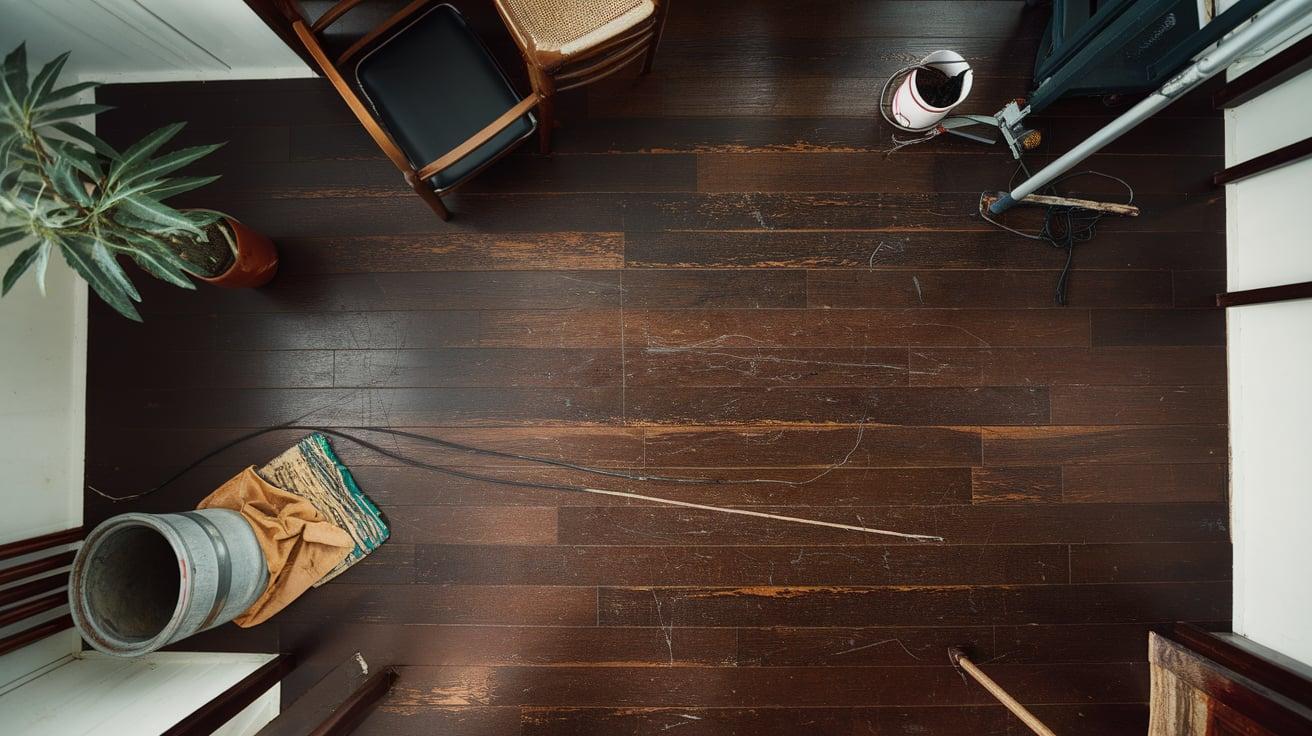
Start by thoroughly cleaning your hardwood floors to remove dust, dirt, and debris. This step ensures a smooth, even sanding process and prevents any particles from getting trapped in the finish.
Use a broom, vacuum, or a microfiber mop to ensure the floor is completely clean before starting.
Step 2: Buff the Floor
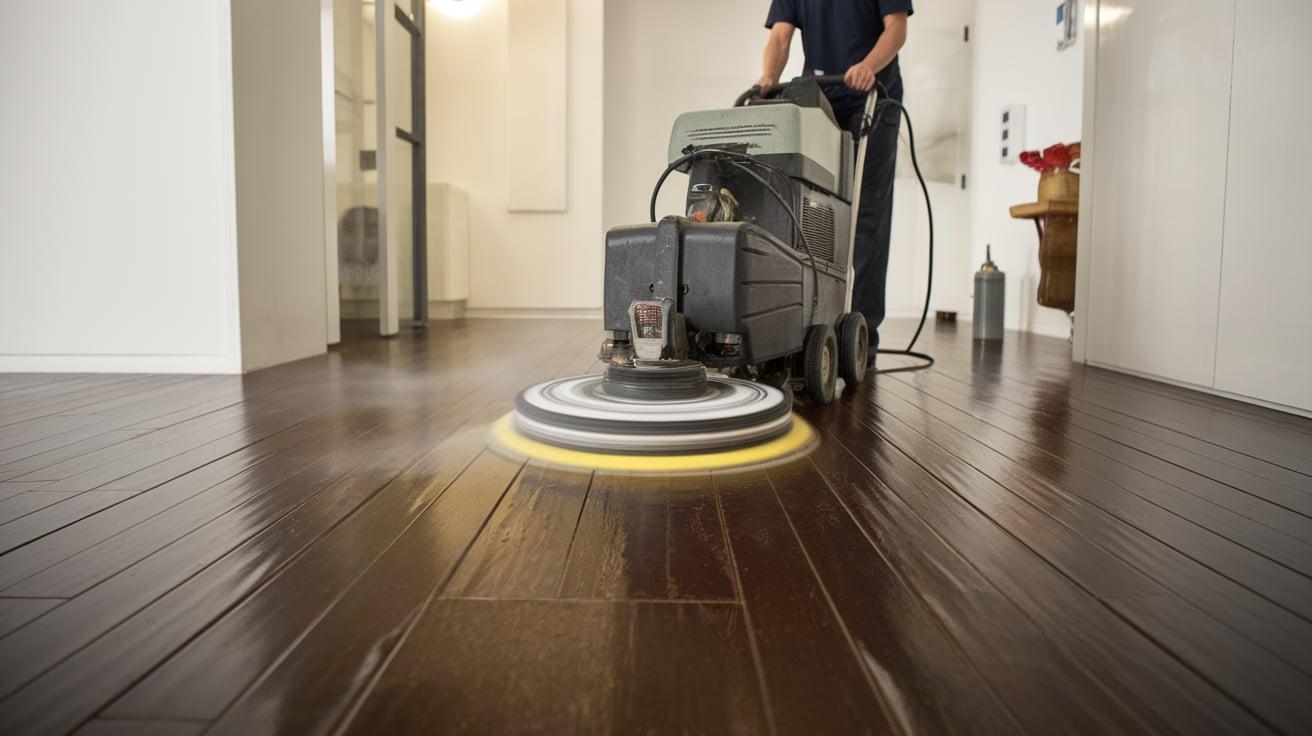
Once the floor is clean, secure a 220-grit sanding screen to your floor buffer. The sanding screen should be tightly fitted to ensure it stays in place during the process.
The 220-grit screen is gentle enough to sand the finish without damaging the wood itself, providing a smooth surface.
Next, use the floor buffer to move across the floor in slow, overlapping motions. Buffing should be done evenly to ensure that the sanding process is smooth and consistent.
The goal is to sand only the top layer of the finish, removing minor imperfections, without affecting the wood beneath.
Step 3: Clean Again
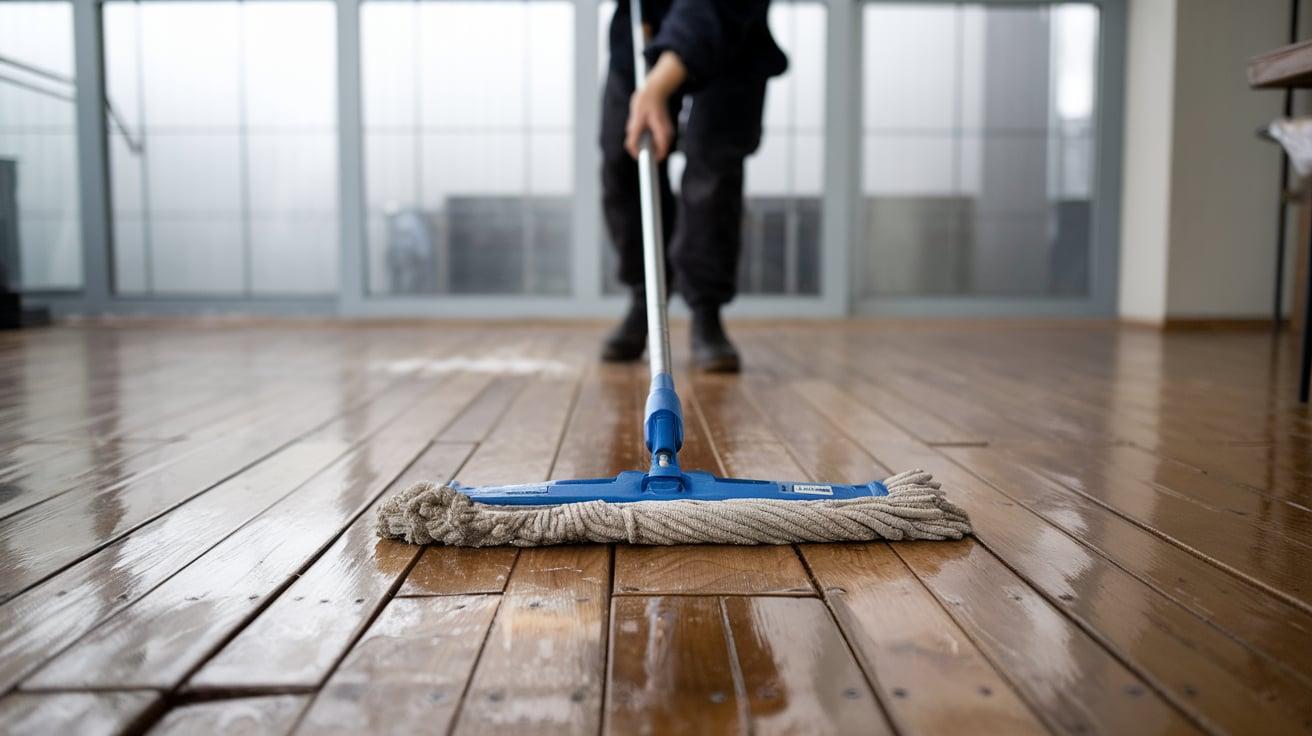
After buffing, vacuum up any dust left behind from the sanding process. This step is crucial because leftover dust can interfere with the new finish.
Wipe the surface with a clean, damp cloth to remove any remaining particles, ensuring a clean and smooth surface for the new finish.
Step 4: Apply New Finish
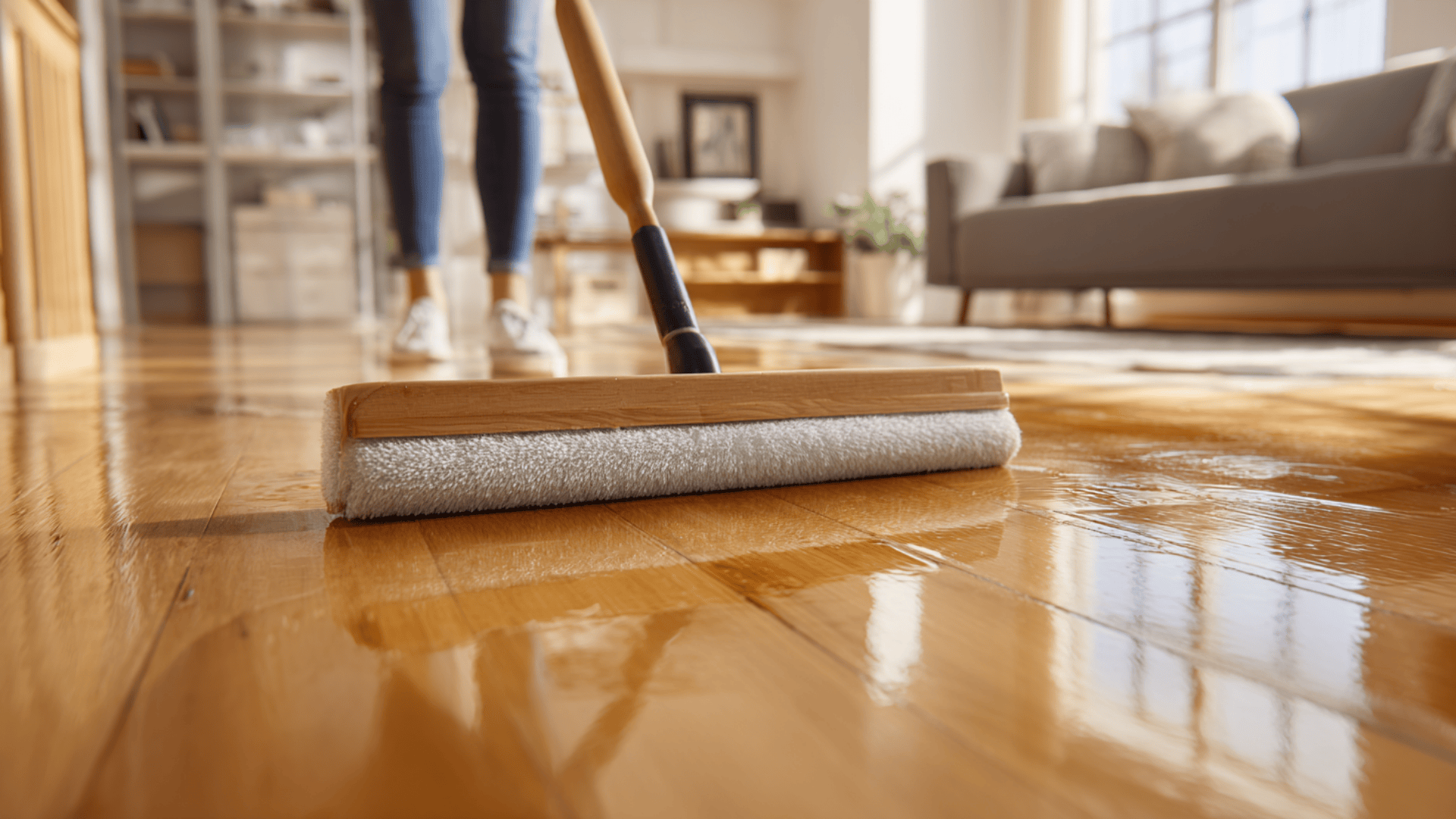
Once the floor is cleaned, use a finish applicator to evenly coat the surface with a fresh layer of polyurethane or your chosen finish.
Apply the finish in thin, even layers to avoid streaks or pooling. Ensure you cover every area of the floor for a consistent finish.
Step 5: Let It Dry

After applying the finish, let it dry completely before walking on the floor. Drying time typically ranges from 6 to 24 hours, depending on the finish used.
Avoid placing furniture or rugs on the floor until the finish has fully cured, which can take a few days to ensure durability.
Tips for Best Results While Screening Wood Floors
Here are a few simple tips to help you get the best results when buffing and finishing your floors. These small steps make a big difference.
- Work in Small Sections: To ensure even coverage, work in small areas and overlap your movements with the buffer.
- Don’t Overdo It: Avoid pressing too hard on the buffer. Let the machine do the work for a smoother finish.
- Allow Enough Drying Time: Be sure to let the finish dry completely before walking or placing furniture back on the floor.
- Test in a Small Area: Always test the process in a small area first to ensure the finish bonds properly and looks good.
Following these tips will help you avoid mistakes and get a smooth, even finish every time. Take your time and let the process work for you.
When Should You Screen Hardwood Floors?
Screening hardwood floors is recommended when the finish starts to dull, develop scratches, or show signs of wear.
Minor Surface Scratches and Dullness
Screening hardwood floors is ideal for floors that have light wear, such as minor surface scratches, scuffs, and general dullness.
This process helps restore the floor’s shine and vibrancy without affecting the wood or stain beneath. If your hardwood floors are looking tired but the finish is still intact, screening can provide an easy and effective solution.
It’s a cost-effective way to bring back the natural luster without requiring a full refinishing.
Not for Deep Scratches or Damage
If your floors have deep scratches, cracks, or peeling finishes, screening is not suitable.
For significant damage, sanding and refinishing are necessary to remove the old finish, repair the wood, and restore the floor’s appearance.
Sanding removes both the old finish and a thin layer of wood, which allows you to address deeper issues like stains, gouges, or imperfections.
If your floor’s finish is peeling or has major adhesion problems, it’s best to opt for a full refinishing to properly restore the wood and ensure a smooth, even surface.
Screening vs. Sanding: Key Differences
Screening is a lighter process that buffs the surface and applies a new layer of finish, while sanding removes the old finish and wood layers for a more intensive, restorative treatment.
| Aspect | Screening | Sanding |
|---|---|---|
| Process | Light sanding that only removes the top finish layer, leaving the wood and stain intact. | Deeper sanding that removes both the finish and a thin layer of wood. |
| Ideal For | Floors with light surface imperfections, minor scratches, and dullness. | Floors with significant wear, deep scratches, or peeling finishes. |
| Invasiveness | Less invasive, preserves the original wood and stain. | More invasive, it removes the wood’s finish and sometimes the wood itself. |
| Time & Effort | Quicker and less time-consuming. | More time-consuming and labor-intensive. |
| Cost | More affordable than sanding and refinishing. | More expensive due to the extra work involved. |
| Result | Restores shine, removes minor scratches, and protects from future wear. | Thorough restoration, ability to change stain, and fix deep damage. |
When to Hire a Pro for Screening Wood Floors
Hiring a professional for hardwood floor screening is a good idea if you want a flawless finish, lack the time or tools for the job, or prefer expert results.
- Severe Damage: If your floor has deep scratches, gouges, or extensive wear that screening can’t fix, a professional can assess and address the damage.
- Peeling or Chipping Finish: If the finish is peeling or has major adhesion issues, professionals have the tools and experience to ensure proper bonding.
- Lack of Time or Equipment: If you don’t have access to the necessary tools or don’t have the time to do the job yourself, hiring a pro saves effort and ensures a quality result.
What to Expect from a Professional Service
- Cost: Professional screening costs can vary based on location and floor size. Additional services, such as repair work, may add to the cost.
- Process: A professional will start by assessing your floor’s condition. They will use specialized equipment to sand the finish lightly, clean the floor, and apply a fresh coat of finish.
- Timeline: The screening process usually takes 1–2 days, depending on the size of the area. After the finish is applied, expect about 24 hours of drying time before walking on the floor. Full curing may take up to 3 days.
Hiring a pro ensures your floors get the best care, especially if you’re dealing with more complex issues or if you want a flawless finish without the hassle.
How Much Does Wood Floor Screening Cost
Wood floor screening costs between $2 and $4 per square foot, depending on factors like floor size and condition. It’s an affordable way to refresh and protect your hardwood floors.
Cost per Square Foot
DIY Screening: The cost for DIY screening typically ranges from $1.50 to $3 per square foot. This price includes the cost of sanding screens and the finish. If you already own the equipment, this can be an affordable option.
Professional Screening: Hiring a professional typically costs between $2 to $4 per square foot. The price may increase if repairs are needed or if your floor is in poor condition. While professional services may be slightly more expensive, they save you time and ensure a high-quality finish.
Factors That Influence Price
Floor Size: Larger floor areas will naturally cost more, as professionals charge based on square footage. The more square feet you need to cover, the higher the overall cost.
Floor Condition: If your floor has significant damage, deep scratches, or uneven finishes, it may require extra work, which can raise the price. A thorough cleaning and preparation may also add to the cost.
Finish Type: The type of finish you choose can affect the price. Polyurethane finishes are common, but if you opt for a different finish or special coatings, the cost may vary.
Some finishes may require multiple layers, which can also increase the price.
How to Maintain Your Wood Floors After Screening
Maintaining your wood floors after screening will keep them looking great and extend their lifespan. Here are some helpful tips:
- Regularly clean with a soft microfiber or dust mop to remove dirt and debris.
- Avoid harsh chemicals and abrasive cleaners that can damage the finish.
- For deeper cleaning, use a damp mop with a mild wood cleaner safe for hardwood.
- Ensure the mop is damp, not soaking wet, to avoid water damage.
- Dry the floor immediately after cleaning.
- Re-screen and re-coat every 3 to 5 years, depending on foot traffic.
- If the finish dulls or develops scratches, it’s time to re-screen and re-coat.
By following these simple steps, you can keep your wood floors looking beautiful and lasting longer without the need for complete refinishing.
Conclusion
Screening wood floors has been one of the easiest, most affordable ways I’ve found to bring back that clean, polished look, without the hassle of full refinishing.
Now that you know when it works best, how to do it, and what tools you’ll need, you’re ready to give it a try. Take a good look at your floors. If they’re just looking a bit dull or lightly scratched, screening might be exactly what they need.
Just make sure to prep properly, take your time, and let the finish dry fully. A little patience can go a long way in making them shine again.
Want more easy home care tips and floor maintenance ideas? Check out other blogs on the website for helpful guides to keep your space looking its best all year long.


