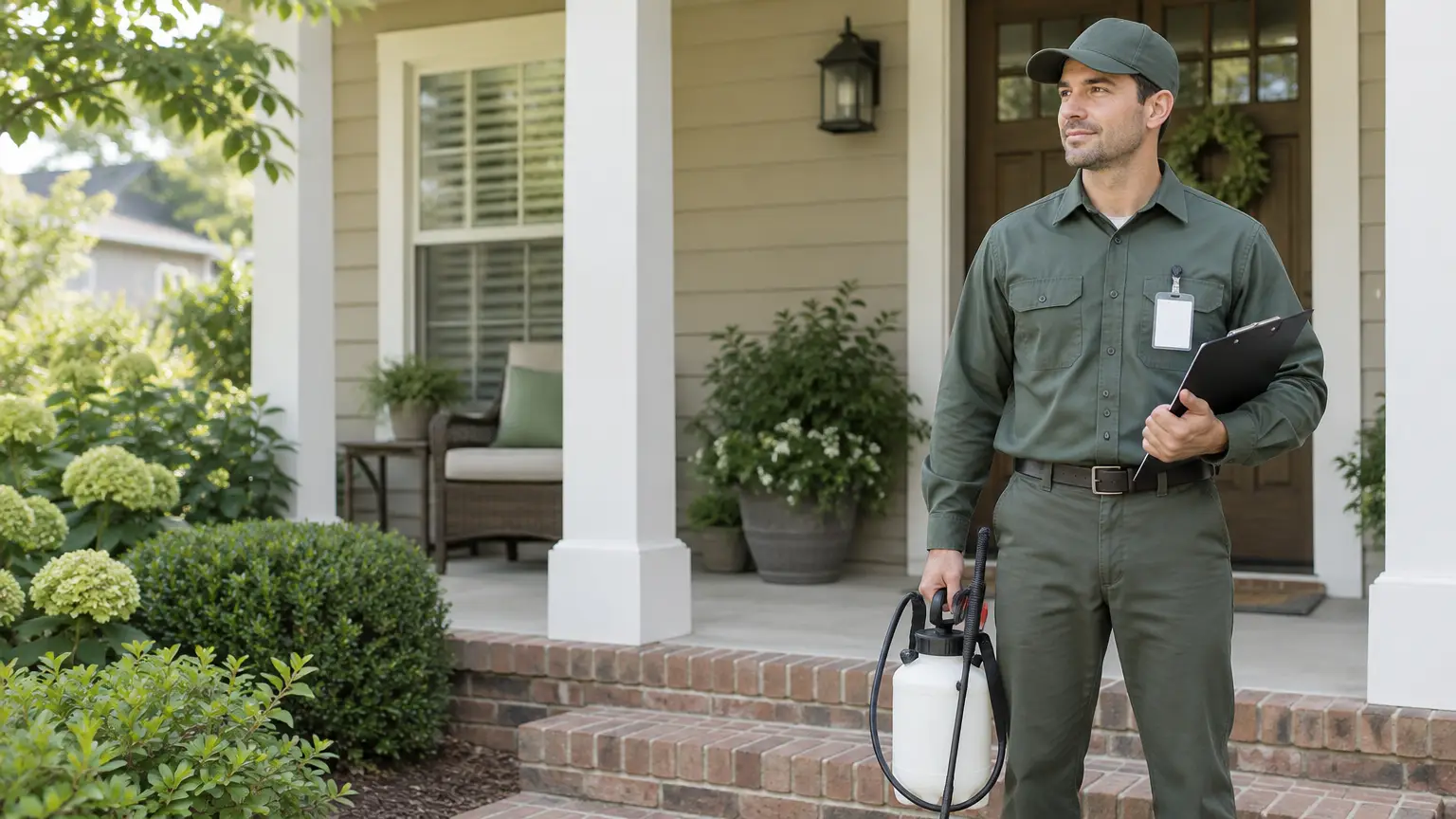
Who Is Actually Standing at Your Door: How Pest Control Technicians Get Screened, Licensed and Trained
When a pest control technician arrives for a service visit, most homeowners open the door without thinking twice.
The technician may walk through the kitchen, check under sinks, look in children’s bedrooms, and spend time in the garage or basement. For the length of the visit, a stranger has access to the most private spaces in the house.
It is reasonable to want to know who that person is and how they were vetted. It is also a question many people feel awkward asking.
Here is how technician screening, licensing, and training generally work in the pest control industry, and what to ask any company before letting a technician inside.
Step 1: Background Screening
Reputable pest control companies screen technicians before hiring them. The depth of that screening varies widely from company to company, and no single national standard dictates what it must include.
A thorough screening process typically looks at:
- Criminal history, to identify any records that would make the person unsuitable for in-home work
- Sex offender registries, a critical check for anyone entering homes where children live
- Drug testing, both before hiring and, at some companies, on an ongoing basis
- Driving records, since technicians spend much of the day behind the wheel of a company vehicle
Some companies check only one or two of these. Others check all four. The only way to know is to ask.
Step 2: State Licensing and Certification
Under federal law, pesticides must be applied according to their labels, and states run certification programs for professionals who apply them commercially.
In most states, that program is administered by the Department of Agriculture or a similar agency.
Requirements differ by state, but they generally include:
- Passing exams on pesticide safety, pest identification and the specific categories of work the technician will perform
- Supervision rules that allow newer technicians to work under a certified applicator while they complete their own certification, in states that permit it
- Continuing education to keep a license or certification current
Homeowners can usually verify a company’s or technician’s license through the state agency’s online lookup tool. It is worth taking a minute to do that, especially with a company you have not used before.
Step 3: Classroom and Field Training
A license shows that someone has met the state’s minimum requirements. How well they do the job beyond that depends largely on the training their employer provides.
The strongest training programs combine two parts. Classroom instruction covers pest biology, product safety, treatment methods, and customer communication.
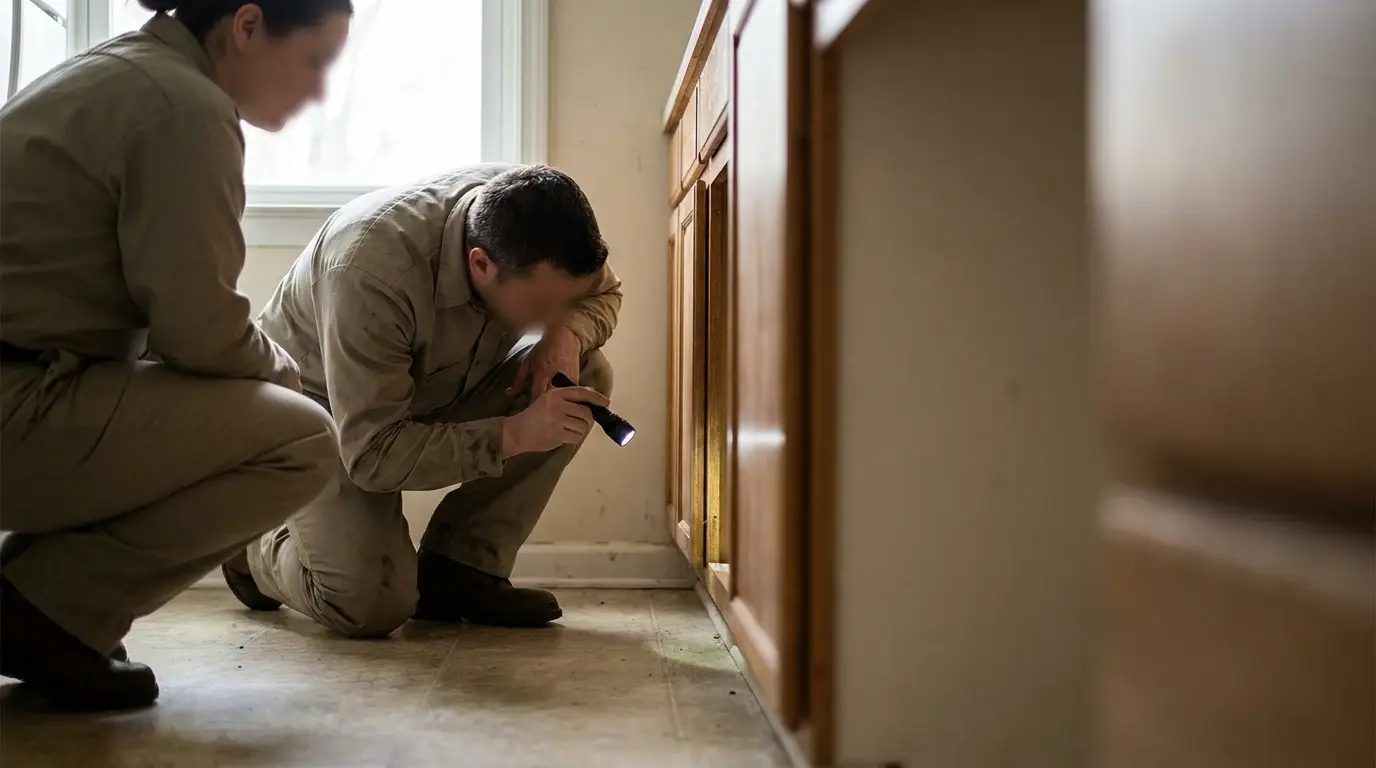
Field training puts new technicians alongside experienced ones so they learn how the work is actually done in real homes, with real customers and real problems.
Mentored field time is where judgment develops. A new technician learns to spot an entry point a textbook would not mention, and to notice when something about a home needs a closer look.
An Example of Published Standards
Few companies publish their screening and training standards in detail, which makes it harder for homeowners to compare. EcoShield Pest Solutions is one that states its standards directly: “All our technicians receive the highest-level of classroom and on the job training with an experienced mentor. We insist on a criminal, background, sex offender, drug, and a driving record review to ensure the safety of our customers. We are also a drug-free workplace.”
That statement covers all four screening areas above plus the classroom and mentorship components of training. It is the kind of answer homeowners should expect any company to give when asked.
What to Ask Before You Hire
Whether you are choosing a pest control company for yourself or helping an aging parent hire one, these questions are worth asking directly:
- What background checks do you run on technicians? Ask specifically about criminal history, sex offender registries, drug testing and driving records.
- Are your technicians licensed or certified by the state? Ask how you can verify it.
- How are new technicians trained? Ask whether training includes time in the field with an experienced mentor.
- Will the same technician usually come to my home? Consistency helps build trust and gives the technician a better understanding of the property.
- How will I know who is coming? Many companies share the technician’s name ahead of time, and technicians should arrive in a marked vehicle and uniform with identification.
The Bottom Line
Letting someone into your home is an act of trust. It is fair to ask what that trust is based on. A company with strong standards will be glad to explain its screening, licensing and training. That openness is one of the best signals that you are hiring the right people.