
What Is Upholstery and How Does It Affect Furniture Quality?
Upholstery determines how comfortable, durable, and practical your furniture will be over years of use.
From the hidden frame and cushion materials to the fabric you touch every day, each layer affects performance, appearance, and maintenance. The right choices can help furniture hold its shape, handle daily wear, and match the needs of your home.
This article breaks down how upholstery is built, the best fabric options, and what to look for before buying.
What Does Upholstery Mean?
Upholstery is the padded covering applied over a furniture frame using fabric, foam, springs, and webbing. The word traces to the Middle English “upholder,” a tradesman who made and maintained fabric furnishings.
Today the word has two meanings. It describes both the materials used to cover and cushion a furniture frame and the craft of applying them.
When a listing says “upholstered,” it means the piece has been wrapped in cushioning and covered with fabric or leather. A plain wooden dining chair is not upholstered. Add a padded seat cushion covered in linen, and it is.
The 4 Layers of Upholstery and How It Is Built
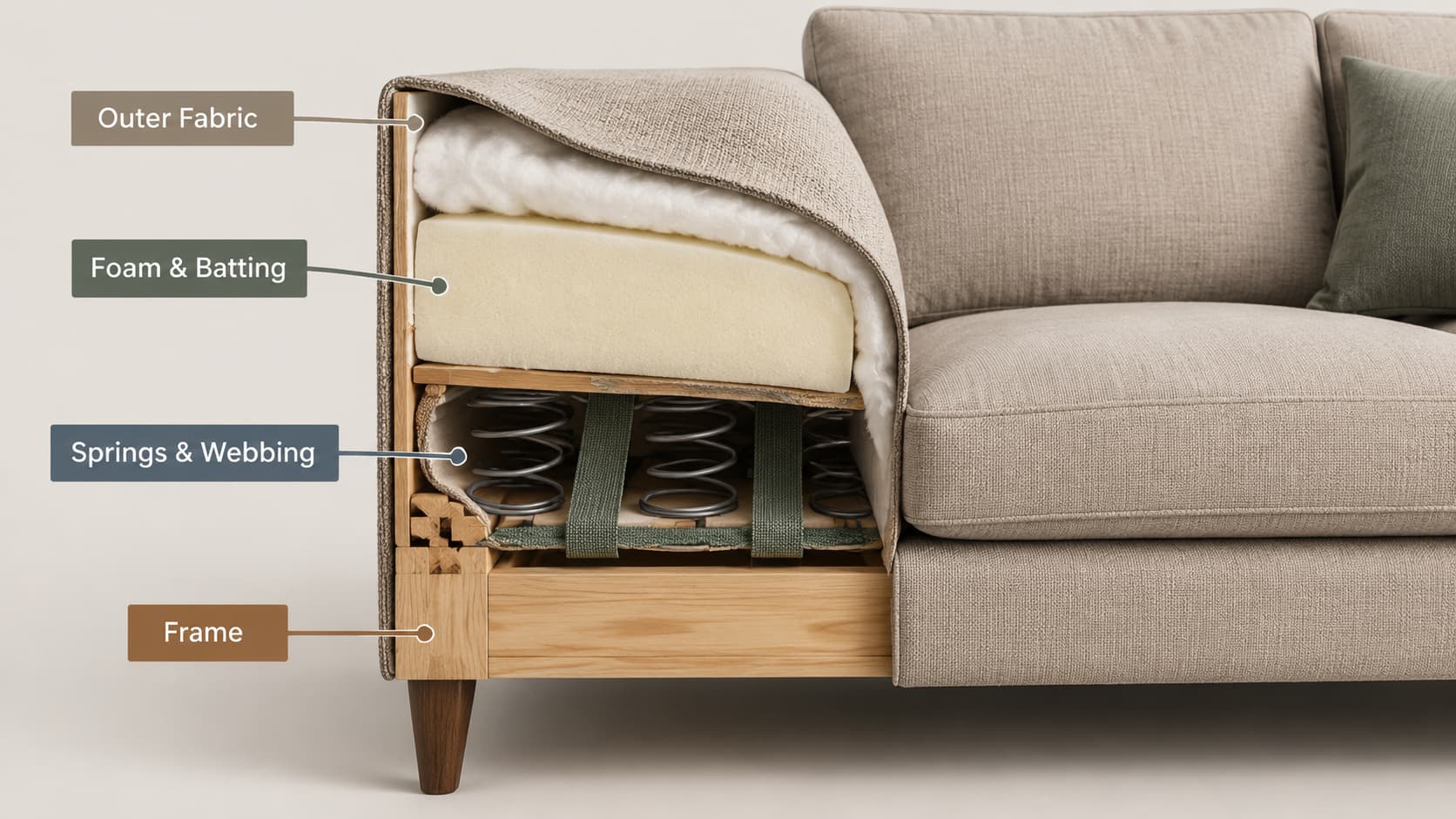
Upholstery uses several layers that work together to provide comfort, support, and durability. The outer fabric gets the most attention, but the hidden materials underneath determine how well the furniture performs over time.
Layer 1: The Frame
The frame provides the structure and supports the entire piece. A strong frame helps furniture keep its shape and prevents early damage.
- Solid hardwood frames, especially kiln-dried wood, offer better strength and durability.
- Quality joints should be glued and reinforced, not held together with staples alone.
- Lower-quality frames made from particle board or softwood are more likely to loosen or crack over time.
Layer 2: Springs and Webbing
Springs and webbing create the support system beneath the cushions. They help distribute weight and prevent sagging.
- Eight-way hand-tied coil springs provide excellent support and durability.
- Sinuous springs are common in mid-range furniture and offer reliable support at a lower cost.
- Strong webbing helps keep the seat structure stable and reduces sagging.
Layer 3: Foam and Batting
Foam creates the main comfort layer, while batting adds softness and shape around the cushion.
- Higher-density foam holds its shape longer and resists permanent dips.
- Low-density foam breaks down faster and can leave cushions feeling flat.
- Batting gives cushions a smoother, softer finish.
Layer 4: The Outer Fabric or Leather
The outer layer affects the furniture’s appearance, comfort, and ability to handle daily use.
- Match your fabric choice to your lifestyle, considering stains, pets, sunlight, and cleaning needs.
- Durable materials like performance fabric, microfiber, and full-grain leather handle heavy use better.
- A premium fabric cannot make up for a weak frame or poor-quality cushion materials.
What Is Upholstery Used For?
Upholstery is used wherever people need soft, padded seating or surfaces. At home, it covers sofas, armchairs, dining chairs, ottomans, headboards, benches, and window seats.
In cars, upholstery covers seats, door panels, and headliners. It must handle heat, UV exposure, and constant movement. Boat seating uses marine-grade upholstery with moisture-resistant foam and vinyl built for water, salt, and sun.
Beyond the home, you will find upholstered surfaces in office chairs, theater seats, restaurant booths, and hotel furniture. Anywhere comfort and durability are both needed, upholstery is part of the answer
Best Upholstery Fabric: How to Choose the Right One

The best choice depends on your lifestyle, cleaning needs, and how often you use the furniture. Consider factors like pets, children, and daily wear before choosing a fabric.
1. Cotton
Cotton is soft, breathable, and one of the most comfortable fabrics to sit against. It wrinkles easily, stains easily without a protective treatment, and fades with regular sun exposure. Cotton works best in low-traffic rooms and guest chairs where appearance matters more than durability.
2. Linen
Linen has a natural, relaxed texture and breathes well in warmer rooms. It wrinkles more than most other options and shows wear faster in busy spaces. Linen suits calm, low-traffic rooms with neutral color schemes. Avoid it in homes with kids or pets.
3. Velvet
Standard velvet is plush, adds visual softness to any room, and can show pressure marks with regular sitting. Performance velvet, usually 100 percent polyester, is the smarter everyday choice. Rub counts often exceed 50,000. It gives you the look and feel of velvet with far better wear resistance for a main sofa or chair.
4. Microfiber
Microfiber is stain-resistant, soft to the touch, and more budget-friendly than leather. It is one of the most practical choices for family rooms and homes with pets or children. Look for tightly woven microfiber to reduce the risk of snags from pet claws and make cleaning easier.
5. Leather
Leather is highly durable, wipes clean easily, and develops a natural patina over time that many people find appealing. Full-grain leather is the most durable type and the best long-term investment. Avoid bonded leather. It combines leather scraps with synthetic material and tends to peel and crack within a few years.
6. Performance Fabric
Performance fabrics resist stains, fading, and daily wear in busy households. Brands like Crypton and Sunbrella lead this category with tested, certified fabrics used in both residential and commercial settings. They cost more upfront but hold up much better than cotton or linen in homes with real daily use.
Quick Comparison: Best Upholstery Fabric by Lifestyle
The table below compares the most common options across the factors that matter most. Find the best match at a glance.
|
Fabric |
Best For |
Est. Double Rub Count |
Easy to Clean |
Key Notes |
|---|---|---|---|---|
|
Cotton |
Guest rooms, decorative chairs |
15,000 to 25,000 |
No |
Wrinkles easily; fades in direct sun |
|
Linen |
Low-traffic, neutral rooms |
10,000 to 20,000 |
No |
Stains and wrinkles easily; not ideal for families |
|
Velvet (standard) |
Formal accent chairs |
20,000 to 30,000 |
No |
Shows pressure marks; needs regular brushing |
|
Performance Velvet |
Everyday sofas, busy homes |
50,000 and above |
Yes |
Best combination of look and durability |
|
Microfiber |
Family rooms, pets, children |
25,000 to 40,000 |
Yes |
Close-woven construction resists pet claw snags |
|
Leather (full-grain) |
Modern, high-traffic spaces |
Not applicable |
Yes |
Avoid bonded leather; ages well with care |
|
Performance Fabric |
Any busy household |
30,000 to 100,000 and above |
Yes |
Highest real-world durability across all use cases |
What Is a Double Rub Count?
A double rub count measures how resistant an upholstery fabric is to wear from everyday use. Each time someone sits down and gets up, that motion counts as one double rub. This is measured using the Wyzenbeek abrasion test.
It is the standard durability method in North America, as explained by American Leather. A common rule of thumb: 3,000 double rubs equals about one year of residential use. Actual lifespan depends on how you use and care for the fabric.
- Under 15,000 double rubs: suitable for low-traffic pieces only, such as accent chairs and decorative furniture that gets occasional use
- 15,000 to 25,000 double rubs: standard residential use in rooms with moderate daily traffic
- 25,000 to 30,000 double rubs: suitable for a main sofa or chair in a busy household
- 30,000 and above: high-traffic residential seating or commercial settings such as offices and waiting rooms
For a main family room sofa, target a minimum of 25,000 to 30,000 double rubs. A higher number does not always mean better comfort. Very high-rub fabrics are often tightly woven, which can make them feel stiffer. If a fabric listing does not include a rub count, ask the supplier for the spec sheet. Do this before buying.
How to Read the Cleaning Code on Your Upholstery Tag

Every upholstered piece has a small care tag, usually hidden under a cushion or on the seat deck. The wrong cleaning method can shrink fabric, change color, or push moisture deep into the foam beneath. Checking the code first takes ten seconds and can save the fabric.
- W (water-based): safe to clean with a water-based cleaner. Mild dish soap mixed with cool water works well for most stains
- S (solvent-based): use a solvent-based cleaner only. Applying water to an S-coded fabric can cause permanent staining or shrinkage
- W/S (either method): both water-based and solvent-based cleaners are safe to use on this fabric
- X (vacuum only): no liquids at all. Brush or vacuum only. Call a professional cleaner for anything beyond surface dust
Always blot spills immediately rather than rubbing. Rubbing spreads the stain and pushes it deeper into the fibers. Test any cleaner on a hidden spot first, such as the back of a cushion or under the seat. This one habit alone will extend the life of your upholstery by years.
How to Care for Upholstery
Good upholstery can last for many years with simple, consistent care. Most damage comes from neglect, not hard use.
The habits below take very little time. They make a real difference in how long your furniture holds up.
- Vacuum weekly with a soft brush attachment to remove dust, crumbs, and pet hair before they work into the fibers
- Rotate and flip loose cushions every few weeks so the padding wears evenly and does not compress in one spot
- Blot spills immediately with a clean white cloth; never rub
- Check the cleaning code on the tag before using any product; using the wrong cleaner can permanently damage the fabric
- Keep leather clean with a damp cloth, dry it completely, and apply leather conditioner two to three times per year
- Keep velvet and linen away from direct sunlight to prevent fading and fiber damage over time
- For odor, sprinkle a light layer of baking soda over the fabric, let it sit for 20 minutes, then vacuum it completely away
- Use arm covers or a throw on the highest-wear spots to slow visible wear on frequently used pieces
Sometimes, you can refresh older upholstery instead of replacing it. Painting upholstery can change the color or give worn fabric a new look, but it requires the right fabric type, paint, and prep to avoid making the material stiff or uncomfortable.
Common Upholstery Mistakes to Avoid
From what I have seen in my own home, the most common upholstery mistake is simple. People choose a fabric entirely on how it looks. You fall in love with the color in the store and buy the sofa without asking a single question. Then two years later, the fabric is worn, stained, or pulling at the seams.
I have watched people skip the rub count and ignore the cleaning code. I have seen people buy bonded leather without knowing what it was. Low-density foam cushions that go flat in a season are another common issue.
Each of those mistakes costs real time and money that a few simple upfront questions would have saved. The fix is straightforward. Ask about the rub count before you buy.
Read the cleaning code before you clean. Ask about foam density before you choose a cushion. Your furniture can look good and last for years at the same time. You just have to make the choice with both in mind.
Final Thoughts
Upholstery is more than just padding and fabric. It affects how comfortable, durable, and practical your furniture feels over years of use. The right upholstery choice depends on your lifestyle, cleaning habits, and how often you use the piece.
By paying attention to the frame, support layers, cushion materials, and fabric quality, you can choose furniture that looks good and holds up to daily wear.
Frequently Asked Questions
What is the difference between furniture and upholstery?
Furniture is the complete piece, while upholstery is the padding, springs, and fabric or leather added over the frame.
Do couches count as upholstery?
Yes. Couches are upholstered furniture because their seats, backs, and arms are covered with padding and fabric or leather.
Is it cheaper to buy a new couch or reupholster?
Reupholstering is usually worth it for high-quality couches with strong frames. For cheap or damaged furniture, replacing it is often cheaper.
Which upholstery is best for a sofa?
Performance fabric, microfiber, and full-grain leather are strong choices for everyday sofas because they handle wear well.
What type of sofa lasts the longest?
A sofa with a kiln-dried hardwood frame, strong springs, high-density foam, and durable upholstery usually lasts the longest.
What’s the average price to reupholster a couch?
Reupholstering a standard three-seat sofa typically costs around $700 to $2,500, depending on fabric, size, and labor.
How much does it cost to reupholster a sofa?
Most sofa reupholstery projects cost about $600 to $4,000, depending on the sofa style, materials, and complexity.


