
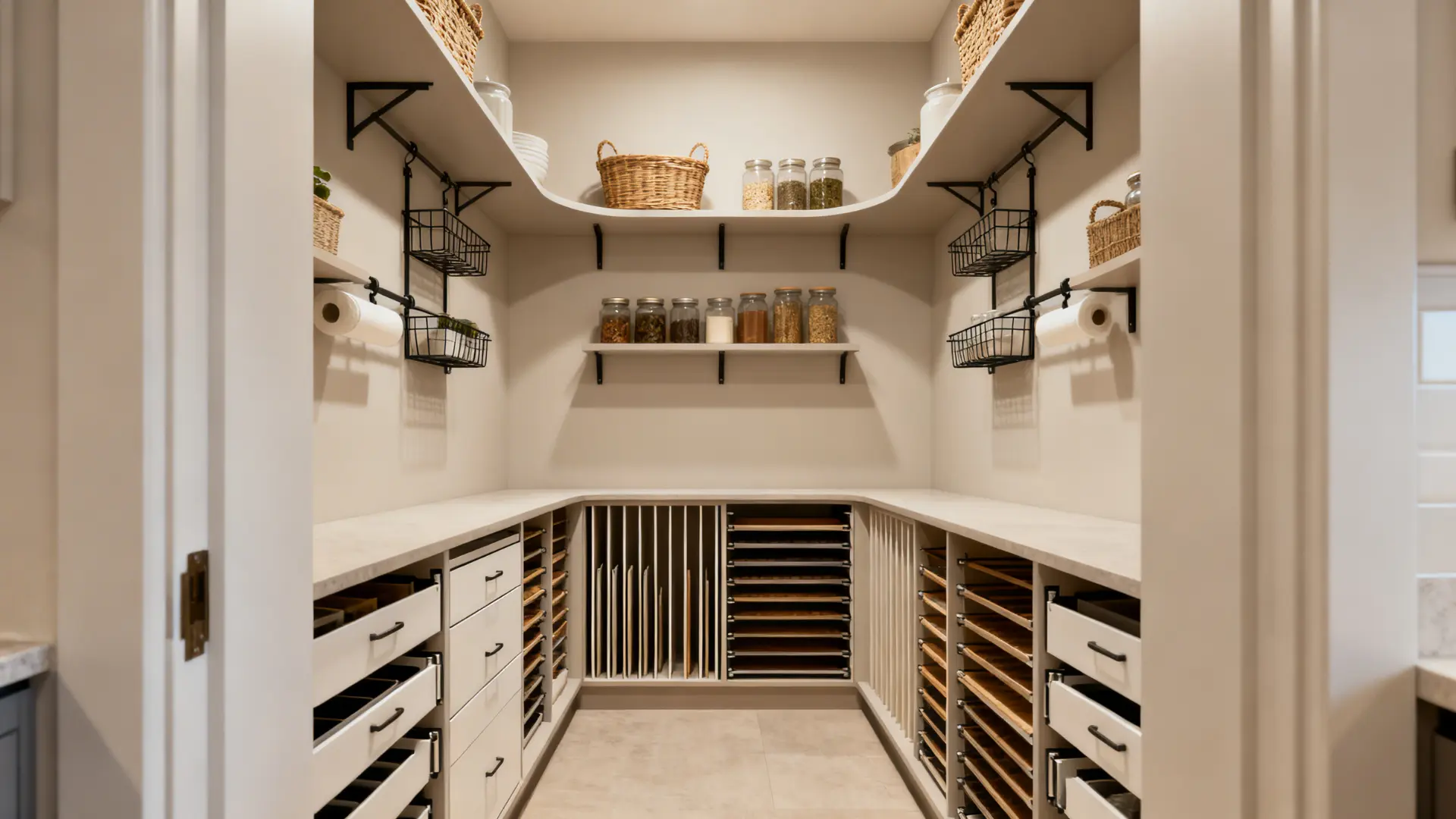
24 Small Walk-In Pantry Ideas and Tips
Did you know that even a 4-by-4-foot space can work as a fully functional walk-in pantry? Most people assume a small kitchen means giving up on the idea entirely, but that’s not true.
The right layout, shelving, and storage system can turn even the tightest space into a practical, organized space.
This blog covers everything you need to design a small walk-in pantry that actually works, from choosing the right layout to lighting, storage ideas, and common mistakes to avoid.
If starting from scratch or improving what you already have, you’ll find ideas here that fit your space.
Space-Saving Ideas for Small Walk-In Pantries
A walk-in pantry is a small dedicated room or closet used to store food, kitchen supplies, and appliances. Unlike a cabinet or a pull-out shelf, you can step inside it, making organizing and accessing items much easier.
Even a small walk-in pantry can free up a lot of space in your kitchen cabinets. The type you choose will depend on your kitchen layout, available space, and storage needs.
1. U-Shaped Walk-In Pantry
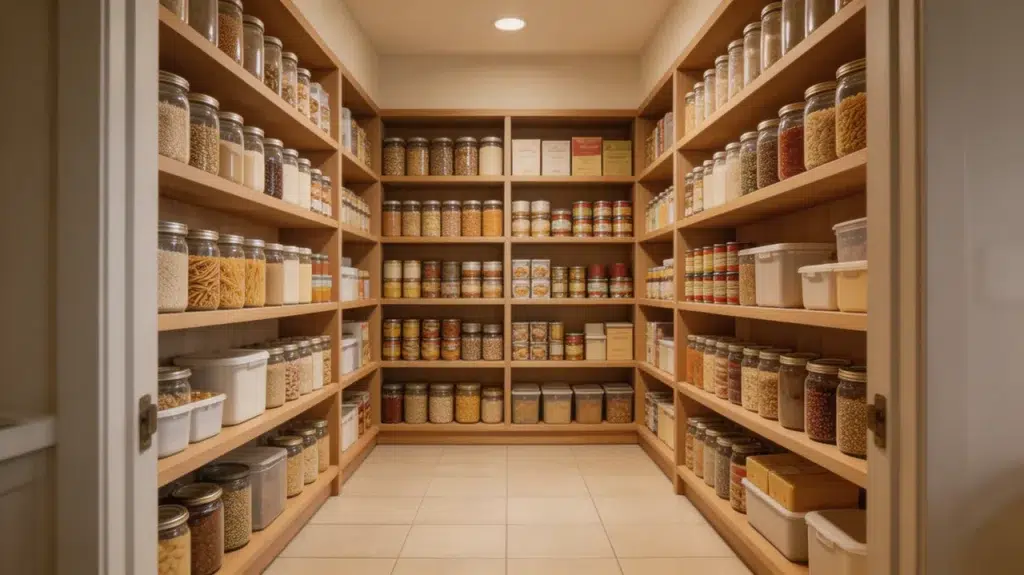
A U-shaped layout is one of the best small walk-in pantry ideas when you want to use every wall.
Shelves run along three sides while the center stays open for walking. This layout keeps food within easy reach and provides ample storage.
2. Narrow Hallway-Style Pantry Design
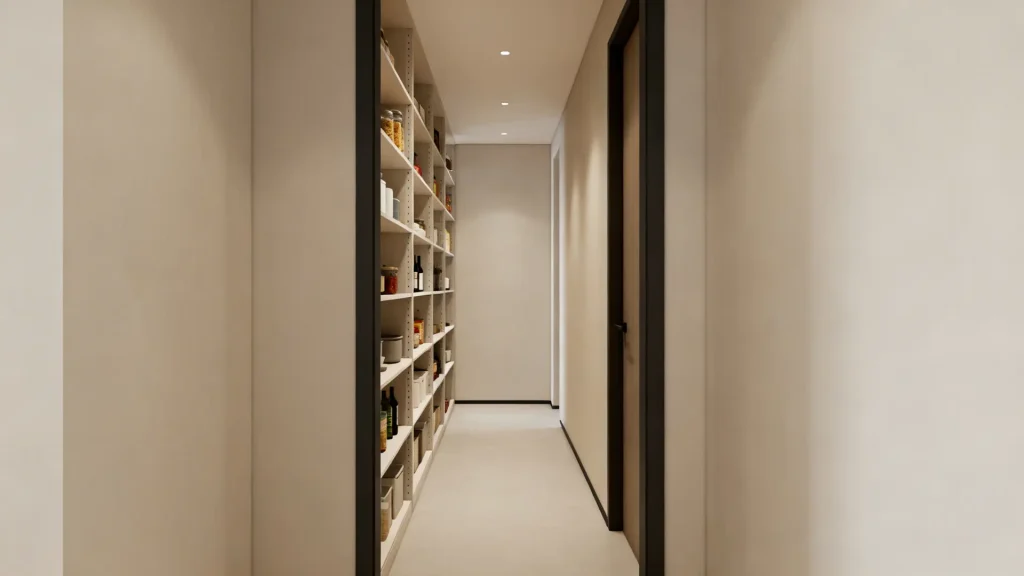
A narrow walk-in pantry often resembles a small hallway, with shelves along one or two walls.
This design works well in tight kitchen spaces with limited room.
3. Corner Walk-In Pantry with Angled Shelves
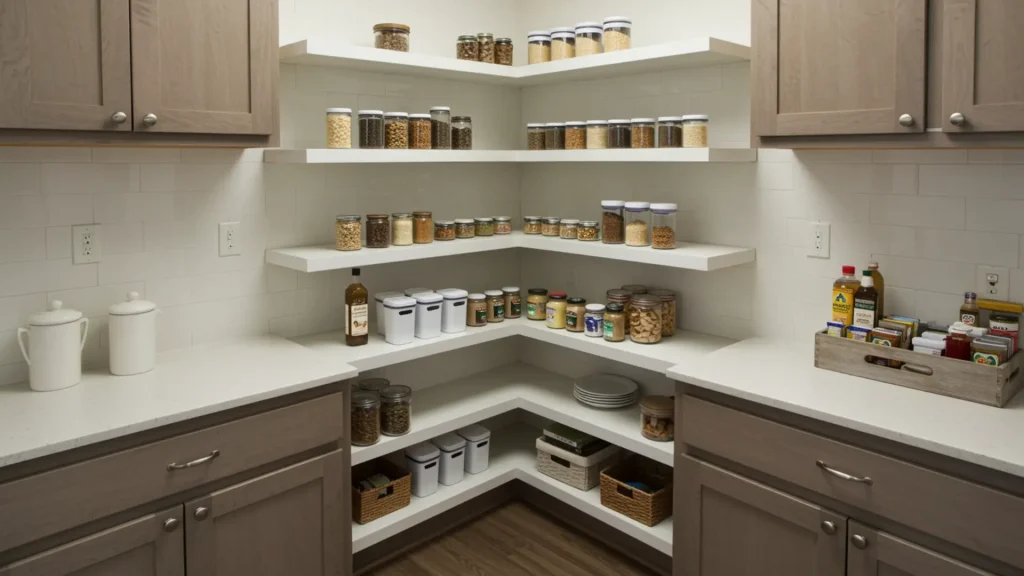
A corner walk-in pantry uses an unused kitchen corner to create extra storage.
Angled shelves make the space easier to use because items do not get stuck in deep corners. This layout works well in small kitchens where every inch matters.
4. Pantry Built Under the Stairs
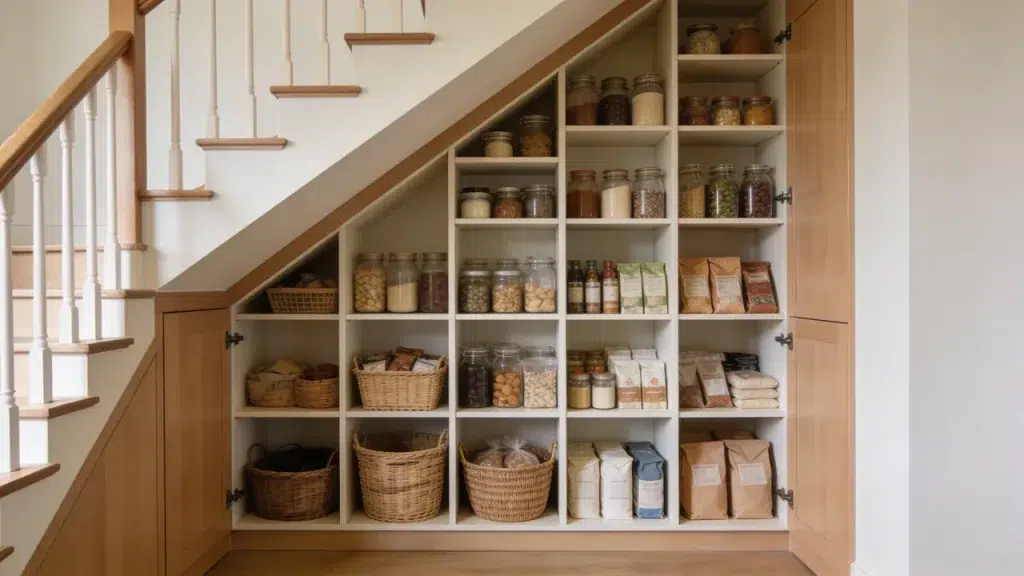
The unused space beneath a staircase is one of the most overlooked storage opportunities in a home.
With custom shelving that follows the slope of the ceiling, this area transforms into a fully functional walk-in pantry. Lower sections handle bulky items while smaller nooks store packaged goods, making every odd-shaped inch count.
5. Floor-To-Ceiling Shelving for Vertical Storage
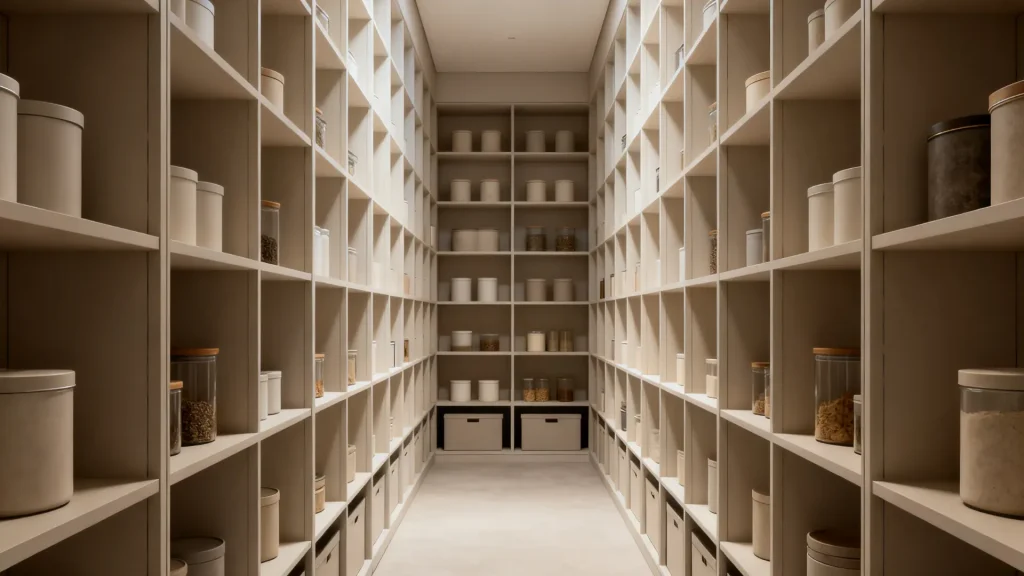
Floor-to-ceiling shelves are a smart way to increase storage in a short walk-in pantry.
Vertical space is often underused, but tall shelves can hold many extra items. Store everyday food at eye level and place rarely used items on the higher shelves.
6. Adjustable Pantry Shelving System
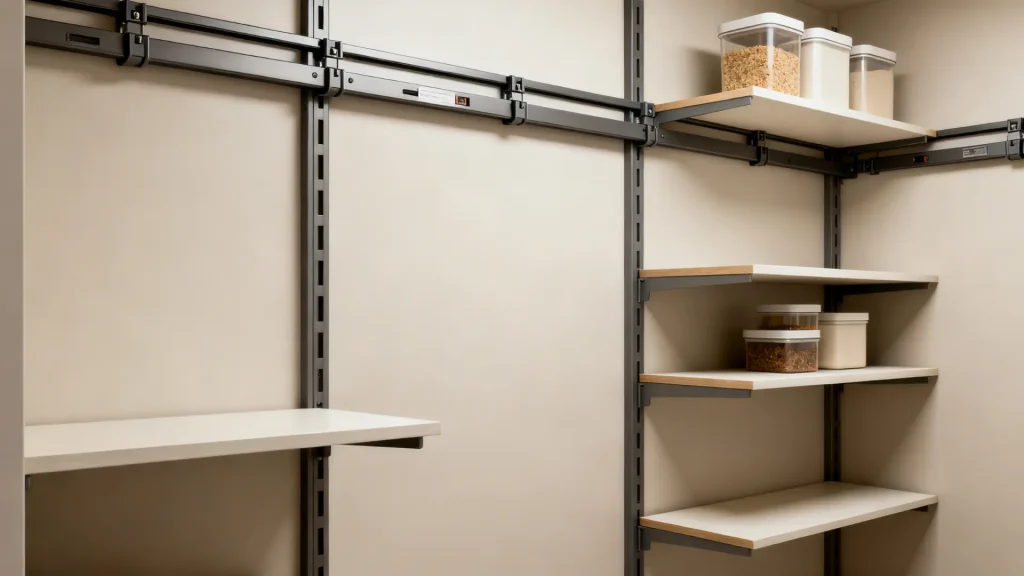
Adjustable shelves make a pantry more flexible over time. As your storage needs change, the shelf height can be moved to fit different containers and food items.
This helps keep the pantry organized without wasting space. Adjustable shelving is one of the most practical pantry shelving ideas for small kitchens.
7. Shallow Shelves to Keep Items Visible
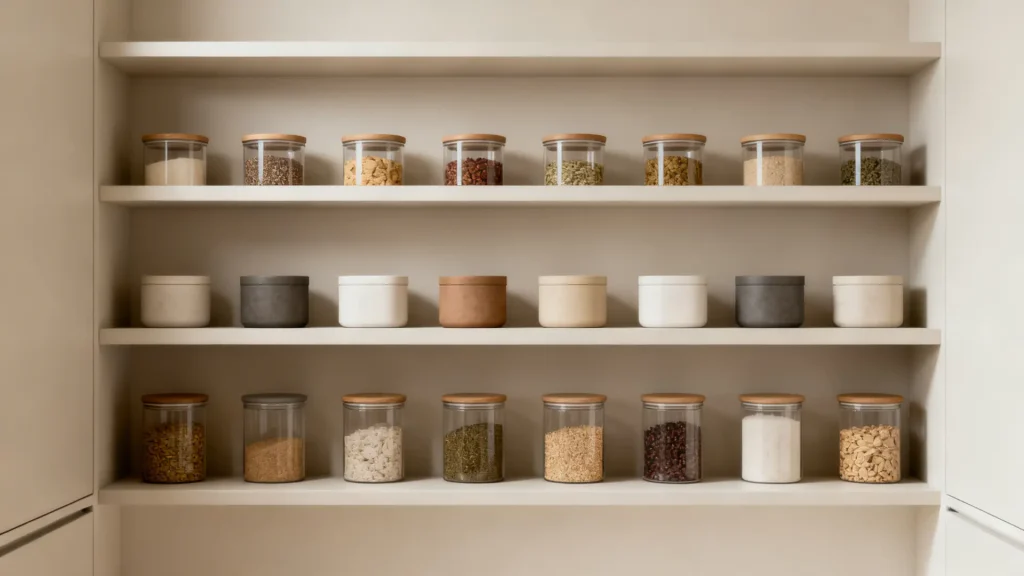
Shallow shelves work especially well in a small walk-in pantry because they keep everything in clear view.
When shelves are too deep, items at the back often get forgotten and expire. A depth of around 12 inches helps you see labels easily and reach items without digging.
8. Deep Shelves with Pull-Out Drawers
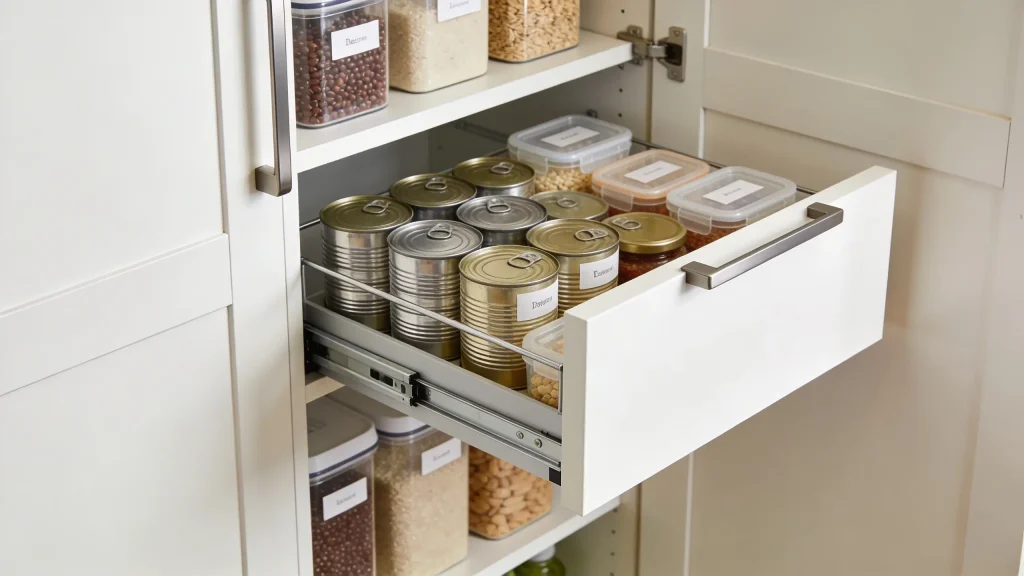
Deep shelves offer generous storage capacity but often cause items at the back to go forgotten. Pull-out drawers solve this completely by sliding the entire shelf forward, bringing everything into clear view.
This combination works especially well for canned goods, heavy containers, and bulk purchases that need both depth and easy daily access.
9. Pantry with A Small Prep Countertop
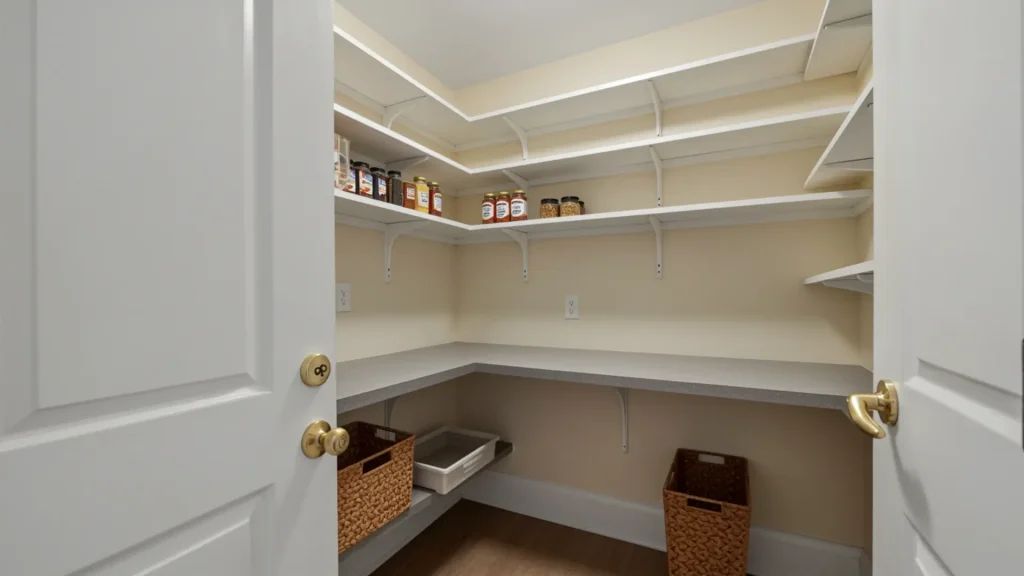
Adding a small countertop inside a walk-in pantry creates a useful workspace. The counter can hold small appliances or act as a spot to unpack groceries.
It also gives you a place to prepare simple ingredients without using the main kitchen counter.
10. Pantry with A Built-In Coffee Station
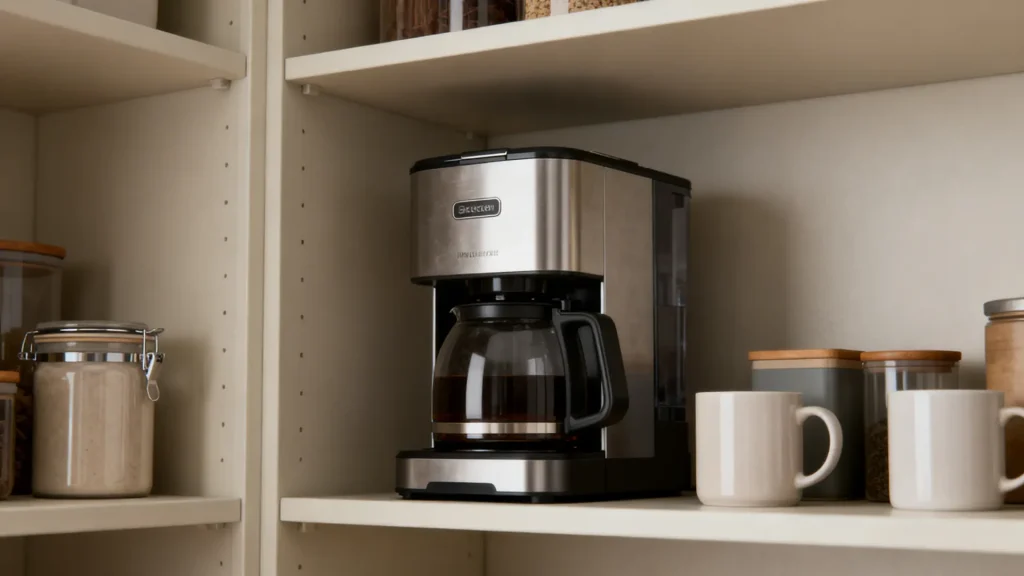
A built-in coffee station inside the pantry keeps mugs, coffee beans, and your coffee machine neatly grouped in one dedicated area.
This setup clears space from your main kitchen counter and makes your morning routine smoother. Everything you need stays in one spot, easy to access and simple to maintain.
11. Pantry with Door-Mounted Storage Racks
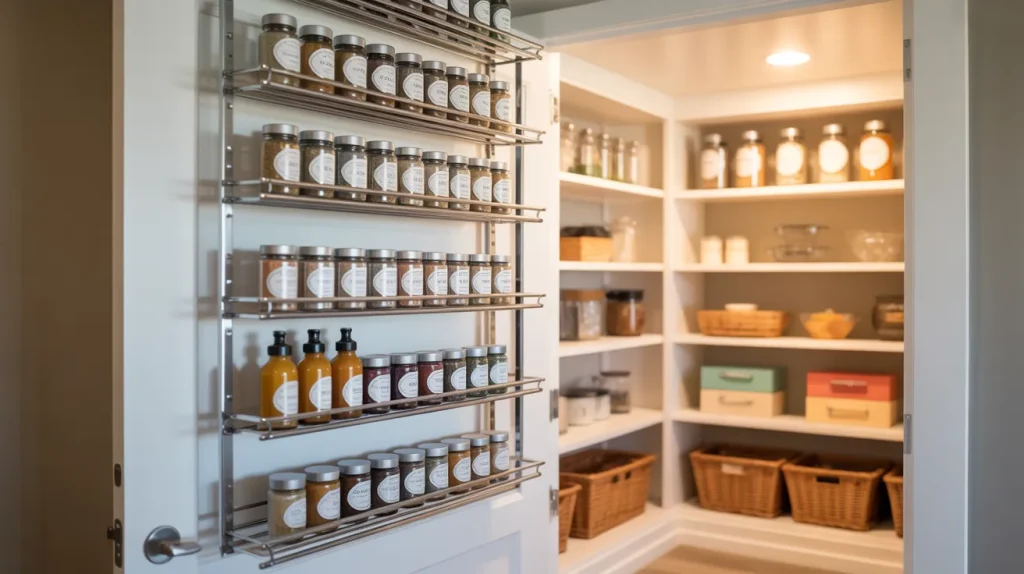
The back of the pantry door can hold extra storage without taking shelf space. Door-mounted racks are useful for spices, sauces, and small jars.
This keeps frequently used items easy to reach. It also frees up shelf space for larger containers and pantry staples.
12. Pantry with Tiered Can Organizers
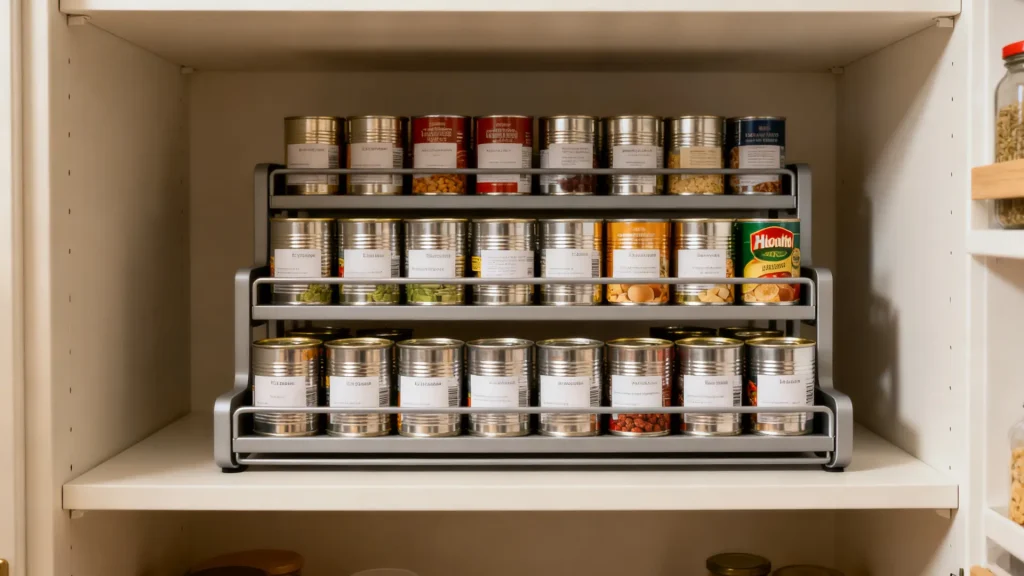
Tiered organizers lift cans in rows so each label is visible. This prevents cans from being hidden behind others.
It also makes it easier to quickly check how many items remain. This small change can significantly improve pantry organization.
13. Pantry with Basket Storage for Snacks
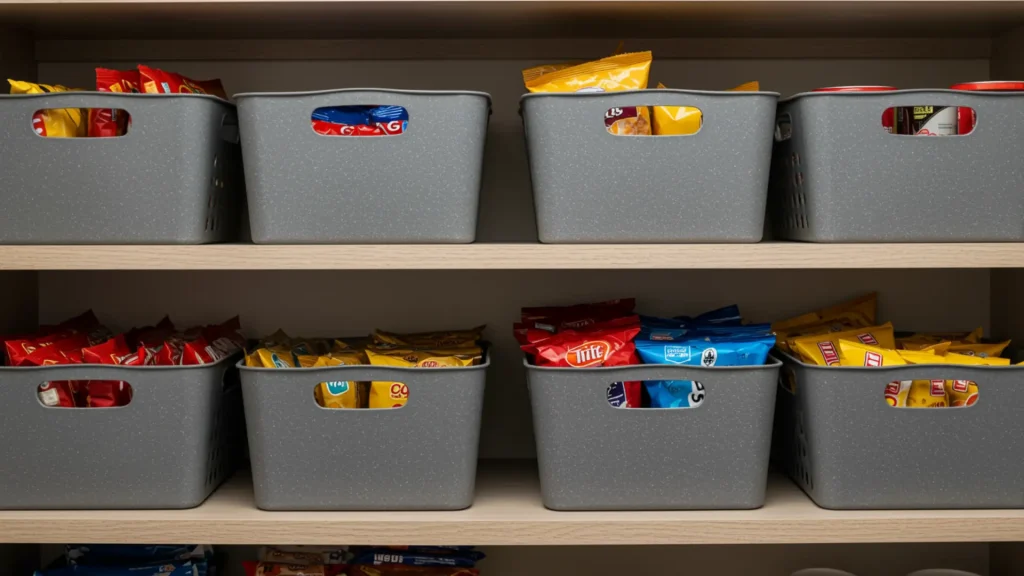
Baskets help group similar items together. For example, one basket can hold snacks while another stores baking supplies.
This keeps shelves from becoming cluttered. It also makes it easier for family members to find items quickly.
14. Pantry with Lazy Susan Turntables
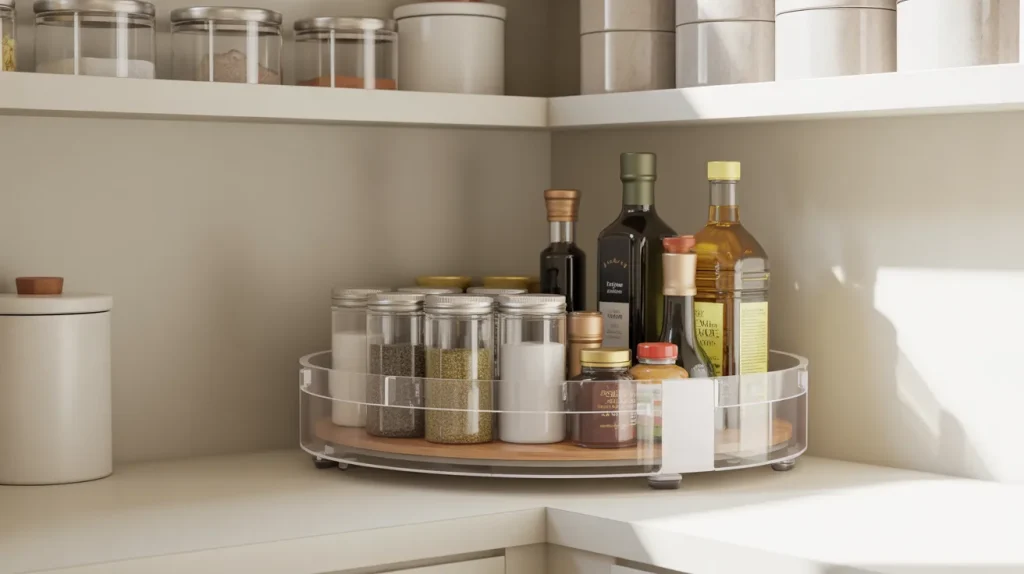
Lazy Susan turntables make it easier to store jars, sauces, and small bottles without losing them in the back.
The rotating base lets you spin the tray and grab what you need quickly. They are especially useful in corner shelves or deeper pantry areas where access can be difficult.
15. Pantry with Vertical Dividers for Trays
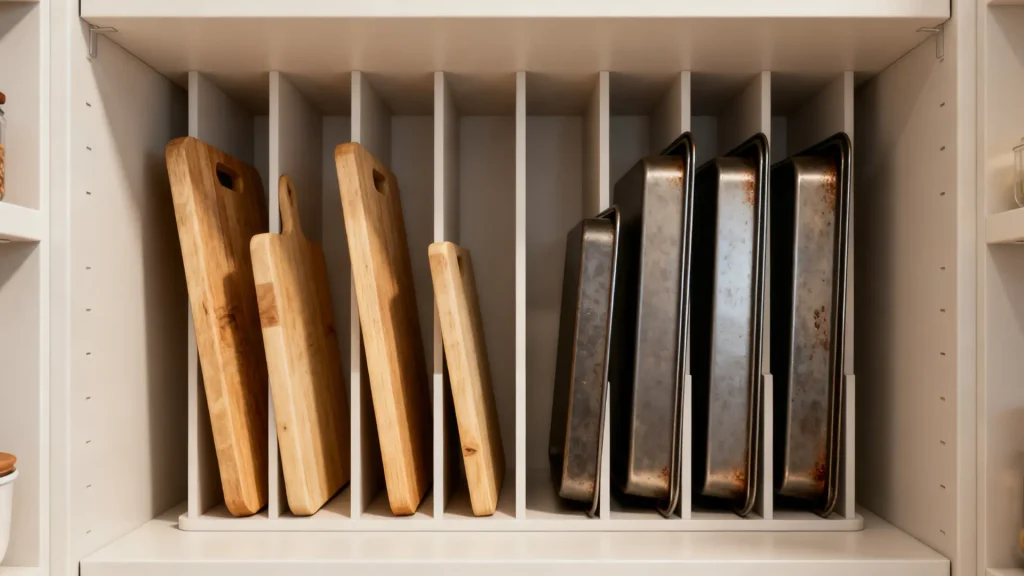
Vertical dividers create organized storage for baking trays, cutting boards, and serving platters. Instead of stacking these items flat, they stand upright in separate slots.
This makes them easier to grab and prevents heavy stacks from falling over.
16. Pantry with Rolling Storage Cart
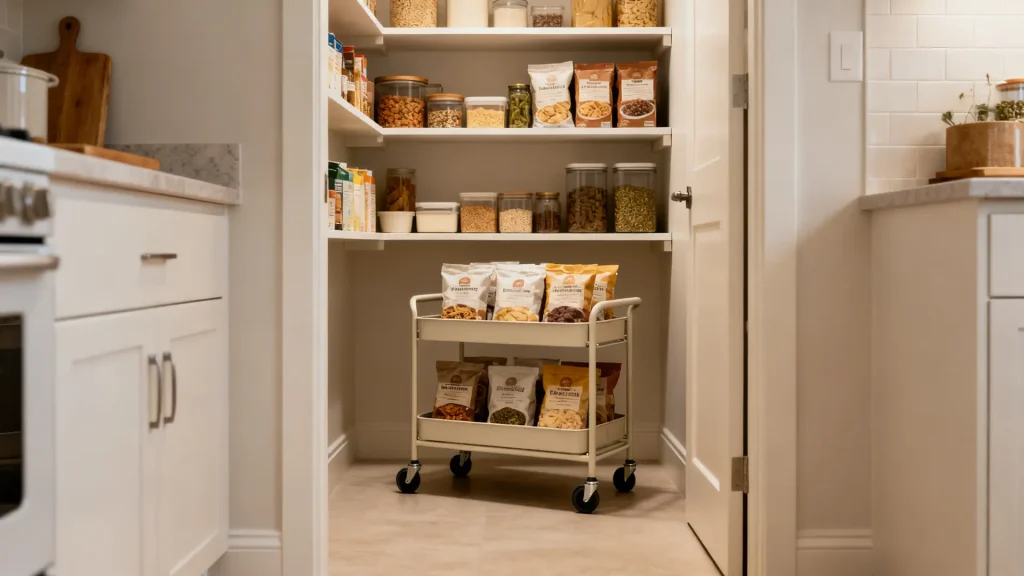
A rolling cart adds flexible storage inside the pantry. It can hold snacks, drinks, or packaged foods.
The cart can also be moved out when extra kitchen space is needed. This makes it a useful option for small walk-in pantry layouts.
17. Pantry with Hidden Recycling and Trash Bins
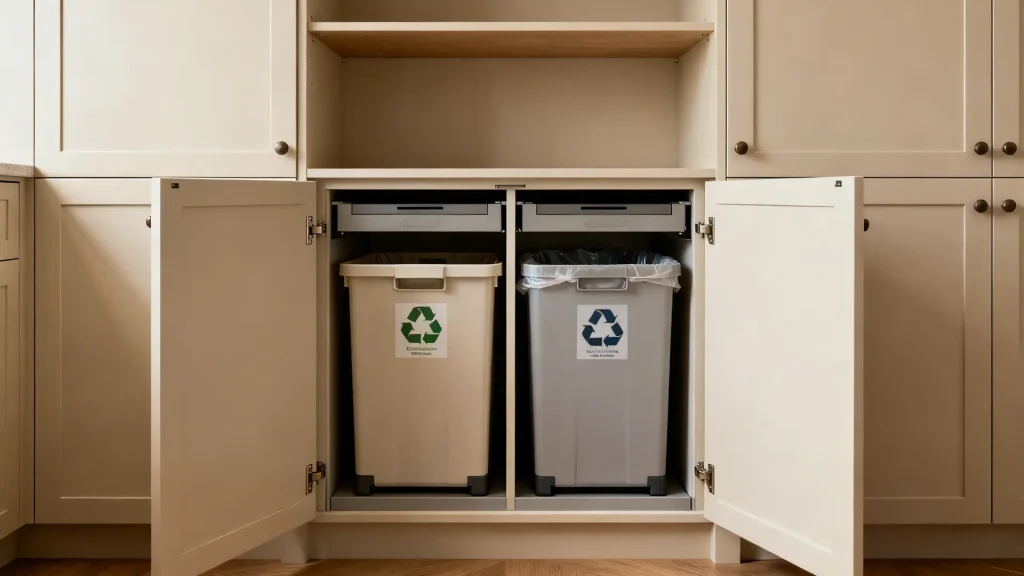
Adding hidden recycling or trash bins inside the pantry keeps the kitchen cleaner. The bins stay out of sight while still being easy to access.
This setup works well in pantries with extra floor space or lower cabinets.
18. Pantry with Built-In Tray Shelf for Baking Sheets
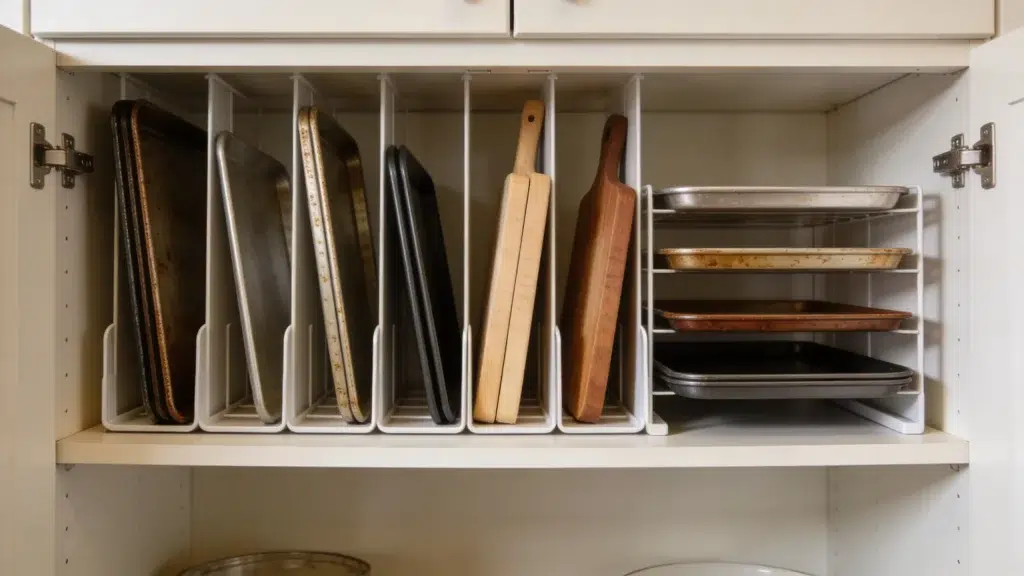
Baking sheets, cooling racks, and cutting boards are awkward to stack and difficult to retrieve. A built-in tray shelf solves this by holding each piece upright in its own dedicated vertical slot.
This eliminates dangerous, heavy piles, protects your cookware from scratches, and makes pulling out exactly what you need quick and effortless.
19. Pantry with Pull-Out Bin for Bulk Food Storage
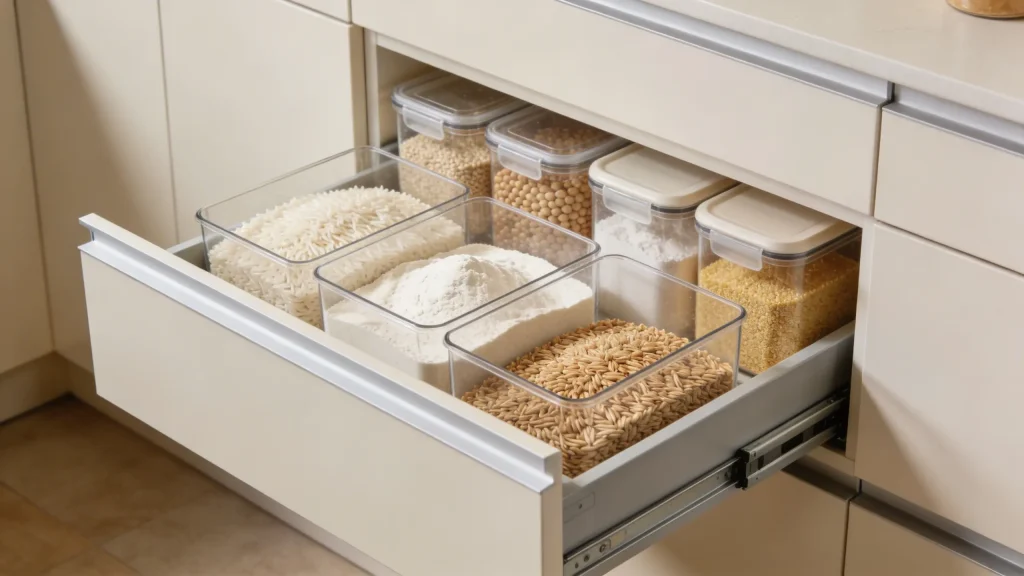
Buying staples like rice, flour, lentils, and grains in bulk saves money but creates storage challenges. Pull-out bins keep these large quantities neatly contained while making scooping and refilling simple and mess-free.
Mounted on smooth drawer runners, each bin slides forward on demand, keeping your bulk pantry staples accessible, airtight, and properly organized at all times.
20. Pantry with Wall-Mounted Hook Storage
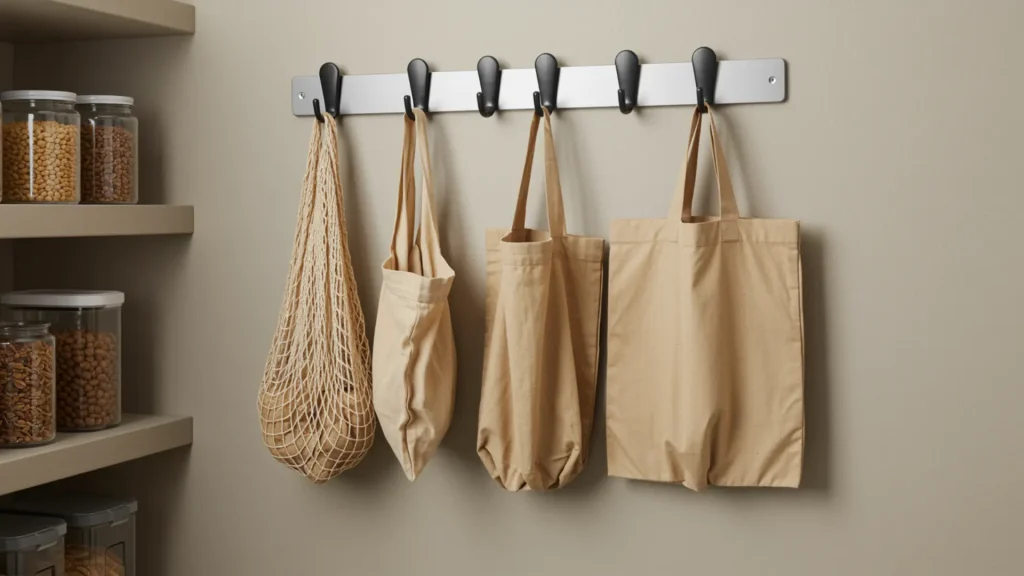
Wall hooks provide simple storage for reusable bags or lightweight items. They use empty wall space that might otherwise go unused.
This keeps bags organized and easy to reach. It also prevents them from taking up valuable shelf space.
21. Pantry with A Narrow Bottle Shelf
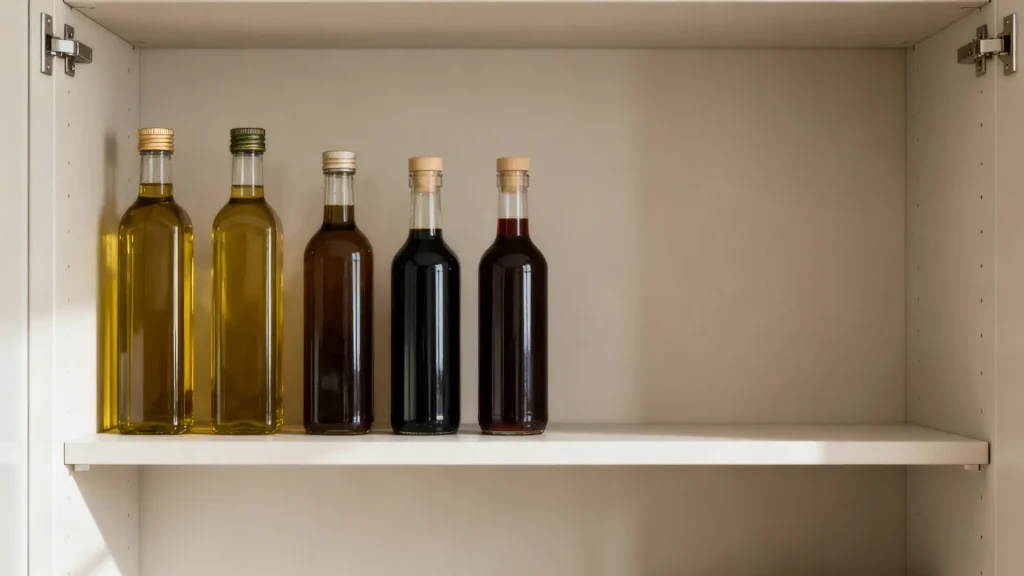
A narrow bottle shelf is designed specifically for tall containers such as oil, sauce, and vinegar bottles.
The slim depth keeps bottles upright and easy to grab. This type of shelf fits well along pantry walls without taking up much space.
22. Pantry with A Small Freezer or A Beverage Fridge
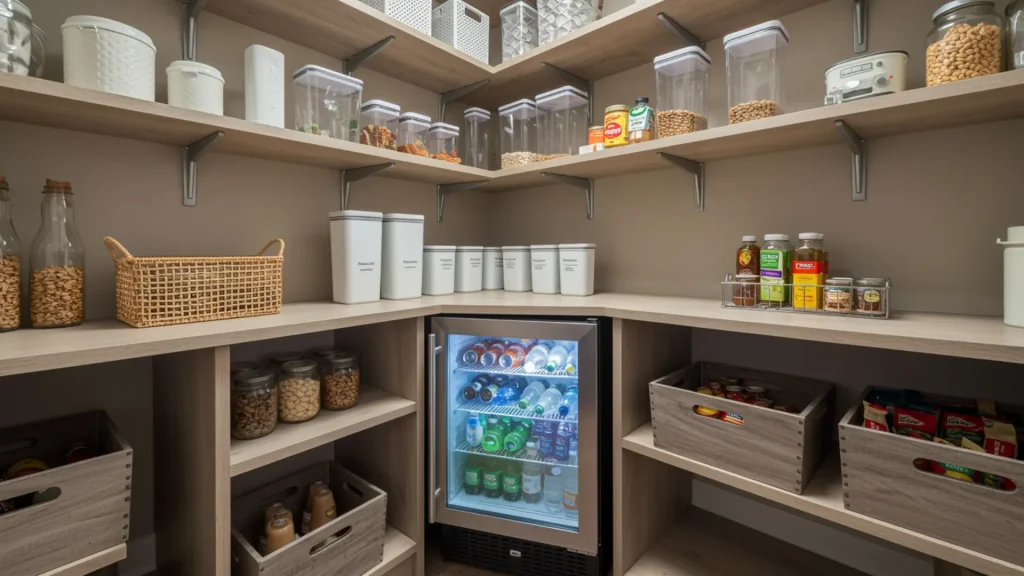
Some walk-in pantries include a compact freezer or beverage fridge. This adds extra storage for drinks or frozen foods without using kitchen space.
Placing it inside the pantry helps keep the main kitchen area less crowded.
23. Pantry with Hanging Measuring Cup Rack

A small rack inside the pantry can hold measuring cups and spoons in one easy-to-reach spot. Hanging them keeps everything visible, so you don’t waste time searching through drawers.
This simple setup also frees up kitchen drawer space and keeps your baking tools organized and ready to use.
24. Pantry with Narrow Side-Wall Shelving
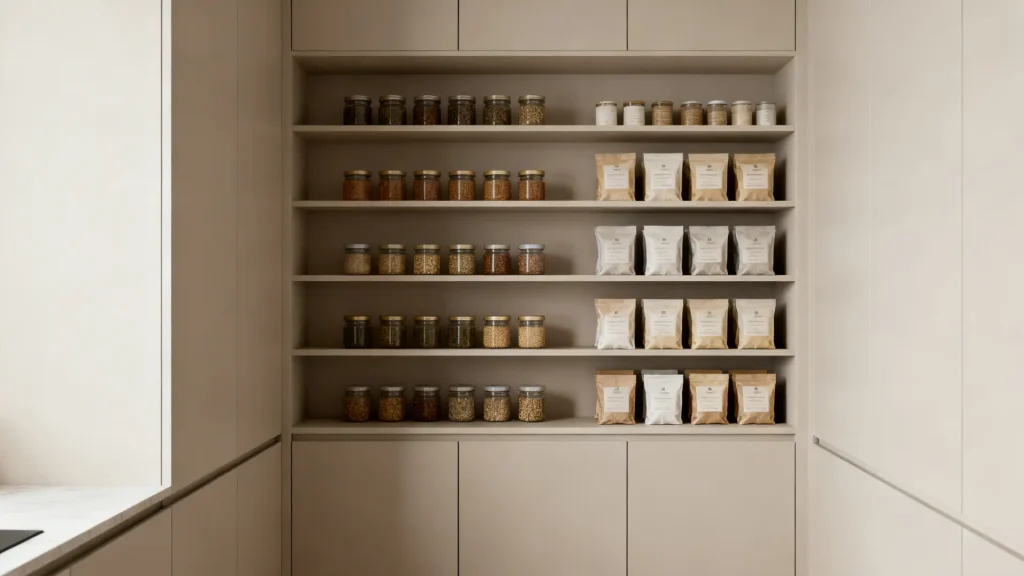
Very narrow shelves along a side wall can store small jars, spices, or packets. These shelves make use of tight spaces that might otherwise go unused.
Even a few inches of extra shelving can add useful storage in a small walk-in pantry.
How to Plan Your Small Walk-In Pantry Before Installing Anything
Before adding shelves or buying organizers, take time to plan how you actually use your kitchen. A small walk-in pantry works best when it’s designed around your habits, not just storage trends.
Start by listing what you store most. Bulk dry goods? Snacks? Small appliances? This tells you how deep shelves should be and where to place them.
Next, divide the pantry into zones. For example:
- Everyday cooking items at eye level
- Bulk storage on lower shelves
- Rarely used items up high
Measure the space carefully, including door swing clearance and walking space. Even a few inches matter in a small pantry.
Finally, think long-term. Adjustable shelves or modular systems allow you to change the layout as your storage needs evolve.
Planning first prevents clutter later and ensures every inch works for you instead of against you.
Conclusion
A well-designed small walk-in pantry is not about how much space you have, but how intentionally you use it. When layout, shelving, lighting, and organization work together, even a compact area can handle daily kitchen needs with ease.
The real difference comes from planning around your habits and keeping systems simple enough to maintain long-term. A pantry that stays organized saves time, reduces food waste, and makes cooking feel less stressful.
Start with one smart improvement and build from there. Take a fresh look at your available space today and begin designing a pantry that truly works for your home.


