Small Home Theater Room Design: 12 Ideas That Work
If you’ve been thinking about turning your small room into a cozy movie space, you’re in the right place. I know how tricky it can be when you don’t have a lot of room to work with.
In this blog, I’ll walk you through small home theater room design ideas that work well in tight spaces.
You’ll find tips I’ve personally used, from selecting the right room to accommodating seating, storage, and technology that won’t clutter your space.
Ready to turn that small room into your theater? Let’s get started.
Getting Started with Your Small Home Theater
Designing a home theater in a small room can save money and space. These compact setups offer cozy viewing and easier sound control. But careful planning is key to avoiding layout or tech mistakes.
Choosing the Right Room
The best rooms for a small home theater are ones that are closed off and quiet. Spare bedrooms, basements, and finished attics often work well as additional living spaces. These spaces give you better control over lighting and sound.
Avoid areas with large windows unless you plan to block the light completely. Try to pick a room with minimal outside noise; a room next to a laundry room or a street-facing wall may not be ideal.
Low ceilings are fine, but ensure the room feels comfortable and has sufficient depth to accommodate your screen, speakers, and seating arrangement.
Budget Planning
Planning your spending early helps you make wise choices as you set up your small home theater. Focus on what matters most first, like a good screen, clear sound, and comfortable seating.
These are the core parts of any setup. You can add extras like wall art, lighting, or storage later. Do-it-yourself setups let you work at your own pace and choose parts that fit your room.
If you’re hiring help, look for someone who understands how to work in small spaces. Keeping your list simple in the beginning makes the whole process easier to manage.
Small Home Theater Room Design Ideas That Work
These small room ideas are practical, smart, and easy to use. They help you save space, stay organized, and enjoy a better viewing setup without needing a large or custom-built room.
1. Corner-Mounted Screen Layout

A diagonal screen setup helps make the most of tight corners. It improves sightlines and frees up wall space for other furniture.
Mount the screen or TV in one corner, and position your seats across the opposite corner. This layout works well in square rooms or spaces where one or more walls are blocked.
Add a small light or mat under the screen to anchor the area and give it a clear purpose without using extra floor space.
2. Two-Tier Platform Seating
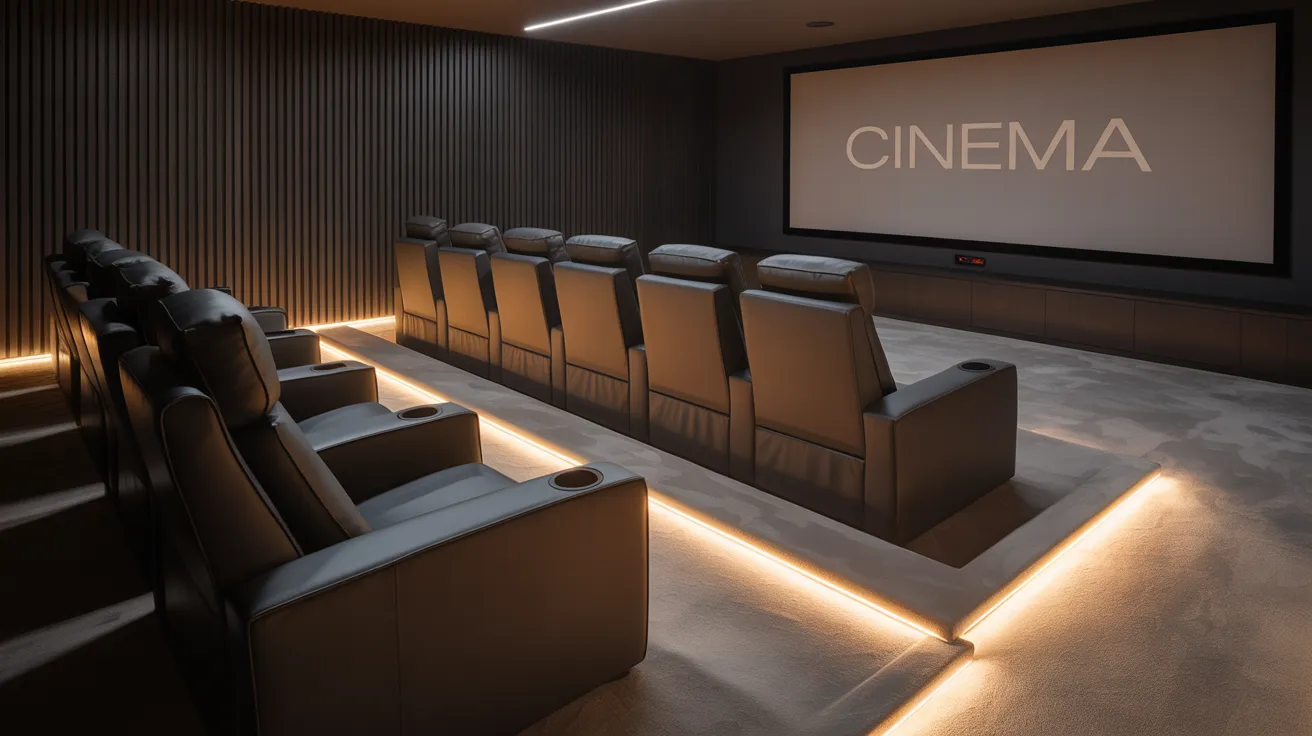
Add a small platform to raise the second row of seats if your room can fit more than one row. This keeps the rear viewers from looking over their heads.
A simple wood riser with carpet or rubber padding works well. You can also add storage inside the platform for extra space.
Keep the design compact so it doesn’t make the room feel crowded. It’s a solid solution for rooms that are around 12×15 feet or slightly larger.
3. Wall-Hugging Recliners
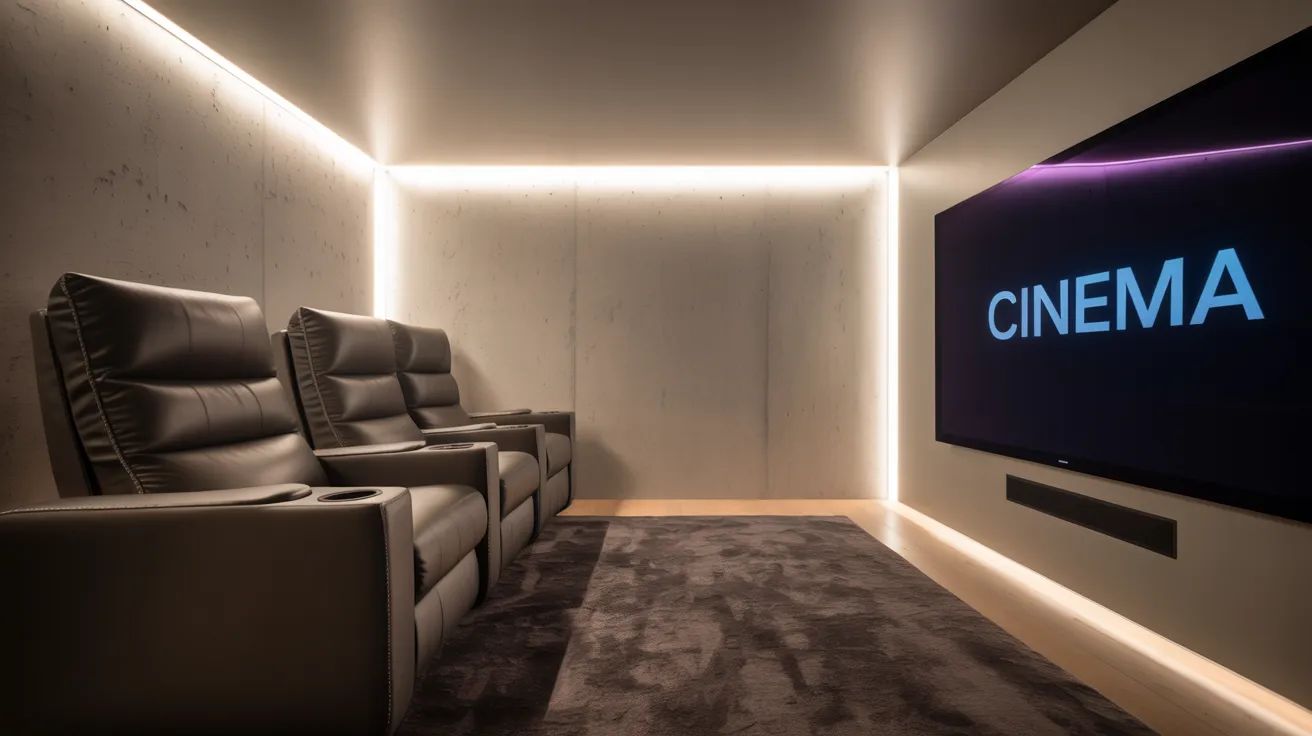
Wall-hugger recliners are made to slide forward, not back. That means you can place them closer to walls without losing the ability to recline. These seats are great for tight layouts where space behind the chairs is limited.
Choose styles that include cup holders or charging ports if you want added function. Look for sets of two or three that fit side by side. These are popular for home theaters because they keep things simple and comfortable.
4. Custom Bench with Storage
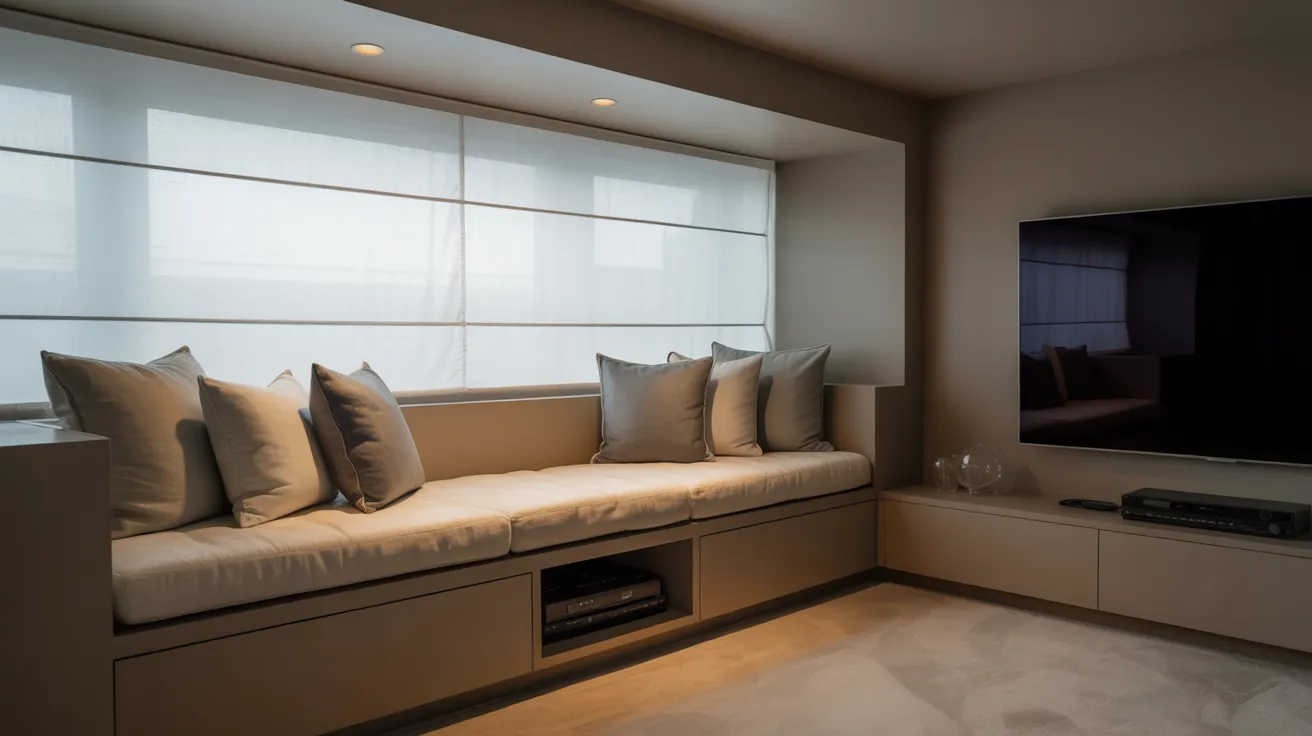
A bench seat along one wall can do double duty. Use it for sitting during movies and store things inside when not in use. Build one from basic wood panels and add a cushion on top.
You can store cables, pillows, or snacks inside. Place it under a window, screen, or on the back wall. This is a good option when there isn’t room for large chairs or extra cabinets. It helps the room feel tidy and helpful.
5. Swivel Club Chairs
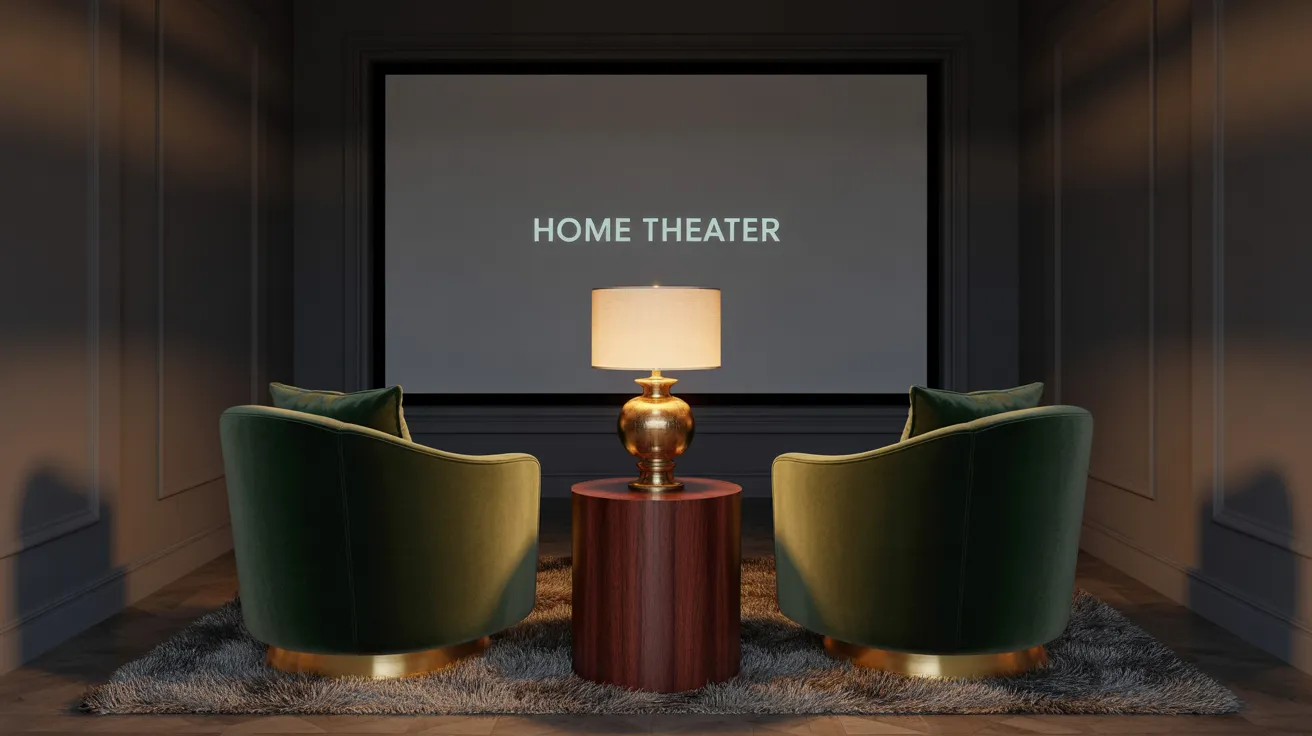
Swivel chairs let you change position with ease. They are a good choice for small rooms that serve more than one purpose. During the day, they can face a desk or a window.
At night, you can turn them toward the screen. These chairs often take up less space than recliners and are easier to move around. Choose round bases with soft backs for comfort. They work well in corners or near walls where you want more seating freedom.
6. Desk Behind Theater Seating
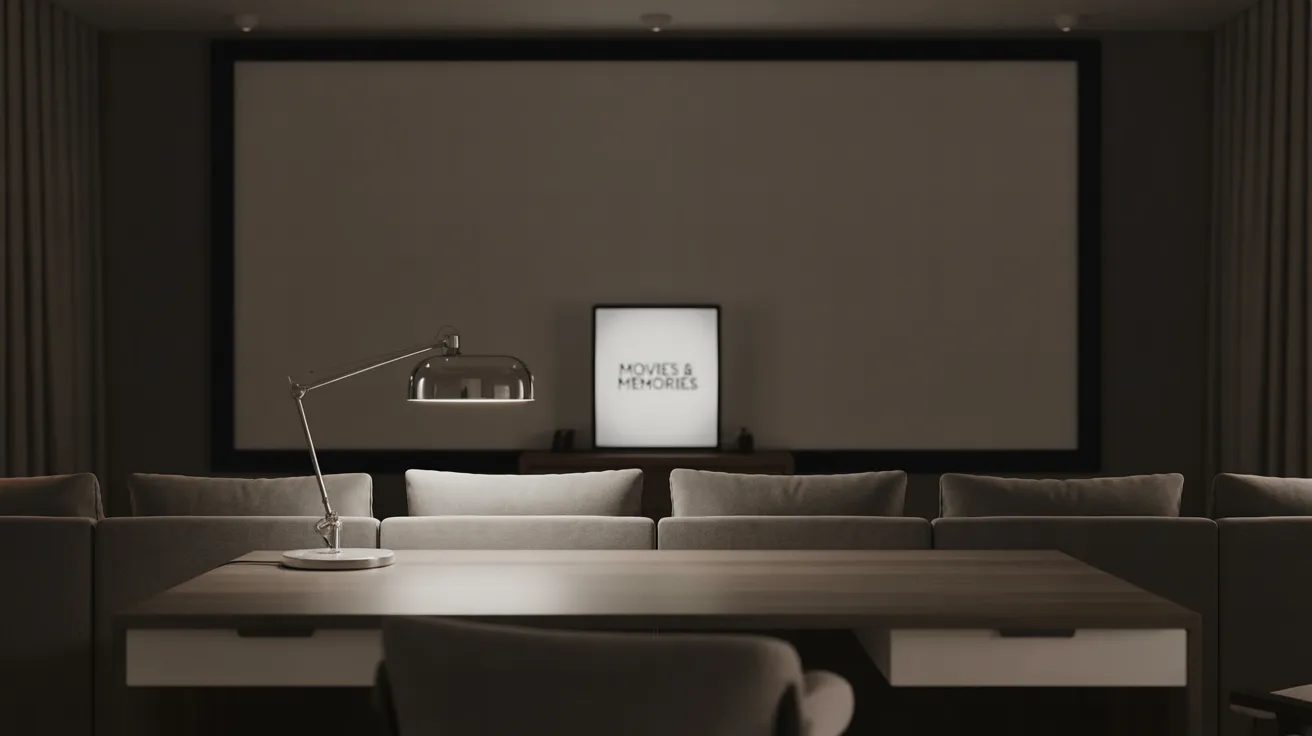
If the room also needs to function as an office or homework space, add a small desk behind your seats. Use a narrow table that fits along the back wall.
Add a stool or slim chair that slides underneath when not in use. This layout keeps your work area away from the screen and helps separate tasks.
When it’s time to watch, just turn off the lights and face forward. No moving large items or unplugging cords.
7. Bookshelf-to-Bar Conversion
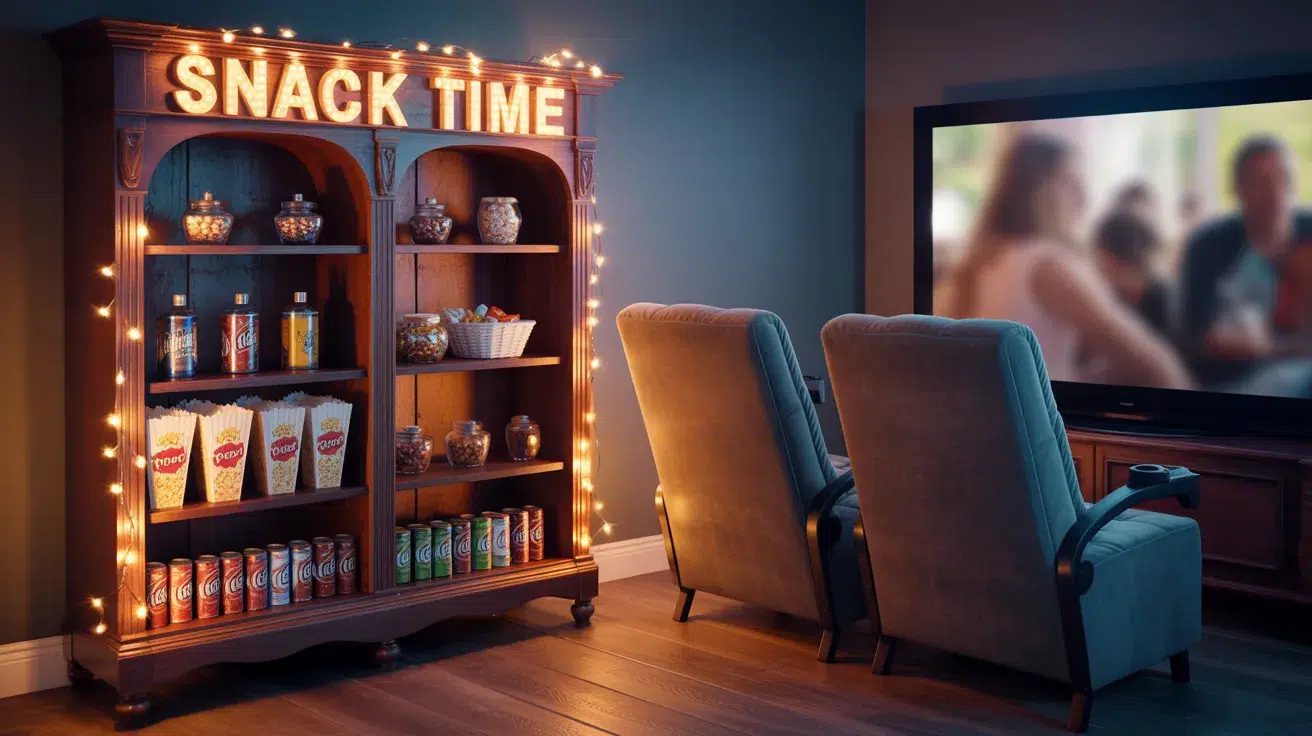
Use a tall bookshelf as a snack bar by turning the shelves into storage for drinks and snacks. Keep popcorn, soda, and movie candy on hand without using your kitchen.
Add stick-on lights or a small spotlight to highlight the shelves. You can also keep napkins, trays, or serving cups stored neatly. This setup works well in corners or between chairs.
It gives you access to treats without adding bulk to the room or buying a full cabinet.
8. Motion-Activated Floor Lighting
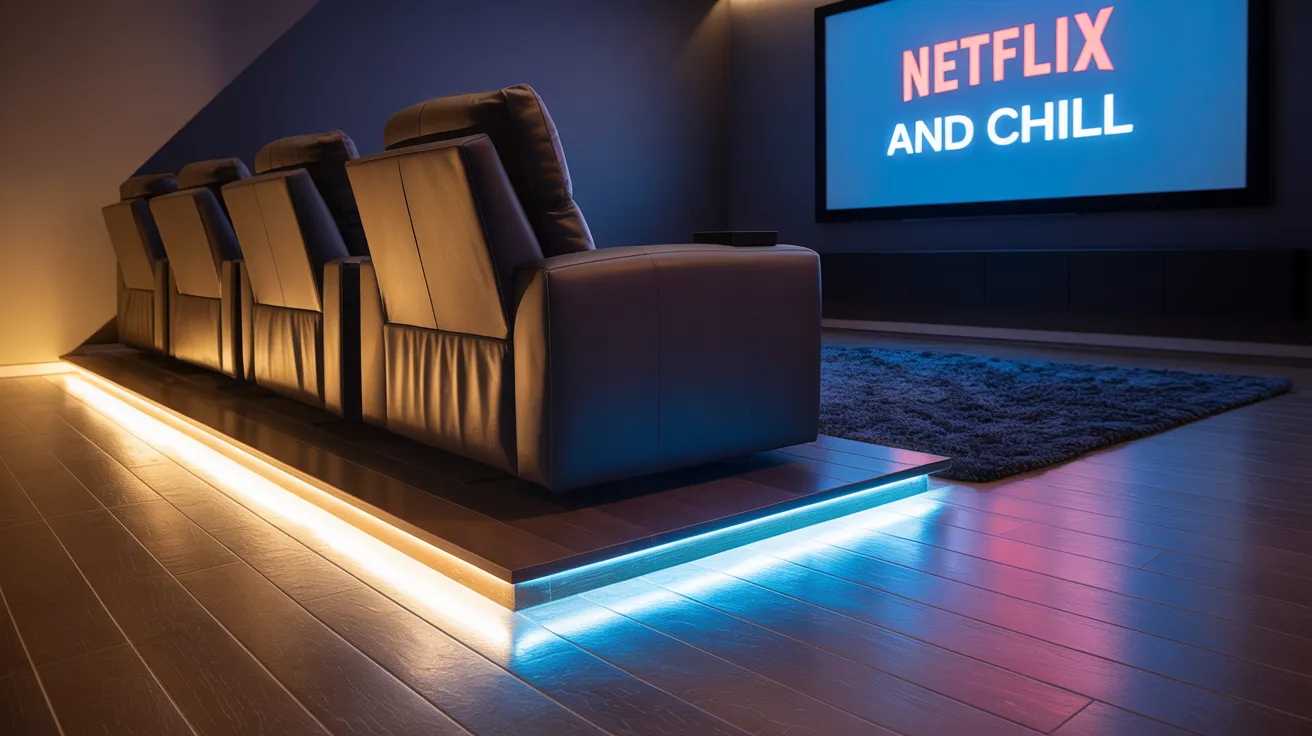
Lighting that turns on when you move is perfect for small theater rooms. It helps people walk around safely without needing a switch.
Place lights along the base of the walls or steps to guide movement in low light. These are easy to install and can run on batteries or plug into a wall. The soft glow lights the path without disrupting the movie.
9. Themed Fabric Wall Panels
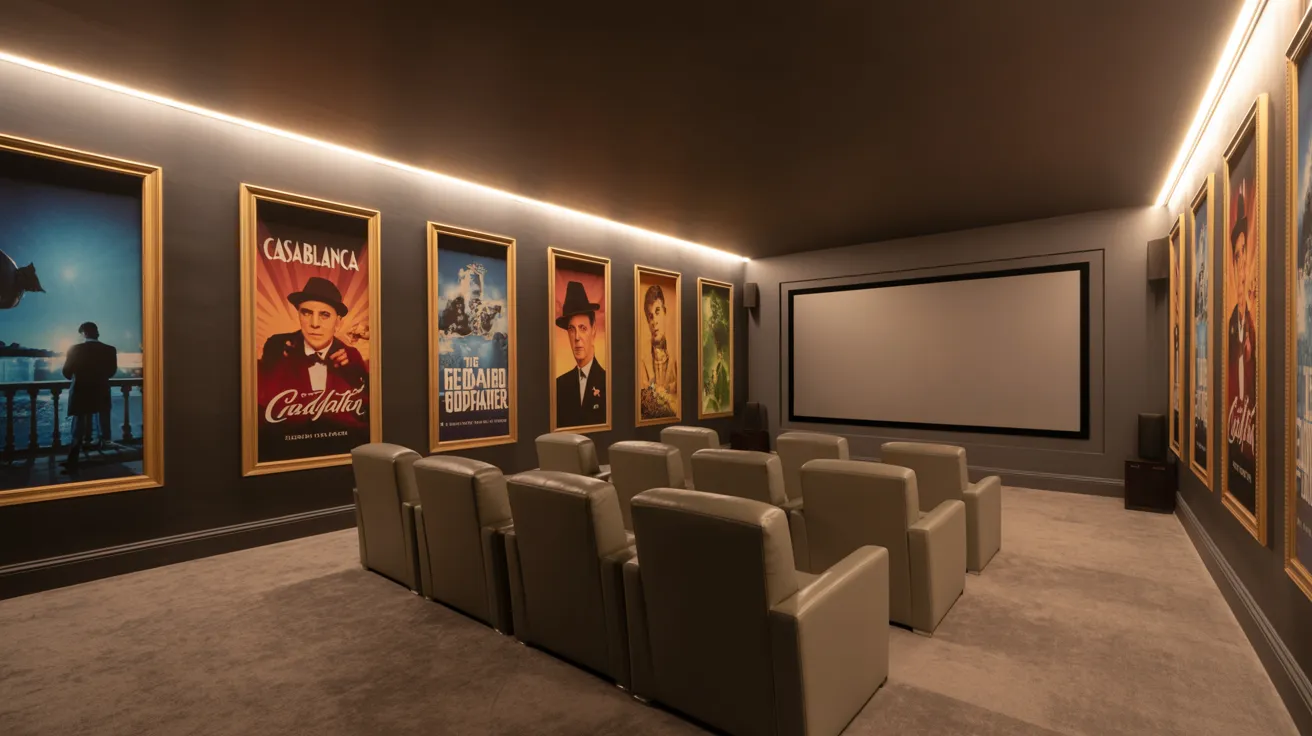
Add foam panels to your walls and cover them with fabric that matches your movie style. You can use solid dark colors or movie-themed prints. These panels help improve the sound while also decorating the space.
They can be framed or mounted with adhesive strips. This setup helps block echo and makes voices sound clearer. It’s a simple way to dress up the walls and improve your viewing at the same time—no need for heavy changes.
10. Short-Throw Projector with Ceiling Mount

A short-throw projector is great for rooms with limited space. It can be mounted near the screen and still show a large image. You don’t need wires running across the floor.
Ceiling mounts save even more room and reduce clutter. Ensure the projector is aligned to match the screen’s height and width. This setup works best in rectangular rooms.
You’ll get a clean look and can enjoy a full wall image even from a short distance.
11. Slide-Out AV Equipment Drawer
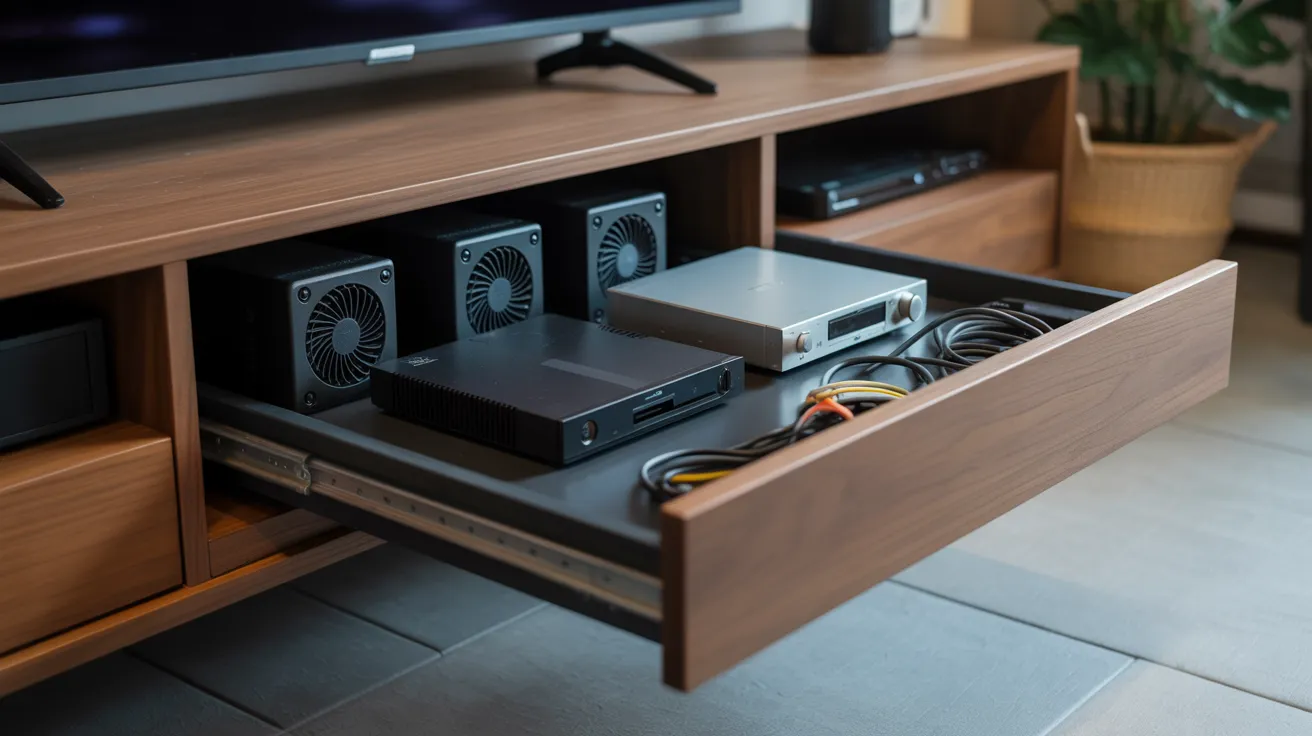
Store your electronics in a drawer that pulls out from a cabinet or media shelf. This keeps the front of the room clear and makes it easy to access gear like your receiver, player, or game console.
Add holes in the back for cables and fans to prevent heat build-up. This idea helps hide wires and gives the room a neat, finished feel. You can build it into a bench, side cabinet, or even below the screen setup.
12. Closet-to-Theater Makeover
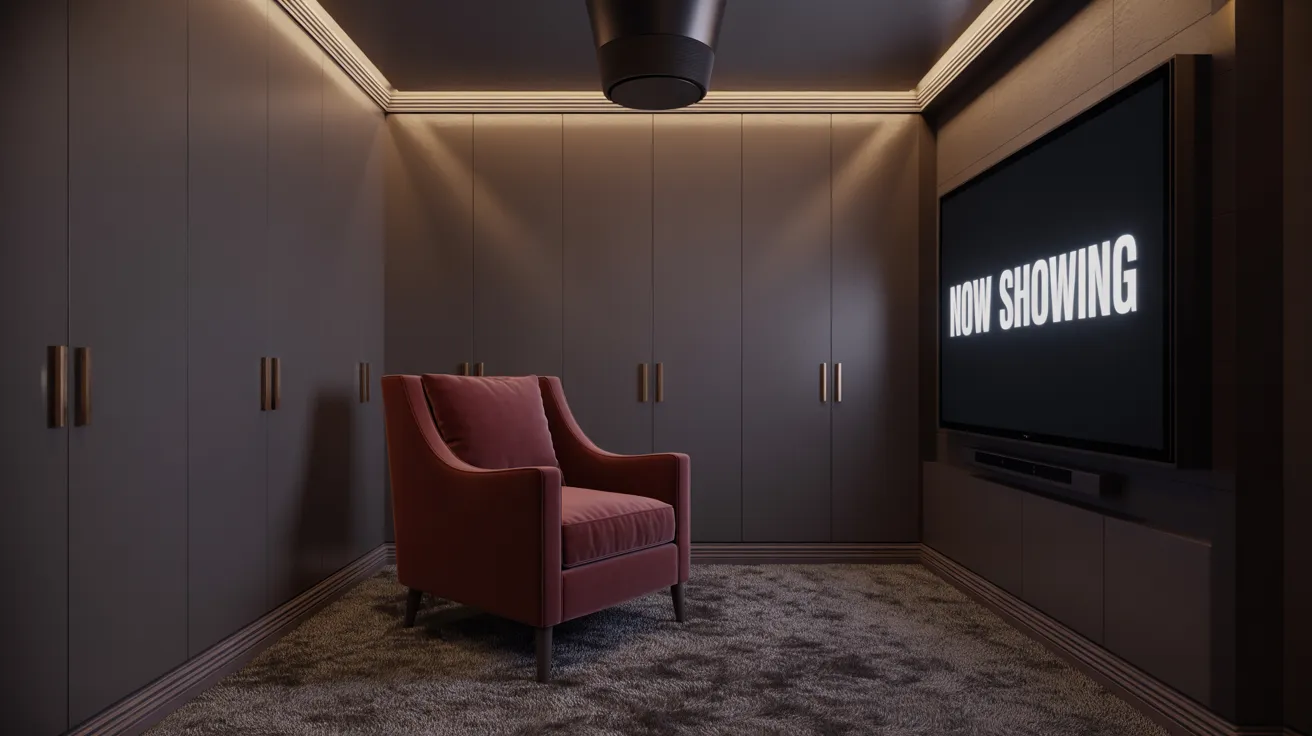
Turn a walk-in closet into a small theater by adding a screen on one end and a single chair or loveseat inside. Use dark paint or curtains to help block out light.
Mount speakers on the wall or ceiling to save space. This setup is ideal for solo viewing or gaming. It’s quiet, private, and uses space you might otherwise overlook.
You don’t need to change the whole room, just focus on making the layout comfortable and straightforward.
Designing for the Senses: Light, Sound & Color
Small spaces benefit from simple changes that improve mood, sound, and picture quality. Thoughtful choices in lighting, noise control, and color can help your room feel more focused and better suited for long viewing sessions.
Lighting Tips for Immersive Viewing
Soft lighting helps your eyes adjust during movie scenes and maintains a calm mood. LED strips behind the screen or TV reduce strain without drawing attention.
Wall sconces that dim or lights with remote controls let you adjust brightness without getting up. Choose warm tones instead of white or blue light.
Floor-level lighting can also help guide movement without being too bright. Stick-on strips and battery-powered options are easy to install and won’t need extra wiring.
Acoustic Treatments on a Budget
Improving sound doesn’t have to cost much. Thick curtains on windows help absorb echoes and block outside noise. Area rugs can stop sound from bouncing off hard floors.
Foam tiles are widely used and easy to attach to walls. Try framing them with wood or cloth covers for a finished look. Even bookshelves filled with soft items can soften the sound in a room.
Focus on the wall and corner areas where noise tends to reflect the most.
Choosing the Right Paint Colors
Dark paint helps your screen stand out and limits distractions from light reflection. Stick with flat or matte finishes in deep shades like charcoal, navy, or rich brown.
These colors reduce shine and support a focused setting for viewing. Lighter ceilings can still work, but try to keep wall tones rich and deep. Avoid gloss or semi-gloss paints since they can reflect screen light and create glare.
A consistent wall color also helps the room feel calm and pulled together.
Essential Tech Setup for Small Theaters
The proper tech setup makes a big difference in small rooms. Choosing the right screen, speaker layout, and storage method helps keep things neat and easy to use without taking up too much space.
Screen vs. Projector vs. TV
For compact rooms, knowing when to use each display option helps avoid wasted space. Use this quick guide to compare:
| Option | Best For | Setup Notes |
|---|---|---|
| Short-Throw Projector | Small spaces with clear wall access | Mount close to the wall; minimal space needed |
| Wall-Mounted TV | Simple setups with fewer devices | Easy to install; suitable for plug-and-play use |
| Pull-Down Screen | Rooms used for other tasks | Hides away when not required; works well with projectors |
Speaker Placement & Wiring Tips
Speaker and wire setup affect both sound and how clean your room looks. Keep it simple with these quick tips:
- Use in-ceiling or in-wall speakers to save space and avoid floor clutter
- Place speakers at ear level when seated for balanced sound
- Choose wireless models to avoid cable mess and wall drilling
- Run wires through baseboard channels or behind shelves for a clean setup
- Avoid placing speakers in corners, where sound can get too heavy or bounce
Storage & Media Equipment Placement
Storage can be simple if you plan early. Use floating shelves to hold your player, console, or small gear without taking up floor space.
A low AV cabinet positioned under the screen helps centralize wires and gear, while also serving as a display area.
If you’re using a bench or platform riser, build under-seat storage for items like remotes, cables, or movies. Keep vents clear if storing gear in drawers or cabinets to prevent heat buildup.
Finishing Touches & Personal Style
Small home theaters feel more complete when you add touches that reflect your taste. Simple decor choices and practical extras can make the space feel more welcoming and suited for everyday use or special viewing nights.
Wall Decor, Posters, & Theme Concepts
Adding wall decor brings personality to your setup. Choose themes that match your interests, such as Marvel, retro cinema, or noir film styles. Posters can be framed or printed on canvas for easy hanging.
Another smart option is using framed sound panels. These improve sound quality while also decorating the room. Pick dark or muted tones to avoid glare from the screen.
Wall-mounted shelves with action figures or old film reels can also give the room a focused and unique feel without taking up floor space.
Furniture & Snack Bar Setup
Comfort and snacks go hand in hand during movie nights. A mini fridge near your seats keeps drinks cold and easy to grab.
Use a rolling snack cart stocked with candy, popcorn, and napkins to move between rooms or store neatly in a corner.
For a more hidden approach, try a drawer built into your media cabinet or bench. This keeps things close without adding clutter.
Match furniture finishes so the space feels balanced, and choose pieces that are small enough to avoid crowding the room.
Conclusion
You don’t need a big space to enjoy a great movie night. With the small home theater room design ideas I’ve shared, you can build something that fits your space and feels just right for you.
I hope you’ve found ideas you can try, such as a better seat setup, hidden storage, or a projector that fits your wall. Use what works best for your room and make it your own.
If you’re ready for more tips to help you create a space you love, check out my other blogs on the website. You’ll find plenty more waiting for you there.