Simple Outdoor Lighting Upgrades That Give Omaha Homes a Fresh New Look
Most Omaha homeowners spend a lot of time on interior upgrades and forget that the outside of a home is what every visitor, neighbor, and passerby sees first. A dark or poorly lit front yard doesn’t just look uninviting; it pulls down curb appeal in ways that even fresh paint can’t fix.
The good news is that you don’t need a full renovation to change how your home looks after sunset. These five simple outdoor lighting upgrades give Omaha homes a noticeably fresher look and are worth adding to your list this season.
Replace Path Lights With Low-Voltage LED Fixtures
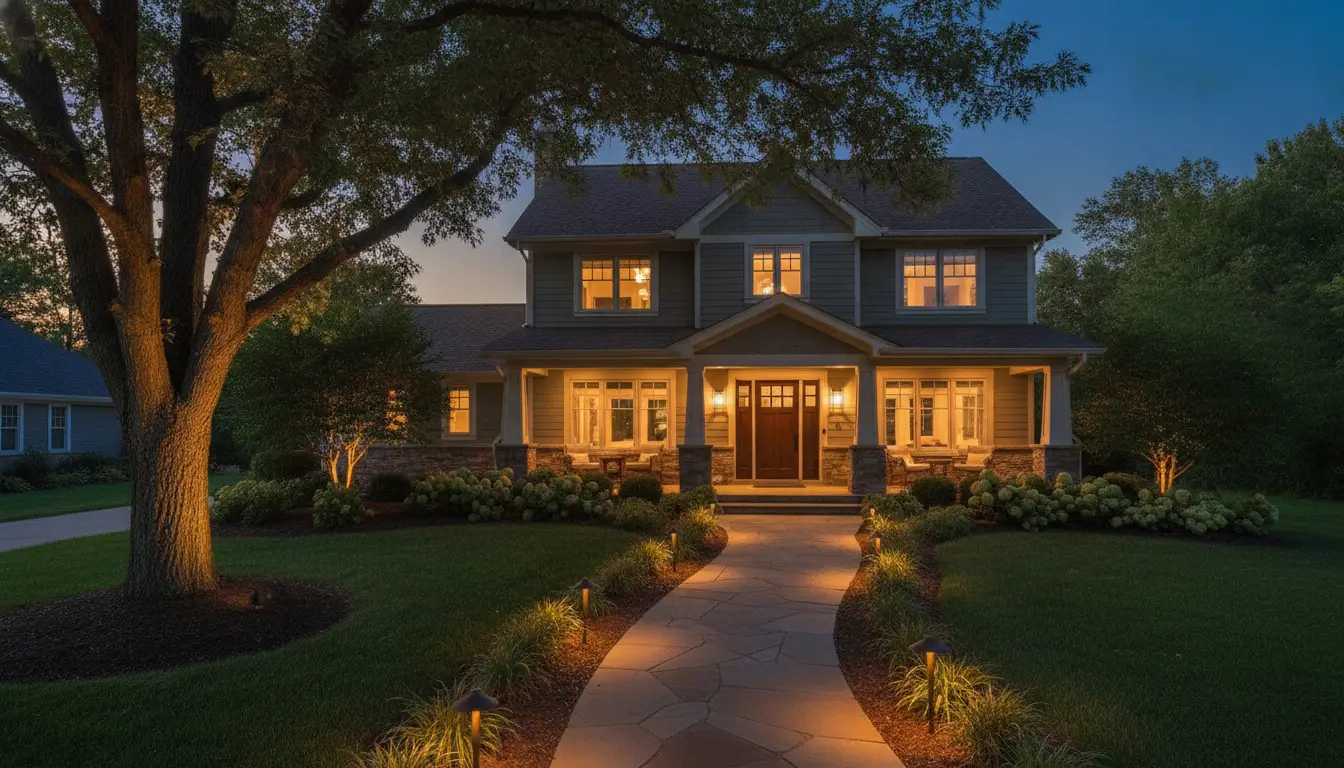
The right path lights change everything about how a home reads from the street. If you’ve got old halogen fixtures along your walkway, or worse, no path lighting at all, this is where the results show up fastest. Landscape lighting professionals who offer outdoor lighting services in Omaha frequently consider walkway lighting one of the most noticeable upgrades, thanks to its ability to improve both aesthetics and functionality. Low-voltage LED path lights draw a fraction of the energy that older fixtures consume, and they last significantly longer between replacements. You can choose from a wide range of styles, from clean, modern bollard designs to traditional lantern-style fixtures, so the look matches your home’s architecture rather than clashing with it. Placement matters too. Space fixtures evenly, about 6 to 10 feet apart, so the path is illuminated without the wash of overlapping light looking industrial or overpowering.
Add Uplighting to Trees and Architectural Features
Uplighting transforms flat, forgettable facades into something that reads with depth and dimension at night. The technique is straightforward: a fixture sits at ground level and directs light upward through the branches of a mature tree or along the textured surface of a stone or brick exterior. Done right, it creates contrast and shadow that make the home look like it belongs on the cover of a design magazine. Done wrong, with too many fixtures or bulbs that are too bright, it looks harsh and excessive. The most important thing is restraint. One or two well-placed uplights on a statement tree in the front yard, paired with a subtle wash along the front wall, create the kind of layered look that feels designed rather than accidental. LED fixtures with a warm color temperature, somewhere in the 2700K to 3000K range, produce light that flatters most exterior materials and landscaping without washing everything in a cold, blue-white tone.
Install Garden Spotlights to Light up Garden Beds
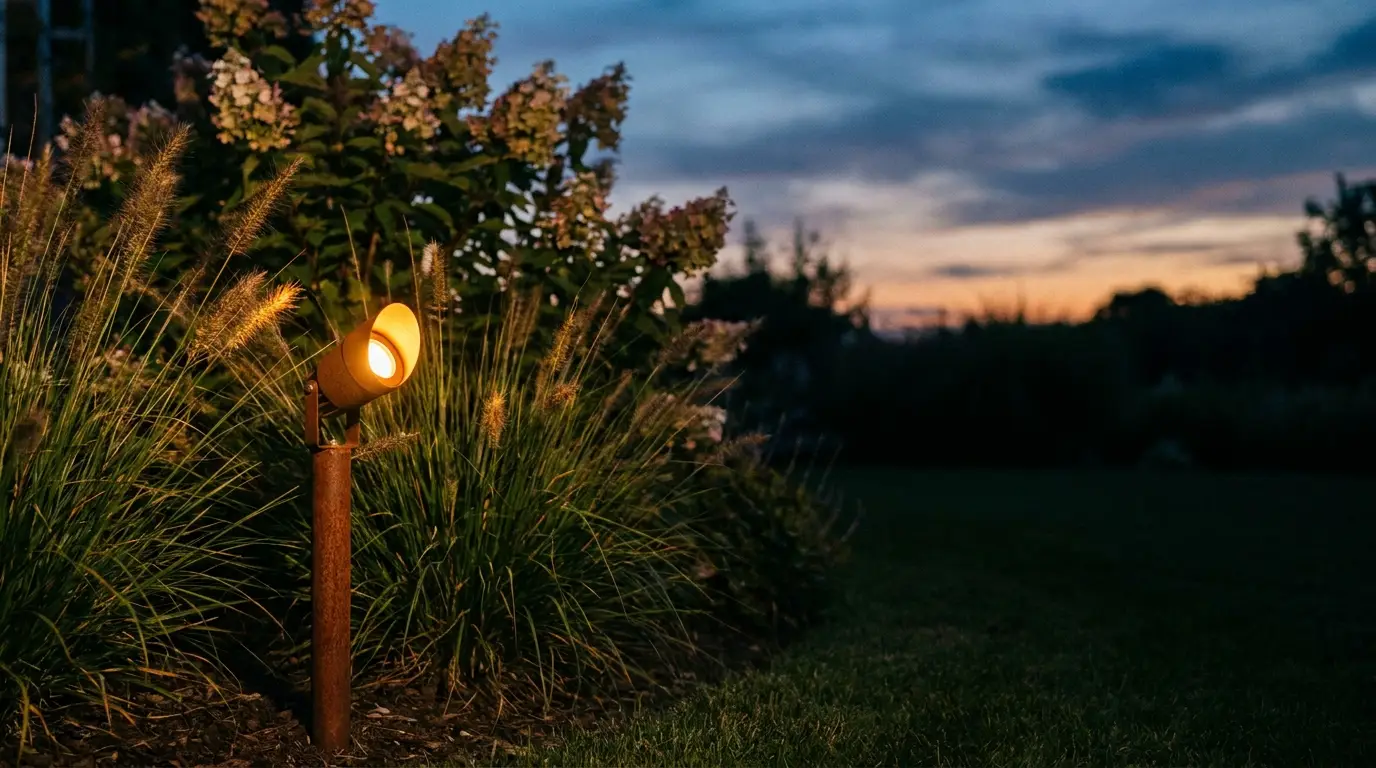
Garden beds and planting zones don’t get nearly enough attention after dark, and that’s a real missed opportunity. Spotlights aimed at flower beds, ornamental grasses, or focal shrubs draw those areas into view and give the whole outdoor space a sense of purpose. The fixtures themselves are small. They can be positioned discreetly enough that they’re practically invisible during the day, leaving only the light to do the talking at night. A few practical details are worth keeping in mind: angle spotlights somewhere around 30 to 45 degrees to avoid direct glare while still getting even coverage across the planting area. Fixtures that adjust on a stake make that easy to dial in. And because LED spotlights now come in very tight beam spreads, you can isolate a single plant or sculpture rather than flooding an entire zone, that precision is what separates a thoughtful outdoor lighting design from a generic one.
Upgrade Porch and Entry Lighting With Fixtures That Match Your Home’s Style
The light fixture flanking your front door is one of the most visible design details on your home’s exterior, yet many homeowners ignore it for years. An outdated coach light or a builder-grade fixture installed in 1997 signals neglect even when everything else looks well-maintained. Replacing entry fixtures ranks among the most affordable upgrades in this category, and the visual payoff is immediate. You don’t have to match the fixture style exactly to your architectural era, but a cohesive relationship matters; a sleek matte black lantern on a Victorian-style home looks mismatched, and a farmhouse-style flush mount on a mid-century modern exterior has the same problem. Spend a few minutes with a lighting showroom or an experienced designer to understand which profile and finish works with your specific home. Beyond style, make sure the fixture puts out enough lumens for a well-lit entry without requiring a bulb so powerful it bleaches the whole area.
Add Step and Deck Lighting for Safety and Visual Appeal
Step lighting often gets treated as a purely practical afterthought, but it can double as one of the cleanest architectural details you’ll add to an outdoor space. Recessed step lights built into risers, or small wall-mounted fixtures along stair landings, create a rhythm that guides the eye and makes the whole space feel intentional. The same logic applies to deck or patio lighting. Low-profile fixtures mounted along deck boards or under railings give an outdoor living area a resort-like quality that traditional overhead string lights can’t fully replicate. You also eliminate the tripping hazards that come with any unlighted transition between grade levels, something that matters especially on steep or multi-level properties common across Omaha’s older districts. Dimmable step lights let you dial the intensity down for evenings when you want ambiance rather than full visibility. That kind of control turns lighting into a design tool rather than a static feature.
Conclusion
Simple outdoor lighting upgrades have an outsized effect on how Omaha homes look and feel, both from the street and within outdoor living spaces. You don’t need to tackle all five changes at once; starting with path lights or entry fixtures alone delivers a visible difference. As you plan, keep fixture quality, placement, and color temperature front of mind. Those three factors determine whether a lighting design reads as polished or thrown together, and getting them right is what separates a home that catches attention from one that blends into the block.