
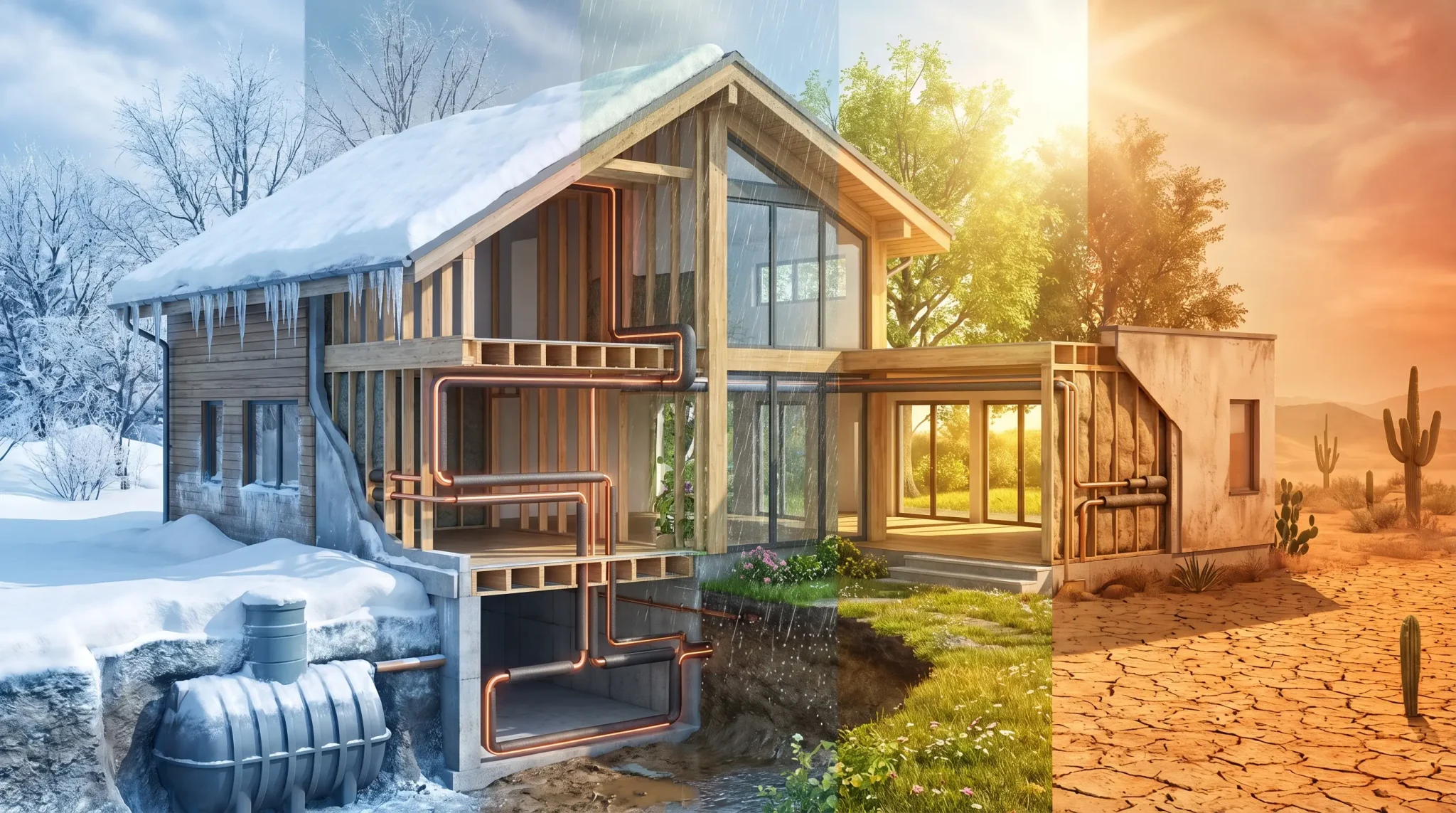
Seasonal Water Systems Design: How Climate and Architecture Influence Plumbing in Modern Homes
Plumbing systems have long been a functional part of architectural design. However, as climate change intensifies, the effects on household durability underscore the importance of a more proactive response to a changing environment and evolving residential needs. The evolution of climate science and building innovations is reshaping plumbing design in modern homes.
The Unseen Influence of Climate on Plumbing Design

Since 1880, average temperatures have risen 1.2° Celsius, or 2.16° Fahrenheit. While it may not seem like a dramatic increase, the warming trend causes detrimental changes, with the repercussions of global warming felt worldwide. Beyond its ramifications on weather patterns and various economic sectors, climate change has significantly influenced plumbing designs.
For instance, moisture and heat in hot, humid regions may lead to corrosion and mold growth. In response, architects and engineers might look to ventilation solutions and specialized materials to mitigate concerns.
Colder climates must also contend with the risk of freezing pipes. When the temperature drops below 32°, pipes are at risk of freezing or even bursting if not properly insulated, even if homeowners leave the faucet dripping. Southern states, including North Carolina, dealt with an influx of burst pipes when a cold front swept through in January 2026. Upgrades often entail insulation, frost-resistant materials and better placement within heated zones of the house.
Arid climates face their own challenges, particularly in water-scarce areas. Plumbing designs have shifted toward water conservation, integrating rainwater harvesting systems, greywater recycling and low-flow fixtures. According to Paul Westerhoff, a professor in the School of Sustainable Engineering at Arizona State University, 30% to 40% of home water use is greywater.
Architectural Intelligence and Designing for Plumbing Resilience
Innovations in architectural intelligence have paved the way for plumbing resilience. From rethinking pipe placement to integrating smart technology, professionals are drastically improving efficiency and longevity within residential structures.
The Critical Role of Insulation and Pipe Placement
A layout of a home’s plumbing system can have long-term consequences. Overall, architectural experts follow best practices of running pipes through the interior walls, avoiding unheated attics and exteriors. It is often a first line of defense against cold temperatures and energy loss.
For pipes installed in exterior walls, it is important to use high-quality insulation to avoid bursting and enhance efficiency. The U.S. Department of Energy says that adding a three-quarter-inch layer of insulation can reduce water-heating energy consumption by 4% to 5% annually. For homes with hydronic heating, insulation can reduce heat loss by 90%, enhancing resilience and saving homeowners money.
Smart Home Technology and Water Management

Smart home technology is revolutionizing residential water management, providing greater control of water consumption and pipe health. For homeowners, integrating intelligent plumbing solutions creates a connected network that is both efficient and protective.
Whole-home solutions include smart leak detectors that detect moisture in critical areas and automated shut-off valves that can stop leaks before they result in substantial water damage. Water flow monitors also deliver real-time insights into daily water use, helping homeowners identify leaks and inefficiencies in their appliances.
Smart plumbing features also help conserve water. For example, smart faucets and dual-flush toilets are excellent water-saving options, while intelligent irrigation systems can adjust watering schedules based on weather forecasts.
Sustainable and Eco-Friendly Plumbing Solutions
According to a Government Accountability Office report, 40 of 50 water management professionals anticipate water shortages in their state under average conditions. This has led to the development of sustainable and eco-friendly plumbing in the architectural landscape.
Environmentally friendly materials and water- and energy-saving technologies look beyond simple fixes and cultivate a more holistic approach to water management. The use of recycled and durable materials, such as copper and polyethylene piping, is more cost-effective and extends the plumbing lifespan.
Energy-efficient, tankless water heaters, innovative greywater recycling and low-flow fixtures are other solutions helping to address the water crisis and rising utility costs.
Common Seasonal Plumbing Issues and How to Prepare

The changing seasons bring about different challenges for households. From bursting pipes in winter to strained pipe connections in spring, it is important for homeowners to understand the risks their climate poses and prepare accordingly.
Those living in areas that receive heavy summer precipitation should test their sump pump by slowly dumping water into the pit and checking whether the float triggers the pump. Conducting routine maintenance, including testing batteries and discharge lines, ensures it works properly when they need it most.
During autumn months, it is crucial to clear gutters and downspouts of debris, as this can cause water to overflow and pool around a home’s foundation. This could lead to pressure issues and leaks in a basement. When the first frost arrives, disconnecting and draining outdoor hoses and spigots can prevent freezing and cracking.
Insulating pipes in colder areas, such as attics, garages and crawl spaces, is most critical during the winter months. Then, in the spring, homeowners should call a professional and schedule a thorough inspection.
Global Perspectives on the Future of Plumbing
The future of plumbing is emerging against significant global water strains. Places like Africa and Asia are notoriously affected by shortages, with about 226 million residents lacking access to safe water and 381 million lacking access to sanitation. As climate change worsens, these regions can expect worsening conditions and pressure on existing plumbing systems.
In general, the United Nations estimates that 4 billion people endure severe water scarcity for at least one month annually. In 2023, nearly 28% of the European population experienced shortages.
The architectural sector must embrace technological innovations and a mindset shift to design water systems that are durable and resilient. Next-generation water-saving devices will be most advantageous, while construction blueprints must move past simple convenience and functionality.
When professionals and homeowners begin treating plumbing as a crucial conservation tool, homes become part of the solution to addressing global challenges and ensuring water availability for tomorrow’s generations.
A Call for Integrated and Thoughtful Design
While conventional pipes might have been sufficient for past weather conditions, those systems are unlikely to withstand today’s climate impacts. Modern pipes and plumbing solutions must take into account the changing climate, ensuring architecturally sound and sustainable solutions for safer, more efficient households.


