The Real-World Guide to Freestanding Tubs: Why Acrylic Wins for Daily Use
A freestanding bathtub can completely change the look of a bathroom. But once you move past the photos and start thinking about installation, cleaning, and how the tub actually performs in a busy American home, the material matters more than the shape. Most people end up choosing between heavy materials like cast iron or stone resin and the more practical option of acrylic. If you are remodeling a master bath or a guest bathroom, understanding how an acrylic bathtub holds up over time will save you a lot of trouble down the road.
Installation and Weight Matter More Than You Think
One of the first surprises with a freestanding tub is delivery day. Depending on the material, a tub can weigh as much as a small car, and that affects everything from floor structure to how easily it fits through your doorways.
Floor Loads and Subfloor Prep
If your house is on a slab foundation, weight is less of a concern. But a huge number of American homes have wood-frame construction with crawl spaces. A stone resin or cast iron freestanding tub often weighs 300 to 400 pounds before water. Add water and a person, and you are looking at over 800 pounds sitting on four small feet or a flat base.
An acrylic bathtub typically weighs between 70 and 100 pounds. That difference often means you do not need to reinforce floor joists or hire a structural engineer. You can place it on standard plywood subfloor without worrying about long-term stress on the framing.
Getting It Through the Door
Older homes with narrow hallways and tight door frames make delivery a real headache. With a heavy stone or iron tub, you might need a specialized moving crew or even remove a window to get it inside. With acrylic, two people can carry it easily. You can tilt it, rotate it, and fit it through standard doorways without damaging walls. That keeps the renovation simpler and avoids extra delivery costs.
Daily Comfort and Heat Retention
A bathtub is not just a showpiece. When you actually use it, you want the water to stay warm and the surface to feel comfortable.
How Acrylic Holds Temperature
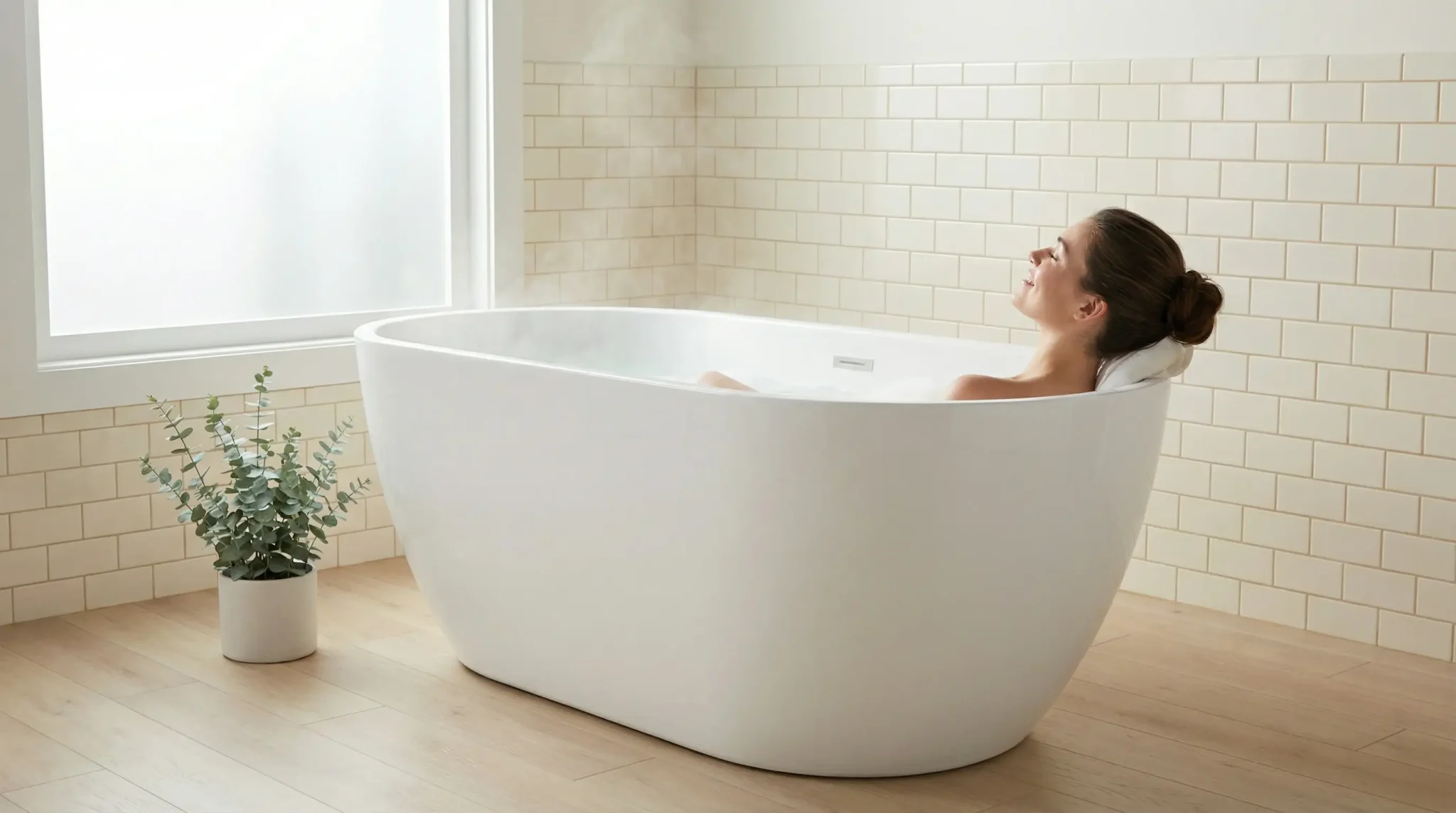
Acrylic does not pull heat out of the water the way metal does. If you have ever used a steel tub, you know the sides feel cold against your back and the water cools quickly. Acrylic warms up to body temperature within a few minutes of filling. Compared to stone resin, it loses heat a little faster, but for a normal 30- to 45-minute soak the difference is not dramatic.
What matters more is whether the tub has proper insulation. A well-made freestanding bathtub in acrylic usually includes a layer of fiberglass reinforcement and sometimes foam insulation. That foam stiffens the shell and helps hold heat. If you want good heat retention, look for models that specifically mention reinforced insulation rather than a single-layer shell.
The Feel Underfoot
Stone and cast iron feel completely rigid. Lower-quality acrylic can have a slight bounce when you step in, especially if the base is not fully supported. But a well-constructed acrylic bathtub uses resin and fiberglass reinforcement to eliminate that flex. When you are shopping, press down on the bottom. If it feels solid, it is built to handle daily use, including kids climbing in and out.
Cleaning, Durability, and Repairs
Bathrooms get wet, soap scum builds up, and accidents happen. The material you choose determines how much weekend cleaning you do and how easy it is to fix minor damage.
Surface Durability
Acrylic is non-porous, so mold and mildew do not have pores to grow into. A soft sponge and a mild bathroom cleaner keep it looking glossy. You should avoid harsh abrasive powders or scrub brushes, but with normal care the surface stays good for years.
One big advantage of acrylic is repairability. In a real home, someone drops a shampoo bottle or a razor nicks the surface. With cast iron or stone, a chip is hard to repair and often leaves a visible patch. With acrylic, you can sand out a minor scratch with fine-grit sandpaper and buff it back to a shine. For deeper damage, repair kits fill the area and blend in seamlessly. You do not need to replace the whole tub for one small blemish.
Hard Water and Stains
Hard water is common across the US, especially in the Southwest, Midwest, Texas, and Florida. When hard water evaporates on a dark surface, it leaves white mineral deposits that are tough to clean. Acrylic handles this better than stone. On a black or dark gray stone resin tub, every water spot shows up immediately and often requires specialized stone cleaners. With acrylic, the surface is smoother and mineral deposits do not bond as aggressively. A simple spray of white vinegar and water usually takes care of buildup without damaging the finish.
Design Flexibility and Sizing
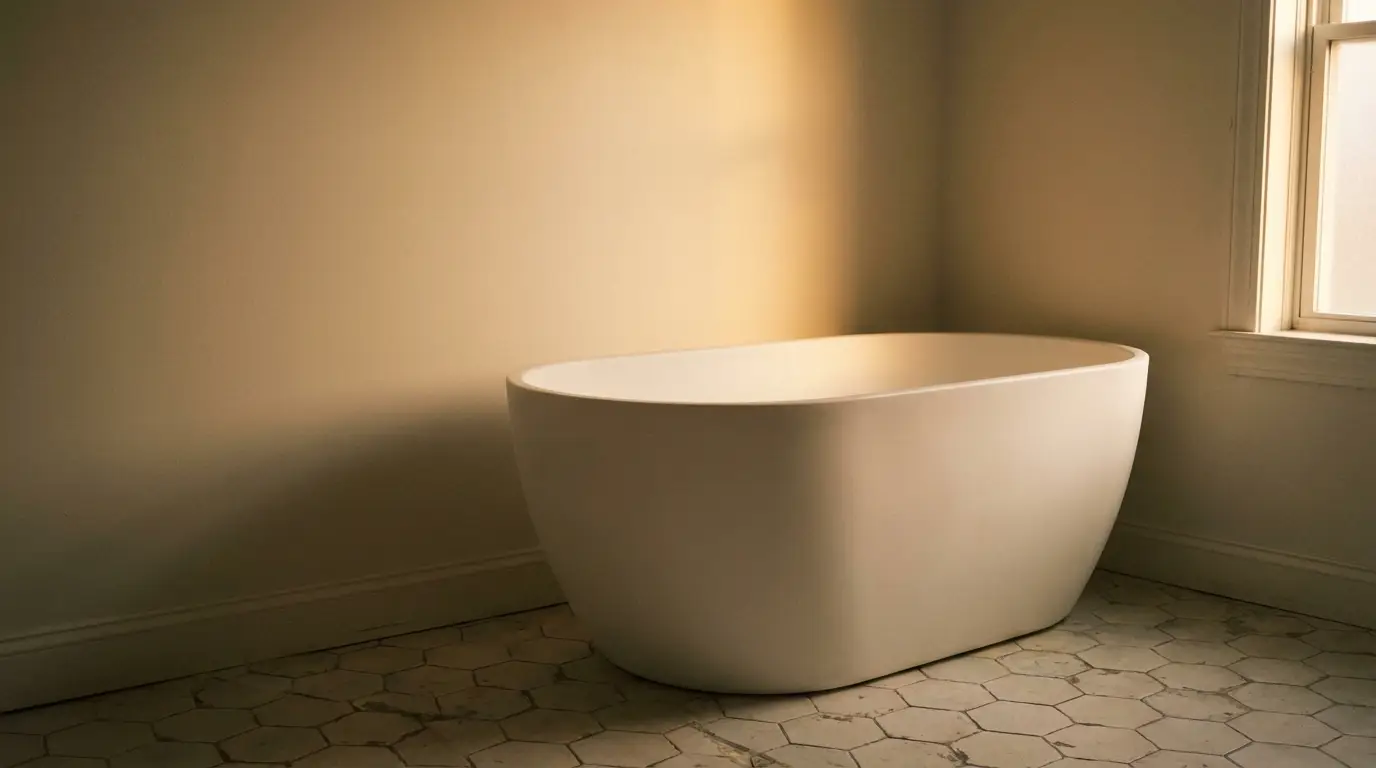
Freestanding tubs come in more shapes than ever. Acrylic allows for designs that are not practical with heavier, more rigid materials.
Fitting Unusual Spaces
Not every bathroom is a huge master suite. Many homes built from the 1950s through the 1980s have smaller bathrooms where space is tight. With acrylic, manufacturers can make compact freestanding models that fit into corners or have narrower profiles while still offering a deep soak. You can find a freestanding bathtub in acrylic that is only 55 inches long but still gives you 18 inches of water depth. Because acrylic is molded rather than carved or cast, the shapes can be more ergonomic too. Some models have built-in lumbar support or a sloped back that makes lying down more comfortable without needing a long deck.
Color and Finish Over Time
Stone resin tubs often have a gel coat that can yellow or fade if exposed to direct sunlight through a bathroom window. Acrylic has the color built into the material, and the finish is UV-stable. If your bathroom gets natural light, the tub stays white or holds its color without developing a yellowish tint after a few years.
Plumbing and Installation Simplicity
A freestanding tub usually has either a floor-mounted or wall-mounted faucet. That changes the plumbing rough-in compared to a standard alcove tub, but acrylic makes the process easier.
Easier for Contractors and DIY
If you hire a plumber, installation is straightforward but requires precision. The drain location has to match the tub’s footprint. With an acrylic bathtub, the lightweight shell gives you more flexibility if the rough-in is slightly off. You can maneuver the tub into place without wrestling a 400-pound unit onto the drain shoe. For a remodel, that keeps the project moving faster and reduces the risk of damaging floors or walls.
Drain and Faucet Reliability
Acrylic does not react with water chemistry the way some metals do. You typically see fewer issues with the seal around the drain. Stone resin tubs sometimes develop hairline cracks around the drain hole if the plumber over-tightens the fitting. Acrylic has a little give, so it is more forgiving during installation. You also avoid problems with metal drain flanges rusting against the material.
Matching the Tub to Your Lifestyle
Before buying a freestanding tub, think about who will use it and how often. The material should fit your real routine, not just your design inspiration.
Families with Kids
For families, acrylic is the most practical option. Kids splash, climb, and drop toys. The non-porous surface does not hold bacteria, and the smooth finish wipes down quickly after bath time. If a toy leaves a scuff, you can polish it out. You do not have to worry about chipping an expensive stone finish.
Aging in Place and Accessibility
If you are remodeling for the long term, weight matters for another reason. An acrylic freestanding tub is easier to remove if you ever need to modify the bathroom for accessibility. Many acrylic models also offer a lower step-in height because the material can be molded with a shallower threshold. That makes a real difference for anyone with limited mobility.
Cost and Overall Value
Budget is always a big factor in a bathroom remodel. Acrylic tubs generally cost less than stone resin, copper, or cast iron. But the cost difference goes beyond the purchase price. You also save on installation labor, structural modifications, and long-term maintenance.
When you add up the cost of reinforcing a floor for a heavy tub, hiring extra labor for delivery, and buying specialized cleaners to maintain a stone finish, a heavy tub can end up costing two to three times more than a quality acrylic installation. For most homeowners, that extra cost is hard to justify unless a specific design absolutely requires stone.
Acrylic gives you the clean look of a freestanding tub without the engineering challenges of heavier materials. It fits how people actually live, balancing style with practicality and long-term value.