15 Most Expensive Flooring: What to Know Before You Buy
Thinking about upgrading your floors but unsure if it’s worth the hefty price tag? With so many luxury options, from rare marbles to handmade wood patterns, it’s easy to feel overwhelmed.
In this guide, I’ll help you understand what makes some floors so pricey, when to invest in them, and when mid-range alternatives make more sense.
If you’re balancing beauty and practicality, this blog will help you find flooring that fits your style and your budget.
What Makes Flooring Expensive?
Some flooring costs more because of rare materials, expert work, import limits, hard installs, and the need for regular care.
Rare Materials
Some floors use rare woods like teak or zebrawood, or stones like marble and onyx. These materials are hard to find and slow to produce. That makes them more expensive.
Special tiles or inlays made with shells or even diamonds also cost a lot. When materials are rare, prices rise fast because there’s not enough for everyone who wants them.
Skilled Craftsmanship
Expensive flooring often involves expert work. Hand-cut tiles, detailed inlays, and custom wood patterns take a lot of time and skill. These jobs can’t be rushed or done by machines.
Workers need training and special tools. If a floor is made just for your home or has a detailed design, that labor adds cost, both in time and in the final price.
Limited Supply
Many costly flooring options come from specific regions or countries. Getting the material takes time, effort, and money. If a country exports only small amounts or if the wood is rare, prices go up.
Shipping long distances and paying extra taxes or import fees also raises the price. Limited supply means buyers compete for what’s available, which increases cost.
Installation Challenges
Some flooring materials are harder to install than others. Stone or hand-laid tiles need strong glue, perfect measurements, and trained professionals. Even hardwood may need sanding, sealing, or pattern cuts.
Mistakes during installation can ruin the whole look. Because it takes more time and care to do right, labor costs are much higher than for simple or snap-in floors.
Ongoing Care
Many high-end floors need regular care to stay beautiful. Marble may need sealing every few months. Wood might need polishing or buffing.
Some materials scratch easily or don’t handle water well. That means you’ll spend more time and money keeping them clean and damage-free. Over the years, these upkeep costs can add a lot to your total spending.
Most Expensive Flooring Types
These luxury flooring choices are grouped by stone, wood, and unique surfaces to help you compare easily and choose what suits your space.
Rare Natural Stones
These stones are prized for their beauty, color, and texture. Many are imported and require special care and sealing.
1. Calacatta Gold Marble

This bright white marble from Italy has gold and gray veins. It’s rare and gives bathrooms or dining rooms a clean, rich look. You need to seal it often to stop stains.
It’s popular in luxury homes because it looks soft but expensive. The cost is high due to both its rarity and the regular upkeep it requires.
2. Thassos White Marble

Thassos marble is one of the whitest natural stones. It’s found in Greece and has no patterns or lines. That clean look makes small spaces feel brighter and bigger.
It’s great for bathrooms and kitchens. You’ll need to clean and seal it often, but it gives a sharp, polished feel to modern or classic home styles.
3. Blue Bahia Granite

Blue Bahia is a bold granite from Brazil with rich blue tones and sparkles. It’s one of the rarest colored stones. It works well in kitchens or near water because it’s strong and doesn’t crack easily.
It brings color and drama to a space. Once installed, it doesn’t need much care, but it comes with a high price tag.
4. Onyx & Quartzite Tiles

Onyx has bright colors and a smooth surface, but it’s fragile. Quartzite is tougher and lasts longer. Both are great for adding bold looks to walls or floors.
Onyx needs sealing often and is best in quiet areas. Quartzite is better for busy spots like kitchens. The price depends on thickness, finish, and where the stone is from.
Exotic Hardwood and Wood-Inspired Options
These wood types offer deep color, strong grains, and a warm, rich feel that turns floors into centerpieces.
5. Zebra Wood

Zebra wood has light and dark stripes that look like a zebra’s pattern. It comes from Africa and is hard to find. It’s strong and good for places like offices or sitting rooms.
But it needs polish to stay shiny and clean. Too much water or dirt can fade its color, so it’s best used in dry, quiet areas.
6. Bubinga & Bocote

Bubinga is from Africa, and Bocote comes from Mexico. Both have rich grains and deep colors. They’re dense, heavy, and long-lasting.
People use them for custom floors or fancy rooms. They cost more because the trees grow slowly and the wood is hard to cut. You’ll need a skilled installer to work with these, but the final look is worth it.
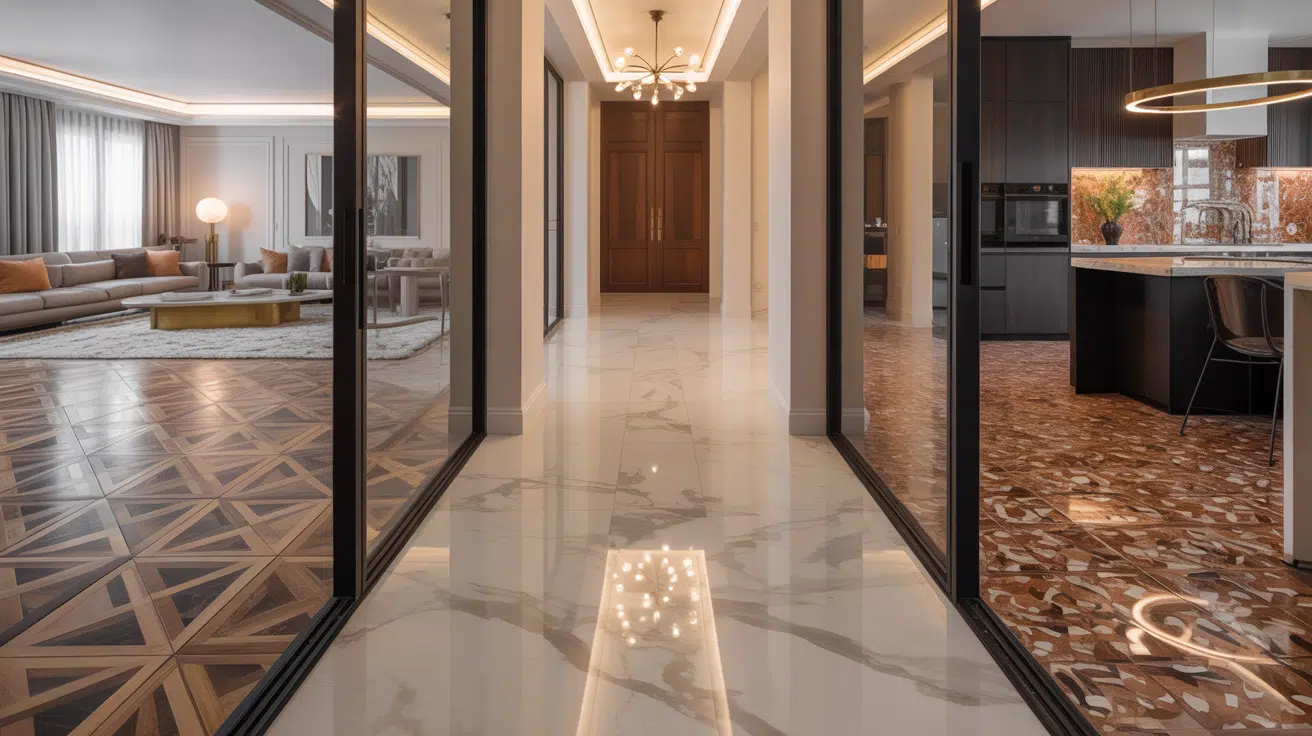
7. Versailles Parquet

This classic wood floor design uses small pieces placed in a square pattern. It comes from French palaces and takes a lot of time to install. You need exact cuts and detailed planning.
The look is formal and elegant, perfect for dining rooms or large living spaces. Because of the labor involved, it’s one of the more costly wood options.
8. Reclaimed Antique Hardwood

This wood comes from old homes, barns, or ships. It has marks, nail holes, and deep color from years of use.
People like it because it’s eco-friendly and full of character. It’s strong and often better than new wood. You’ll need to sand and seal it, but it adds a warm, lived-in feel that new floors can’t match.
9. Petrified Wood

Petrified wood comes from trees that turned to stone over millions of years. Each tile looks like wood but is strong like rock. The mix of earth tones makes it great for entryways or spa-like rooms.
It needs sealing, but holds up well over time. Every tile is one of a kind, which adds to its beauty and cost.
Unique Luxury Surfaces
These materials go beyond wood or stone to offer rare textures, colors, and handmade details for standout flooring.
10. LuxTouch Diamond Marble

This floor includes tiny diamonds, mother-of-pearl, and black stone set into marble. It’s made by hand and costs more than most homes. You’ll see it in fancy showrooms, not regular homes.
It’s not just flooring, it’s a luxury art piece. Very few places in the world use this kind of floor, which makes it extremely rare.
11. Handcast Bronze Flooring

Handcast bronze tiles or panels create a rich, glowing floor surface with deep patina and metallic warmth. Each piece is poured and finished by hand, giving the floor a subtle texture and variation.
Bronze flooring works well in formal spaces like foyers, libraries, or wine rooms.
It resists wear and builds character over time, but it’s expensive due to the material and labor involved. You’ll need a professional installer and a wax finish to keep it looking its best.
12. Leather Flooring

Made from genuine leather tiles, this flooring is soft and warm underfoot. It’s used in bedrooms, closets, or study spaces where comfort matters.
It scratches easily and doesn’t like water, so it’s not for busy or wet rooms. Leather floors give a cozy, rich feel but need regular care to stay clean and smooth.
13. Designer Mosaic Tiles

These tiles are handmade or painted with bright patterns. Some include glass or metal bits. Each one is placed by hand, so the work takes time and money.
They’re used in bathrooms and kitchens because they handle water well. They look bold and creative and can turn even small spaces into standout designs.
14. Terrazzo with Brass or Copper

Terrazzo is a mix of stone chips set in concrete. When mixed with brass or copper strips, it gets a high-end look.
These floors are smooth and last a long time. They’re used in wide spaces like offices or hallways. You’ll get a strong surface that’s easy to clean, and it adds a polished feel without looking too cold.
15. Mother-of-Pearl Tile Inlays

These tiles are made from the inner shells of oysters and other mollusks. The surface shines with soft colors like cream, pink, and silver. They’re used in special spaces like powder rooms or entryways for a gentle glow.
Each tile is handmade and delicate. They aren’t great for high-traffic areas, but add beauty and charm where you want to impress.
Best Flooring by Room Type
Not every expensive floor fits every space. Some shine in busy kitchens, others work best in quiet bedrooms. Here’s a simple guide to match luxury flooring with the room where it works best.
Kitchen

Kitchens need strong, easy-to-clean floors. Blue Bahia Granite adds bold color and resists stains and water. Terrazzo works well in big kitchens. It’s smooth, tough, and easy to wipe down after cooking or spills.
Bathroom

Bathrooms deal with water and humidity. Thassos Marble gives a bright, clean look and makes small bathrooms feel larger. Designer Mosaic Tiles handle moisture well and let you add colorful or bold patterns with style.
Entryway

Your entry sets the tone for the home. Reclaimed Hardwood adds warmth and character, while Quartzite holds up against dirt and foot traffic. Both bring strong first impressions and can take a beating from shoes.
Bedroom

Handcast Bronze Tiles add warmth and subtle shine, perfect for low-traffic, cozy bedroom spaces. Each tile is handmade and ages beautifully, though it needs wax upkeep.
Living Room

Living rooms are for gathering and relaxing. Versailles Parquet offers a formal look with patterns that catch the eye. Zebra Wood adds flair with bold lines, turning the floor into a design feature all its own.
Dining Room

Dining rooms deserve a rich look. Calacatta Marble brings a clean, polished feel and works well with formal dining sets. Bocote Wood adds depth and drama with its dark grains and natural shine.
How Much Does Luxury Flooring Cost?
Luxury flooring isn’t just about the material itself. The total cost also includes who installs it, how hard it is to work with, and what it takes to keep it looking great over the years.
Average Price Ranges
Different floors have different base costs depending on how rare or complex they are to make. Stone, wood, or handmade tiles all vary in price.
Some floors are expensive because of what they’re made from, while others cost more due to how they’re designed or finished.
Labor and Installation
Many luxury floors require skilled workers to be installed correctly. Some require special tools or detailed cuts. The more complex the material is to work with, the more time and care the job needs. Mistakes can be costly, so expert help is often a must for high-end floors.
Hidden Maintenance Expenses
The spending doesn’t end after the floor is installed. Many premium floors need regular care like sealing, buffing, or cleaning with special products.
Some may also require professional help to maintain their appearance. Over time, this upkeep adds to the total cost.
Eco-Friendly Luxury Flooring
If you want luxury without harming the planet, these flooring options offer beauty, comfort, and quality with a reduced environmental impact.
- Sustainable Hardwoods: Made from fast-growing or responsibly harvested trees like bamboo or FSC-certified oak. Strong, stylish, and renewable.
- Reclaimed Wood: Reuses old wood from barns or buildings. Keeps charm, reduces waste, and adds character to any room.
- Natural Linoleum: Made from flaxseed oil and wood dust. Biodegradable, soft underfoot, and great for kitchens or playrooms.
- Recycled Tile: Glass or ceramic tiles made from post-consumer materials. Durable, water-resistant, and often available in bold colors.
- Low-VOC Finishes: Paints, stains, and sealers with fewer harmful chemicals, healthier indoor air, and safer for families.
Final Thoughts
Choosing the most expensive flooring isn’t just about spending money; it’s about making wise choices that fit your goals, space, and lifestyle.
You’ve seen what makes luxury flooring special, when it’s worth the price, and how mid-range options can still deliver style and function.
Whether you’re updating one room or planning a complete home upgrade, I hope this guide helped you feel more confident about your decision. If you’re still unsure, start small. Try one space and see how it feels.
As you plan, remember to think beyond the surface, consider comfort, care, and how your home functions day-to-day. Want more tips? Check out my other guides before your next step.