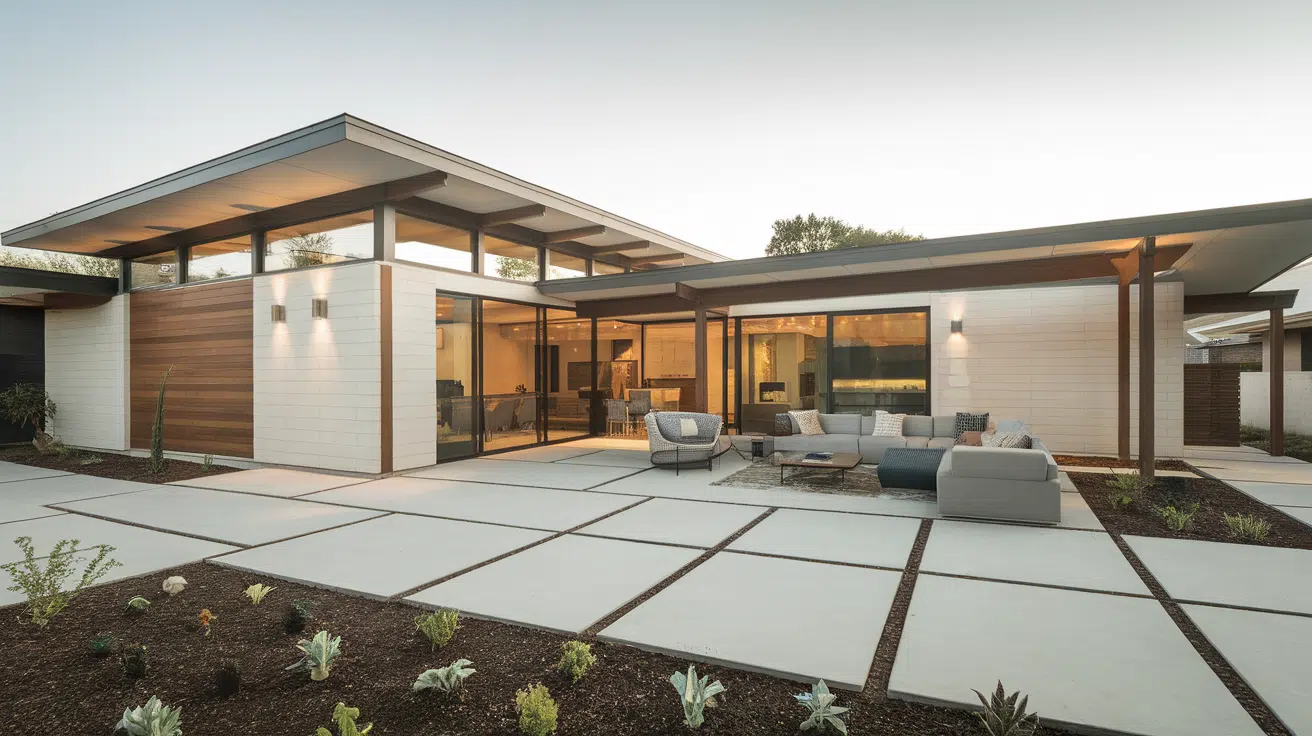
19 Mid Century Modern Exterior Design and Ideas
There’s something about a mid-century modern exterior that just speaks to me. The clean lines, big windows, and simple shapes make it a style that feels calm and effortless.
If you’re like me, you probably love how it brings the outdoors in and makes your home feel open and bright.
In this guide, I’ll walk you through how to create or update your own mid-century modern look. We’ll talk about rooflines, siding, paint colors, windows, and even landscaping.
If you’re just getting started or planning a full refresh, I’ve got you covered.
So if you’ve been dreaming about that perfect blend of vintage appeal and modern style, you’re in the right place. Let’s get into it.
What Makes an Exterior Mid-Century Modern House Special
Mid-century modern design started after World War II. Architects wanted to create homes that felt open and connected to nature.
These homes moved away from fancy details. Instead, they focused on simple shapes and natural materials.
The style became popular because it offered something new. Families wanted homes that felt modern and easy to live in.
Key Design Features That Define the Style
To bring a mid-century modern exterior to life, it helps to first understand what makes this look stand out.
These homes have a few clear features that give them their unique feel. Let’s take a closer look at those next.
Clean Horizontal Lines
Mid-century modern homes stretch wide rather than tall. The rooflines often run parallel to the ground.
You’ll see long bands of windows that emphasize this horizontal feel. These elements make the house look settled into its surroundings.
Large Glass Windows
Windows take up much more space than in older home styles. Some walls are almost entirely glass. These big windows bring natural light deep into the home. They also create a strong connection between inside and outside spaces.
Minimal Decoration
The beauty comes from the building’s shape and materials. You won’t find fancy trim or ornate details. Every element serves a purpose. This approach creates a calm and uncluttered look.
Popular Architectural Elements
Once you know the key features, it’s easier to spot the details that give these homes their character.
From roof shapes to window styles, every part plays a role in the overall look. Here’s what to keep in mind as you plan your exterior.
Flat and Low-Pitched Roofs
Most mid-century modern homes have roofs that barely slope. Some are completely flat. These roof styles make the house look longer and lower. They also create interesting geometric shapes.
Post and Beam Construction
Exposed wooden beams often show on the exterior. These structural elements become part of the design.
The posts and beams create rhythm and pattern on the house’s face. They also support large overhangs and open spaces.
Integration with Landscape
These homes sit lightly on their lots. They often have large overhangs that create outdoor living areas.
The design brings the outdoors in through courtyards and covered patios. Gardens become extensions of the interior rooms.
Mid-Century Modern House Exterior Ideas
Now that you know what makes this style special, let’s look at ways you can bring it to your own home.
From siding and paint to lighting and landscaping, there are lots of simple touches that can make a big difference.
1. Flat or Low-Pitched Roofs
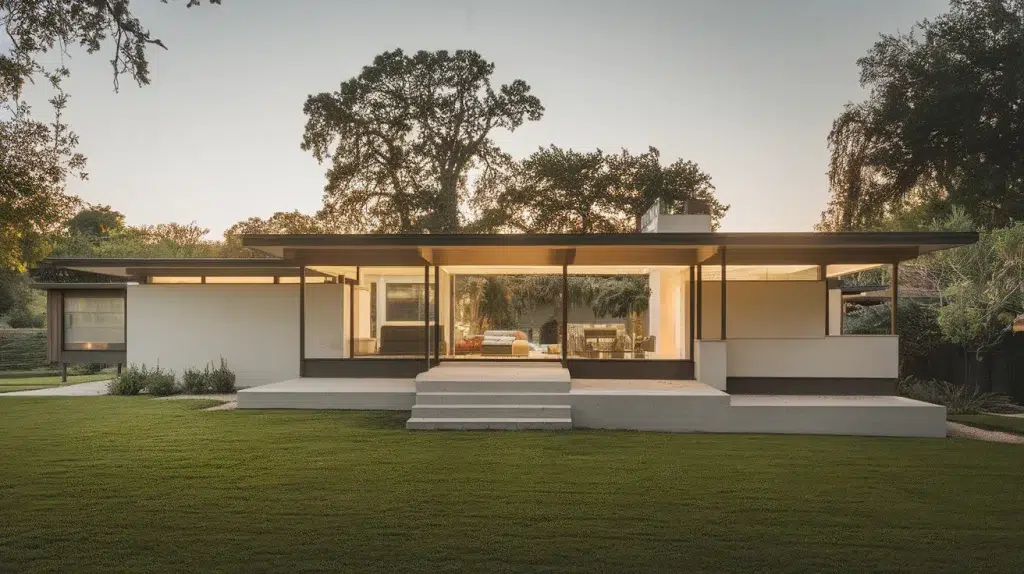
Flat or low-pitched roofs are a hallmark of mid-century modern design. They offer a sleek, minimalist artistic that emphasizes clean lines and geometric shapes.
This simple, functional roof style allows for large windows and helps integrate the structure with its natural surroundings.
2. Large Windows
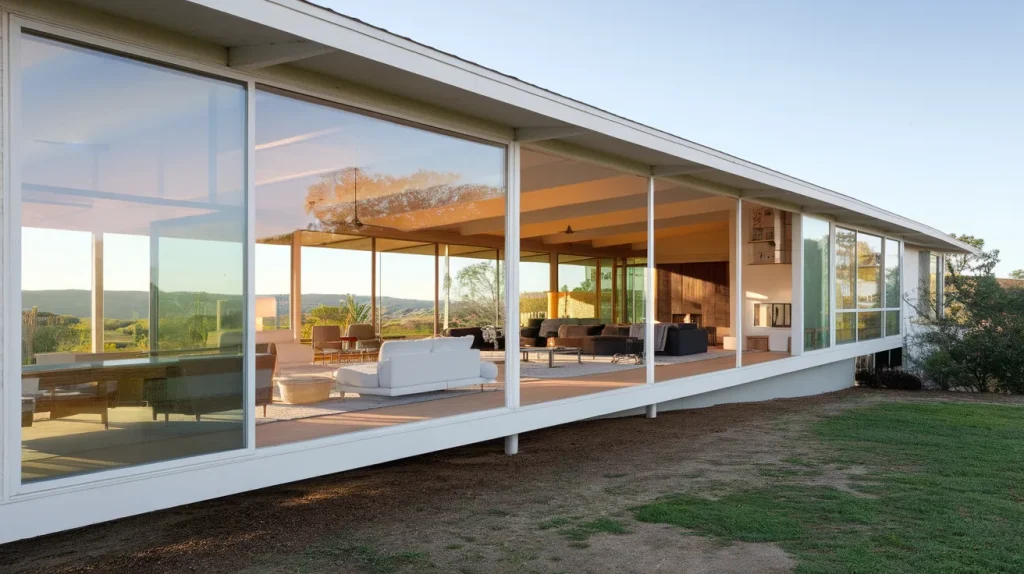
Expansive floor-to-ceiling windows are essential for creating an open, airy feel in mid-century modern exteriors.
These large windows not only let in abundant natural light but also offer unobstructed views of the surrounding landscape. They help blur the lines between indoor and outdoor spaces, fostering harmony with nature.
3. Open Floor Plans
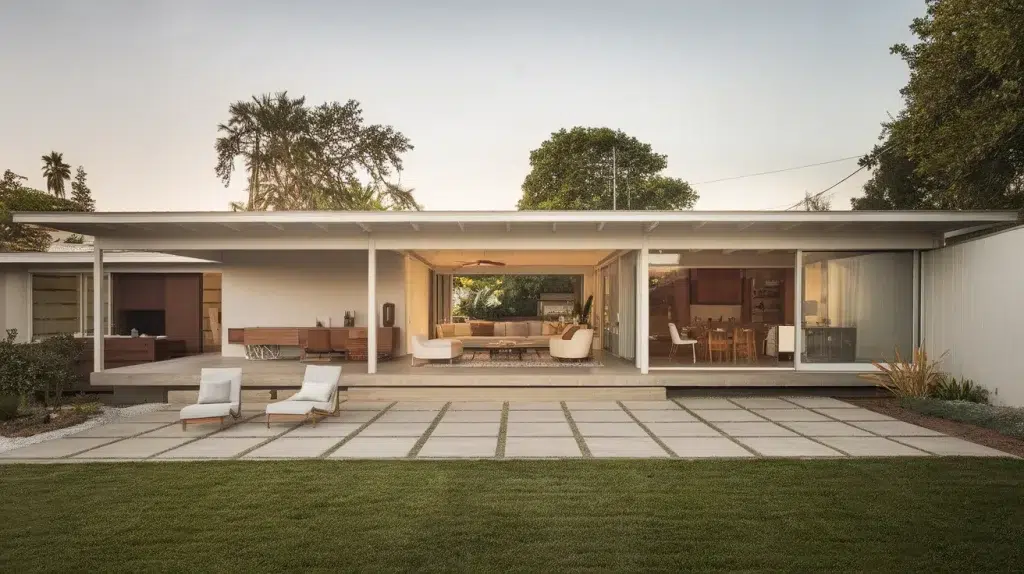
Open floor plans are a defining feature of mid-century modern design, creating seamless transitions between indoor and outdoor spaces.
This design encourages airflow and interaction between rooms. The simplicity of the layout promotes a sense of spaciousness and a direct connection to the natural environment.
4. Wood Cladding
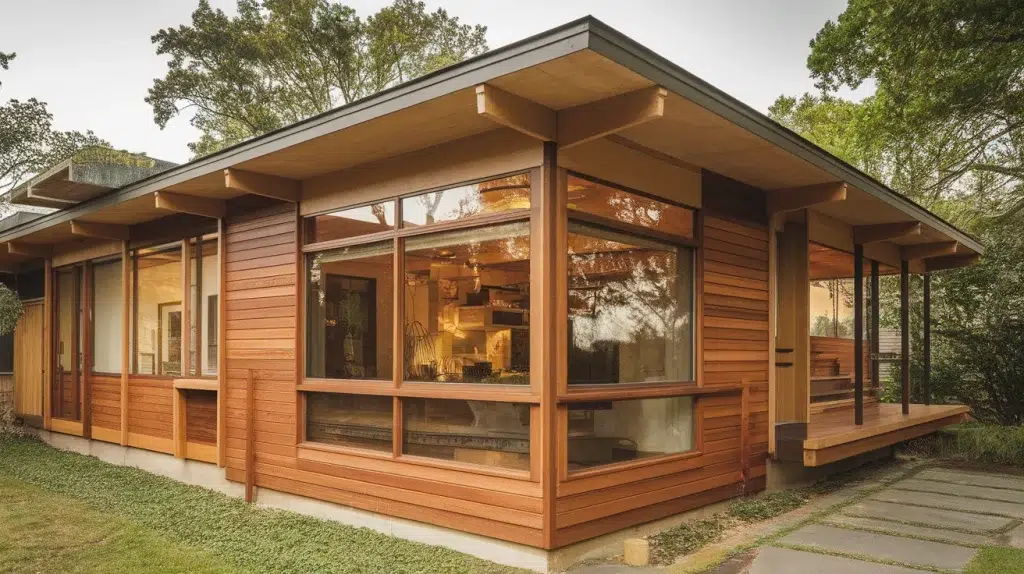
Wood cladding adds warmth and texture to mid-century modern exteriors. If it is used on walls, trim, or accents, natural wood creates a balanced contrast against the minimalist design elements.
The organic nature of wood softens the stark lines of modern materials like glass and steel, enhancing the overall beauty.
5. Geometric Shapes
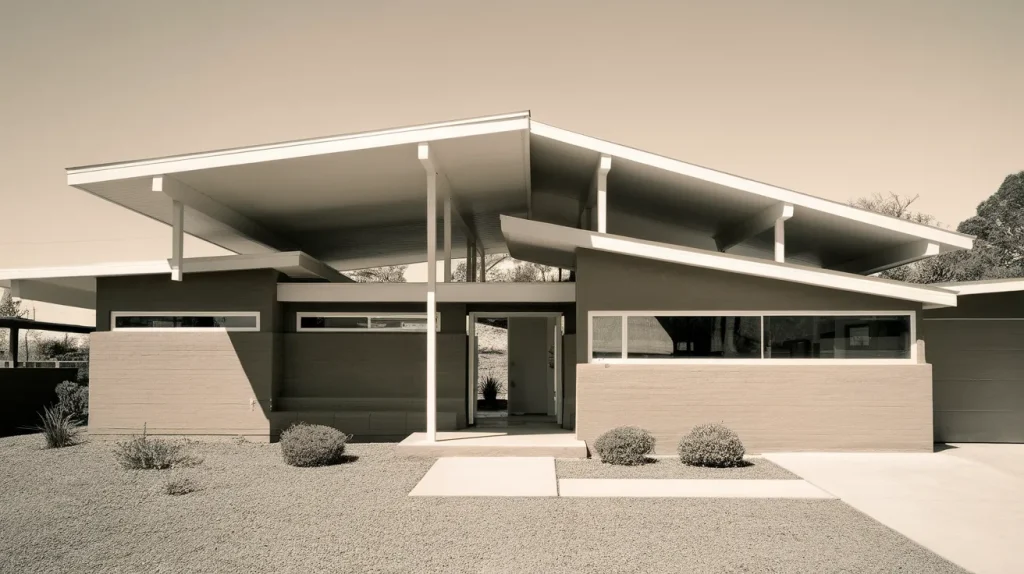
Mid-century modern design embraces geometric shapes, with angular lines and simple, bold forms. These shapes are often seen in the architecture, windows, and structural features of the home.
Geometric forms add visual interest while maintaining the clean, uncluttered appearance typical of this design style.
6. Bold Door Designs
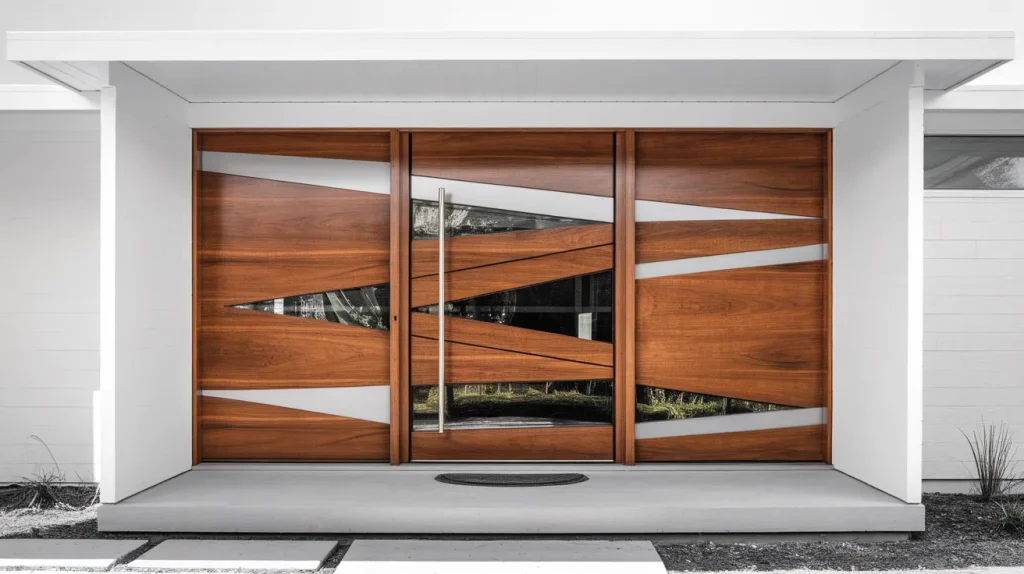
A unique door design can set the tone for a mid-century modern exterior. Bold, simple doors crafted from materials like wood or metal often feature sleek, geometric patterns or unusual shapes.
These doors serve as a focal point, making the entrance both inviting and stylish.
7. Sliding Glass Doors
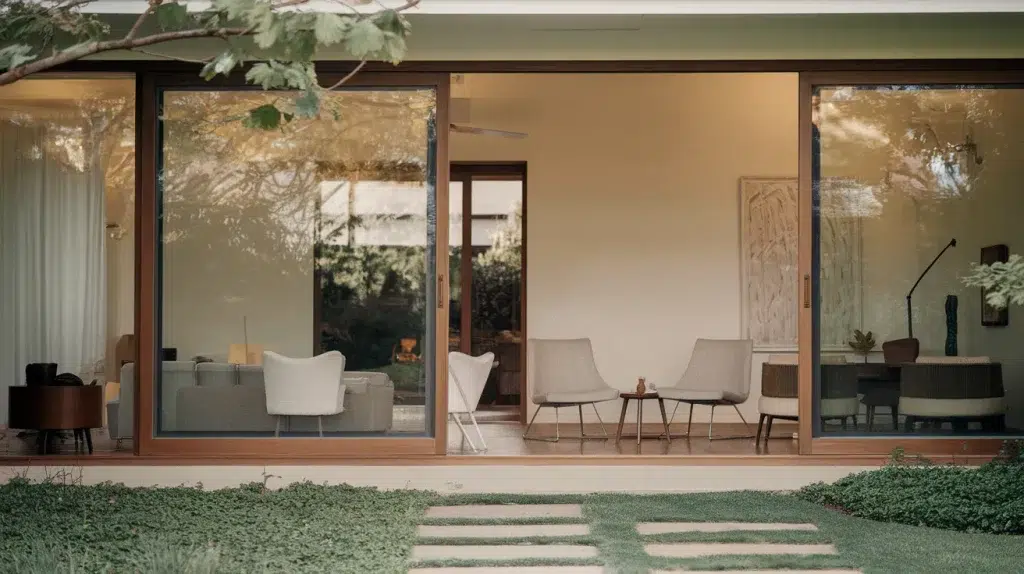
Sliding glass doors are a practical yet artistic choice for mid-century modern exteriors. They provide easy access to patios or gardens, allowing for a seamless flow between indoor and outdoor spaces.
These doors also maximize natural light, enhancing the connection to nature and offering beautiful views.
8. Exposed Brick
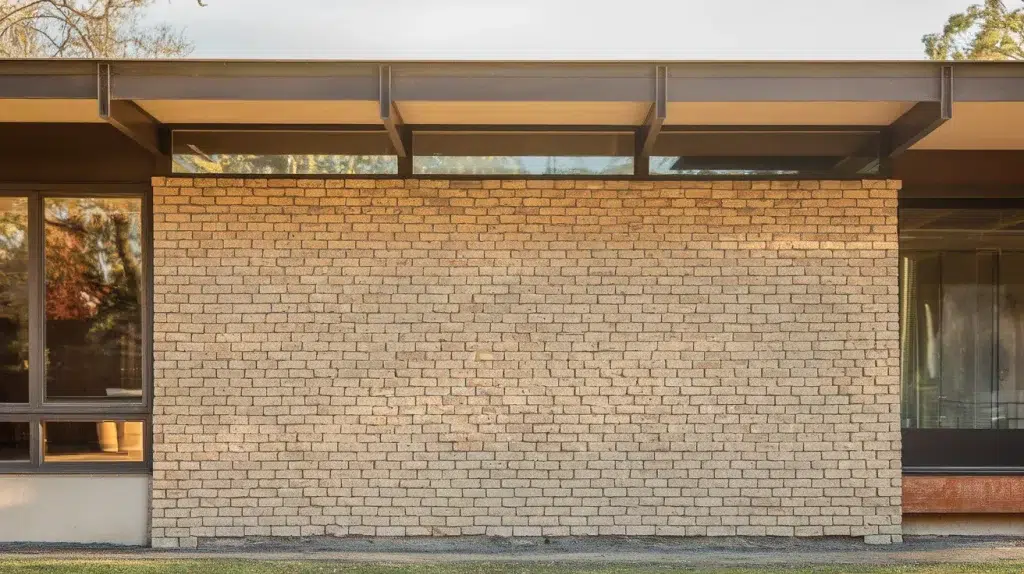
Exposed brick is a classic material used in mid-century modern exteriors. It adds texture and warmth to the sleek lines of modern design.
Often used in accent walls or as part of the facade, brick provides a sense of solidity while maintaining an earthy connection to nature.
9. Cantilevered Structures
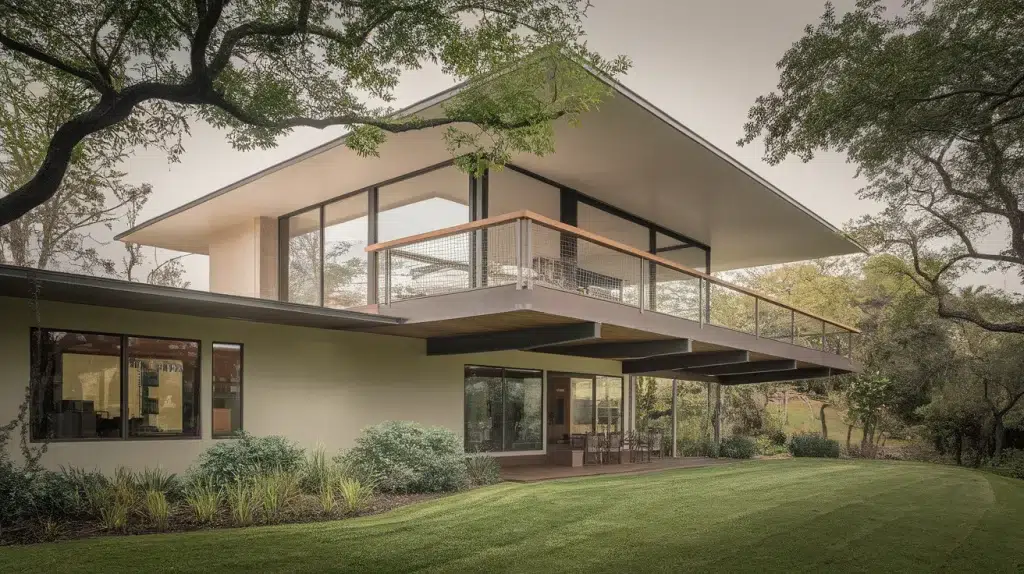
Cantilevered structures, such as overhangs or extended balconies, are a signature feature of mid-century modern homes.
These elements provide both functional shade and artistic appeal, giving the exterior a floating, dramatic look.
Cantilevers enhance the home’s connection to the landscape, offering a visual bridge between architecture and nature.
10. Concrete or Steel Accents

Concrete and steel are industrial materials commonly incorporated into mid-century modern exteriors.
These materials add an element of sleekness and strength, balancing natural materials like wood and brick.
Concrete is often used for walkways, patios, or structural details, while steel accents appear in railings, window frames, or trim.
11. Flat Facade
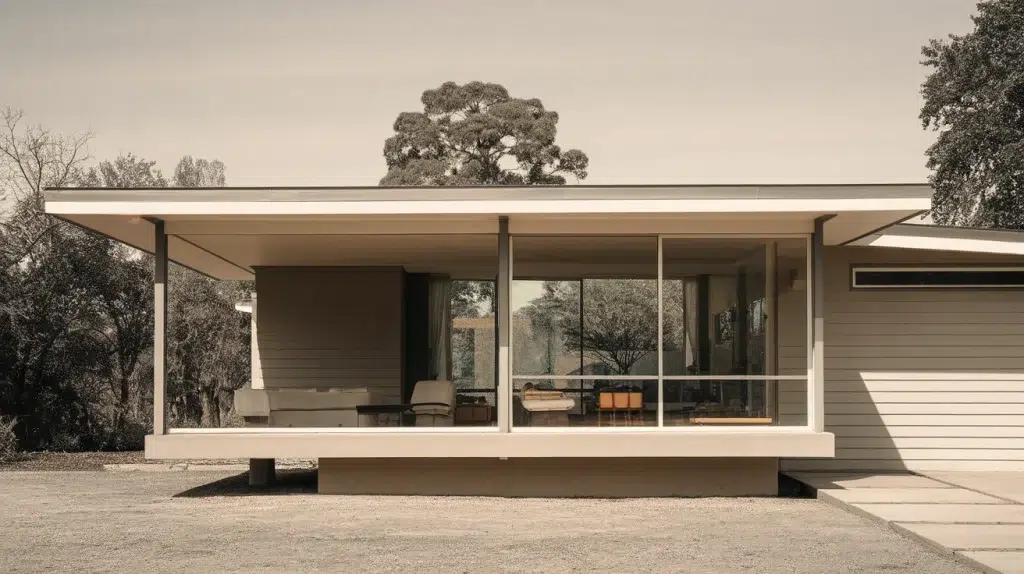
A flat facade emphasizes the minimalist principles of mid-century modern design. This style avoids excessive decoration, focusing on clean lines and functional space.
The flat exterior creates a streamlined, geometric look that allows for expansive windows and open spaces, further enhancing the connection to the natural environment.
12. Minimal Landscaping
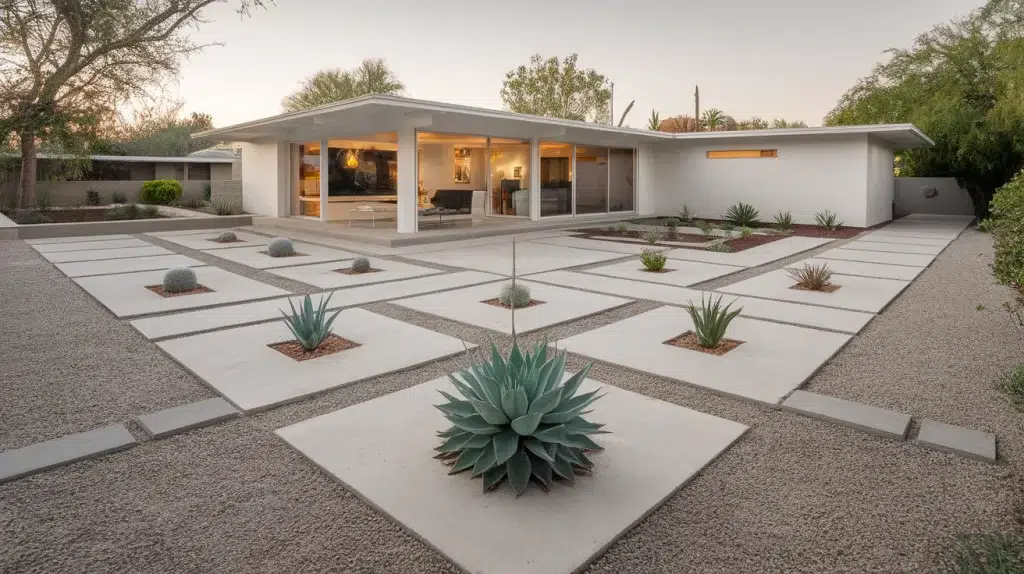
Mid-century modern landscaping features simplicity and geometric designs.
Instead of lush, elaborate gardens, these exteriors feature clean lines, open spaces, and low-maintenance plants, such as succulents or cacti.
Landscaping elements are often used to complement the architecture, not compete with it, ensuring the natural environment enhances the home’s beauty.
13. Dark Color Schemes
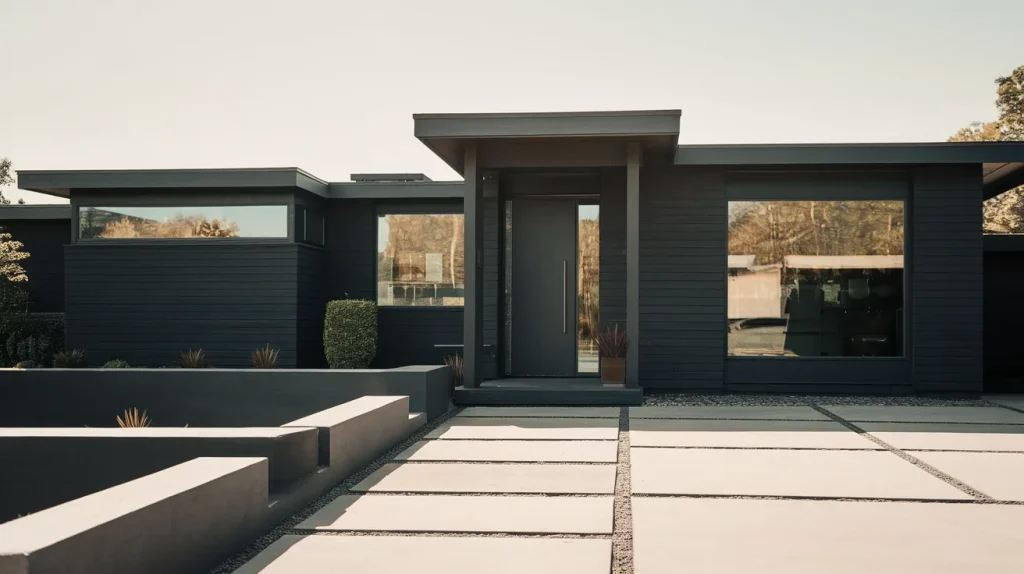
Mid-century modern homes often feature dark, muted colors like charcoal, navy, or black, creating a bold contrast against the lighter natural elements.
Dark color schemes emphasize clean lines and geometric shapes while giving the home a smooth, classic feel. These colors also help highlight architectural details like windows or doors.
14. Wooden Soffits
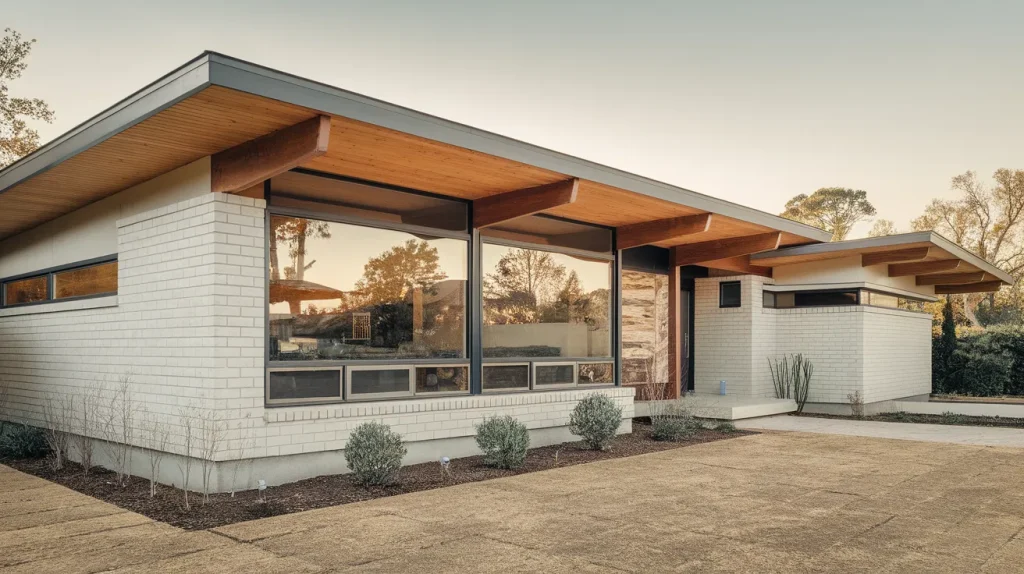
Wooden soffits are a subtle yet impactful feature in mid-century modern exteriors. Used under eaves or as part of the roofline, they add warmth and texture while maintaining a minimalist artistic.
Wooden soffits create visual interest and complement the natural materials used throughout the home’s exterior design.
15. Attractive Lighting
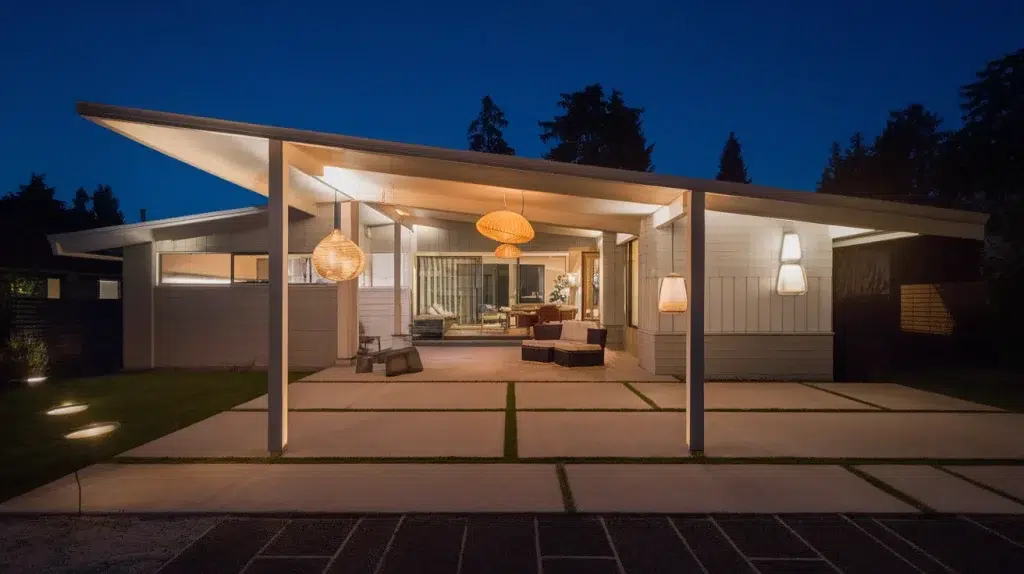
Attractive lighting enhances the beauty of mid-century modern exteriors, illuminating architectural features and creating ambiance.
Statement outdoor lighting fixtures, such as pendant lights or sconces, can highlight the home’s clean lines and geometric forms.
Proper lighting also extends the home’s livable space, allowing for nighttime enjoyment of outdoor areas.
16. Vertical Garden Walls

Vertical garden walls introduce eco-friendly design into the exterior of a mid-century modern home.
These living walls feature plants arranged in vertical patterns, adding greenery without taking up horizontal space.
Vertical gardens bring a natural element to the facade, enhancing the connection between the home and its surroundings.
17. Tiled Exteriors
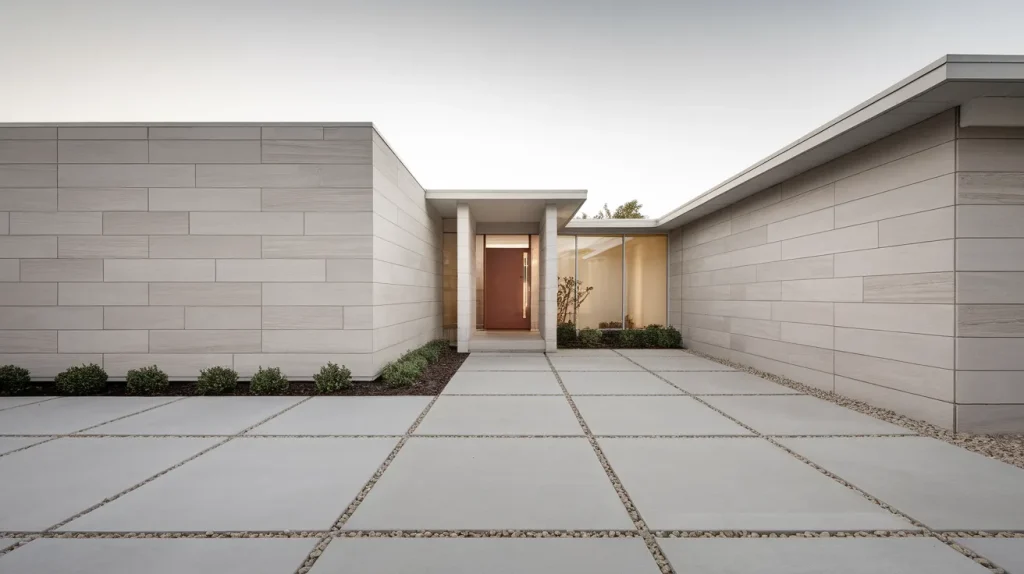
Large, modern tiles in neutral tones can convert the exterior of a mid-century modern home.
Used on walls, patios, or even the entryway, tiles create a clean, smooth surface that complements the home’s minimalist artistic.
The use of large tiles reduces grout lines, giving the exterior a sleek, contemporary look.
18. Metal Accents
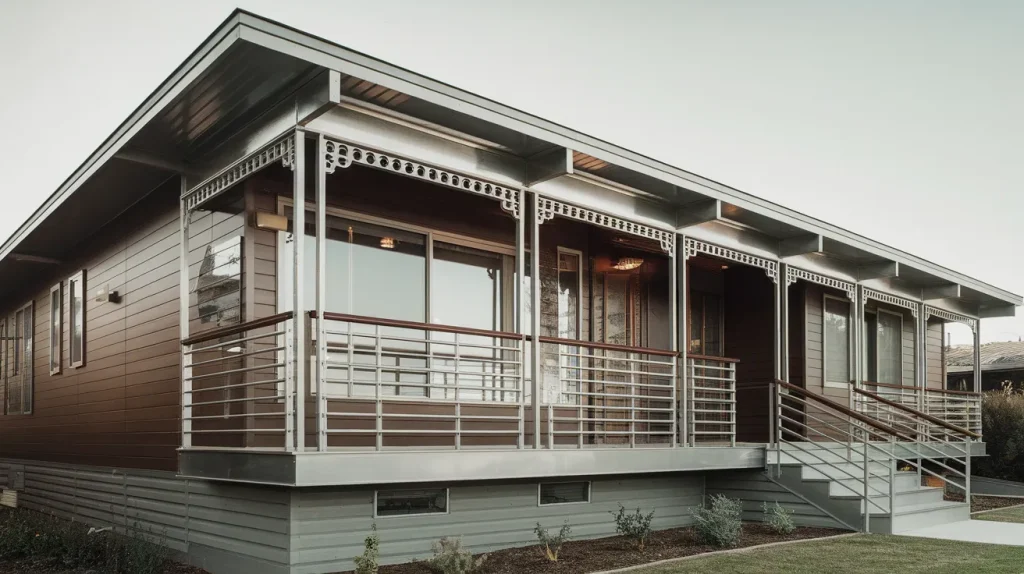
Metal accents, like steel or aluminum, are commonly used in mid-century modern exteriors to add an industrial touch.
These materials are often found in railings, window frames, or as decorative trim. The sleek, shiny finish of metal contrasts with natural materials, enhancing the home’s modern, classic style.
19. Geometric Outdoor Furniture
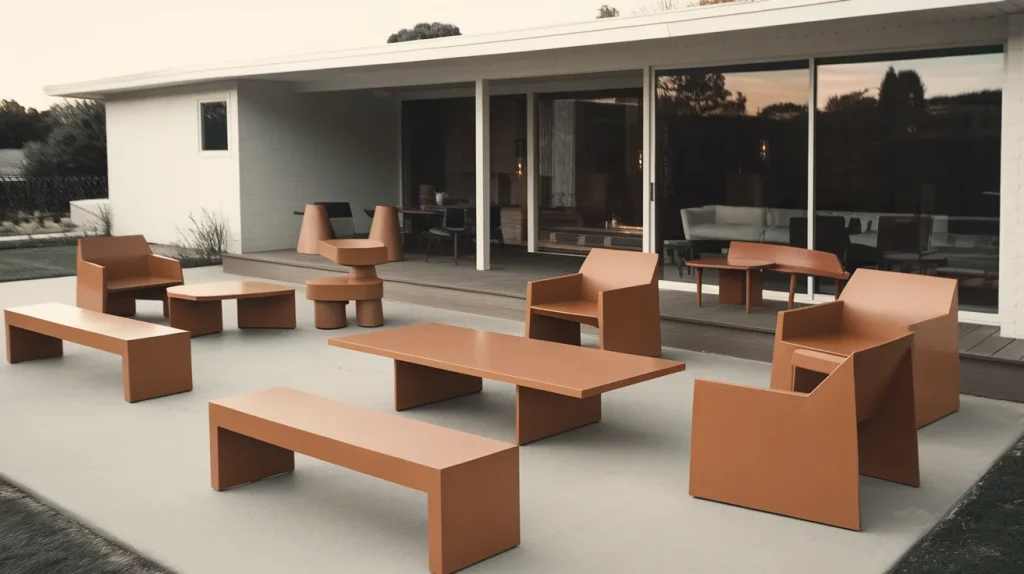
Geometric outdoor furniture complements the clean lines and modern beauty of mid-century modern exteriors. Pieces often feature bold, angular shapes with simple designs.
By choosing furniture with minimal ornamentation and functional design, homeowners can extend the style of their exterior into outdoor living areas, creating a cohesive modern look.
Common Mistakes to Avoid
- Don’t add decorative elements like shutters or fancy trim that compete with the clean, simple lines of mid-century design.
- Avoid small windows and vertical siding that destroy the signature horizontal proportions these homes need
- Don’t mix more than three materials at once, or you’ll create visual chaos instead of the calm aesthetic.
- Skip curved garden beds and tall plants near windows that block views and fight the geometric architecture.
- Never attempt structural changes like roof modifications or large window installations without professional help.
- Avoid cheap material substitutions like vinyl siding that never achieve the authentic mid-century look
Final Thoughts
I hope you’ve found what you needed to start shaping your own mid-century modern exterior.
I’ve covered the key features, design ideas, and tips to help you make choices that feel right for your home.
If you’re picking paint colors, reworking your landscaping, or just figuring out where to start, you’ve got some solid direction now.
You don’t need to rush or do everything at once. Even a few thoughtful changes can bring out the joy and character you’re going for.
If you’re still analyzing or need fresh ideas, I’ve got more Blogs that can help. Take a look around, there’s always something new to inspire your next step.