
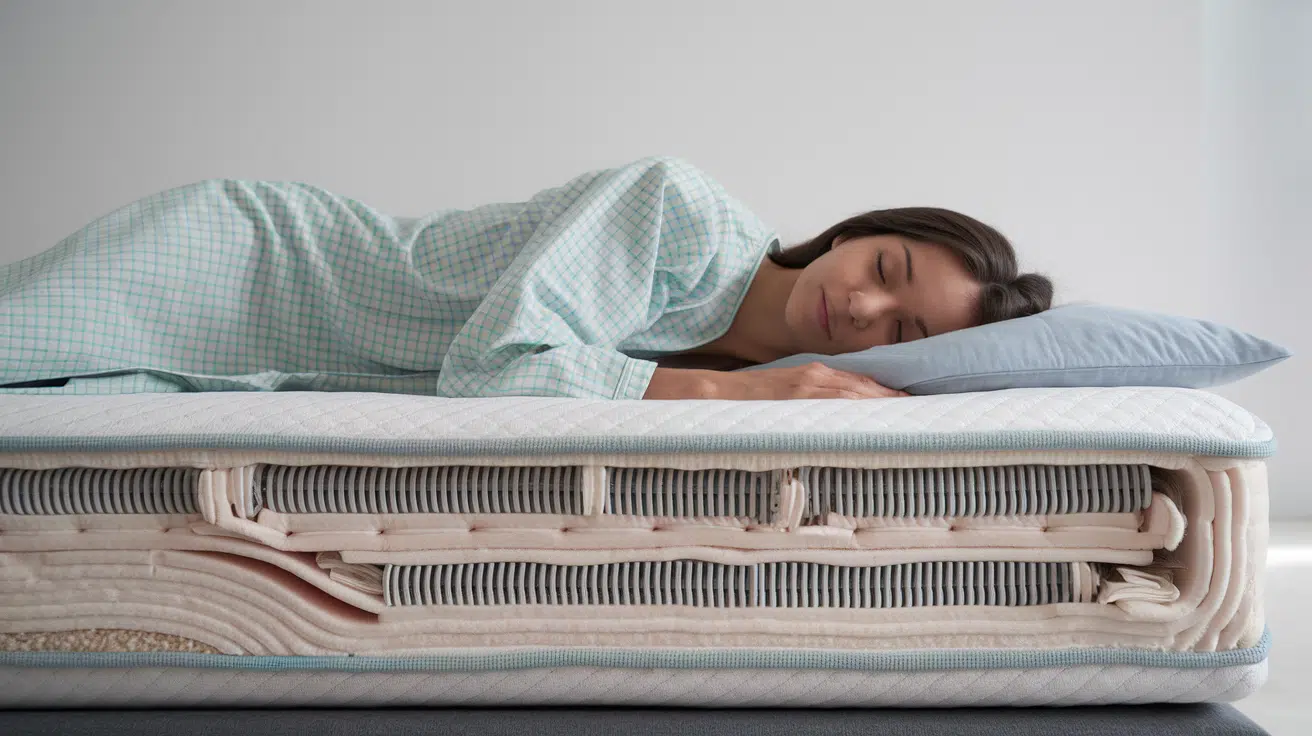
What Is a Hybrid Mattress? Pros, Cons, and Who It’s Best For
Shopping for a mattress shouldn’t mean choosing between comfort and support.
Memory foam sleeps hot. Innerspring feels too firm. You want pressure relief AND cooling AND durability, all in one bed.
Hybrid mattresses deliver exactly that. By combining supportive coils with comfortable foam layers, they offer a balanced sleep solution for most people.
This blog covers what is a hybrid mattress, who it’s best for, and how to choose the right one.
What Is a Hybrid Mattress?
A hybrid mattress combines two or more support systems into one sleep surface.
The most common design pairs innerspring coils with foam or latex comfort layers.
This combination aims to deliver the bounce and support of a traditional spring mattress with the pressure relief and contouring of foam.
The typical hybrid mattress includes these core components:
- Support core: Pocketed coils or springs that provide the foundation
- Comfort layers: Memory foam, latex, or polyfoam that cushions your body
- Transition layer: A buffer between the coils and comfort foam
- Cover: The outer fabric that encases all the layers
Why Are Hybrid Mattresses So Popular?

Hybrid mattresses are popular for several reasons:
- Better Temperature Control: The coil layer allows air to circulate, keeping the mattress cooler than all-foam options.
- Balanced Feel: They combine the bounce and responsiveness of springs with the pressure relief of foam, appealing to more sleep styles.
- Strong Edge Support: The perimeter coils prevent sagging at the edges, giving you more usable sleep surface.
- Less Motion Transfer: Pocketed coils move independently, reducing partner disturbance while still maintaining some bounce.
- Versatility: They work well for different sleeping positions (back, side, and stomach) and body types.
- Perceived Value: People feel they’re getting “the best of both worlds” rather than compromising with just springs or just foam.
- Good Durability: The coil base provides long-lasting support even as foam layers soften over time.
Essentially, hybrids address the main complaints people have about traditional innerspring (too firm, poor pressure relief) and all-foam mattresses (too hot, feels stuck, weak edges).
Hybrid Mattress vs Other Mattress Types
| Mattress Type | What It’s Made Of | Feel | Best For |
|---|---|---|---|
| Hybrid | Coils and foam layers | Balanced support & comfort | Most sleepers, couples, and hot sleepers |
| Memory Foam | All foam | Deep contouring, slow response | Side sleepers, motion isolation |
| Innerspring | Coils with thin padding | Firm, bouncy | Budget shoppers, traditional feel |
| Latex | Natural or synthetic latex | Responsive, buoyant | Eco-conscious sleepers, durability |
Hybrid mattresses offer the best mix of support, comfort, and cooling for most people.
Who Should Choose a Hybrid Mattress?
- Hot Sleepers: Coils allow airflow, keeping the mattress cooler than all-foam options
- Combination Sleepers: Works for all positions; responsive surface makes movement easy
- Couples: Reduces motion transfer and maximizes usable space with strong edge support
- Back/Stomach Sleepers: Firm coil support prevents sagging, while foam adds cushioning
- Heavier People (230+ lbs): Coils provide durable support and prevent excessive sinking
- Side Sleepers: Softer hybrids cushion shoulders and hips without bottoming out
- People Wanting Balance: Combines support and comfort without being too firm or too soft
Who Should Avoid a Hybrid Mattress?
Strict Budget Shoppers
Hybrids cost $800-2000+ compared to $300-600 for basic foam or innerspring mattresses. Quality pocketed coils increase manufacturing costs significantly.
People Who Love Deep Sinking
All-foam mattresses sink 2-4 inches, while hybrids only sink 1-2 inches. The coil base limits contouring depth and body-hugging feel.
Light Sleepers Sensitive to Motion
Memory foam blocks 90%+ of motion transfer compared to hybrids at 70-80%. Coils create some bounce that transfers between partners.
Those Who Prefer Very Soft Beds
Most hybrids rate medium-firm (5-7 on the firmness scale). The coil support core prevents achieving a plush/soft feel (3-4 rating).
People Who Move Frequently
Hybrids weigh 80-150 lbs compared to 50-80 lbs for all-foam mattresses. The coil system makes the mattress bulky and difficult to compress for moving.
Those Wanting Adjustable Firmness
Air mattresses adjust from 1 to 10 on the firmness scale per side. Hybrids offer only a single, fixed firmness level.
Severe Pressure Point Pain
Memory foam distributes weight across a larger surface area. Hybrids have less foam depth (2-4 inches) compared to all-foam options (8-12 inches).
What Real Users Say About Hybrid Mattresses
Real users generally say hybrid mattresses offer the best balance between comfort and support.
Many people appreciate that hybrids feel more supportive and cooler than all-foam mattresses while still providing pressure relief.
Common positives include better edge support and suitability for multiple sleep positions.
On the downside, users often mention that hybrid mattresses are heavier, more expensive, and vary widely in quality, with some brands using the “hybrid” label loosely.
Overall, community feedback suggests hybrids work well for most sleepers, as long as the materials are high quality.
How to Choose the Right Hybrid Mattress
- Select the right firmness for your sleep position: side sleepers usually need soft to medium firmness for pressure relief, while back and stomach sleepers benefit from medium to firm support to keep the spine aligned
- Check the foam thickness and materials: a true hybrid mattress should have at least 2–4 inches of quality foam (memory foam or latex) layered over pocketed coils
- Evaluate the coil system: individually wrapped coils provide better support, durability, and motion isolation than traditional coil systems
- Look for cooling features if you sleep hot: breathable covers, gel-infused foam, latex, and coil airflow can help regulate temperature
- Consider edge support and motion isolation: important for couples, combination sleepers, and anyone who sleeps near the edge of the bed
- Review durability, trial period, and warranty: higher-quality hybrids cost more but typically last longer and offer better long-term value
Is a Hybrid Mattress Worth It?
Hybrids are worth it for most people seeking a versatile, cooling mattress with balanced support and comfort.
The higher upfront cost ($800-2000) pays off through a 7-10 year lifespan and nightly comfort.
However, they’re not ideal for budget shoppers or those with specific needs like an ultra-soft feel or maximum motion isolation.
The best value comes from mid-range hybrids ($800-$1500) with quality pocketed coils and at least 2-3 inches of foam
Conclusion
Hybrid mattresses combine coils and foam for balanced support and comfort.
They’re ideal for hot sleepers, combination sleepers, and couples needing cooling and motion isolation.
Worth the $800-$1500 cost if you want versatility and 7-10 year durability. Skip them if you’re on a tight budget or prefer deep sinking.
Choose based on your sleep position, weight, and temperature needs. Look for pocketed coils, 2-3 inches of foam, and a 100-night trial. Test at home to find your perfect match.


