
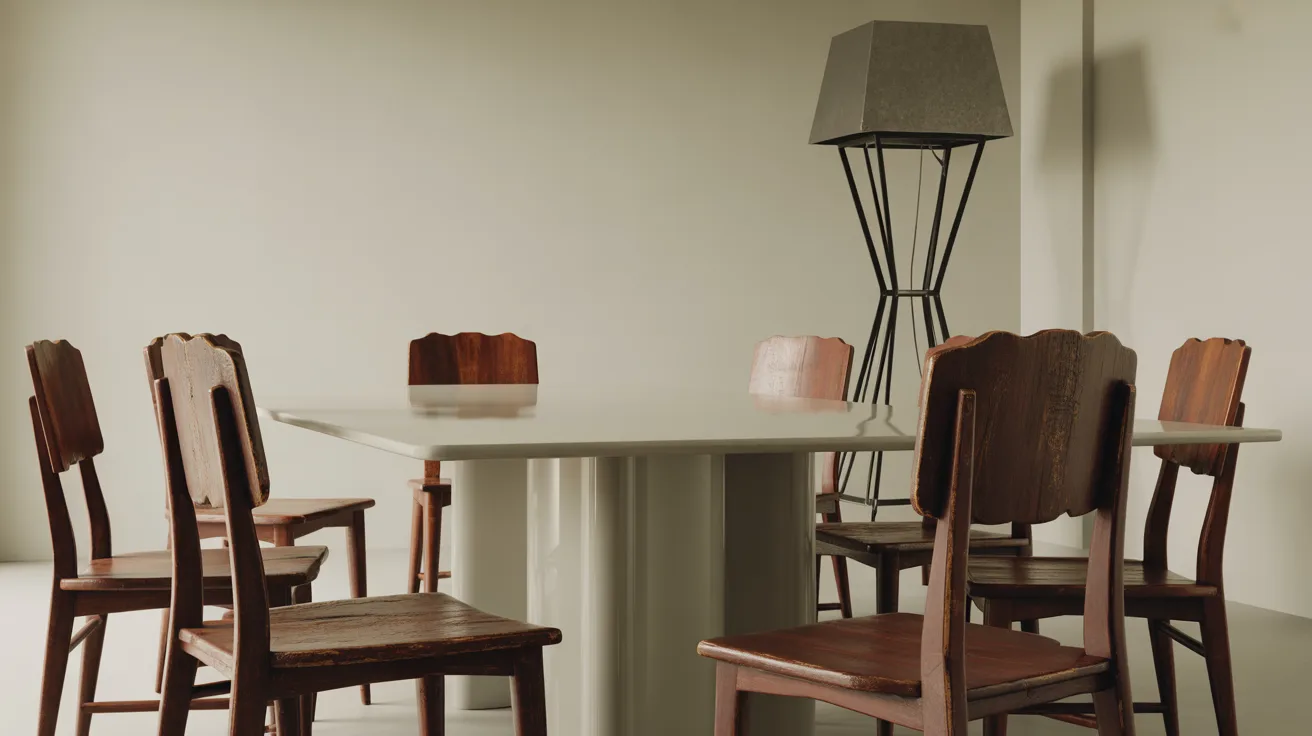
How to Mix Modern and Vintage Decor: Full Guide
Mixing modern and vintage decor sounds simple, but it often goes wrong. You bring in a few old pieces, add some modern ones, and suddenly the room feels off instead of stylish.
Ever looked at your space and felt like nothing really fits, even though each item looks good on its own? That usually happens when there’s no clear system behind the mix.
In this blog, you’ll learn how to combine modern and vintage decor in a way that actually works. We’ll break down how to choose a dominant style, mix pieces step by step, and use contrast, color, and scale to keep everything balanced.
By the end, you’ll have a clear method you can apply to any room without second-guessing your choices.
Start with a Clear Style Direction (Choose the Dominant Style)
When you mix modern and vintage decor, the biggest mistake is giving both equal importance. That usually results in a space that feels confusing rather than cohesive.
I’ve seen this happen a lot, where nothing stands out, and everything feels slightly off. The fix is simple. One style needs to lead, and the other should support it.
Why One Style Must Lead
Your eyes need a clear pattern to follow. When both styles compete equally, the brain struggles to process the space. It starts to feel cluttered even with a few items. A dominant style creates structure.
The first style tells you what the room is “about,” while the second adds contrast and personality. Without this hierarchy, the room ends up looking accidental instead of designed.
How Style Dominance Actually Works
A practical way to think about this is the 70–30 rule.
- Around 70–80% of the room should follow one style
- The remaining 20–30% introduces the second style
This split works because it keeps things balanced. You get contrast, but not conflict.
For example: A modern room with a few vintage accents feels clean but interesting. A vintage room with some modern pieces feels rich but not heavy
If you try to go 50–50, both styles lose their impact, and the space feels unclear.
How to Decide Your Base Style
Your choice depends on how you want the space to feel and how much control you want while decorating.
Modern as the base
- Works best if you want a calm and minimal look
- Easier to manage because clean lines reduce visual noise
- Vintage pieces stand out more as highlights
Vintage as the base
- Creates a warmer, more layered feel
- Adds depth and character naturally
- Needs more control to avoid the space feeling crowded
If you’re unsure, starting with a modern base is usually safer. It gives you more room to experiment without things getting messy.
How to Mix Modern & Vintage Decor Like a Pro
Once your dominant style is clear, follow a structured order. This keeps the mix controlled and avoids random decisions that lead to visual clutter.
Step 1: Anchor the Room with Key Furniture
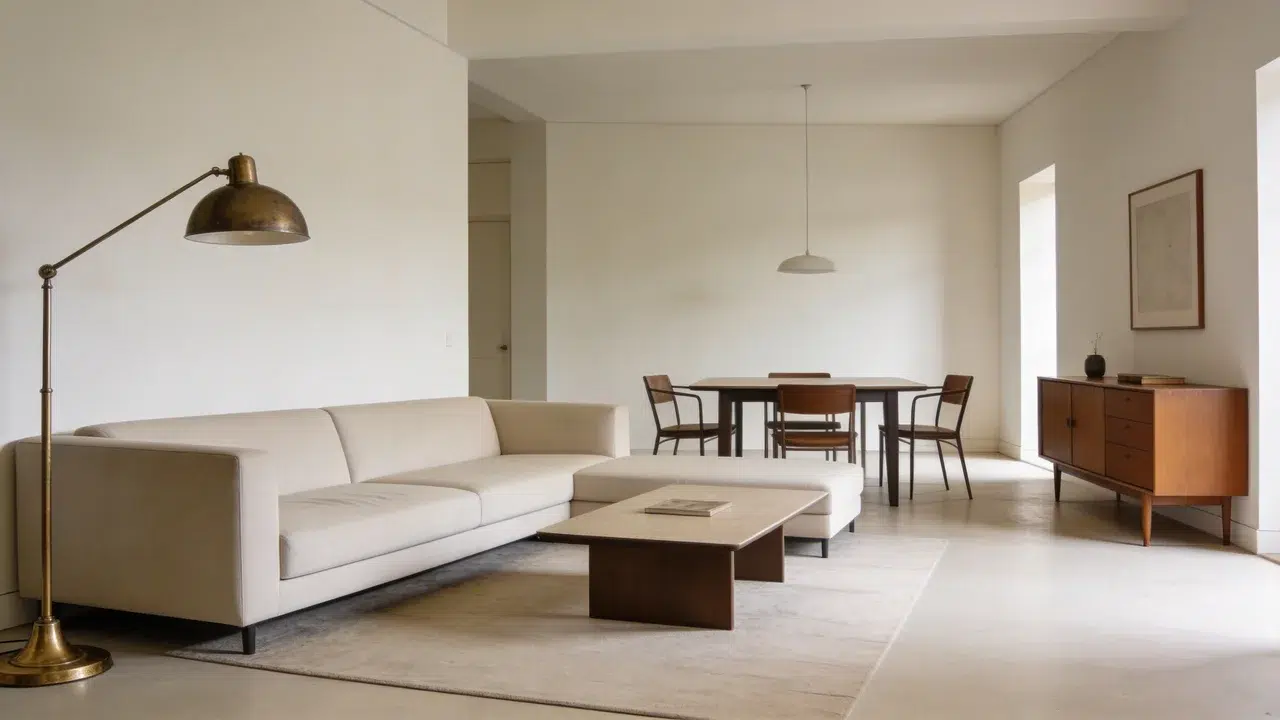
Start with large pieces like the sofa, bed, or dining table. Keep them aligned with your dominant style. These items carry the most visual weight and set the overall direction.
If they feel right, the rest becomes easier to manage. Skipping this step often leads to a disconnected setup.
Step 2: Introduce Contrast Through Secondary Pieces
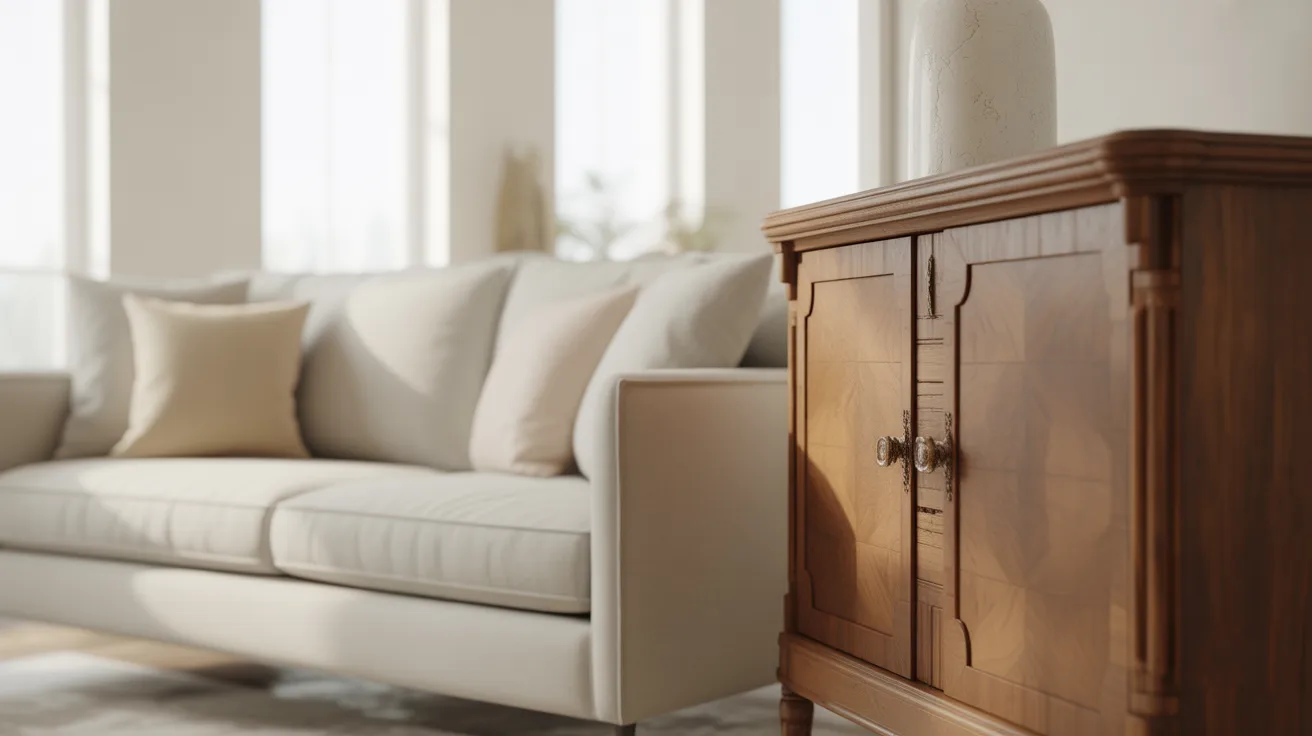
Add contrast with smaller furniture, such as chairs and side tables, or with lighting.
For example:
- Vintage chairs with a modern table
- A modern lamp next to a vintage cabinet
This creates interest without overpowering the space. Avoid adding too many contrasting pieces at once, or the room will feel chaotic.
Step 3: Balance Through Repetition
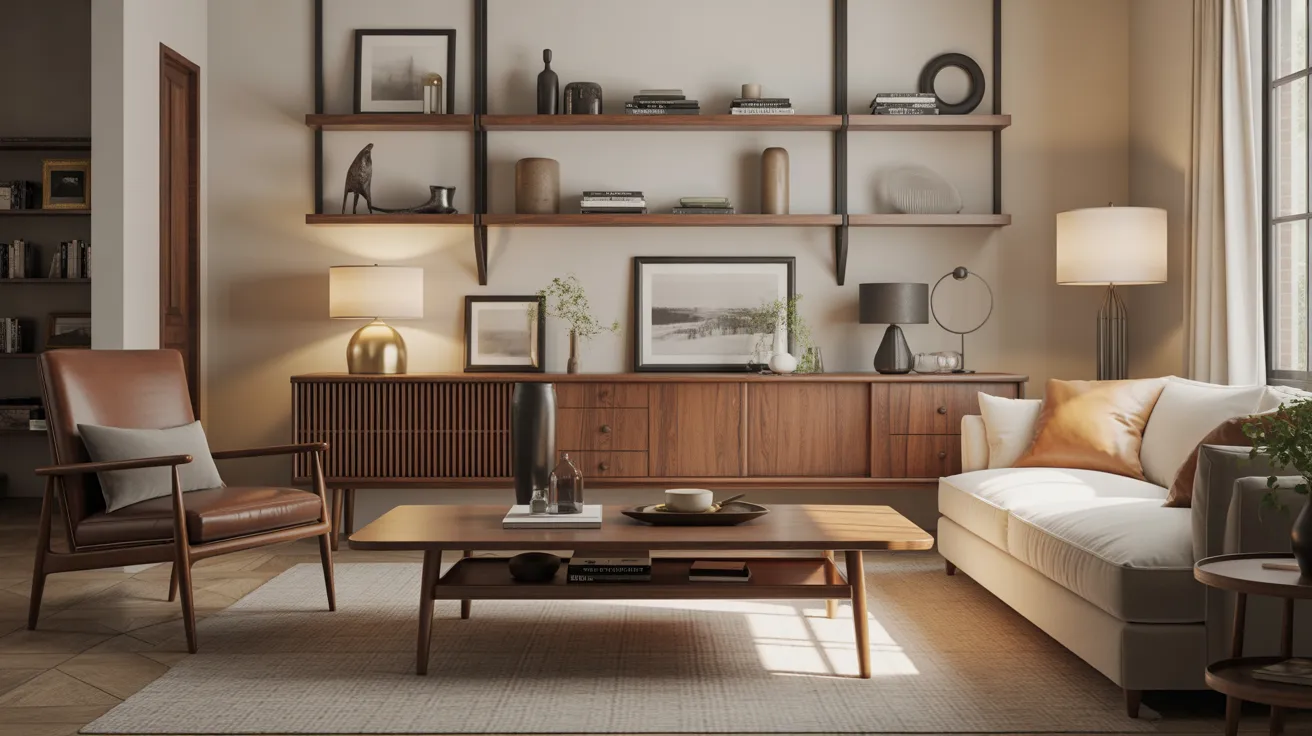
Repeat key elements to connect both styles.
This can include:
- Similar wood tones
- Matching metal finishes
- Repeated colors or shapes
Repetition helps different pieces feel related. Without it, the mix can look random instead of intentional.
Step 4: Layer with Decor, Not Furniture
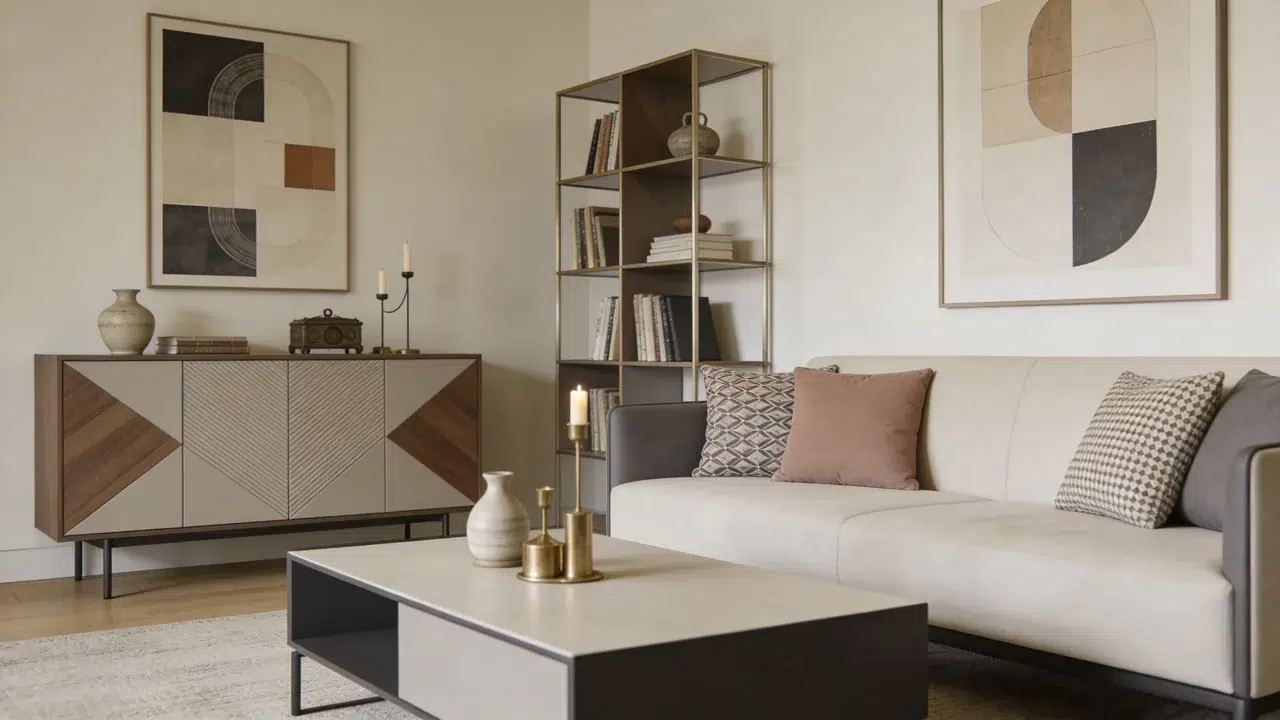
Use decor like art, textiles, and accessories to refine the mix. These are easier to adjust and replace, so you can test combinations without risk.
Avoid making bold style changes through large furniture at this stage, as it’s harder to fix mistakes. Done right, this step adds personality without disturbing the balance.
Controlling Visual Contrast with Color and Tone
Modern pieces usually feel clean and sharp, while vintage items bring texture, detail, and age. This difference creates interest, but only when it is controlled.
| Key Point | What It Means | How To Apply It |
|---|---|---|
| Understand Contrast | Contrast adds interest, but too much can make a room feel busy. | Keep a clear difference between modern and vintage pieces without letting every item compete. |
| Use Color As a Connector | Repeated colors help different styles feel related. | Start with neutral tones, then repeat 1–2 colors through pillows, art, decor, or trim. |
| Match Undertones | Warm and cool tones can clash if they are not balanced. | Let one undertone lead, then use the other in smaller accents. |
| Align Materials and Finishes | Materials need a shared visual link to feel planned. | Repeat finishes like matte black, brass, chrome, or similar wood tones across the room. |
| Limit Strong Visual Elements | Too many bold pieces can break the balance. | Keep most items simple and let only a few pieces create the main contrast. |
Balancing Proportion and Scale When Mixing Decor
Modern and vintage decor can work well together, but the size of each piece matters. When proportions feel balanced, the room looks collected instead of crowded or mismatched.
- Start with the Largest Piece: Let the sofa, bed, dining table, or cabinet set the scale for the room. Smaller decor should support it, not fight for attention.
- Avoid Too Many Heavy Pieces: Large vintage furniture can feel bulky next to slim modern items. Balance one heavy piece with lighter shapes around it.
- Mix Heights Carefully: Use a mix of tall, medium, and low pieces so the room does not feel flat. Lamps, art, plants, and shelves can help create height changes.
- Keep Walkways Clear: Oversized furniture or too many accent pieces can make the room feel tight. Leave enough open space so the layout feels easy to move through.
- Pair Small Items In Groups: Tiny decor can look lost beside large furniture. Group smaller pieces on trays, shelves, or tables so they feel more intentional.
- Match Visual Weight: A dark wood cabinet may feel heavier than a slim glass table, even if both are similar in size. Balance heavy colors and finishes with lighter nearby pieces.
Conclusion
Mixing modern and vintage decor comes down to control, not guesswork. Once you set a dominant style, follow a clear mixing order, and manage contrast, color, and scale, the space starts to feel connected and intentional.
You’ve learned how to structure the mix, balance visual weight, and avoid the mistakes that make rooms feel cluttered or off. Every step builds on the last, and the results show when you apply them together.
Start small, stay consistent, and adjust as you go. The right mix takes a little patience but always pays off. Which tip are you trying first? Drop it in the comments below.
Frequently Asked Questions
What is the Difference Between Vintage and Antique Decor?
Vintage pieces are typically 20–100 years old, while antiques are over 100 years old. Both can work in a modern mix.
Can I Mix Different Vintage Eras Together?
Yes, but limit it to two eras. Too many periods create visual confusion. Stick to pieces that share a color, material, or tone.
How Do I Use Lighting to Mix Modern and Vintage Styles?
Pair a vintage-inspired lamp or chandelier with modern fixtures. Lighting draws the eye and blends styles without requiring large furniture changes.
How Do I Mix Modern and Vintage Art on the Same Wall?
Place modern abstract prints alongside vintage frames or maps. Keep sizing balanced and use consistent frame colors to tie both styles together.


