How to Handwash Clothes Without Damaging Fabric
A single wrong wash can shrink sweaters, fade colors, or damage delicate fabrics. Learning how to handwash clothes correctly helps keep garments clean while protecting their quality.
Handwashing does not require complicated tools or methods. The right water temperature, mild detergent, and gentle techniques can safely clean different fabrics at home.
From sorting clothes and removing stains to rinsing and drying, each step helps maintain fabric shape and color. Proper care also helps clothes last longer.
These techniques help avoid common mistakes while keeping different fabrics clean and well-maintained.
What Do You Need to Handwash Clothes?
Having the right supplies makes handwashing easier and helps prevent unnecessary damage to fabric. This preparation keeps fabric safe and ensures consistent results.
- Mild Detergent or Gentle Soap: Choose a pH-neutral formula without harsh brighteners to protect colors and delicate fibers.
- Clean Basin, Sink, Bucket, or Tub: Any large, clean container works, free of residue that could transfer onto fabric.
- Water Suited to the Fabric: Cold for colors, lukewarm for everyday cottons, warm only for sturdy, heavily soiled items.
- Detergent Matched to Fabric Type: Specialty soap for wool and silk, mild detergent for synthetics, baby shampoo for delicates.
- Towel or Drying Rack: Keep one ready to blot moisture and support items as they dry flat, preventing stretching.
Prepare Clothes Before Handwashing

Check the care label before washing for a hand-wash symbol, usually a hand in a basin. Labels also list safe temperatures and specific fabric handling instructions.
Sort clothes by color and fabric before washing. Separate dark, light, and delicate items, and avoid mixing wool, silk, or synthetics needing different wash care methods.
Treat stains before washing by dabbing gently with mild detergent or a stain remover, letting it sit briefly, then blotting from the outer edge toward the stain’s center.
Avoid rubbing stains harshly, since friction breaks fibers, thins fabric, and spreads the stain further. Gentle blotting removes stains while protecting the fabric surface.
How to Handwash Clothes Step by Step
Following the right order makes handwashing easier and helps remove dirt while protecting fabric fibers. These steps cover washing, rinsing, and drying methods for different types of clothing.
Step 1: Fill Basin and Mix Detergent

Fill a basin with the correct water temperature for the fabric, then add mild detergent. Stir until the detergent fully dissolves before adding clothes.
Follow the detergent label instructions, as concentrated formulas may require different amounts. A balanced solution helps remove dirt while protecting colors and fibers.
Step 2: Soak Clothes and Gently Agitate

Soak lightly soiled clothes for 5–10 minutes and allow heavily soiled items more time if the fabric allows. This helps loosen dirt before washing.
Move clothes through the water with slow presses and gentle swirls. Avoid twisting or rough scrubbing because harsh movement can stretch fibers and affect fabric shape.
Step 3: Rinse Clothes Until Water Runs Clear

Drain the soapy water and refill the basin with clean water. Gently swish clothes until the water runs clear and no detergent residue remains.
Repeat the rinse cycle if needed while handling clothes carefully. Avoid excessive squeezing or twisting to protect fabric fibers and maintain the original shape.
Step 4: Remove Excess Water Without Wringing

Press clothes gently between your hands to remove excess water without twisting. Wringing can stretch fibers, distort fabric shape, and damage delicate materials.
For delicate items, place the garment on a clean towel, roll it carefully, and press gently to absorb moisture. This helps prepare clothes for drying while protecting fabric.
How to Handwash Different Fabric Types?
Each fabric requires a specific washing method to stay clean without shrinking, stretching, or damaging fibers. Adjusting water temperature, pressure, and drying techniques helps maintain the quality of different clothing materials.
1. Handwashing Delicate Clothes
Use a mild detergent without harsh chemicals or brighteners, as fabrics like silk and lace can weaken when exposed to strong cleaning agents.
Handle delicate items gently with slow swishing motions instead of rubbing or twisting. This helps prevent snags, distortion, and damage to lightweight fibers.
Examples: Silk blouses, lace tops, chiffon dresses, and embroidered garments need extra care during handwashing.
2. Handwashing Wool and Sweaters
Wash wool garments in cold water because heat can cause fibers to shrink, felt, or lose their original shape.
After cleaning, place sweaters flat on a towel to dry instead of hanging them. This prevents stretching and helps the garment maintain its structure.
Examples: Wool sweaters, cashmere scarves, knitted cardigans, and winter hats should be washed gently and dried flat.
3. Handwashing Cotton and Everyday Clothes
Cotton and other durable fabrics can handle slightly stronger cleaning methods, including gentle squeezing and soft brushing on areas with visible dirt.
For collars, cuffs, and high-contact areas, treat stains before washing. Use suitable detergent and avoid excessive scrubbing to keep fibers in good condition.
Examples: Cotton shirts, T-shirts, jeans, towels, and everyday household fabrics are easier to handwash with regular care.
How Often Should You Handwash Clothes?
The right washing frequency depends on the fabric type, how often clothes are worn, and their level of dirt or stains. Following care labels helps prevent unnecessary washing and protects fabric quality.
| Clothing Type | How Often to Handwash | When to Wash Sooner |
|---|---|---|
| Silk Blouses and Tops | After 2–3 wears | Wash after sweating, spills, makeup marks, or noticeable odor. |
| Wool Sweaters | After 3–5 wears | Wash sooner if stained, sweaty, or exposed to smoke and strong odors. |
| Lace Clothing | After 1–2 wears | Wash after direct skin contact, sweating, or visible dirt. |
| Bras and Delicate Lingerie | After 2–4 wears | Wash after heavy sweating or workouts. |
| Cashmere Sweaters | After 3–5 wears | Wash when odor, stains, or visible dirt appears. |
| Hand-Knit Clothing | After 3–5 wears | Wash sooner when dirty or after prolonged outdoor wear. |
| Delicate Dresses and Skirts | After 2–4 wears | Wash after spills, sweat, or visible marks. |
| Workout Clothes | After every wear | Wash immediately after heavy sweating when possible. |
| Underwear and Socks | After every wear | These should be washed after each use due to direct skin contact. |
| Lightly Worn Delicates | After 3–5 wears | Wash earlier if they develop odor, stains, or body-oil buildup. |
Should You Use Hot or Cold Water for Handwashing Clothes?
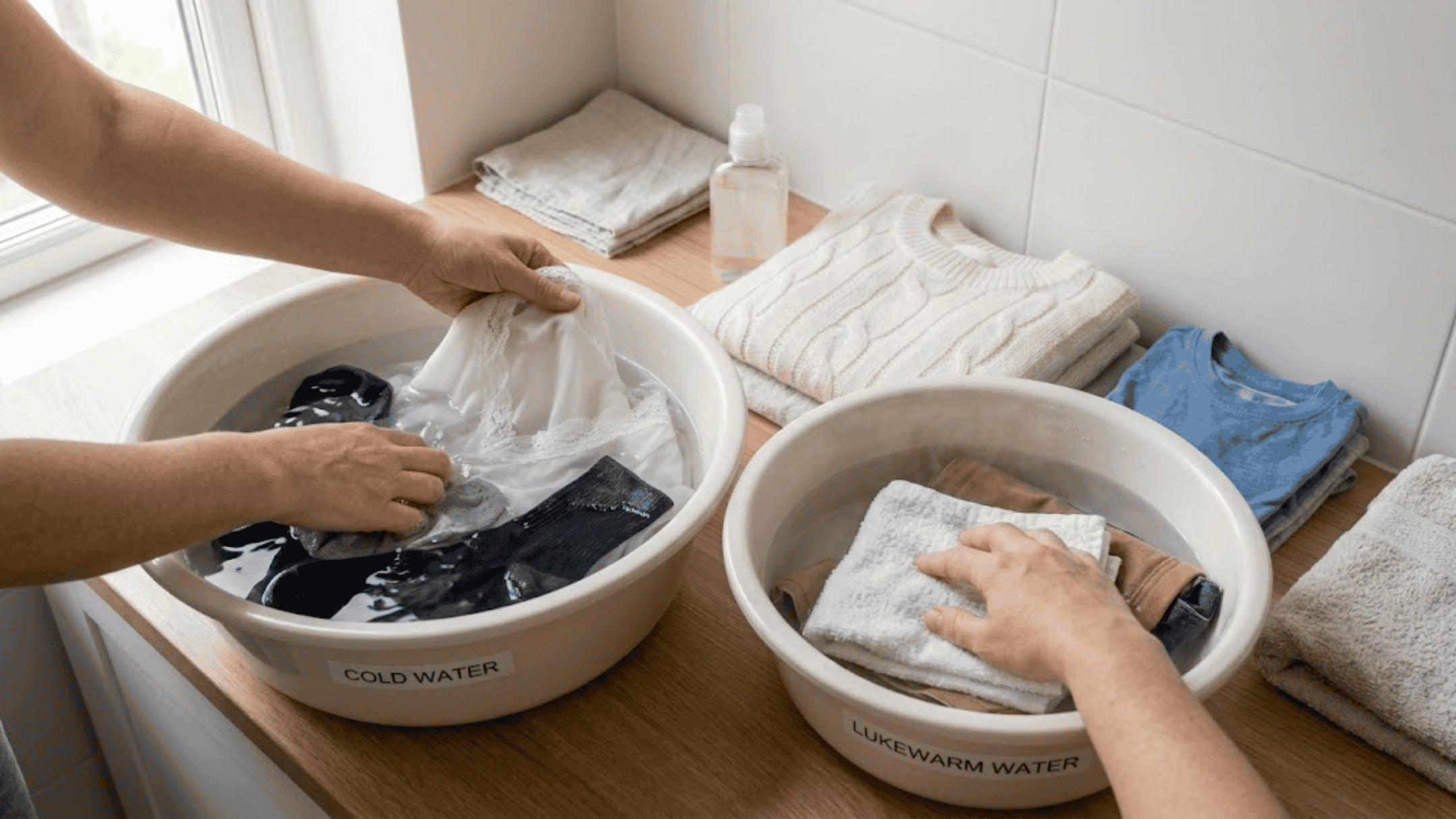
Cold water is best for most handwashing, as it cleans effectively while protecting colors, fibers, and fabric shape from heat-related damage.
Use cold water for delicate fabrics like silk, wool, and lace, as well as dark or bright clothes, since heat can cause shrinking, fading, or color bleeding.
Warm water works for sturdy, heavily soiled cotton items like towels or workwear, helping lift grease and dirt without harming these more resilient fabrics.
Avoid hot water for handwashing, as it can shrink fibers, fade dyes, and weaken fabric over time, making cold or lukewarm water the safer choice overall.
Common Handwashing Mistakes to Avoid
Avoiding common mistakes helps prevent shrinking, fading, and unnecessary fabric damage. Simple changes in washing, rinsing, and drying habits can help maintain clothing quality over time.
- Excess detergent can leave residue in fibers and require extra rinsing, which may put more stress on the fabric.
- Rubbing silk, lace, or wool too firmly can cause pilling, snags, thinning, and other fiber damage.
- Hot water can shrink delicate fabrics, fade colors, and weaken fibers, so use a suitable temperature for each material.
- Twisting or wringing clothes can stretch fibers and change their shape. Pressing gently or rolling them in a towel is safer.
- Poor rinsing can leave detergent behind, making fabric feel stiff, irritating skin, and causing dirt to collect more quickly.
Careful handling at each stage can keep fabrics in better condition, reduce wear, and help clothes hold their shape, color, and softness for longer.
Conclusion
A careful handwashing routine makes it easier to care for different types of clothing and extend their lifespan. Knowing how to handwash clothes properly helps maintain fabric quality with simple steps.
Using suitable detergent, the right water temperature, and gentle drying methods can reduce unnecessary wear while keeping clothes fresh. Small care habits make a difference over time.
Whether washing delicate fabrics or everyday items, a consistent approach keeps laundry simple and effective. Try these handwashing steps during your next wash and share your experience with others.
Comment your handwashing tips below and share what works best for you!
Frequently Asked Questions
Can You Handwash Clothes While Traveling without a Basin?
Yes. A clean sink, bucket, or sealed container can work well for washing small loads of laundry. Add water and detergent, wash the clothes by hand, rinse them properly, then squeeze out excess water before drying.
How can You Make Handwashed Clothes Smell Fresh?
Use a mild, scented detergent or add a fabric-safe laundry fragrance during the final rinse. Make sure clothes dry completely before storing or wearing them, since leftover moisture can cause musty odors.
Can Handwashing Remove Sweat and Body Odor from Clothes?
Yes, soaking clothes before washing can loosen sweat, body oils, and dirt trapped in the fabric. Pay extra attention to collars, cuffs, and underarms, where buildup is common and may require gentle rubbing.