How to Get Paint Out of Clothes: Step-by-Step Guide
Paint stains can feel like a disaster, especially when they hit your favorite clothes. But the truth is, most stains can be removed if you act correctly and avoid a few common mistakes.
Knowing how to get paint out of clothes starts with understanding what you’re dealing with and using the right method at the right time.
In this guide, I’ll walk you through a clear, step-by-step approach that works for different paint types and situations. You’ll also learn which products actually help and which ones can make things worse.
Let’s begin with a quick process you can follow right away.
Get Paint Out of Clothes Fast: Quick Guide
Before you grab any product, follow this basic process. It works as a starting point for any paint type.
Step 1: Identify the paint type: water-based (acrylic or latex) or oil-based
Step 2: Check if the paint is wet or already dry
Step 3: Scrape or blot off the excess; never rub
Step 4: Apply the right cleaning agent for that paint type
Step 5: Rinse from the back of the fabric to push paint out of the fibers
Step 6: Wash normally and check before placing in the dryer
Note: Never put clothes in the dryer until you’re sure the stain is gone. Heat locks paint into fabric permanently.
How to Get Paint Out of Clothes Based on Paint Type
Not all paint stains come out the same way. The method you use depends on two things: the type of paint and whether it’s still wet or already dried.
Water-based paints like acrylic and latex are generally easier to deal with. Oil-based paints need stronger solvents and a bit more patience.
1. How to Remove Wet Water-Based Paint (Acrylic or Latex)

Wet water-based paint is the easiest stain to deal with. Act right away, and you’ll likely get it out in one round.
Here’s what to do:
- Blot the stain gently; do not rub it.
- Flip the garment and rinse from the back with warm water.
- Mix one part dish soap with one part warm water.
- Sponge the solution onto the stain and blot repeatedly.
- Rinse and repeat until the stain fades.
- Wash normally once the stain is gone.
Warm water breaks down the paint before it sets. Dish soap lifts the pigment out of the fibers. The faster you do this, the better your results.
Note: Avoid using hot water too early; it can set some pigments into the fabric before you’ve had a chance to lift them out.
2. How to Remove Dried Water-Based Paint from Clothes
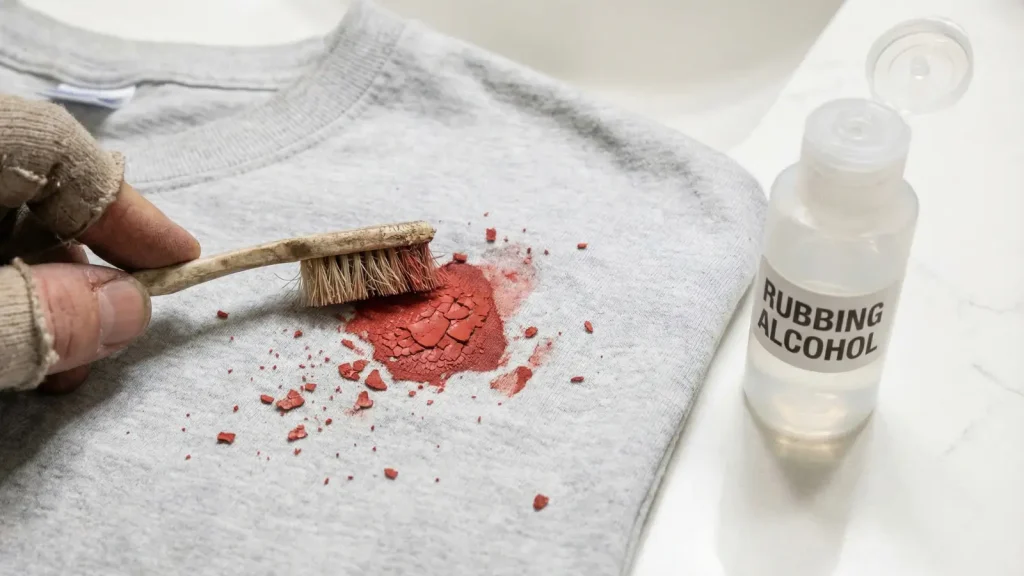
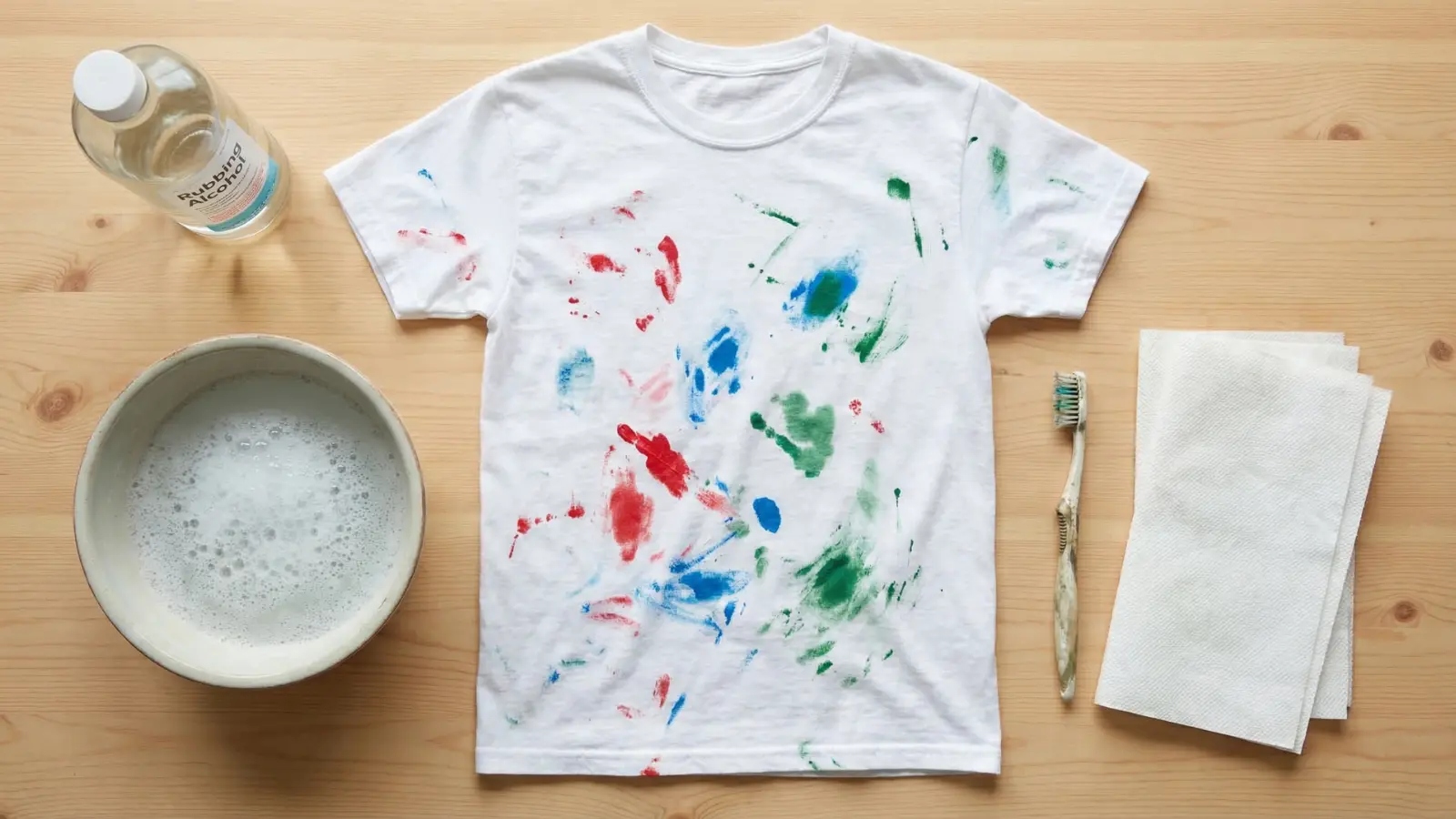
Dried acrylic or latex paint is harder to remove, but it’s not impossible. You’ll need rubbing alcohol or isopropyl alcohol to break it down.
Follow these steps:
- Use a spoon, fork, or soft brush to scrape off as much dried paint as possible.
- Dampen the stain with warm water.
- Apply rubbing alcohol directly to the stain and let it soak for a few minutes.
- Scrub gently with a stiff brush or an old toothbrush.
- Blot with a clean cloth and repeat as needed.
- Wash normally after the stain is gone.
Alcohol breaks down the polymer binder in dried paint. That’s what makes it effective, where water alone won’t work. You may need to repeat the process two or three times for older or thicker stains.
Don’t expect one attempt to do the job. Patience here is what gets results.
3. How to Remove Oil-Based Paint from Clothes
Oil-based paint is the trickiest type to deal with. Water won’t touch it; you need a solvent from the start.
When the Paint is Still Wet
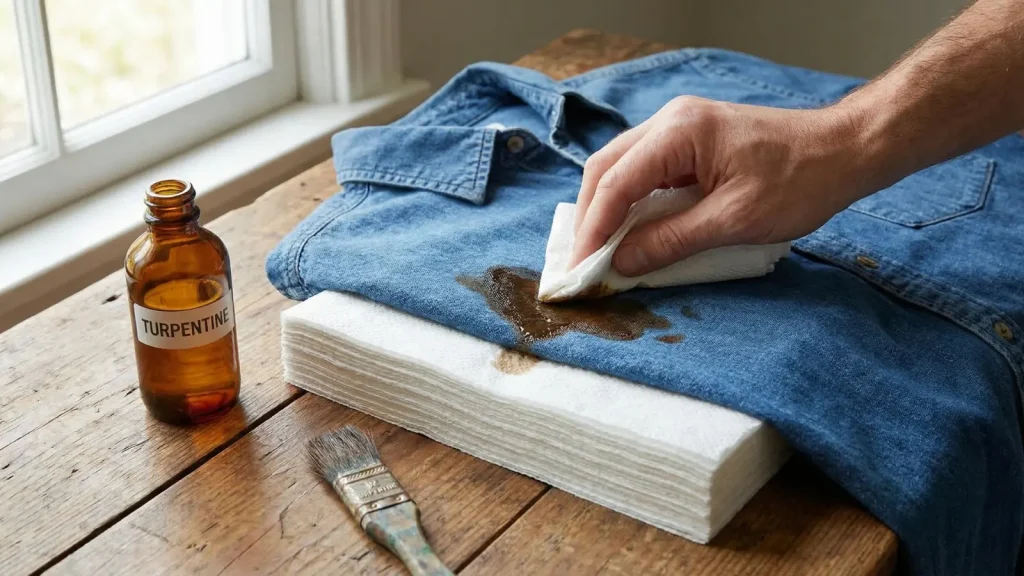
Move fast, but don’t panic.
- Blot off as much excess paint as possible with a clean cloth.
- Place the fabric face down on paper towels.
- Apply turpentine or mineral spirits to the back of the stain.
- Blot and tamp, don’t rub, until the paint lifts.
- Rinse the area thoroughly with warm water.
- Apply dish soap and work it in before washing.
Note: Always do a spot test on a hidden area first. Some fabrics react badly to turpentine.
When the Paint is Dried
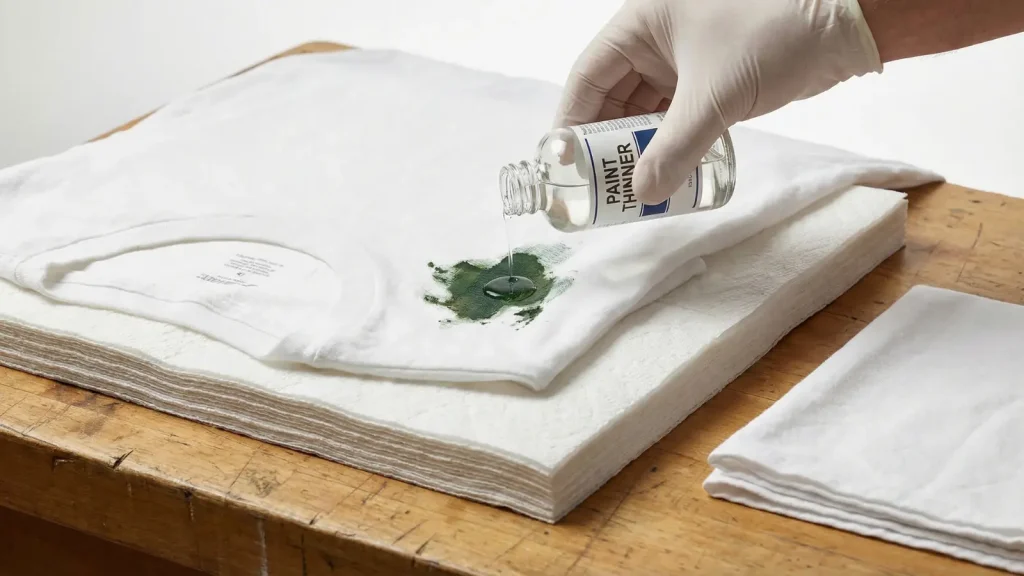
Dried oil-based paint needs a stronger approach.
- Apply paint thinner or the solvent recommended on the paint.
- Work from the back of the stain to push paint out.
- Blot repeatedly with clean cloths.
- Once the stain loosens, treat it with heavy-duty laundry detergent.
- Soak overnight if needed, then wash.
Note: Never use water first on oil-based paint. It won’t help and can spread the stain further. Also, don’t overuse solvent; too much can damage the fabric, especially synthetics.
How to Treat Paint Stains After Washing and Drying
Already ran your stained clothes through the dryer? It’s harder, but you still have options.
Heat sets paint deeper into the fibers, so results won’t be guaranteed. But it’s worth trying before you give up on the garment.
Here’s what to do:
- Re-wet the stain with rubbing alcohol or the appropriate solvent.
- Let it soak for 10–15 minutes.
- Scrub gently and repeat the process multiple times.
- Avoid putting the garment back in the dryer until the stain is fully gone.
The more times a garment has been dried with the stain in it, the lower your chances. Act as soon as you realize the stain is still there.
Choosing the Right Cleaning Agent
Choosing the right cleaning agent depends on the type of paint and fabric, so it’s important to match the product to the stain.
| Cleaning Agent | Best For | How It Works | Important Note |
|---|---|---|---|
| Rubbing alcohol | Dried acrylic or latex paint | Dissolves the polymer film | Test first on delicate fabrics |
| Dish soap + warm water | Wet water-based paint | Lifts pigment from fibers | Works best before paint dries |
| Acetone (nail polish remover) | Tough acrylic stains | Breaks down strong paint bonds | Avoid on acetate or triacetate fabrics |
| Turpentine/mineral spirits | Oil-based paint | Breaks down oil binder | Use in well-ventilated area |
| Heavy-duty laundry detergent | Final cleanup | Removes remaining residue | Use after main stain treatment |
| Commercial stain remover | Pre-wash treatment | Loosens leftover stain | Apply after bulk stain is removed |
Using the correct product for each paint type makes the cleaning process faster, safer, and more effective.
Common Mistakes that Make Paint Stains Permanent
Avoidable mistakes are the main cause of permanent paint stains. Here’s what not to do.
- Putting clothes in the dryer too soon: Heat bonds paint to fibers. Always check the stain first.
- Rubbing instead of blotting: Rubbing pushes paint deeper and spreads it wider.
- Using the wrong solvent: Water on oil paint or alcohol on a fresh latex stain can make things worse.
- Skipping the patch test: Strong solvents can damage or discolor certain fabrics.
- Ignoring the care label: Some fabrics can’t handle heat, alcohol, or acetone. Always check.
- Washing without pre-treating: The washing machine alone will not remove paint. Pre-treatment is essential.
One wrong step can turn a removable stain into a permanent one. Take a moment to identify the paint type and fabric before you start.
Conclusion
Removing paint from clothes is less about luck and more about using the right method at the right time.
Once you understand the type of paint and how it behaves on fabric, the process becomes much easier to manage.
Getting paint out of clothes depends on acting early, choosing the right cleaning agent, and avoiding mistakes that lock the stain in permanently. Even tougher stains can improve with repeated treatment if you stay consistent.
Try the steps from this guide the next time you face a stain and see how much of a difference the right approach can make.
Frequently Asked Questions
Will Paint on Clothes Stain Other Clothes in The Washer?
Dried paint won’t transfer to other clothes in the wash. Wet paint can spread, so always wash paint-stained clothes separately.
Can Hairspray Remove Paint from Clothes?
Yes, but only older alcohol-based hairsprays work. Rubbing alcohol is more reliable and gives better results on dried latex or acrylic paint.
Can Vinegar or Baking Soda Remove Paint from Clothes?
Both can help soften minor water-based stains. They’re not as effective as rubbing alcohol but are safer on delicate fabrics.
How Do I Know if My Paint is Water-Based or Oil-Based?
Check the paint can label. If it says latex or acrylic, it’s water-based. If it needs mineral spirits, it’s oil-based.