

Guide to Bathroom Counter Height and What to Keep in Mind
Tired of crouching over your bathroom sink or stretching awkwardly to wash your hands? The bathroom counter height might be the problem.
It’s something most of us don’t think about until it starts to bug us. The right height can make your bathroom easier and more comfortable to use every day.
In this blog, I’ll walk you through the various bathroom counter height options and help you find one that truly suits your needs.
I’ll cover standard, comfort, and custom heights, along with tips for selecting the best option. Curious which one’s right for you? Keep reading to find your perfect fit.
Choosing the Right Bathroom Counter Height
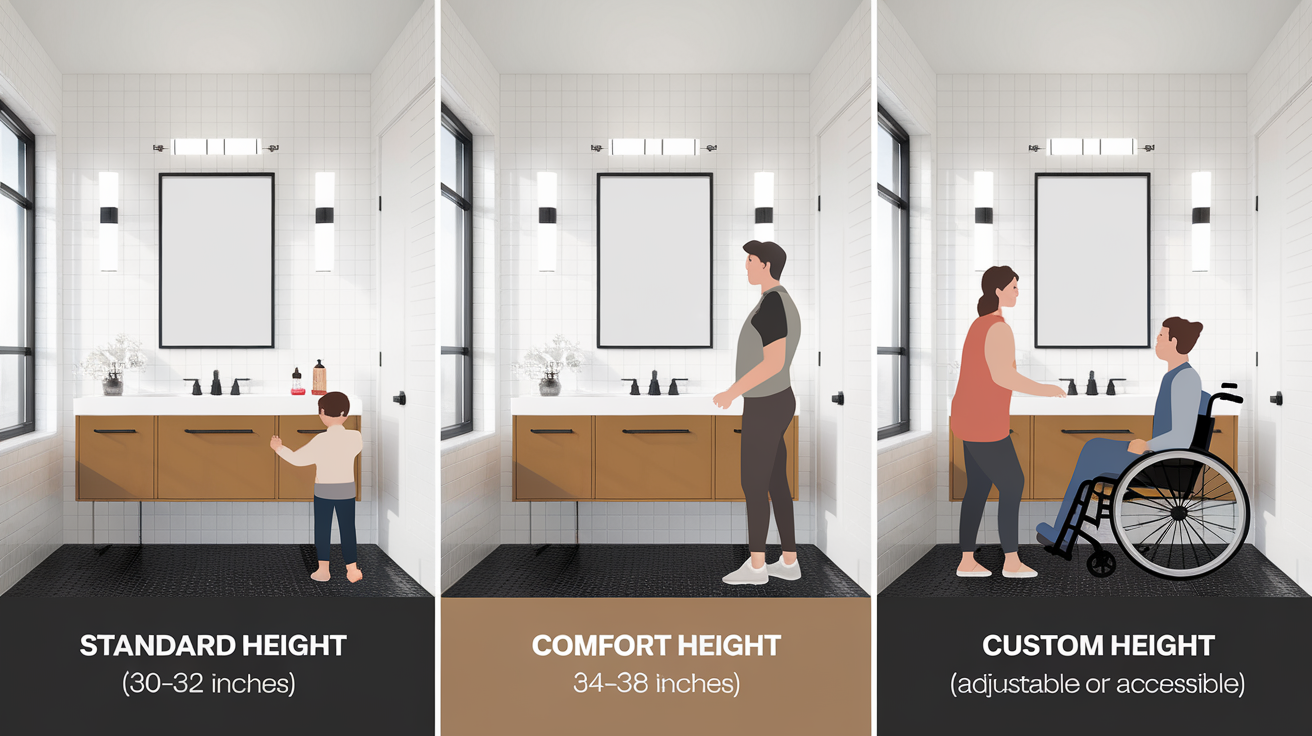
When renovating a bathroom, the counter height is often overlooked, with many assuming all vanities are the same. However, it quickly becomes clear that choosing the correct height is essential.
Standard Vanity Height
Standard bathroom counters are usually 30 to 32 inches tall. This height has been used for a long time and works best in specific situations:
- Great for children or shorter adults who may struggle to reach higher surfaces comfortably.
- Fits well with older home designs that typically feature lower counters.
- Ideal for those who prefer lower sinks for seated use or a more traditional look.
For those seeking a more ergonomic solution, comfort-height vanities provide an alternative.
Comfort Height: A Popular Choice
Comfort-height counters are typically around 34 to 36 inches tall, similar to kitchen counters. This design is becoming more common because it:
- Suits taller people who find lower vanities inconvenient.
- Reduces strain on your back by allowing you to stand straighter while using the sink.
- Supports a more upright, natural posture for daily tasks like brushing teeth or washing your face.
Switching to this height brought noticeable relief to my back and made routines feel easier.
Custom Heights: Made for Your Needs
Custom vanity heights are ideal when off-the-shelf sizes don’t match your needs. This is helpful if:
- You’re designing for wheelchair access or people with limited mobility, where lower and open designs may be essential.
- Small children mainly use the space, and you want them to reach the sink without a stool.
- You have a household with people of various heights, and want a height that balances everyone’s needs.
Custom heights allow your vanity to fit your space and lifestyle exactly.
DIY Ideas to Adjust Height
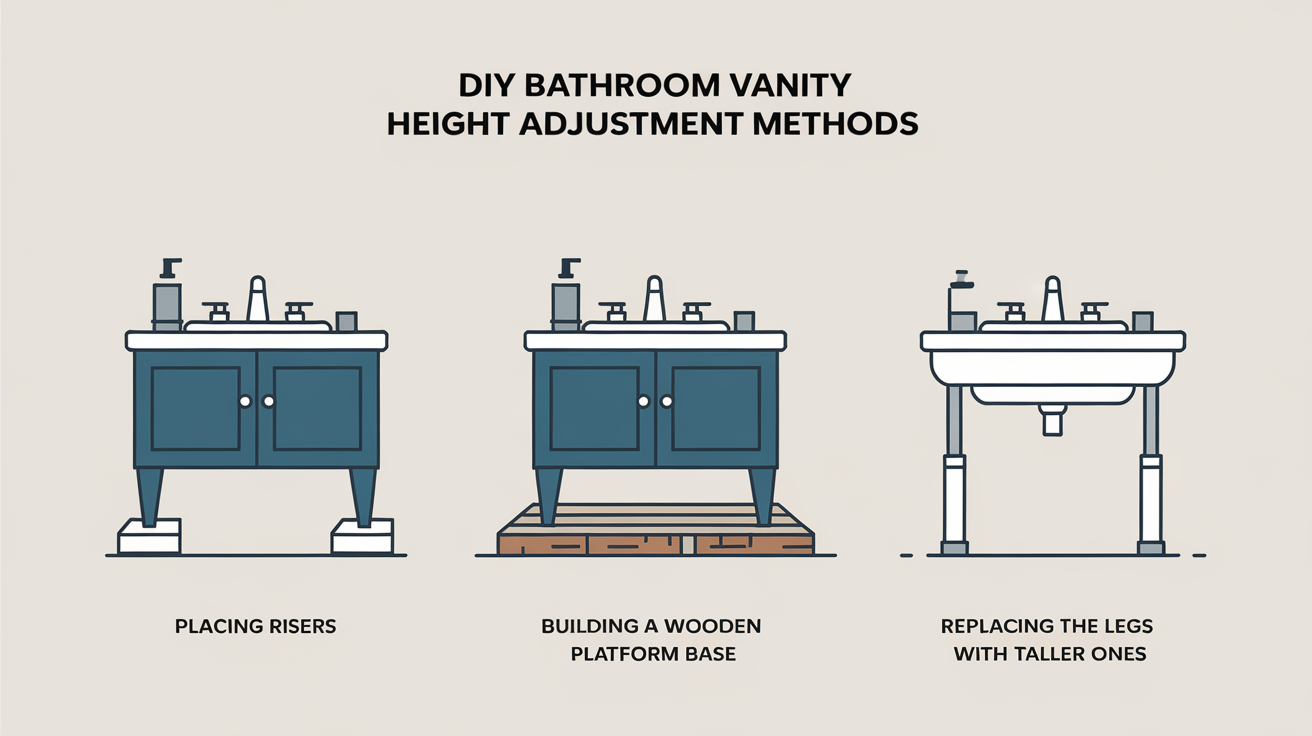
You don’t always need to buy a new vanity to fix the height. Here are some creative, low-cost ways to adjust it:
- Add base blocks or furniture risers under the legs to raise the entire unit slightly.
- Build a platform for the vanity to sit on if you need a few extra inches of space.
- Replace the legs with taller ones if your vanity has removable feet and you’re comfortable with simple tools.
Installation Tips and Considerations
Getting the height right during installation is just as important:
- Double-check balance and stability: After adjusting the vanity, ensure it’s firmly in place to prevent wobbling or shifting over time, which can lead to damage or instability.
- Use a level: Always check that the vanity is perfectly level across all sides. This ensures a uniform appearance and prevents issues with water drainage or misaligned fixtures.
- Leave enough space for doors and drawers: Make sure there’s sufficient clearance around the vanity to allow cabinet doors and drawers to open fully without obstruction, thereby improving accessibility and functionality.
- Ensure plumbing lines are aligned: Verify that plumbing connections are properly positioned and aligned with the vanity to prevent leaks and avoid costly delays or future plumbing issues.
- Plan for backsplash height: Measure and position the backsplash to complement the vanity height, ensuring both aesthetic appeal and proper functionality in protecting the wall from splashes.
Think About Your Sink Style
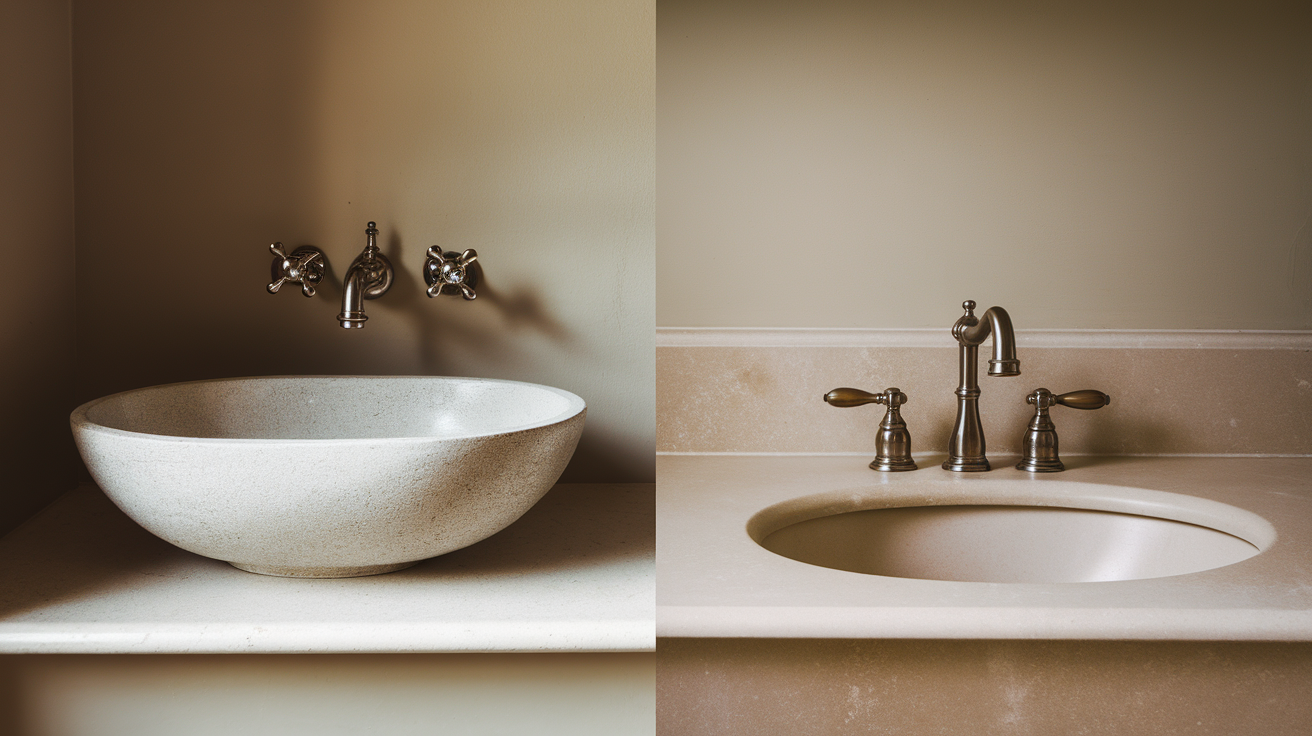
The type of sink you choose changes how high the counter should be. Here’s how:
- Vessel sinks: They sit entirely above the counter, adding several inches of space. These work best with lower vanities to prevent them from being too tall.
- Drop-in or undermount sinks: They are installed within or below the surface. These support standard or comfort-height counters without adding extra height.
Always measure the total height of the counter and sink combined to ensure it suits your needs.
Match Height to Your Body
To choose a height that feels good for you, try this simple test:
- Stand at a counter in a store or your home.
- Bend your arms to a 90-degree angle.
- Your hands should rest naturally on the counter surface.
If you find yourself leaning forward or reaching up, the height isn’t quite right. The best fit should allow a relaxed and comfortable stance.
Impact of Material on Height Choices
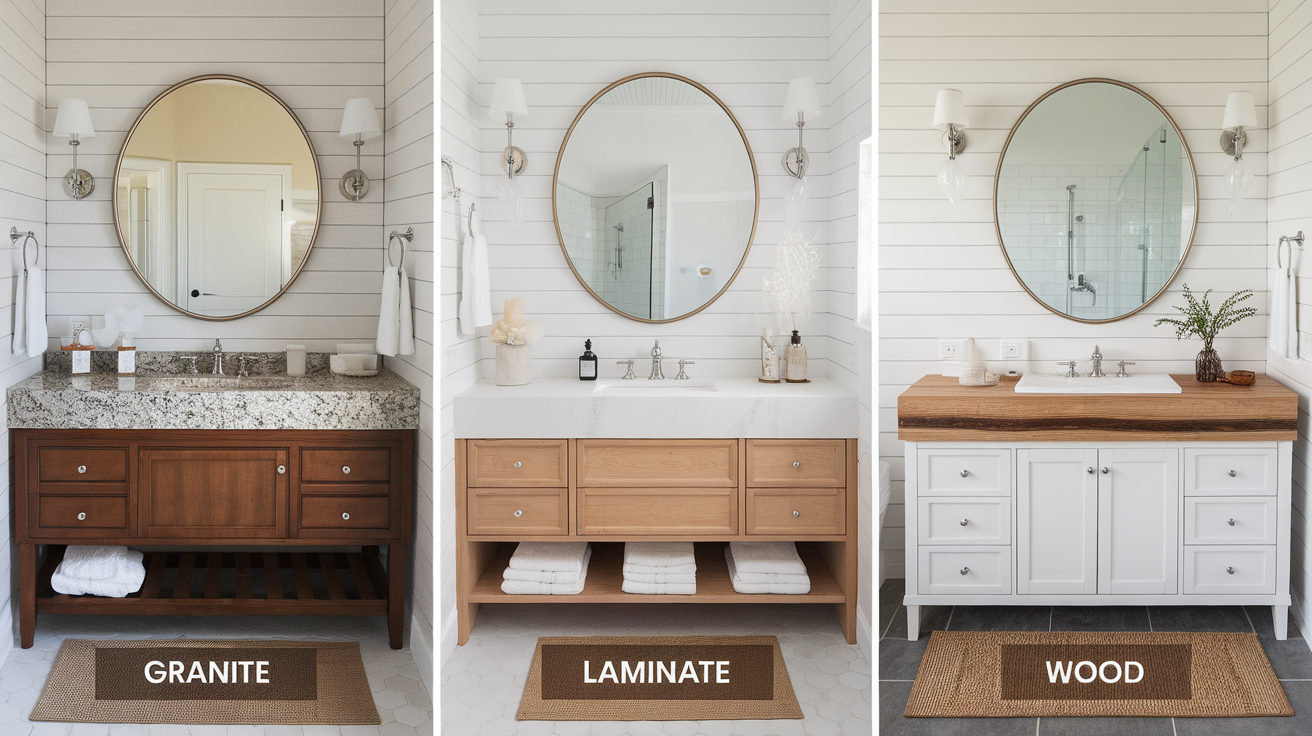
Different materials might influence how the vanity is built and how it feels:
- Stone countertops (such as granite or quartz): These materials are thicker and heavier, which means they can slightly increase the overall height of the vanity. Their solid structure adds durability, but may make adjustments more challenging.
- Laminate or wood surfaces: These materials are typically lighter and more flexible, offering more customization options. They can be easily trimmed or adjusted to fit your desired height, making them great for DIY projects.
- Prefabricated units: They often come with fixed dimensions and limited customization options. While these are convenient and ready to install, they don’t offer as much flexibility in terms of height adjustments compared to custom designs.
Knowing the material helps in setting realistic expectations for adjustments.
Quick Chart to Help You Choose
| Your Height | Good Counter Height |
|---|---|
| Under 5’4″ | 30–32 inches |
| 5’4″ to 5’10” | 32–34 inches |
| Over 6’0″ | 34–36 inches |
Use this chart as a starting point. Try a few setups in stores to see what feels best.
Understanding ADA Standards for Bathroom Counter Height
When designing for accessibility or planning for the long term, it’s essential to follow guidelines that support all users.
According to ADA-friendly practices, a counter height of approximately 34 inches is suitable for most accessibility needs.
In addition, there should be at least 27 inches of knee clearance beneath the counter. This space allows a person using a wheelchair to roll under and access the sink comfortably.
Even if your home doesn’t currently require these features, including them now can add flexibility and increase the value of your home over time.
Mistakes to Avoid when Choosing Vanity Height
Many people make simple errors when choosing vanity heights. Avoid these:
- Don’t overlook the combined height of the vanity and sink: The total height, including both the vanity and sink, can significantly affect your comfort. Make sure that you consider the final height after installation, as it directly impacts how you’ll use the space daily.
- Avoid choosing a vanity solely based on its appearance: While style is important, it’s essential to test how the vanity feels when you use it. Comfort should always be a priority, especially for tasks like brushing your teeth or washing your face.
- Forgetting about others in the home: If multiple people will be using the bathroom, consider their heights and needs when selecting the vanity height. A one-size-fits-all approach could make the space uncomfortable for others.
- Failing to plan for aging or changing needs: Think long-term. As you or your family members age, your needs might change. A vanity height that works now might not be suitable in the future, so it’s best to plan for possible adjustments.
Conclusion
Selecting the right bathroom counter height can significantly improve your daily routine.
I’ve covered standard, comfort, and custom options, along with how factors such as your height and sink style can influence your choice.
Now, it’s your turn to think about what feels best for your body and how you use your space. Don’t just plan for today.
Consider how your needs may evolve in the future. A bit of foresight now can save you from headaches later. Remember, your bathroom should work for you, not the other way around.
Looking for more practical tips to make your home more comfortable? I was hoping you could read my other blogs for useful, actionable ideas that can make a difference.


