

Georgian Homes: Where Tradition Meets Style
Have you ever walked past a home and stopped just to admire its perfect symmetry? Georgian homes have that effect.
These aren’t just houses, they’re pieces of history that tell a story of balance, beauty, and careful design.
Built during the 18th and early 19th centuries, Georgian-style houses continue to inspire architects and homeowners around the world.
If you love classic architecture or you’re thinking about buying or building a home with character, this blog will show you what makes Georgian homes so special.
From their symmetrical facades to their formal interiors, you’ll learn what defines this style, how it looks inside and out, and how you can bring Georgian charm into your own space today.
What Defines a Georgian Home?
Georgian homes take their name from the four King Georges who ruled Britain between 1714 and 1830.
During this time, architects looked back to ancient Greece and Rome for inspiration. They focused on proportion, order, and symmetry.
This isn’t just about good looks. Georgian design follows rules based on mathematics and classical principles. Everything has a place, and nothing feels random.
Key Features:
- Symmetrical fronts with a centered door
- Brick or stone walls with white or cream trim
- Multi-pane sash windows that match on both sides
- Hipped or gabled roofs with chimneys placed evenly
- Tall ceilings and well-proportioned rooms
- Classic details like columns, pilasters, and pediments
Georgian homes feel calm and orderly. The balance in the design creates a sense of permanence and grace that still feels modern today.
Exterior of a Georgian Home
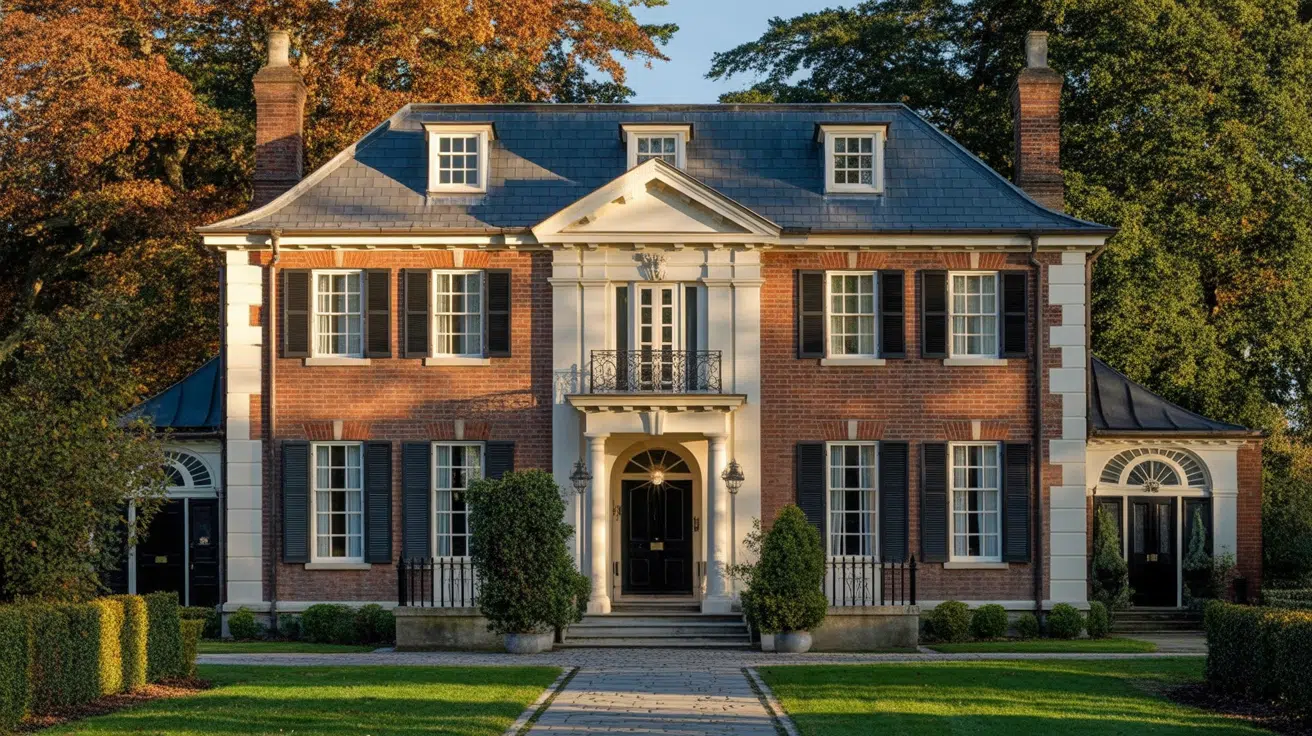
The outside of a Georgian home is easy to recognize. The design is all about symmetry and restraint. Every element on one side mirrors the other.
This creates a sense of calm and order that draws the eye. Georgian exteriors don’t shout for attention; they earn it through perfect proportion and timeless details.
Typical Exterior Elements:
- Symmetry: Windows and features mirror each other on both sides of the front door. This creates a balanced, pleasing look.
- Materials: Most Georgian homes use brick or stone. Walls are often painted or left in natural tones. White or cream trim adds contrast.
- Roofing: Roofs are usually hipped or gabled. Some homes have small dormer windows that add charm without breaking the symmetry.
- Entrances: The front door is the focal point. It’s often framed with a fanlight above and sidelights on each side. Pediments or columns add formality.
- Windows: Tall, multi-pane sash windows are a hallmark. Shutters are common and add both style and function.
- Details: Look for dentil molding along the roofline, cornices above windows, and quoins at the corners. These small touches add refinement.
- Landscaping: Georgian homes often sit behind neat lawns, trimmed hedges, and straight paths. The outdoor design mirrors the order inside.
Tip: A bold front door in navy, black, or forest green stands out beautifully against pale walls and adds instant curb appeal.
Interior of a Georgian Home

Step inside a Georgian home and you’ll notice a sense of calm. Rooms are well-proportioned, light-filled, and thoughtfully arranged.
Each space has a clear purpose and flows naturally into the next. High ceilings and tall windows create an airy feel, while classical details add warmth and character.
There’s a quiet sophistication that makes these interiors feel both formal and inviting.
Distinct Interior Features:
- Layout: A central hallway divides the main floor. Rooms open off this hall in a symmetrical pattern.
- Ceilings: High ceilings make rooms feel grand. Many feature decorative cornices or ceiling medallions.
- Walls: Paneling is common, especially in dining rooms and studies. Wainscoting adds texture and visual interest.
- Fireplaces: These are often the focal point of a room. Mantels are made from marble or limestone and feature classical details.
- Floors: Hardwood floors are standard. In formal areas, you might see patterned stone or tile.
- Color Palette: Soft, muted tones dominate. Think creams, pale blues, sage greens, and warm grays.
- Furniture: Traditional Georgian furniture includes Queen Anne and Chippendale styles. Mahogany and walnut are common woods.
- Lighting: Chandeliers and wall sconces provide gentle, layered light. Brass and crystal are popular finishes.
Modern Tip: Keep the architectural details but update with minimalist furniture and light, neutral fabrics for a fresh take on Georgian style.
Living in a Georgian Home: Advantages and Disadvantages
Like any home style, Georgian houses come with pros and cons. Here’s what you should know.
| Advantages | Disadvantages |
|---|---|
| Timeless Appeal: The symmetrical design and classical details never go out of style. | High Maintenance: Detailed moldings, trims, and brickwork need regular care. |
| Prestige & Heritage: Owning a Georgian home means living in a piece of history. | Energy Inefficiency: Older homes may have poor insulation or single-pane windows. |
| Spacious Layouts: Large rooms with high ceilings feel open and grand. | Restoration Costs: Fixing or replacing historic features can be expensive. |
| Strong Resale Value: Character-rich homes hold their value well. | Historic Restrictions: Some areas have rules about changing the exterior or structure. |
| Adaptable Style: Georgian interiors work with modern or traditional decor. | Limited Natural Light: Smaller windows can make rooms feel darker. |
How to Bring Georgian Style Into Your Home

You don’t need a mansion to enjoy Georgian design. With a few smart choices, you can add this classic look to any space.
Exterior Tips
- Keep your windows and door placement symmetrical.
- Use white or cream trim to define edges and corners.
- Add classical touches like pilasters, columns, or a pediment above the door.
- Choose a bold, heritage-inspired color for your front door.
- Frame the entrance with matching lanterns or iron fixtures.
Interior Tips
- Stick to neutral or muted color palettes.
- Add paneling or crown molding to create depth.
- Arrange furniture around a fireplace to create a focal point.
- Mix antique or vintage pieces with modern decor.
- Use chandeliers or brass light fixtures for a classic touch.
Georgian Homes for Today’s Modern Lifestyle
Georgian design hasn’t disappeared. Modern builders and architects still create homes inspired by this style. They’re called Neo-Georgian homes.
These homes keep the symmetry, proportion, and classical details. But they add modern conveniences like open floor plans, energy-efficient windows, and smart home technology.
You get the best of both worlds: the beauty and character of a historic style with the comfort and efficiency of a new build.
Modern Georgian houses prove that good design is timeless. The principles that worked in the 18th century still work today.
Conclusion
Georgian homes capture what many modern houses miss: harmony, craftsmanship, and timeless beauty.
From stately brick exteriors to refined, symmetrical interiors, the Georgian style shows that balance and proportion never go out of fashion.
You might be restoring an old masterpiece or designing a new build inspired by classic principles.
Either way, Georgian architecture proves that great design lasts. The same rules that created beautiful homes centuries ago still create beautiful homes today.
What do you think about Georgian-style homes? Would you live in one, or are you inspired to add Georgian touches to your current space? Let me know in the comments below!


