How to Clean Bamboo Floors the Right Way
Your bamboo floors looked perfect when installed. Now they’re streaky and dull.
The problem? Most people use too much water or the wrong cleaners on bamboo. It’s grass, not wood, so it needs special care.
This blog shows you exactly how to clean bamboo floors. You’ll learn the step-by-step professional cleaning process, find which products work best, handle tough situations like pet messes, and maintain your floors for decades.
Let’s get your bamboo looking brand new again.
Understanding Bamboo Flooring
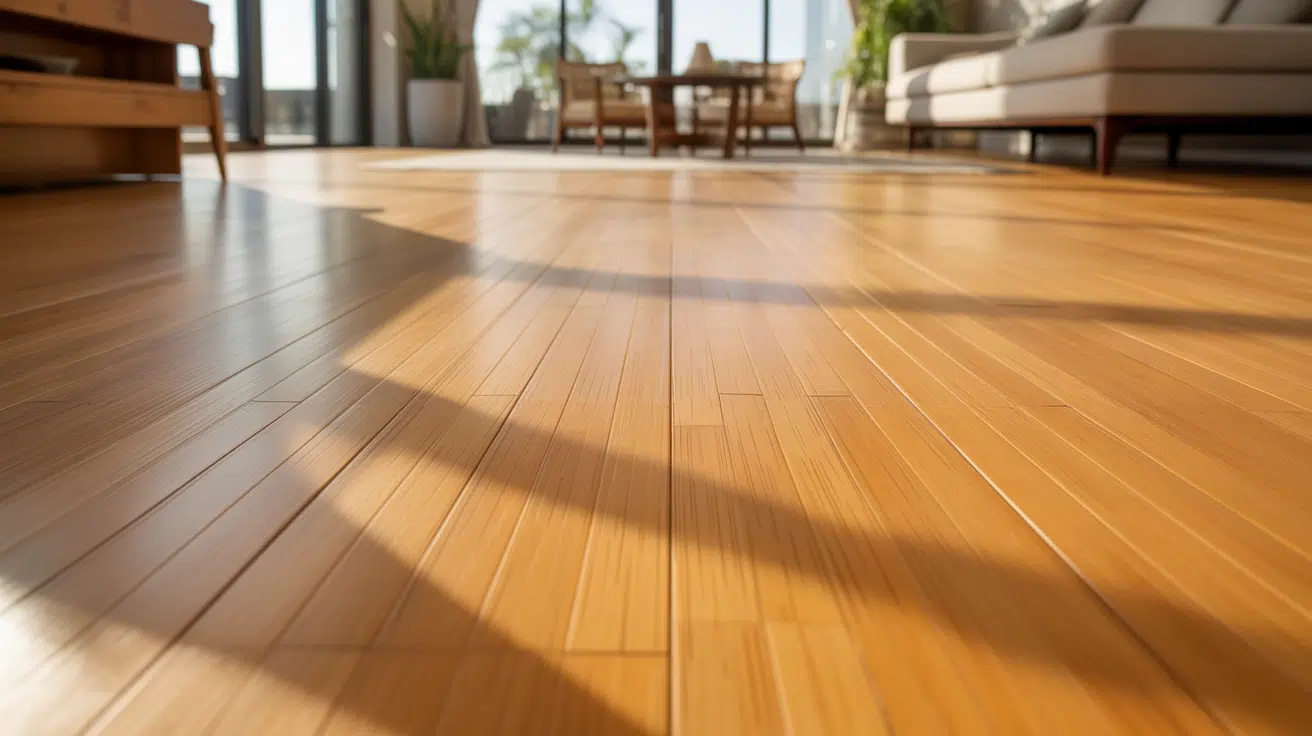
Bamboo flooring comes from grass, not wood. Bamboo stalks get cut, sliced into strips, and pressed together to form planks that look like hardwood.
There are three main types:
- Horizontal bamboo shows the natural node lines. Strips lay flat and press sideways.
- Vertical bamboo hides most lines. Strips stand upright when pressed together.
- Strand-woven bamboo is the strongest. Shredded fibers mix with resin and compress under extreme heat.
Colors come in two ways. Natural bamboo is light blonde. Carbonized bamboo gets heat-treated for darker tones. Some have added stains.
Bamboo grows back in 5-6 years versus decades for hardwood trees. It’s durable and works well in busy homes when you choose the right type.
How to Clean Bamboo Floors Without Streaks
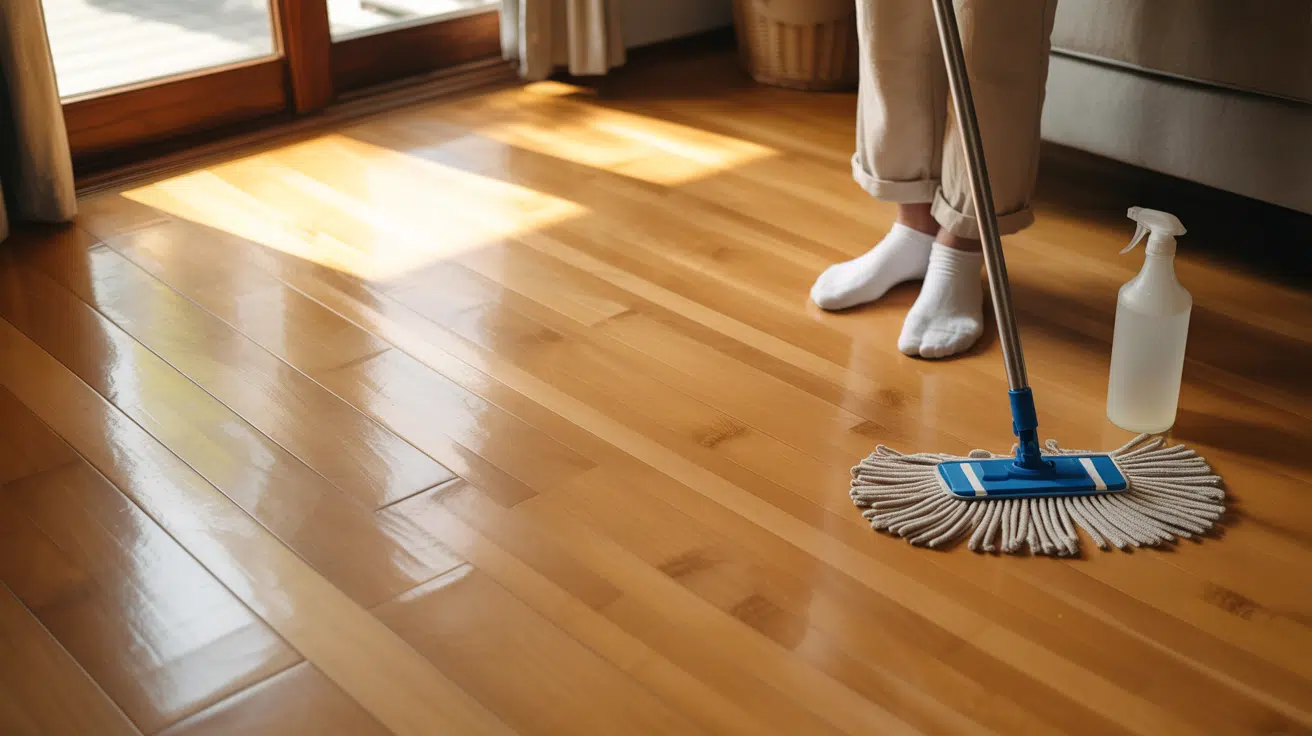
Learn the exact steps on how to clean bamboo floors and the things you need to get streak-free, shiny bamboo floors without causing damage.
What You’ll Need:
- Soft-bristle broom or vacuum with hardwood setting
- Microfiber mop or flat mop
- Two microfiber cloths (one for cleaning, one for drying)
- Bucket
- White vinegar or pH-neutral bamboo/hardwood floor cleaner
- Warm water
- Spray bottle (optional, for spot cleaning)
Step 1: Clear and sweep
Remove rugs and furniture from the area. Sweep or vacuum to remove all dust and dirt.
Pay attention to corners where debris builds up. Mopping over dirt causes streaks and scratches.
Step 2: Mix the cleaning solution
Add 1/4 cup white vinegar to one gallon of warm water. Or use a pH-neutral bamboo cleaner. Avoid ammonia, bleach, and oil soaps, as they leave residue. Test in a hidden spot first.
Step 3: Dampen the mop
Dip your mop in the solution and wring it completely. It should be barely damp, not wet or dripping. Excess water causes streaks and seeps into seams. A damp mop cleans without water damage.
Step 4: Mop in S-patterns
Start from the far corner and work backward. Clean 4×4-foot sections using S-shaped motions.
This spreads cleaner evenly and prevents streaks. Overlap strokes slightly to avoid missing spots.
Step 5: Dry immediately
Follow your mop with a dry microfiber cloth right away. Buff each section after mopping to remove all moisture.
Don’t let the floor air dry, as this creates water spots. Buffing brings out natural shine.
Step 6: Refresh water
Replace dirty water with a fresh solution when it looks cloudy. Dirty water spreads grime back onto clean floors.
For streaks, wipe with plain water and dry immediately. Plain water often works better for fixing streaks.
Step 7: Final buff
Check the entire floor for missed spots or streaks. Do one last pass with a dry cloth for uniform shine.
Look from different angles to catch any streaks. This makes your floor look professionally cleaned.
Step 8: Let dry
Keep people off the floor for 10-15 minutes. Open windows or use fans to speed drying. Walking on damp floors leaves footprints. This ensures completely dry, streak-free floors.
Important reminders:
- Never use steam mops on bamboo; the heat and moisture damage the finish
- Don’t leave standing water or puddles
- Clean up spills immediately to prevent water damage
- Avoid abrasive scrubbers that scratch the surface
Special Situations
- Dealing with sticky residue: Mix equal parts vinegar and water. Apply with a damp cloth for 2-3 minutes. Use a plastic scraper for stubborn spots. Wipe and dry immediately.
- Removing scuff marks: Rub with a tennis ball or a pencil eraser. Wipe with vinegar solution if needed. Dry thoroughly.
- Handling pet accidents: Blot immediately with paper towels. Clean with vinegar or enzyme cleaner. Dry completely; urine causes permanent damage.
- Treating high-traffic areas: Spot-clean 2-3 times weekly. Use a barely damp cloth with the solution. Prevents dirt buildup and scratches.
- Managing water stains: Make a baking soda paste. Rub gently with the grain. Wipe and dry immediately. Deep stains need professional help.
- Cleaning in humid climates: Use less water when mopping. Run fans during cleaning. Use a dehumidifier. Humidity increases water damage risk.
Professional Bamboo Floor Cleaning
| Service Type | What It Includes | Cost (approximately) | When Needed |
|---|---|---|---|
| Deep Cleaning | Commercial equipment, bamboo-safe products, and a low-moisture system | $0.50 – $1.50/sq ft | Annual maintenance, dull floors, buildup |
| Scratch Repair | Buffing, touch-ups, surface restoration | $100 – $300/room | Visible scratches, stubborn scuffs |
| Refinishing | Sanding, new coating, full restoration | $3 – $5/sq ft | Worn finish, serious damage, fading |
| Protective Treatment | Sealant, protective coating | $1 – $2/sq ft | After refinishing, every 3-5 years |
Choose companies that specialize in bamboo flooring, not just general cleaners. Check online reviews and ask for references to verify their work.
Daily Cleaning Routine for Bamboo Floors
A simple routine keeps bamboo floors clean and prevents scratches or moisture damage.
Dust or Sweep
- Use a dry microfiber mop or soft-bristle broom
- Move with the grain to remove fine dust and grit
Vacuum Safely
- Use a vacuum with a soft brush or hardwood attachment
- Never use a beater bar
Wipe Spills Immediately
- Clean spills as soon as they happen
- Use a dry or lightly damp microfiber cloth
Spot Clean When Needed
- Apply a pH-neutral cleaner to a cloth (not directly to the floor)
- Gently wipe sticky or dirty spots
Weekly & Monthly Deep Cleaning Routine
A deeper cleaning schedule helps maintain shine, prevent buildup, and keep bamboo floors looking their best over time.
Weekly
For weekly cleaning, start by sweeping or vacuuming to remove dust and grit.
Use a slightly damp microfiber mop with a pH-neutral bamboo floor cleaner, applying only a light mist to avoid excess moisture.
Mop with the grain and dry the floor immediately afterward to prevent streaks, haze, or water damage.
Monthly
Once a month, inspect the floors for dullness or film.
If needed, use a bamboo-safe deep cleaner to break down residue and restore clarity.
After cleaning, buff the surface with a dry microfiber cloth to even out the sheen and maintain the floor’s natural finish.
Best Bamboo Floor Cleaners (Top Recommended Options)

A quick direction to the safest and most effective cleaners that protect bamboo flooring while delivering a streak-free clean.
1. Homemade vinegar solution
White vinegar mixed with water (1/4 cup per gallon) is the most budget-friendly option. It cuts through dirt, disinfects naturally, and leaves no residue.
Costs pennies per gallon and works as well as commercial cleaners. Safe for all bamboo floor types.
2. Bona Hardwood Floor Cleaner
Bona is a top-rated pH-neutral cleaner that works excellently on bamboo.
Comes in a spray bottle or a concentrated formula. Dries streak-free without rinsing. Available at home improvement stores for approximately $8-$15. Greenguard certified safe.
3. Method Squirt + Mop Wood Floor Cleaner
Method offers a plant-based, non-toxic formula safe for bamboo. Comes concentrated; add to water in your mop.
Biodegradable and eco-friendly with a pleasant almond scent. Costs $5-$8 approximately at grocery stores.
4. Aunt Fannie’s Floor Cleaner Vinegar Wash
This cleaner is vinegar-based and includes added essential oils to enhance the scent. pH-balanced for sealed wood and bamboo.
Pre-mixed and ready to use. Made with plant-based ingredients. Costs $11-$14 approximately per bottle.
5. Black Diamond Stoneworks Wood & Laminate Cleaner
A professional-grade cleaner is safe for bamboo without harsh chemicals. Dries quickly with streak-free shine.
Good for pet homes since it neutralizes odors. Costs $12-$18 approximately.
What to avoid
- Skip cleaners with ammonia, bleach, wax, or oil-based ingredients.
- Avoid Murphy Oil Soap and similar products that leave buildup.
- Don’t use multi-surface cleaners that are not marked safe for hardwood.
- Never use steam mop solutions or Orange Glo oil cleaners.
Long-Term Bamboo Floor Maintenance
Proper long-term care helps bamboo flooring stay durable, glossy, and free from damage.
- Control Indoor Humidity: Bamboo expands and contracts with moisture, so keep indoor humidity between 40% and 60% to prevent warping, gaps, or swelling.
- Prevent Scratches: Use felt pads under furniture legs, place rugs in high-traffic areas, and avoid walking on the floor with high heels or shoes that track in grit.
- Protect Against Moisture: Clean spills immediately and never let water sit on the floor. Avoid wet mopping and keep plants or pet bowls on protective trays.
- Rotate Rugs and Furniture: Move rugs periodically and rotate furniture placement to ensure even wear and prevent uneven fading from sunlight.
- Maintain a Regular Cleaning Schedule: Sweep or vacuum often, damp mop sparingly, and use only pH-neutral cleaners to preserve the floor’s finish over time.
The Bottom Line
Streak-free bamboo floors come down to three things: barely damp mops, pH-neutral cleaners, and immediate drying.
Follow the step-by-step weekly routine on how to clean bamboo floors, sweep daily, and wipe spills right away. Use mats at entryways and maintain proper humidity levels.
Remember, bamboo is grass, not wood. It needs less water than hardwood. When in doubt, use less moisture and dry thoroughly.
These simple habits keep your floors looking beautiful for decades.