

Can I Use Acrylic Paint on Fabric? Yes, Here Is How to Do It Right
You have an acrylic paint project in mind, but can you use it on fabric?
Yes, but acrylic paint needs one extra step to last. Without a fabric medium, it can dry stiff, crack, and peel after washing. Mixing it with a medium keeps the paint flexible and durable.
This covers what to mix with acrylic paint, the best fabrics to use, and how to seal your design.
Can I Use Acrylic Paint on Fabric?
Yes, you can use acrylic paint on fabric. Acrylic paint bonds to most fabric surfaces, but the acrylic polymer in it dries rigid. On its own, it makes fabric feel stiff and cracks when bent or washed. Add a fabric medium to the paint, and it becomes flexible, soft, and washable. That one addition completely changes the result.
Can I Use Acrylic Paint on Fabric Instead of Fabric Paint?
Yes, you can use acrylic paint on fabric instead of fabric paint. Fabric paint costs more, comes in small bottles, and offers far fewer color choices. Regular acrylic craft paint, mixed with a fabric medium, performs just as well on most projects. You get more colors, a lower cost, and the same lasting results.
Acrylic Paint vs. Fabric Paint: What’s the Difference?
Both paint types can color fabric, but they behave differently once dry. The table below breaks down the key differences so you can pick the right option for your project.
|
Feature |
Acrylic Paint + Fabric Medium |
Fabric Paint |
|---|---|---|
|
Flexibility when dry |
Soft and flexible |
Soft and flexible |
|
Color range |
Hundreds of shades |
Limited range |
|
Cost per bottle |
Low (often under $1) |
Higher cost, smaller bottles |
|
Works on synthetic fabric |
Yes, with medium added |
Often natural fibers only |
|
Wash-safe |
Yes, when heat-set |
Yes, when heat-set |
|
Best use |
DIY clothing, wall art, shoes, tote bags |
Quick, ready-to-use small projects |
When Fabric Paint Still Makes Sense
Acrylic paint with medium works well for most fabric projects. A few situations still make fabric paint the faster or simpler choice.
-
One-time-use costumes: Dimensional fabric paint applies directly from the bottle and skips mixing entirely.
-
Fine-tip detail work: Fabric paint with a built-in applicator tip makes precise lines far easier than a brush.
-
Puffy or raised effects: Dimensional fabric paint creates a 3D texture that acrylic paint with medium cannot replicate.
-
Kids’ craft sessions: Fabric paint is ready straight from the bottle, making it faster and simpler for group projects.
What Do I Mix with Acrylic Paint to Use on Fabric?

Mix your acrylic paint with a fabric medium, also called a textile medium. This water-based liquid additive changes the paint’s formula so it can bond to fabric fibers properly. It makes the dried paint soft and flexible instead of hard and brittle. The result is paint that moves with the fabric and does not crack or flake after washing.
How to Mix Acrylic Paint with Fabric Medium
The mixing process takes less than five minutes and uses materials from any craft store. Here are the steps, along with what to know before you start.
-
Pre-wash and iron your fabric.
Washing removes the factory sizing, a chemical coating applied to new fabric that blocks paint from bonding to the fibers. If you skip this step, the paint may sit on the surface and peel. Iron the fabric flat and dry before you start painting.
-
Mix your paint colors first.
If your project uses a custom or blended shade, combine your acrylic colors together before the medium goes in. Adding medium to a half-blended mix makes it harder to reach a consistent, even color throughout.
-
Add the fabric medium at the right ratio.
The standard ratio is 2 parts acrylic paint to 1 part fabric medium. Some brands like Liquitex recommend a 1:1 ratio. Always read the label on your specific product. If the mix feels too thick to brush smoothly, add a few drops of water.
-
Stir until fully combined.
Mix until the paint and medium are blended with no visible separation or lumps. Lumps show up as uneven patches on the painted surface. They also affect how well the paint bonds to the fabric underneath.
-
Test the mix on a fabric swatch.
Before starting the main project, test the mix on a scrap of the same fabric. Let it dry and check that the color looks correct. The texture should feel smooth and soft, not stiff or tacky.
-
Paint in thin layers only.
Apply light coats and let each one dry fully before adding another. Thick coats trap moisture underneath and take much longer to cure. They also increase the chance of cracking once the paint is dry.
-
Let the paint cure before heat-setting.
Allow at least 48 to 72 hours to dry. The paint must fully cure before you apply heat. Heat-setting too soon can seal in moisture and weaken the long-term bond between the paint and the fabric.
Homemade Fabric Medium: 2 DIY Alternatives
You may not always have a commercial fabric medium available. These two homemade options use everyday ingredients and give similar results for most fabric art and DIY projects.
Option 1: Glycerin and Water

Glycerin is a sugar alcohol available at most pharmacies and some grocery stores. When mixed with water and added to acrylic paint, it loosens the consistency. It also keeps the dried paint flexible enough to move with the fabric without cracking.
-
Ratio: 1 part glycerin + 1 part water
-
Mix the glycerin and water together first, then add to your acrylic paint
-
For every 2 tablespoons of paint, use 1 tablespoon of the glycerin-water mix
-
Stir well before applying to fabric
-
Best for: stamping, stenciling, and fabric art projects
-
Note: Test on a scrap first. At higher ratios, colors can bleed. Reduce the glycerin amount if spreading occurs.
Option 2: Glycerin, White Vinegar, and Water

This version adds white vinegar to the mix. Vinegar acts as a mild mordant, helping color hold onto fabric fibers longer. It also prevents the mixture from going bad if you prepare a larger batch in advance.
-
Ratio: 1 part glycerin + 1 part white vinegar + 2 parts water
-
Mix all three liquids together first
-
Then combine equal parts of this mixture with your acrylic paint
-
Stir until fully blended before applying
-
Heat-set after the paint dries for longer-lasting results
-
Best for: projects where you need to prepare paint a day or two in advance
Quick note: Store-bought fabric medium is more consistent and reliable than homemade options. Use these DIY alternatives when you do not have access to a craft store. They also work well if you want to test a low-cost approach on a practice swatch first.
Can I Use Acrylic Paint on Fabric Without Medium?
Yes, you can, but the results will not hold up for most uses. Without medium, acrylic paint dries hard on fabric. The surface becomes stiff and uncomfortable to wear or touch. When the fabric bends or goes through a wash, the paint cracks and flakes off.
For a one-time-use project like a Halloween costume worn once and never laundered, skipping the medium may be fine. For anything you plan to wear regularly, wash, or give as a gift, always add a fabric medium.
Which Fabrics Work Best with Acrylic Paint?
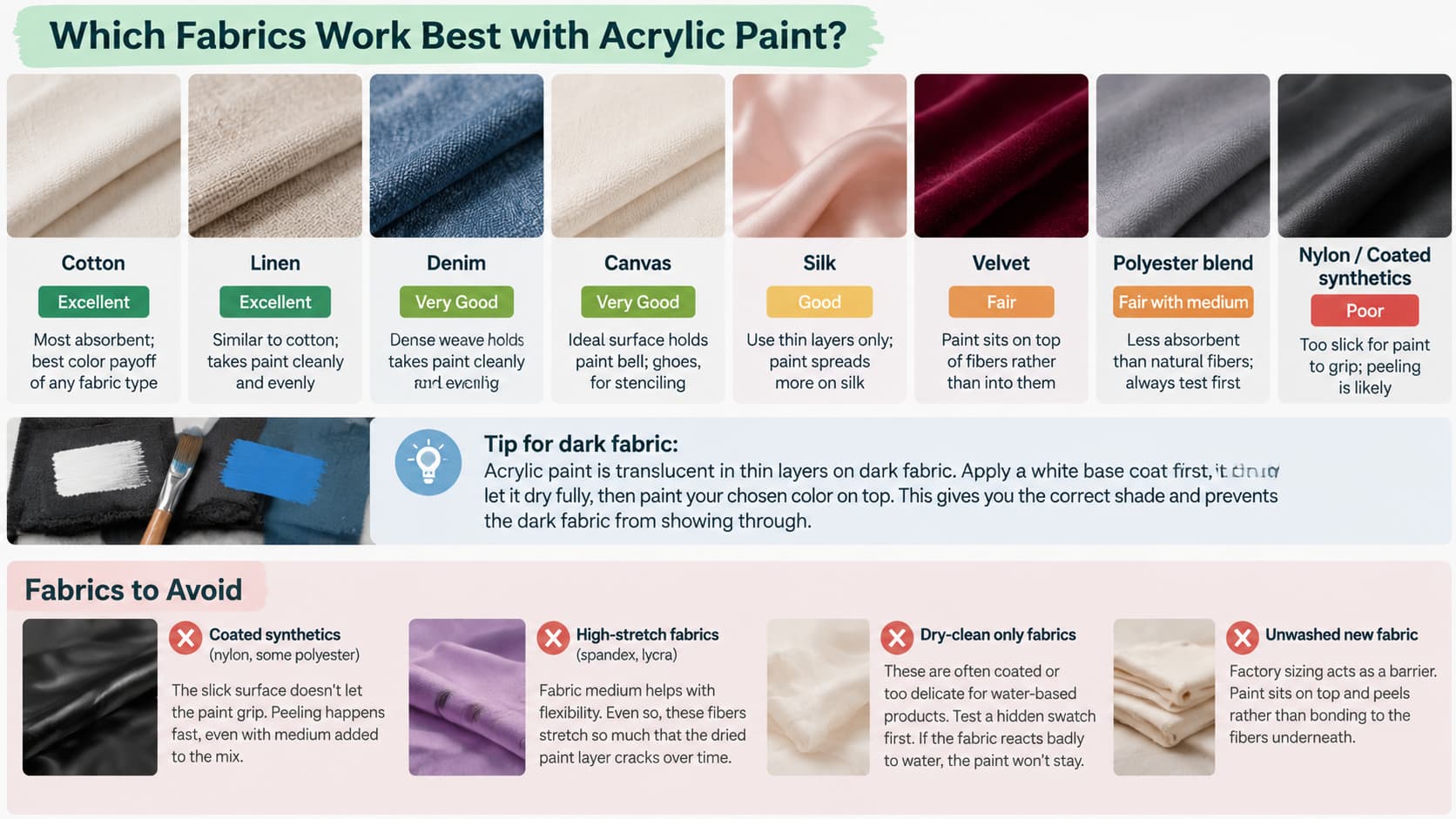
Not all fabrics respond the same way to acrylic paint. The fiber type and weave tightness both affect how well the paint bonds. They also affect how long the paint lasts.
|
Fabric |
Compatibility |
Notes |
|---|---|---|
|
Cotton |
Excellent |
Most absorbent; best color payoff of any fabric type |
|
Linen |
Excellent |
Similar to cotton; takes paint cleanly and evenly |
|
Denim |
Very Good |
Dense weave holds paint well; great for stenciling |
|
Canvas |
Very Good |
Ideal surface for tote bags, shoes, and art projects |
|
Silk |
Good |
Use thin layers only; paint spreads more on silk |
|
Velvet |
Fair |
Paint sits on top of fibers rather than into them |
|
Polyester blend |
Fair with medium |
Less absorbent than natural fibers; always test first |
|
Nylon / Coated synthetics |
Poor |
Too slick for paint to grip; peeling is likely |
Tip on dark fabric: Acrylic paint is translucent in thin layers on dark fabric. Apply a white base coat first, let it dry fully, then paint your chosen color on top. This gives you the correct shade and prevents the dark fabric from showing through.
Fabrics to Avoid
Some fabrics peel, crack, or fail to adhere no matter how carefully you apply the paint. These are the surfaces that consistently lead to failed projects.
-
Coated synthetics (nylon, some polyester): The slick surface doesn’t let the paint grip. Peeling happens fast, even with medium added to the mix.
-
High-stretch fabrics (spandex, lycra): Fabric medium helps with flexibility. Even so, these fibers stretch so much that the dried paint layer cracks over time.
-
Dry-clean only fabrics: These are often coated or too delicate for water-based products. Test a hidden swatch first. If the fabric reacts badly to water, the paint won’t stay.
-
Unwashed new fabric: Factory sizing acts as a barrier. Paint sits on top and peels rather than bonding to the fibers underneath.
How Do You Seal Acrylic Paint onto Fabric?

Heat permanently seals acrylic paint onto fabric. It bonds the paint into the fibers so it holds up through washing and regular use. You have three reliable options depending on what tools you have available.
Method 1: Ironing (Most Reliable)
Ironing applies direct, controlled heat that presses the paint into the fabric fibers. It is the most recommended method for clothing, T-shirts, and smaller painted fabric pieces.
-
Wait 48 to 72 hours after painting before ironing
-
Set your iron to medium-high heat with no steam
-
Place a pressing cloth or thin cotton cloth over the painted area
-
Move the iron in slow, steady passes for 3 to 5 minutes
-
Let the fabric cool fully before wearing or washing
-
Wait 4 to 5 days before putting the fabric through its first wash
Method 2: Tumble Dryer
The dryer works well for larger items like painted curtains, canvas panels, or tote bags. It takes longer than ironing but requires no extra setup or attention.
-
Wait the full cure time (48 to 72 hours) after painting before using the dryer
-
Place the fabric in the dryer on medium heat
-
Run for 20 to 30 minutes
-
Remove and let the fabric cool before handling
-
Check that the paint surface feels firm and fully dry with no soft or tacky spots
Method 3: Oven (Use with Caution)
Some crafters use an oven for small fabric pieces like patches or canvas tote panels. It works for the right material, but requires close monitoring to avoid damaging the fabric.
-
Preheat the oven to no higher than 250 degrees Fahrenheit
-
Place the fabric flat on a baking sheet
-
Heat for 3 to 5 minutes only
-
Remove and allow to cool fully before touching the painted surface
-
Use only on natural fiber fabrics with no buttons, zippers, elastic, or synthetic content
-
Do not use this method for clothing or any multi-layer items
How to Care for Acrylic-Painted Fabric
Painted fabric needs a little extra attention to look its best through regular washing and daily use. Following the right steps after heat-setting will protect the paint and extend the life of your project.
Washing
-
Wait at least 72 hours after heat-setting before the first wash
-
Waiting 4 to 5 full days gives the paint the best chance to cure completely
-
Turn the garment inside out before placing it in the machine
-
Wash on cold using the gentle or delicate cycle
-
Use a mild detergent with no added bleach or optical brighteners
-
A small amount of fabric softener helps keep the painted area soft and pliable
Drying
-
Hang to air dry whenever possible; this puts the least stress on the painted surface
-
If using a dryer, set it to the lowest heat available
-
Do not wring or twist painted fabric; this cracks dried paint along the stress points
Long-Term Storage and Touch-Ups
-
Never iron directly on a painted area; always lay a pressing cloth over it first
-
Store painted clothing flat or loosely folded to reduce cracking at fold lines
-
If small cracks appear over time, a thin touch-up coat of paint and medium can restore the design
-
Heat-set any touch-up area again and wait 48 hours before the next wash
Final Thoughts
Using acrylic paint on fabric is easy when you follow the right steps. Add a fabric medium, apply thin coats, and heat set after the paint dries.
Pick a natural fiber like cotton or linen for best results, and always prewash before starting your project. If you notice stiffness or cracking, the medium ratio or dry time is usually the fix.
With a little preparation, acrylic paint gives you more color choices and costs far less than store-bought fabric paint.
Frequently Asked Questions
Will acrylic paint stay on fabric?
Yes, when mixed with a fabric medium and heat-set after drying. Without those two steps, acrylic paint will crack, peel, or wash off over time.
Can I paint fabric with regular acrylic paint?
Yes. Regular craft acrylic paint works on fabric when you add a fabric medium. The medium makes the dried paint flexible and wash-safe. Without it, the paint dries stiff and is not suitable for anything that needs to be laundered.
What can I add to acrylic paint to make it stay on fabric?
A fabric medium is the most reliable option. It changes the paint’s consistency and makes it bond to fabric fibers for the long term. Without it, even heat-setting may not prevent cracking as the fabric flexes and washes over time.
Can I use hairspray to seal acrylic paint on fabric?
No. Hairspray is not a reliable sealant for acrylic paint on fabric. It washes off easily, can leave a sticky residue, and may discolor the fabric over time. Heat-setting with an iron is the correct, long-lasting way to seal acrylic paint on fabric.


