

BM Pale Oak: Sherwin Williams Equivalents and Color Guide
Finding the right off-white or greige can feel like a never-ending search. I’ve been there, staring at color chips that all look the same until the lighting shifts and suddenly they don’t.
If you love the softness of Pale Oak but prefer using Sherwin-Williams paint, this guide is for you.
I’ll show you the closest Sherwin-Williams equivalents, explain how they compare, and help you decide which one will look best in your home.
We’ll also talk about undertones, lighting behavior, pairing suggestions, and what to try if Pale Oak just isn’t quite right.
Is Pale Oak a Sherwin-Williams Paint?

No, Pale Oak (OC-20) is not a Sherwin-Williams color; it’s a popular neutral from Benjamin Moore. It belongs to their Off-White Collection, and it’s one of those colors that works nearly anywhere.
Basic Pale Oak Specs
HEX code: #DED8CD
LRV (Light Reflectance Value): 68.64
Color family: Warm greige / soft taupe
Undertones: Slight pink-violet and taupe-beige mix
Pale Oak is a warm, muted off-white that reads more greige than cream. It’s perfect if you want a light neutral with just enough depth and warmth to feel soft, not stark.
Sherwin-Williams Equivalent to Pale Oak
Since Sherwin-Williams doesn’t make Pale Oak, you’ll need to find something that closely matches its tone and depth. These three colors are the closest Sherwin-Williams alternatives based on undertones and LRV.
Top 3 Closest Matches
1. Drift of Mist (SW 9166, #DCD8D0)

LRV: 69
Undertones: Soft, warm gray with green-beige leanings
Where it looks best: Bedrooms, open living spaces, anywhere with mixed lighting
- Why it’s similar: Almost identical in lightness and warmth, but a little cooler than Pale Oak
- Why it’s different: Lacks Pale Oak’s faint violet undertone; leans slightly earthier
2. Egret White (SW 7570, #DFD9CF)

LRV: 70
Undertones: Subtle taupe with a whisper of pink
Where it looks best: Dining rooms, hallways, rooms with wood accents
- Why it’s similar: The pink-taupe undertone is close to Pale Oak in certain light
- Why it’s different: Slightly darker vibe; undertones are more obvious in dim spaces
3. First Star (SW 7646, #DAD9D4)

LRV: 69
Undertones: Light gray with a cool violet shift
Where it looks best: Modern spaces, north-facing rooms, kitchens with white cabinets
- Why it’s similar: Similar softness, with a subtle purple-gray base
- Why it’s different: Cooler overall; lacks the warmth Pale Oak brings in sunlit areas
Pale Oak vs. Other Popular Sherwin-Williams Neutrals
Pale Oak sits in the middle between warm gray and greige, but it’s not the only paint with that balance. Let’s look at how it stacks up against some top Sherwin-Williams neutrals.
Pale Oak vs. Drift of Mist
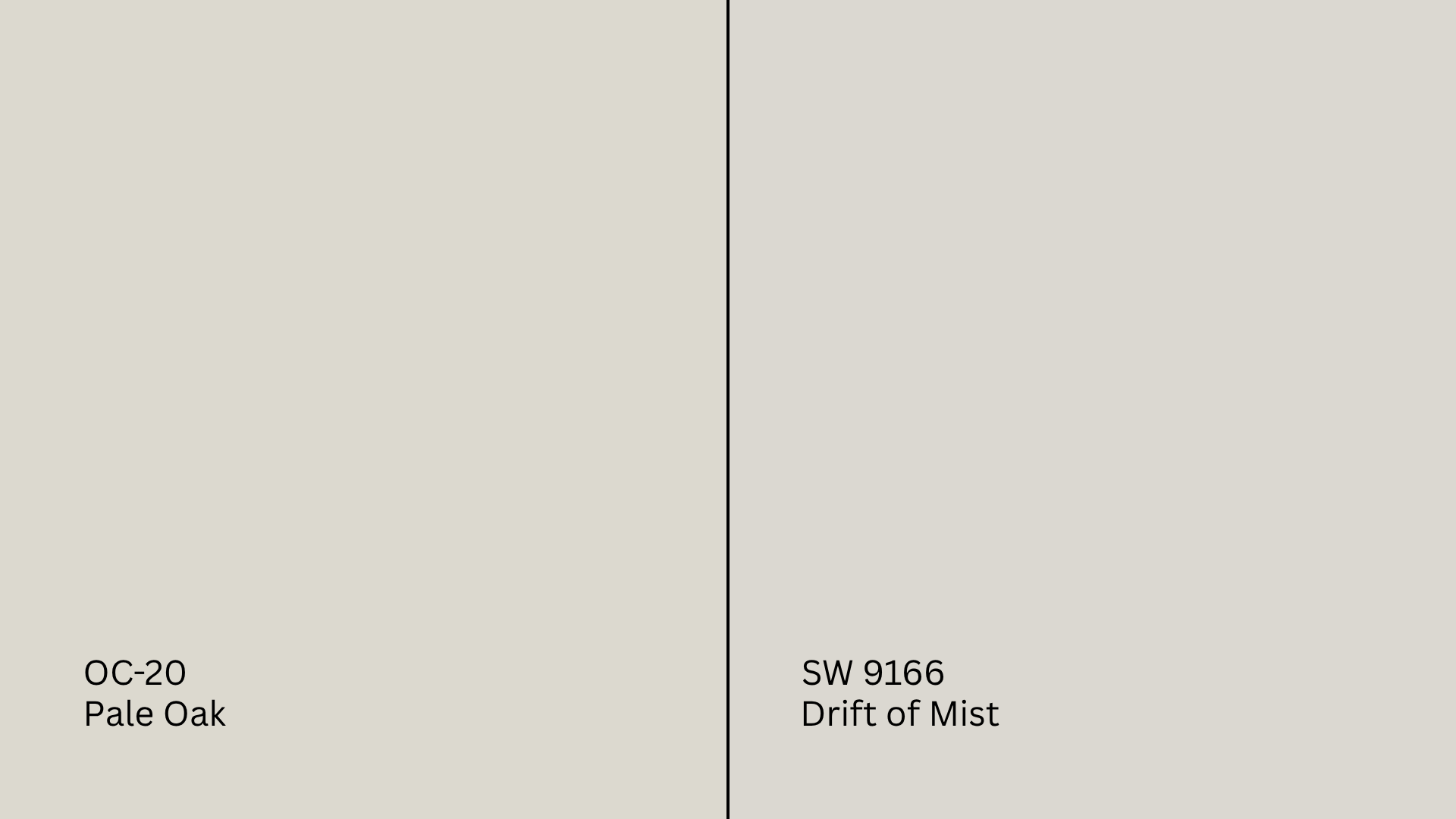
Similarities: Close LRV, calm and quiet in tone, soft in bright light
Differences: Drift of Mist is slightly cooler with green-gray undertones
Drift of Mist works great in warmer climates but may look too gray in shadowy rooms.
Pale Oak vs. Egret White
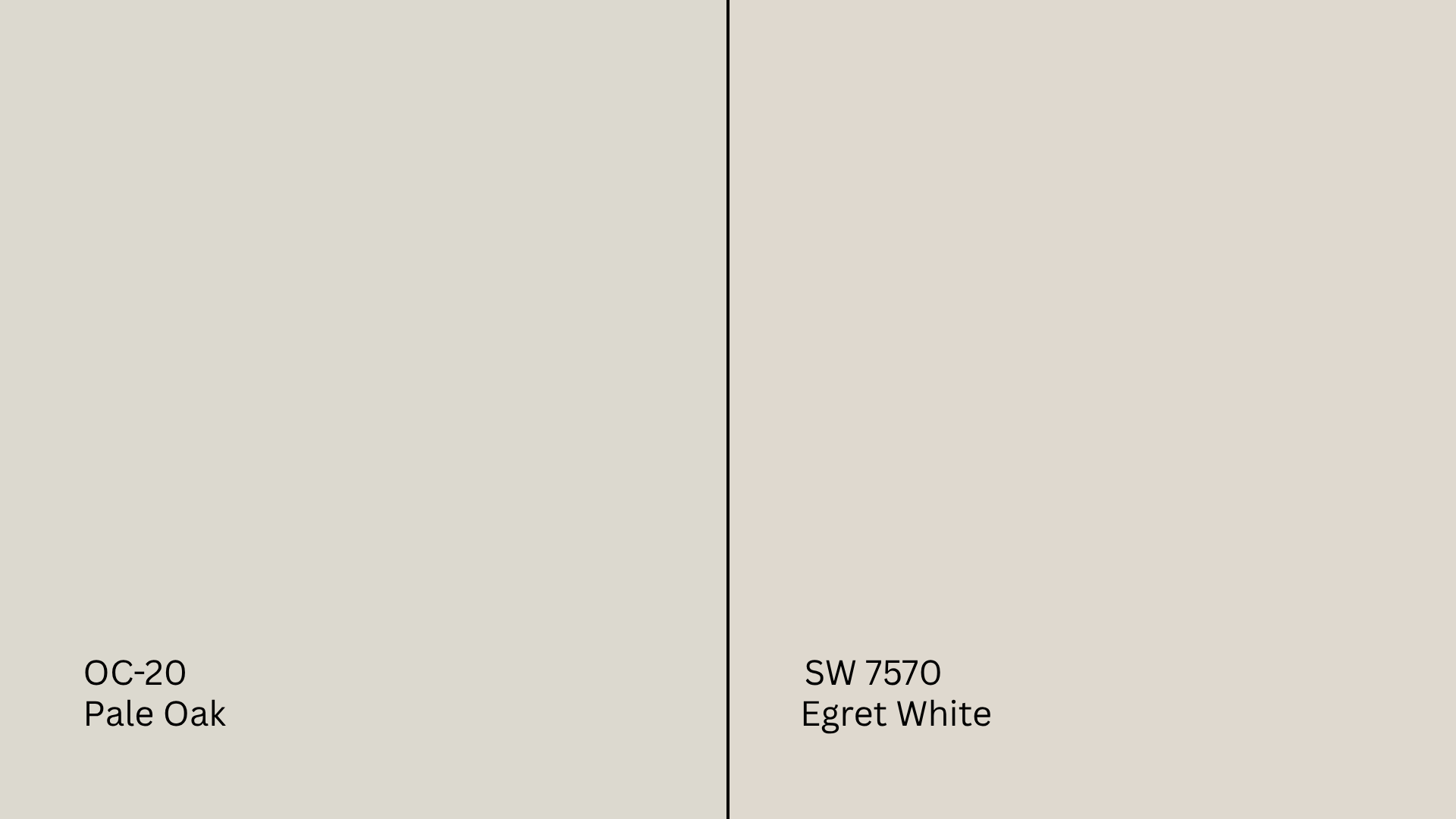
Similarities: Both are warm with subtle taupe/pink tones
Differences: Egret White can flash more pink in artificial light
Pairs well with wood tones and brass hardware. May clash with cool gray flooring.
Pale Oak vs. Accessible Beige
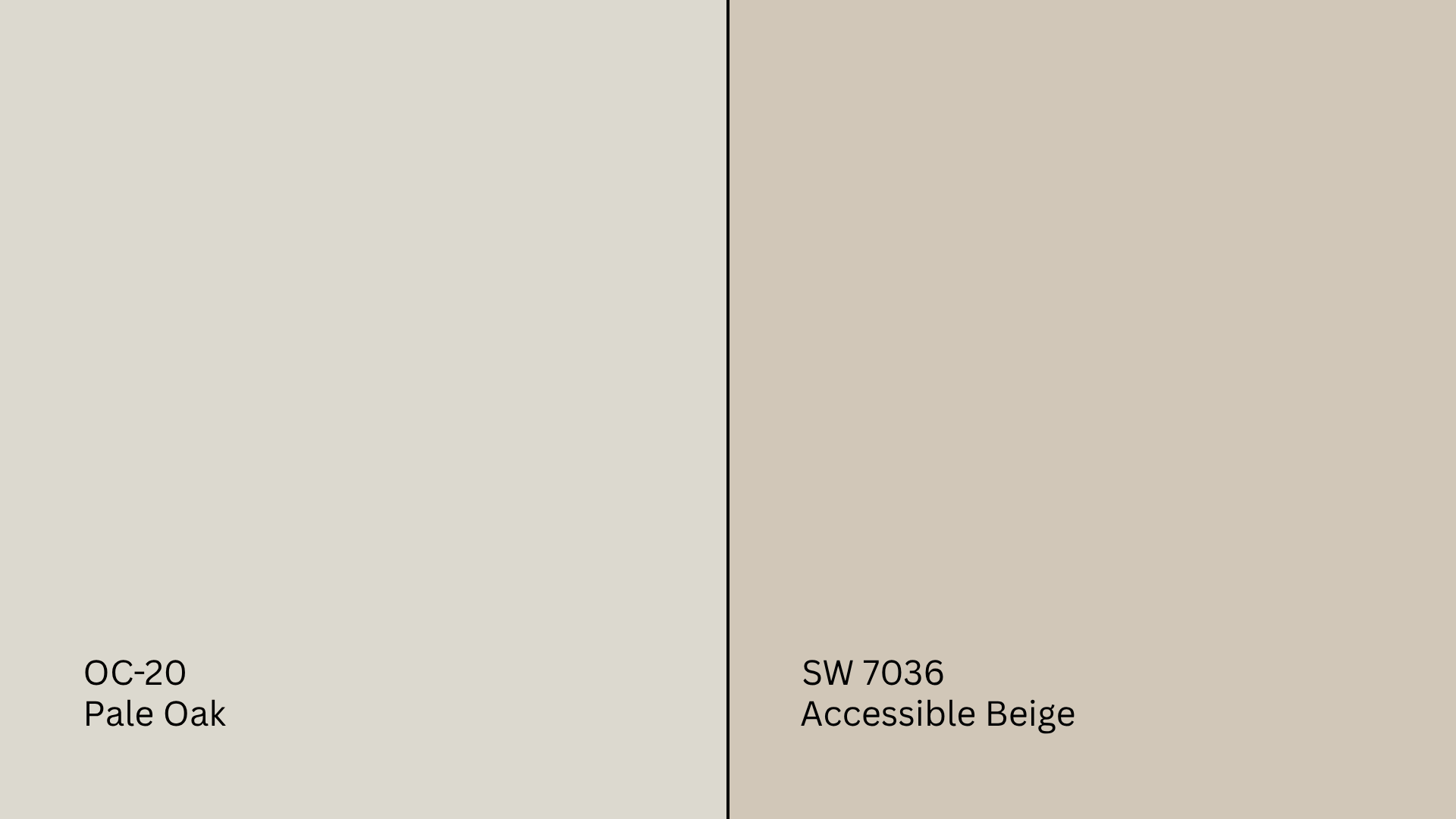
Similarities: Warm, muted, grounded neutrals
Differences: Accessible Beige is darker, earthier, and more tan
Accessible Beige (SW 7036, #D1C7B8) feels cozy in larger spaces but lacks Pale Oak’s airy softness.
Pale Oak vs. Agreeable Gray
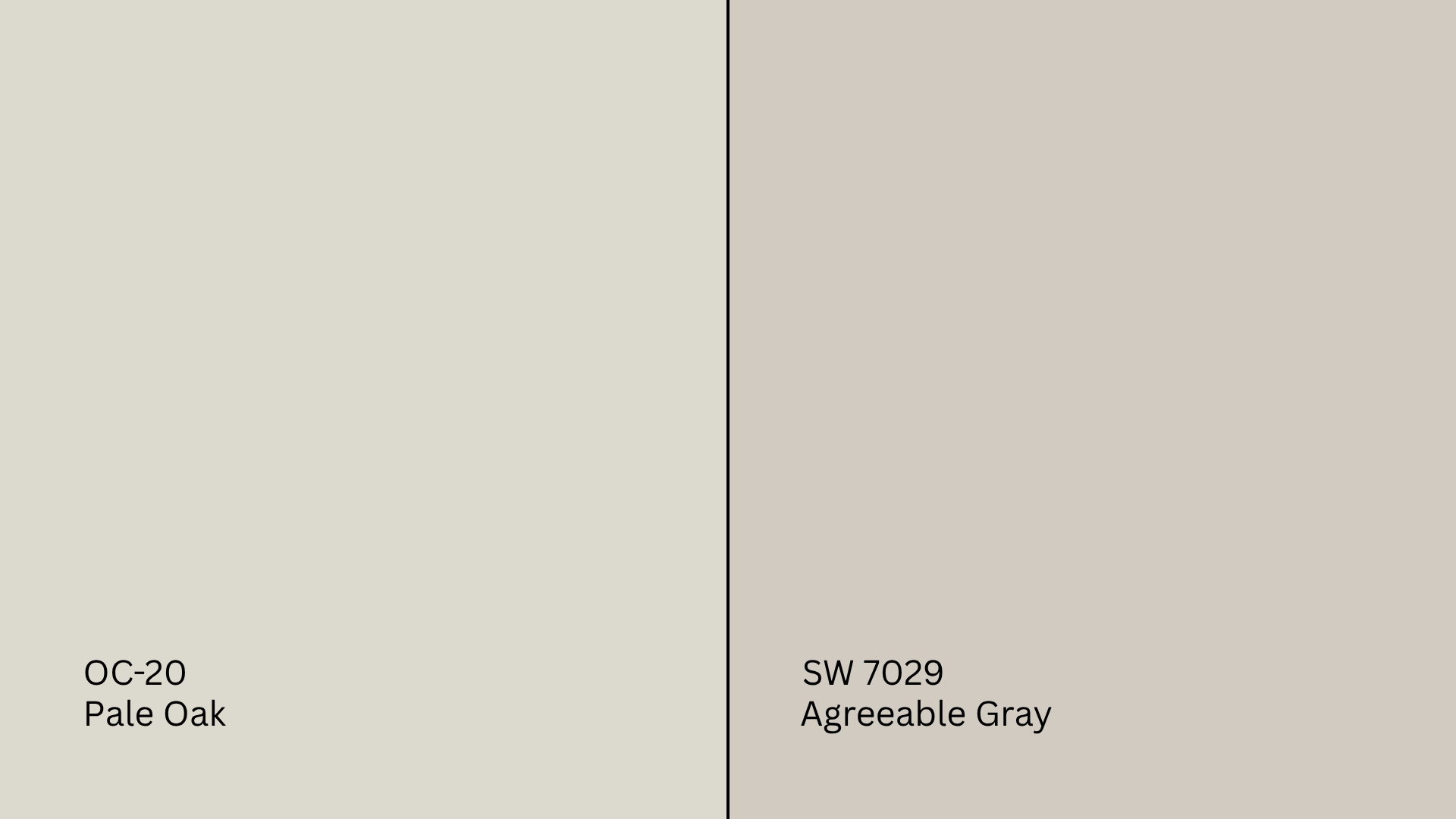
Similarities: Versatile, neutral, greige-adjacent
Differences: Agreeable Gray leans more gray and can feel cooler
Agreeable Gray (SW 7029, #D1CBC1) is very flexible with any decor. Might feel flat in low light compared to Pale Oak’s warmth.
How Lighting Affects Pale Oak and Its SW Equivalents
Pale Oak and its close matches are light-responsive neutrals, meaning they shift in tone depending on natural and artificial lighting.
- North-facing rooms: Expect more gray and muted taupe in Pale Oak and Drift of Mist
- South-facing rooms: Pale Oak warms up and feels more beige; Egret White glows softly
- East-facing rooms: Morning light enhances warmth, but fades to neutral by afternoon
- West-facing rooms: Afternoon sunlight can highlight pink or violet undertones
For artificial lighting:
- Warm bulbs = bring out beige and pink
- Cool bulbs = highlight gray and green
In general, Pale Oak is safer for bedrooms, hallways, and living spaces, while cooler matches like First Star work better in kitchens or modern homes with crisp finishes.
Best Colors Pairings for Pale Oak and Its Equivalents
These colors are flexible, but the right pairings help them feel finished and intentional.
Trim Colors
Extra White (SW 7006, #EEEFEA): Crisp and bright; creates contrast
Alabaster (SW 7008, #EDEAE0): Soft and warm; perfect for cozy palettes
Pure White (SW 7005, #EDECE6): Balanced and clean; works in any style
Accent Colors
Accent colors that work well include soft greiges like SW Shoji White (SW 7042, #E6DFD3) or SW Incredible White (SW 7028, #E3DED7), deeper taupes like SW Loggia (SW 7506, #C4B7A5), or familiar Benjamin Moore favorites like BM Revere Pewter (HC-172, #CCC4B8).
If you want color, add muted greens, dusty mauves, or warm terracotta accents to bring out different undertones in the paint.
These accents help bring out different facets of Pale Oak and its equivalents, depending on the mood you want.
Alternatives If You Don’t Like Pale Oak
If Pale Oak or its SW twins aren’t quite what you want, here are a few options you might wanna check out:
Other Benjamin Moore Options
- Classic Gray (OC-23, #E3DFD5): Softer and more subtle
- Balboa Mist (OC-27, #DAD5CC): Slightly more violet and cooler
- Edgecomb Gray (HC-173, #DAD1C4): More earthy and beige
Other Sherwin-Williams Picks
- Shoji White (SW 7042, #E6DFD3): Warmer and slightly richer
- Greek Villa (SW 7551, #F0ECE2): Brighter, creamier white
- Modern Gray (SW 7632, #D6CEC3): Balanced greige, less pink than Egret White
Tip: Decide if you want your paint to lean warm or cool, soft or bold, and use that to narrow your swatches.
Conclusion
If you love the softness of Pale Oak but need a Sherwin-Williams option, you’ve now got a clear idea of your best matches.
You’ve seen how it stacks up against other neutrals, and what lighting and trim pairings make it work. If you want something warmer, cooler, or more muted, you’ve got options that stay true to Pale Oak’s feel.
Still deciding? Start with a few peel-and-stick samples in your space; that’s the only way to see how these tones behave with your light and style.
Check out my other color comparison guides on the website for more help choosing the right paint with confidence.


