
Best Paint for Furniture: Types & How to Choose
Painting furniture sounds simple: pick a colour, grab a brush, and get started. But walk into any paint store, and you’ll quickly realise there’s a lot more to it.
Chalk paint, enamel, latex, mineral paint, the options keep coming, and each one behaves differently on different surfaces.
Use the wrong one, and you’re looking at a finish that chips within weeks. Use the right one, and your furniture can look brand new for years.
Whether you’re giving an old dresser a second life or refreshing a dining table, the best paint for furniture comes down to knowing what your piece needs.
Further breaks down everything, paint types, finishes, prep steps, and common mistakes, so you can get it right the first time.
What Makes a Paint Suitable for Furniture
Not all paints are built the same way. The best paint for furniture needs to handle daily contact, spills, and wear, things that wall paint was never designed for.
Getting this right from the start determines how long your finish holds up.
- Durability and Wear Resistance: Furniture paint must dry hard to resist daily scratches, spills, and contact.
- Surface Adhesion: Paint bonds differently to wood, MDF, laminate, and metal, always match your primer to the surface.
- Application and Leveling: Self-leveling paints smooth out brush marks on their own, giving a cleaner finish.
- Cleaning and Maintenance: Satin and semi-gloss finishes wipe clean easily, matte finishes need sealing for protection.
- Prep and Finish Quality: Even the best paint fails on a dirty or slick surface, prep determines durability.
Choose the right paint for your surface and use case, and the finish will take care of itself. Skip the basics, and even a premium paint will start failing sooner than it should.
Main Types of Paint Used for Furniture
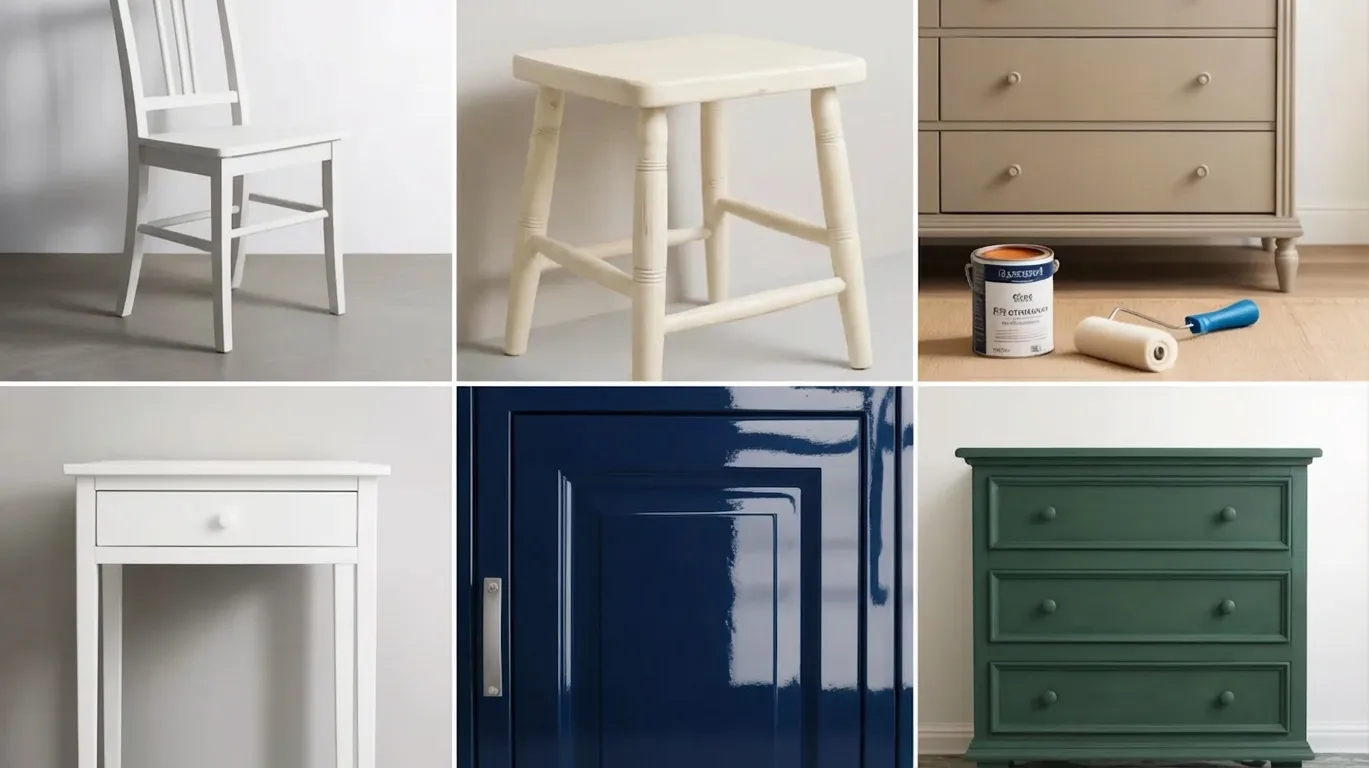
Picking the right paint type shapes how your furniture looks and how long it lasts. Using the wrong one can mean a finish that wears off, peels, or simply doesn’t suit the piece.
Some paints are built for durability. Others are made for decorative results or easy application. Knowing the difference helps you choose what actually fits your project.
1. Chalk Paint
Chalk paint is a thick, water-based paint that dries flat and matte. It sticks to most surfaces without sanding or primer, making it one of the easiest options to work with.
Pros
- No sanding or primer needed on most surfaces
- Good coverage in two coats
- Easy to distress or layer for a vintage look
Cons
- Soft finish that scratches and stains without a sealer
- Not suitable for high-use furniture
- Wax or topcoat is always needed for protection
Popular Brands:Annie Sloan, Rust-Oleum Chalked
2. Milk Paint
Milk paint is made from natural ingredients like milk protein, lime, and pigment. It gives furniture a genuinely aged, rustic finish that synthetic paints can’t replicate.
Pros
- Natural, non-toxic formula
- Creates an authentic aged or chippy finish
- Absorbs well into raw or unfinished wood
Cons
- Needs a bonding agent on sealed or previously painted surfaces
- Can be unpredictable and may flake
- Has a learning curve for beginners
Popular USA Brands:Miss Mustard Seed’s Milk Paint, The Real Milk Paint Co.
3. Latex Paint
Latex paint is water-based, quick-drying, and available in a wide range of colours. It’s budget-friendly and easy to find at any hardware store.
Pros
- Affordable and widely available
- Easy cleanup with soap and water
- Huge range of colours and sheens
Cons
- Doesn’t cure as hard as enamel or alkyd
- Scuffs and wear on high-use furniture without a topcoat
- Needs a sealer for lasting durability
Popular USA Brands:Sherwin-Williams Emerald, Benjamin Moore Advance
4. Acrylic or All-in-One Furniture Paint
Acrylic furniture paint is made specifically for furniture and typically combines primer and paint in one. It self-levels as it dries for a cleaner, smoother finish with less effort.
Pros
- Primer and paint in one, saves time
- Self-leveling reduces visible brush marks
- Works on wood, MDF, and laminate
Cons
- Not as durable as hybrid alkyd or enamel
- Built-in topcoat may not be enough for heavy-use pieces
- Slightly more expensive than standard latex
Popular USA Brands:Fusion Mineral Paint, Dixie Belle Paint
5. Hybrid Alkyd or Enamel Paint
Hybrid alkyd paint blends the convenience of water-based paint with the strength of oil-based enamel. It dries to a very hard, smooth surface with minimal brush marks.
Pros
- Extremely durable and hard-wearing finish
- Levels very smoothly with little brush stroke
- Easy water-based cleanup
Cons
- Takes longer to fully cure, up to a few weeks
- More expensive than latex or chalk paint
- Not ideal for decorative or low-use pieces
Popular USA Brands:Benjamin Moore Advance, Behr Alkyd Semi-Gloss
6. Mineral Paint
Mineral paint is made with mineral pigments and a water-based binder. It bonds to most surfaces with little prep and dries to a smooth, velvety finish between matte and satin.
Pros
- Strong adhesion with minimal prep
- Rich, consistent colour depth
- Often doesn’t need a separate topcoat
Cons
- Less widely available than other paint types
- Mid-sheen finish may not suit all styles
- Limited brand options compared to latex or chalk paint
Popular USA Brands:Fusion Mineral Paint, Rustoleum Mineral
How to Choose the Best Paint Based on Furniture Type
The best paint for furniture isn’t one-size-fits-all. The right choice depends on how the piece is used, how much wear it takes, and what it’s made of.
Functional furniture needs harder, more durable finishes. Decorative pieces have more room for softer, texture-heavy paints.
| Furniture Type | Best Paint Options | Finish to Use | Key Tip |
|---|---|---|---|
| Tables and Desks | Hybrid alkyd, enamel, or acrylic furniture paint | Satin or semi-gloss | These surfaces are subject to daily contact, spills, and heat. Choose a paint that cures hard. Always add a topcoat for extra protection. |
| Cabinets and Dressers | Hybrid alkyd or all-in-one acrylic paint | Semi-gloss or satin | Cabinet doors and drawer fronts need paint that won’t chip at the edges. A hard-drying formula holds up best against repeated opening and closing. |
| Decorative or Vintage Furniture | Chalk paint or milk paint | Matte or flat | Pieces that aren’t handled daily can carry softer finishes. Chalk and milk paint give a natural, aged look. Seal with wax or a matte topcoat to preserve the finish. |
| Laminate or IKEA Furniture | Acrylic all-in-one or mineral paint with bonding primer | Satin | Laminate surfaces are slick and need a bonding primer first. Without it, paint won’t adhere properly and will peel. Some all-in-one paints can be applied directly to laminate without primer. |
Matching the paint to the furniture type is what keeps the finish looking good over time. When in doubt, go with a harder finish for anything that gets daily use and save the softer options for pieces that are more for show.
Best Paint Finishes for Furniture
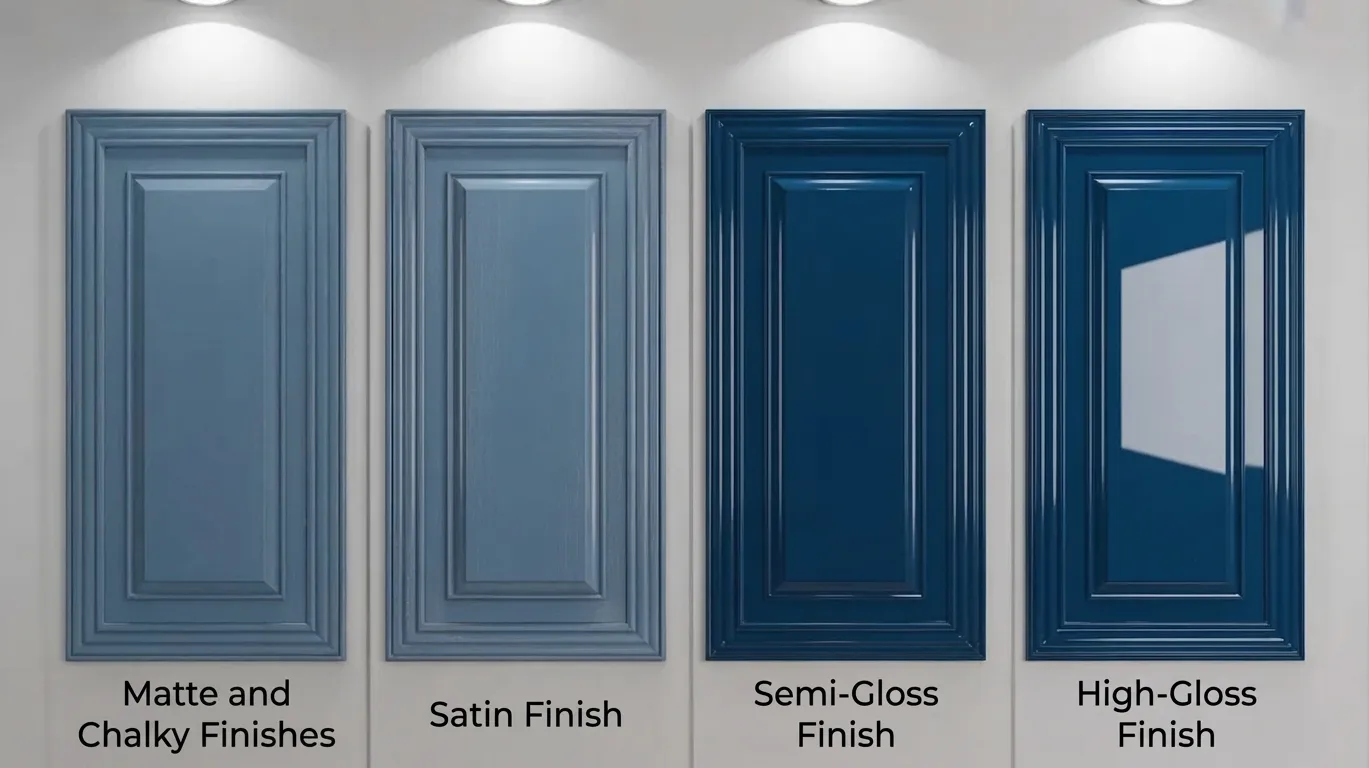
The finish is the sheen level of the paint once it dries. It affects how the surface looks, how easy it is to clean, and how well it holds up over time. Choosing the right finish matters just as much as choosing the right paint type.
- Matte and Chalky Finishes: Flat, no-shine finish that hides surface flaws well. Needs sealing for protection. Best for decorative or vintage pieces with low daily use.
- Satin Finish: A low-to-mid sheen that balances aesthetics and durability. Easy to wipe clean. Works well on dressers, bedroom furniture, and mid-use pieces.
- Semi-Gloss Finish: Noticeable shine with strong resistance to moisture and stains. Cleans easily. Ideal for cabinets, tables, and furniture that sees heavy daily use.
- High-Gloss Finish: Maximum shine with a sleek, lacquer-like surface. Very easy to clean but shows fingerprints and fine scratches more visibly than other finishes.
When in doubt, satin is the safest choice for most furniture. Go harder with semi-gloss or gloss for high-use pieces, and save matte for furniture that’s more decorative than functional.
Common Mistakes When Painting Furniture
Even with the right paint, small mistakes during the process can lead to a finish that chips, peels, or wears out quickly. Most of these are easy to avoid once you know what to watch for.
- Using Wall Paint on Furniture: Wall paint doesn’t dry hard enough for furniture. It scratches and peels quickly on surfaces that get daily contact and handling.
- Skipping Surface Preparation: Paint applied to a dirty or slick surface won’t bond properly. Skipping cleaning, sanding, or primer is the most common reason paint jobs fail early.
- Choosing the Wrong Finish for Heavy Use: Matte finishes on high-use furniture scratch and stain easily. Tables, cabinets, and desks need satin, semi-gloss, or a protective topcoat.
- Not Allowing Proper Cure Time: Paint may feel dry in hours but takes days or weeks to fully harden. Using furniture too soon leaves dents, marks, and permanent damage in the finish.
Avoiding these mistakes costs nothing but a little extra time and attention, and it’s what makes the difference between a finish that lasts and one that needs redoing.
Conclusion
Not every paint belongs on every piece, and that is exactly what this guide has walked you through.
The best paint for furniture depends on the surface material, how often the piece is used, the finish you want, and how well you prep before applying a single coat.
Chalk and milk paint shine on decorative pieces. Hybrid alkyd and enamel hold their ground on tables and cabinets.
Mineral and all-in-one options offer a solid middle ground for everyday projects.
Skip the prep, ignore the cure time, or grab the wrong finish, and even a quality paint will disappoint.
Tried one of these paints recently? Drop your experience or your go-to pick in the comments below!
Frequently Asked Questions
What is the Best Paint for Furniture that Won’t Chip?
Hybrid alkyd and enamel paints cure the hardest and resist chipping best. Pair either with proper surface prep and a topcoat for long-lasting, durable results on high-use furniture.
Is it Better to Paint Furniture with a Brush or a Roller?
Brushes work better for detailed or carved furniture. Rollers give a smoother finish on flat surfaces. For best results, use a foam roller on flat panels and a brush for edges.
Can I Paint Directly on Wood without Primer?
Raw, unfinished wood can accept chalk or mineral paint without primer. However, priming is always recommended for better adhesion, even coverage, and a finish that holds up longer.


