

2Attic Bedroom Ideas That Maximize Space and Style
Attic bedrooms often get dismissed as awkward spaces with sloped ceilings and limited headroom. But those challenges are actually design opportunities in disguise.
Slanted walls frame cozy nooks. Low ceilings create intimate atmospheres. Odd angles inspire custom solutions that feel intentional.
This blog covers practical layouts, smart storage, lighting strategies, and furniture that fits.
Change your attic from forgotten storage into a bedroom that feels special and surprisingly spacious.
Why Attic Bedrooms Are Perfect for Creative Design
Attic bedrooms offer unique architectural features like sloped ceilings and exposed beams that create instant character.
Unconventional spaces encourage creativity. Standard furniture often doesn’t fit, pushing you toward custom-built-ins and innovative storage solutions.
Being separate from the main living areas gives you freedom to experiment with bold design choices independently.
Skylights provide dynamic natural lighting that changes throughout the day, creating a dramatic ambiance without artificial fixtures.
Sloped ceilings create naturally cozy spaces perfect for layering textures and personal touches.
Lower areas work well as reading nooks. Exposed beams serve as built-in focal points that add visual interest, reducing the need for additional décor.
Attic Bedroom Ideas by Layout & Size
Convert challenging attic spaces into functional, stylish bedrooms with layout strategies tailored to different room sizes and ceiling configurations.
1. Under-the-Eaves Sleep Zone

Position your bed directly beneath sloped ceilings to maximize central floor space. This layout creates a cozy sleeping nook while keeping the tallest areas open for movement and dressing.
The lower ceiling above creates an intimate, protective feel that many find comforting for rest.
2. Floor-Level Futon Layout

Use a low-profile mattress along the longest wall when head clearance is limited.
This ground-level approach embraces minimal height restrictions and creates a calm, streamlined aesthetic.
Pair with floor cushions and low storage to maintain the horizontal emphasis throughout the space.
3. Skylight-Centered Bed Placement
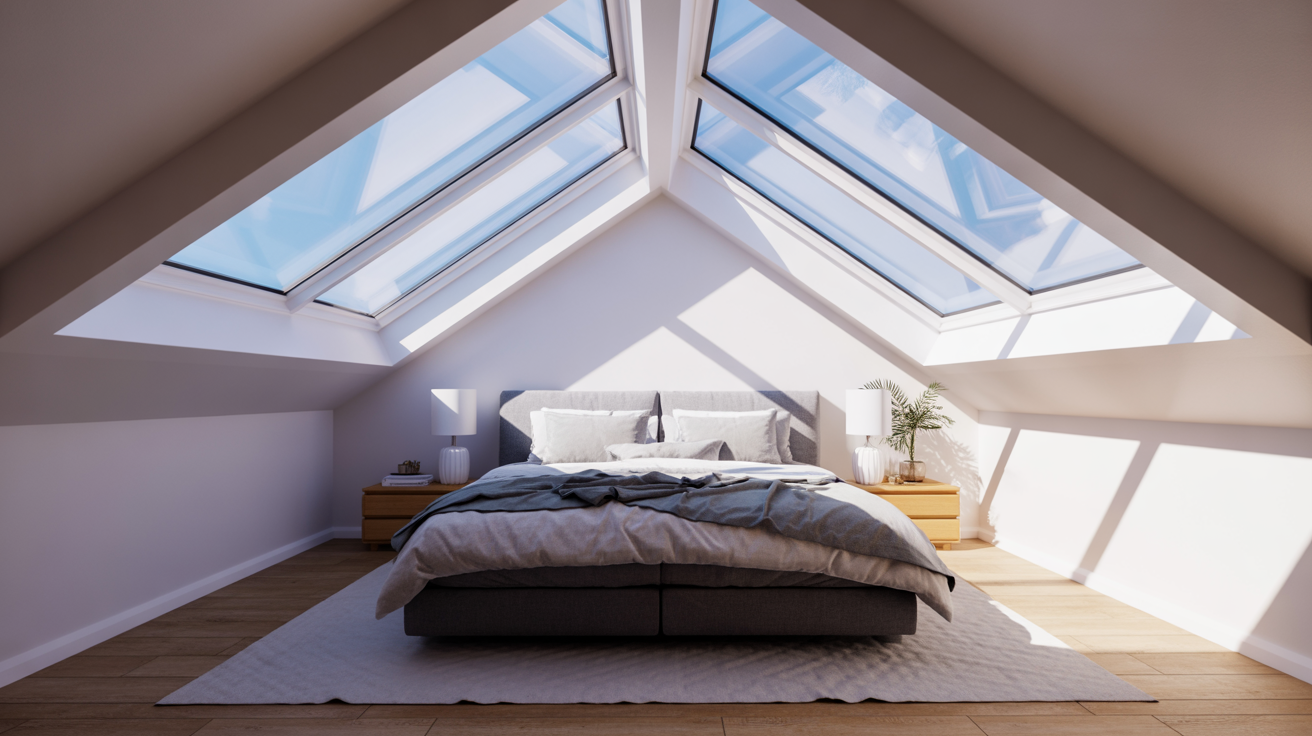
Align your bed directly under a skylight for a natural wake-up light and nighttime stargazing.
This positioning turns an architectural feature into your room’s defining element.
Install adjustable blinds to control light levels and temperature throughout different seasons.
4. Long-and-Lean Attic Layout

Arrange furniture in a linear sequence down narrow attic spaces, with the bed at one end, the desk in the middle, and storage at the far end.
This flow creates zones without needing dividers. The continuous arrangement makes even tight spaces feel organized and intentional rather than cramped.
5. Corner Nest Bedroom Setup
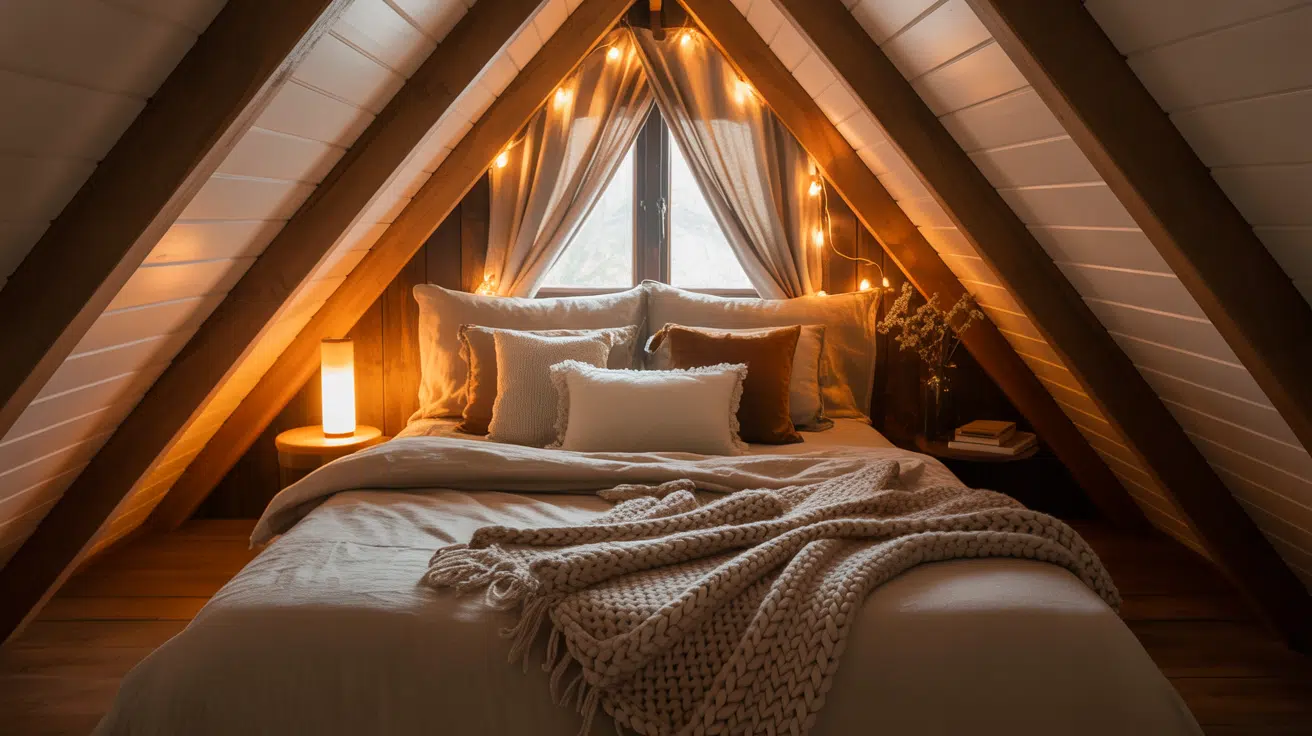
Tuck the bed into the deepest corner where two slopes meet. This frees up entry areas while creating an intimate, protected sleeping spot with natural privacy.
The corner placement also provides two walls for anchoring shelving or lighting fixtures.
6. Open-Plan Loft Retreat

Remove interior walls to celebrate the full attic footprint in larger spaces. Position the bed at one end and let the remaining area flow freely for sitting or dressing zones.
This approach works beautifully for master suites where square footage allows for distinct activity areas.
7. Sloped-Wall Symmetry Design

Center your bed between matching roof slopes for balanced visual appeal. This creates natural symmetry that’s easy to decorate with paired nightstands and lighting.
The mirrored angles draw attention to the bed as the focal point while creating a harmonious, restful atmosphere.
Smart Storage Ideas for Attic Bedrooms
Maximize every inch of your attic bedroom with clever storage solutions designed specifically for sloped ceilings, knee walls, and awkward corners.
8. Seamless Under-Eave Drawer System

Install pull-out drawers into the lowest sloped sections where standard furniture won’t fit. These custom units turn awkward low spaces into organized storage for clothes and linens.
The drawer fronts can match wall colors for a built-in look that disappears into the architecture.
9. Built-In Wall-to-Roof Wardrobes

Commission fitted wardrobes that follow your exact roof angle to eliminate wasted gaps. These floor-to-ceiling units provide maximum hanging and shelving capacity in angled spaces.
Choose sliding doors over hinged ones to save clearance space in front of the closets.
10. Storage-Integrated Window Bench
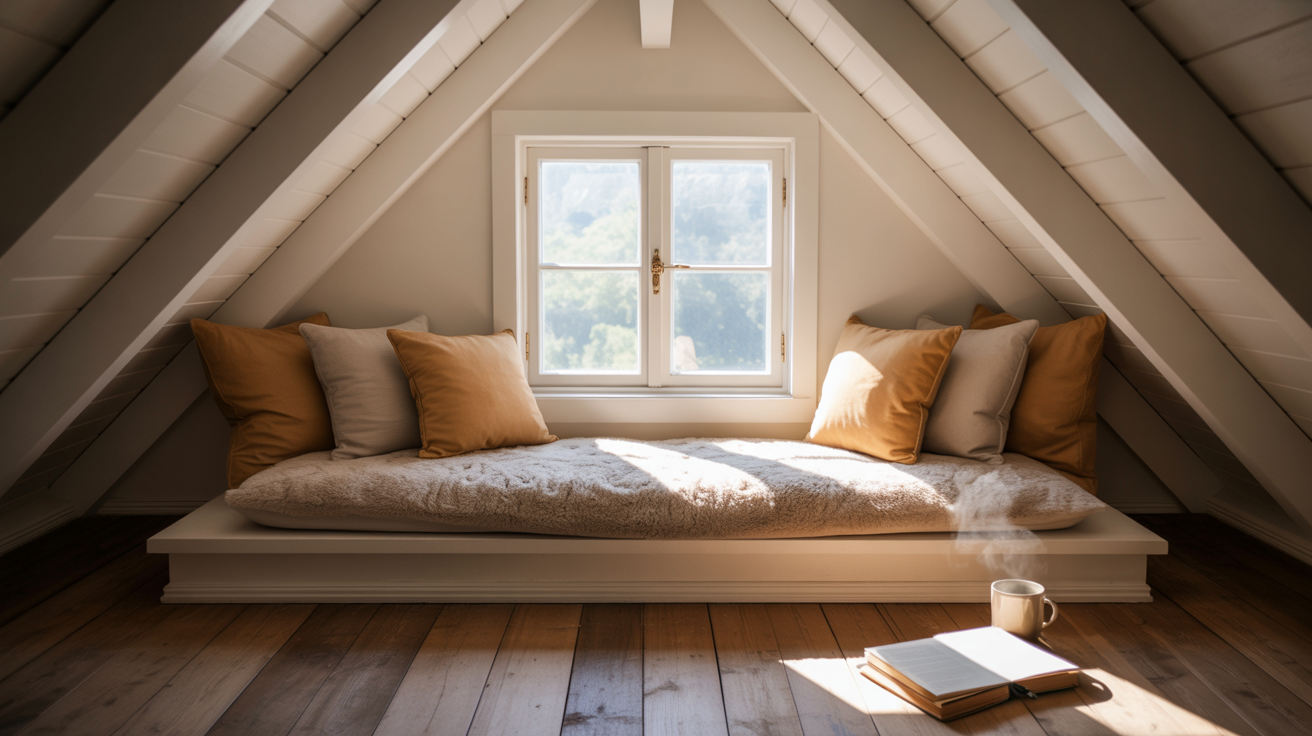
Build a window seat with lift-up cushions that conceal storage beneath. This dual-purpose piece adds seating while hiding seasonal items, books, or extra bedding.
Position it where natural light makes it an inviting reading nook as well as practical storage.
11. Hidden Lift-Up Bed Base

Choose a bed frame with hydraulic storage underneath the mattress.
This provides massive storage capacity without taking up additional floor space in tight attic layouts.
Store bulky items like extra duvets, out-of-season clothing, or luggage in this easily accessible space.
12. Recessed Shelf Wall Design

Carve shallow shelving directly into knee walls between studs. These built-in niches display books and decor without protruding into limited walkways.
The recessed design maintains clean lines while adding functional display space in otherwise underutilized wall sections.
13. Stairwell-Adjacent Storage Wall

Install floor-to-ceiling cabinets along the stairwell wall where furniture placement is impractical.
This utilizes transition space that typically goes unused in attic conversions.
The vertical storage maximizes capacity in an area that would otherwise serve no functional purpose.
14. Ceiling-Line Floating Cabinets

Mount shallow cabinets high along walls where the ceiling height allows. These overhead units store rarely used items while keeping floor space completely clear.
Choose light colors and open bottoms to prevent them from feeling heavy or oppressive.
15. Knee-Wall Pull-Out Storage

Add sliding panels or pull-out bins behind knee walls at seated height.
These access points tap into the deep space behind short walls without permanent cabinetry.
This solution works particularly well for shoes, accessories, or craft supplies that need organized compartments.
Attic Bedroom Lighting Ideas That Enhance Design
Illuminate your attic bedroom strategically with lighting solutions that work with sloped ceilings, enhance natural light, and create the perfect ambiance.
16. Wall-Washed LED Glow
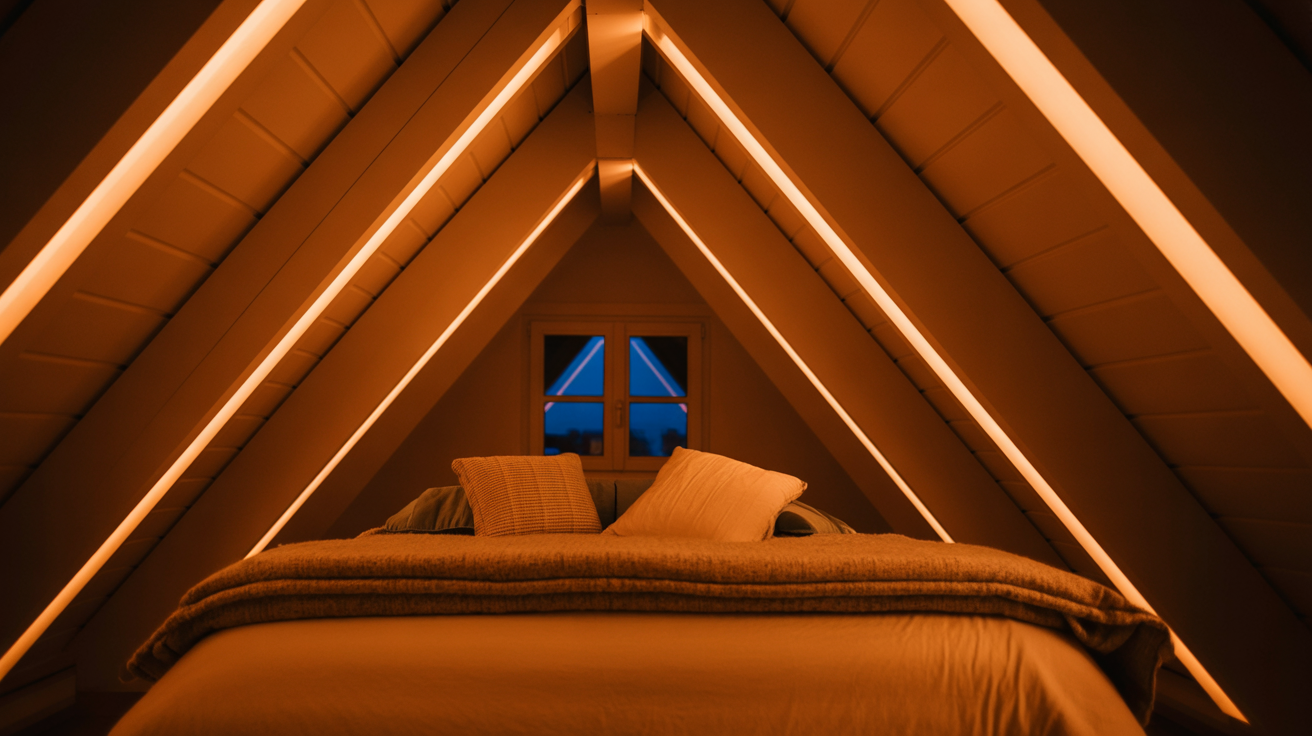
Install LED strips along sloped walls to create soft, indirect illumination. This upward wash of light minimizes shadows and visually lifts the roofline.
The gentle glow provides ambient lighting without harsh overhead fixtures that can emphasize low clearance.
17. Low-Profile Recessed Spot Pattern
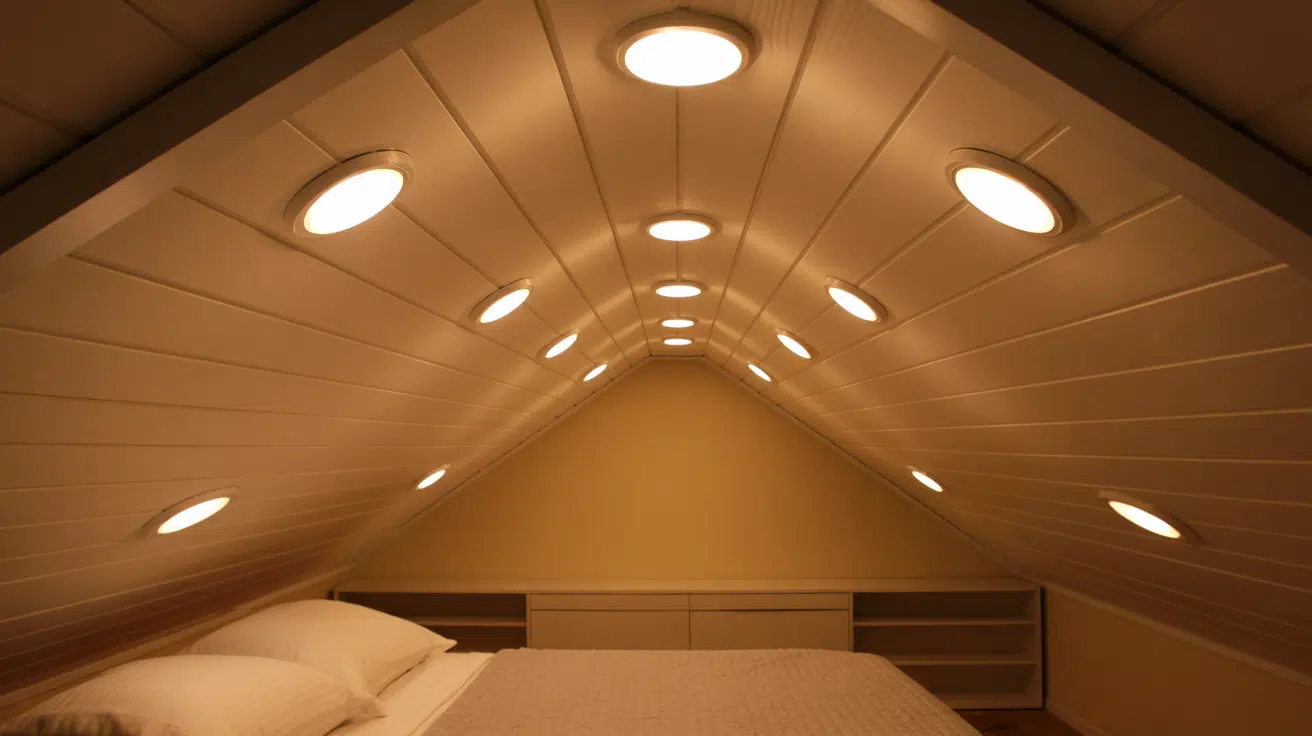
Use flush-mount recessed lights in areas with limited headroom.
Strategic placement provides task and ambient lighting without fixtures that hang down into the walking space.
Space them evenly to eliminate dark corners and create balanced illumination throughout.
18. Pendant Drop Over Bed

Hang a pendant light above the bed where ceiling height permits. This creates a focal point and frees up nightstand space from bulky table lamps.
Choose adjustable-height fixtures to customize the drop based on your ceiling slope.
19. Cove Lighting Along Roof Pitch

Conceal LED strips in the angle where walls meet the roof for dramatic indirect lighting.
This architectural accent highlights the room’s unique geometry while providing soft overall illumination.
The hidden source creates a floating ceiling effect that adds depth.
20. Bedside Sconce Pairing

Mount wall sconces on either side of the bed to save surface space. This provides an adjustable reading light while maintaining clean, minimal nightstands.
Choose swing-arm or adjustable models for flexibility in directing light where needed.
21. Custom-Fit Sloped Wall Desk
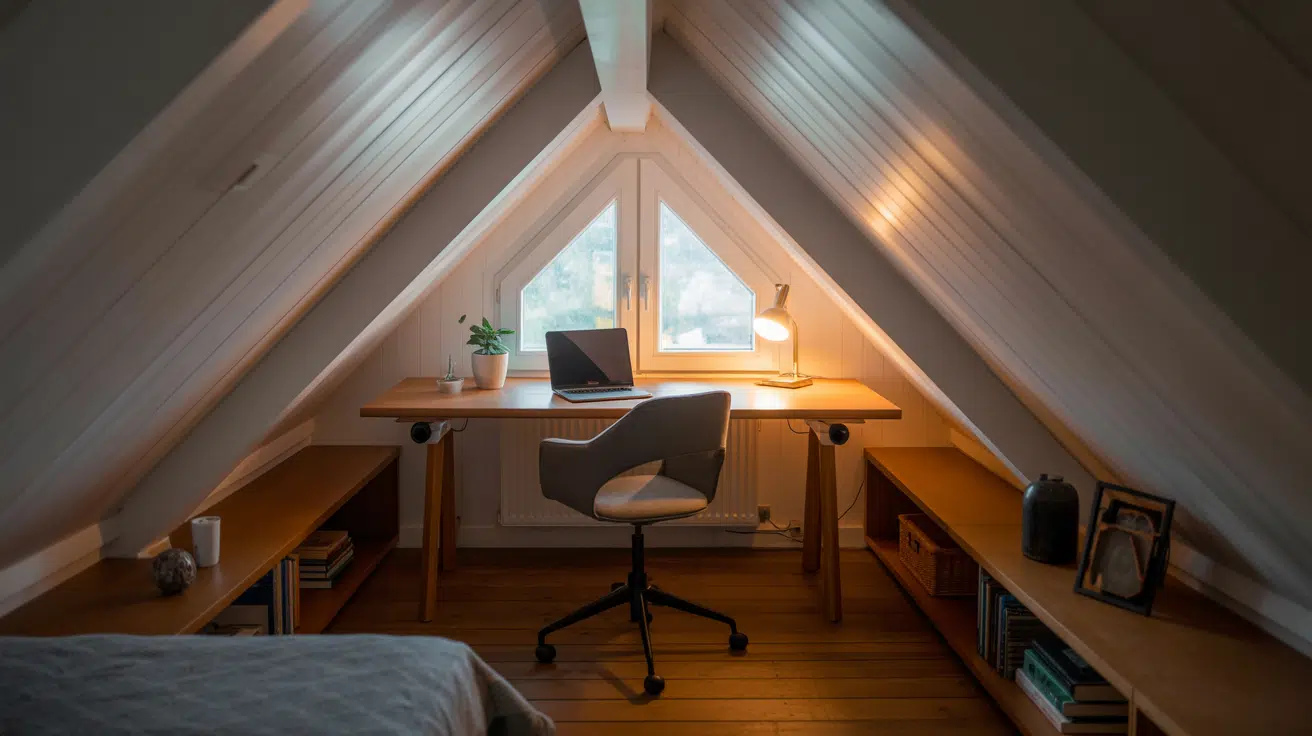
Commission a desk with an angled back edge that sits flush against sloped ceilings. This creates a functional workspace in otherwise unusable areas beneath low overhangs.
Add a comfortable low-back chair that tucks completely under when not in use.
Common Attic Bedroom Design Mistakes to Avoid
1. Ignoring Ceiling Height Zones
Treating the entire attic as usable space leads to awkward layouts. Low-clearance areas should be reserved for beds, seating, or storage, not walkways.
2. Using Oversized Furniture
Standard bedroom furniture often overwhelms attic spaces. Bulky beds, tall wardrobes, or deep dressers can make the room feel cramped and impractical.
3. Poor Lighting Planning
Relying on a single ceiling light creates shadows and emphasizes low ceilings. Attic bedrooms need layered lighting to feel balanced and inviting.
4. Blocking Natural Light Sources
Placing tall furniture in front of dormer windows or skylights reduces brightness and makes the space feel smaller and closed in.
5. Overdecorating Small Spaces
Too many patterns, colors, or decorative objects can visually clutter an already complex architectural space.
6. Choosing Dark Colors Without Balance
Dark paint on sloped ceilings without adequate light can make the room feel oppressive. Dark tones need contrast and proper lighting to work well.
7. Wasting Under-Eave Space
Leaving low areas empty instead of using them for built-in storage results in lost functionality and inefficient use of space.
Conclusion
Attic bedrooms aren’t about working around limitations; they’re about embracing what makes them unique.
Those sloped ceilings and cozy nooks create a character that standard bedrooms can’t replicate.
With smart layouts, custom storage, thoughtful lighting, and properly sized furniture, your attic can become the most inviting room in your home.
Start with one area and build from there. Small changes add up quickly. Your attic bedroom has potential hiding in every angled wall; now you have the ideas to bring it out.


