

How to Choose a Sofa for a Home With Kids and Pets
Furnishing a Family Living Room: At a Glance
- Choose the upholstery first. Pick the fabric or leather that suits how you clean, then choose the colour.
- Plan the seating around the evenings you actually have. Movie nights, sleepovers, and a full house at birthdays each ask something different of the sofa.
- Give the dog one spot. A washable throw on that cushion catches most of the hair.
- Let the washable layers do the hard work. Throws, cushion covers, and rugs take the wear so the sofa doesn’t have to.
- Sit on it with your household in mind. Seat depth and cushion feel matter more than the photo.
The upholstery is often what draws you to a sofa: its colour, texture and how it feels when you sit down. With children and pets at home, you’ll also want to know whether hair brushes off easily, how spills can be cleaned and what everyday wear is likely to look like. Those are the details that help you choose furniture you’ll enjoy using for years.
If you plan to visit The Chesterfield Shop, a Toronto furniture store, bring photos and measurements of the room, along with a few ideas about the styles you like. Try different upholstery and cushion combinations, and explain what you’d like to improve on your current sofa. That might be a softer surface, more supportive cushions, or fabric that’s easier to keep clean.
Choose Upholstery That Feels Good and Wears Well
The 2024 Canadian Pet Population Survey reported pets in more than half of Canadian households. If yours share the furniture, their habits can help narrow your choice of upholstery. A dog that sheds heavily creates a different cleaning task from a cat that catches its claws in loose threads.
Think about comfort at the same time. You may enjoy the smooth feel of leather, a soft woven fabric, or a more textured finish. Feel the samples against your forearm, where you’re more likely to notice roughness, and try the upholstered furniture itself. The material should feel comfortable where your arms and legs rest, as well as look appealing across the room.
Leather: Compare the Feel and the Finish
Leather can appeal to families because loose hair is relatively easy to remove from a smooth surface. The type of finish affects how it feels and how much protection it has against spills, so compare the actual samples before choosing.
Protected or pigmented leather has a coloured surface finish that generally makes routine cleaning easier and provides a more uniform appearance. It can be a practical option when you expect frequent small spills. The feel still varies between products, so take time to compare their softness and surface texture.
Semi-aniline leather has a lighter protective finish that preserves much of the leather’s natural appearance and feel. It can offer an appealing combination of softness and easier care, although spills still need prompt attention.
Aniline leather is often chosen for its soft feel, visible grain and natural variation. With less surface protection, it is more susceptible to marks and changes in appearance. It may suit you if you enjoy that gradual change and are comfortable wi,th the care it requires.
Quality descriptions need some explanation too. Full grain describes the retained surface of the hide; it doesn’t identify the protective finish. Ask about both the leather itself and how it has been finished so you can judge its appearance, feel, and care requirements together.
Performance Fabric: Look for a Texture You Enjoy and Care You Can Manage
Performance fabric can offer a comfortable surface with features such as stain resistance or liquid repellency. Those features vary, so find out what applies to the fabric you’re considering and which cleaning products it can tolerate. A stain-resistant finish still needs the recommended care after a spill.
Texture deserves as much attention as colour. Compare a smooth, closely woven sample with chunkier or looped options, and look at where hair could collect or yarns could catch. Raised loops deserve particular attention with cats, whose claws can catch in fabric loops. Ask whether the particular upholstery is recommended for pets and what its snag-resistance and cleaning information says.
Compare several textures rather than choosing from a photograph. A fabric that looks soft may feel coarse against bare skin, while a finer weave may feel smoother than you expected. Rest your arm on an upholstered armrest and sit against the back cushions. That gives you a better sense of how the material feels during everyday use.
If you can borrow samples, view them beside your rug and curtains and compare them with your pet’s coat. This helps you judge both the colour you enjoy and how noticeable loose hair will be between cleaning.
Look at How the Fabric Keeps Its Appearance
An abrasion rating provides useful information about resistance to repeated rubbing. The Association for Contract Textiles guideline lists 30,000 Wyzenbeek double rubs or 40,000 Martindale cycles for woven upholstery in high-traffic commercial spaces. These are different tests, and higher scores don’t establish how many years a sofa will last.
For a family sofa, you’ll also want to know how the surface and seams respond to use. Ask about pilling, the small balls of fibre that can form where people sit and move, and whether the fabric has been tested for yarns pulling apart around seams. ACT assesses these fabric properties separately from abrasion.
Look closely at the cushion edges and arms of the display model. Check for neat stitching, loose threads, or areas where the fabric is pulling at a seam. These observations give you specific questions to discuss alongside the fabric’s test information.
If the sofa will sit near a bright window, ask about colourfastness to light as well. How the colour holds up is part of keeping the upholstery looking good.
Check the Cushion as Well as the Cover
The upholstery affects how the sofa feels against your skin. The cushion and support underneath affect how you sit in it. A soft cover won’t correct a seat that is too deep or a cushion that lets you sink farther than you find comfortable.
Ask which cushion construction is included and whether there are alternatives you can try. If foam is used, firmness alone won’t tell you about its quality. The Polyurethane Foam Association explains that density and firmness are separate properties: higher-density foam can feel soft, while lower-density foam can feel firm. Density is relevant to durability, so it deserves attention alongside how the cushion feels.
Spend time sitting back, changing position, and getting up. You should be able to relax comfortably and feel supported in the positions you use at home. Ask whether the cushions need regular turning or reshaping, too, so you know what will be involved in maintaining their appearance.
Know What Routine Cleaning Will Involve
Easy maintenance is partly about having a cleaning method you’re comfortable using. Before choosing a fabric, find out whether you can treat ordinary spills at home, which products are approved, and when professional cleaning is recommended.
The common fabric codes explained in this guide to cleaning upholstery identify the permitted cleaning approach. Follow the furniture manufacturer’s instructions for the exact upholstery you order.
| Cleaning code | Cleaning approach |
|---|---|
| W | Suitable water-based upholstery cleaners. |
| S | Suitable water-free solvent upholstery cleaners. |
| WS or W-S | Either approved water-based or solvent-based upholstery cleaners. |
| X | Vacuuming; get professional advice about stains or further cleaning. |
If washable covers would make life easier, confirm that the covers can go in the washing machine and ask how they should be dried. A removable cover may still require specialist cleaning, and a W or WS code doesn’t confirm machine washability.
Compare that routine with what you’re prepared to do. A fabric you love may need occasional professional attention; another may allow more straightforward spot cleaning. Knowing this before you order helps you choose upholstery you can keep comfortable and presentable through everyday family use.
Make Room for Family and Visitors
Choose the main seating around the people who use the living room every day, then think about what you’ll need when guests visit. You want enough comfortable seats without filling the room so completely that it becomes difficult to walk through, open cupboards or leave space for children to play.
A sectional with a chaise can work well if your household likes to stretch out together. Look closely at how the seating is divided, though. A long chaise gives one person room to put their feet up, while the corner may feel less comfortable when several adults are sitting side by side. Try those positions before counting them as additional seats.
A sofa with separate chairs gives you more freedom to arrange the room for conversation. Swivel chairs can turn towards the television or other people, provided there’s enough clearance around them. In a smaller room, compare the complete layout of a sofa and chairs with a compact sectional. Include the coffee table, side tables, and walking routes in your measurements.
If you need somewhere for overnight guests, a sofa bed can provide that option within your everyday seating. Allow for the bed’s full open dimensions and somewhere to move the coffee table. With a recliner, check the space needed behind the backrest and in front of the footrest, along with access to power if the model requires it.
Try the Seating Together
A deeper seat gives you room to curl up or sit with your legs tucked beside you. A shallower seat may feel more comfortable if you prefer sitting upright or find that deep sofas leave your feet unsupported. The people sharing the furniture may have different preferences, so try the seating together where possible.
Compare the space between the arms as well as the overall width. Two sofas of a similar size can offer different amounts of usable seating, particularly when one has broad, padded arms. Think about whether those arms provide a comfortable place to lean or take up space you would prefer to have in the cushions.
You can also combine different types of seating. A deeper sofa and a more upright armchair can give household members a choice without requiring everyone to be comfortable in the same position.
Give Your Dog a Comfortable Place to Settle
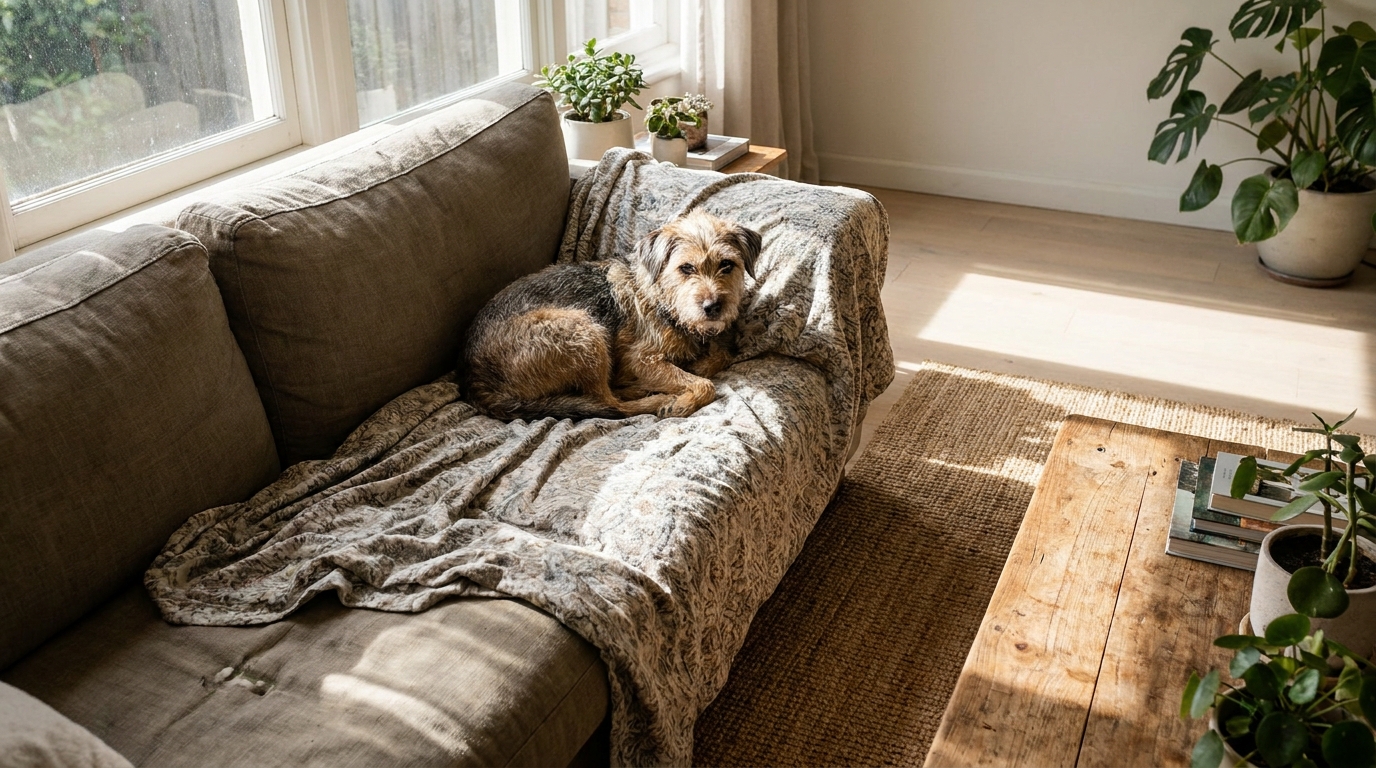
If your dog already has a favourite spot on the sofa, make that area easier to clean. A washable throw can cover the cushion they use most often and collect loose hair between washes. Choose one large enough to stay over the seat as your dog moves, and lift it regularly to clean the upholstery underneath.
A dog bed beside the sofa is another option, especially if you want to keep the seats available for people. Place it close enough for your dog to rest near the family, while leaving doorways and walking routes clear. Check that its cover is removable and washable before buying it.
Routine nail care and wiping muddy paws can help reduce scratches and marks. Keeping a towel near the door makes paw cleaning easier to remember, particularly during wet weather. These small habits can make furniture care more manageable without adding much to the day.
Consider the floor around the seating, too. A rug can provide a softer place for children to sit and play, but you’ll want one you can clean around the coffee table and lift when necessary. Check its care instructions and use a rug pad suitable for your flooring to help keep it in place.
Choose Colours and Details That Work With Your Home
Use the pieces you already enjoy to guide your choices. That might be the wood finish of a coffee table, the colours in a rug or an armchair you want to keep. Bringing a new sofa into the room is easier when you can see how its upholstery and proportions work with those existing pieces.
Compare textures as well as colours. Smooth leather alongside a textured rug creates a different look from a woven sofa paired with patterned cushions. Lay samples beside the materials you’re keeping so you can see whether you like the combination before placing an order.
Throws and cushion covers give you room to introduce colour or pattern in smaller amounts. Choose textures that feel comfortable to lean against, and look for washable options where spills or pet hair are likely. A throw you enjoy using will be more useful than one that needs careful arranging every time someone sits down.
If you’re ordering furniture with a choice of finishes or configurations, confirm what is available for the model you like. Upholstery colours, leg finishes, arm styles and sectional arrangements can vary between products. A change to the arms or layout can also affect the overall dimensions, so check the measurements of the exact version you intend to order.
Give yourself time to compare those choices at home. The upholstery, furniture shape, and surrounding pieces should work together in a way you enjoy looking at and feel comfortable using every day.


