Tree Roots Damaging Paths, Pipes or Foundations? Solutions
A lifted path, a repeatedly blocked drain or cracks near a house can raise the same question: are tree roots causing the damage?
Roots can affect paving and underground services, but a nearby tree is not always the cause of a building problem. The best solution depends on what is damaged, where the roots are growing and whether the tree can be kept safely. Cutting visible roots or removing the closest tree before investigating may leave the underlying problem unresolved.
Here is how to assess each situation and decide what to do next.
Why do tree roots grow towards paths and pipes?
Most tree roots spread through the upper layers of soil, where they can access water, oxygen and nutrients. They do not necessarily stay beneath the canopy. As a tree matures, its roots may extend into garden beds, beneath paving and towards underground services.
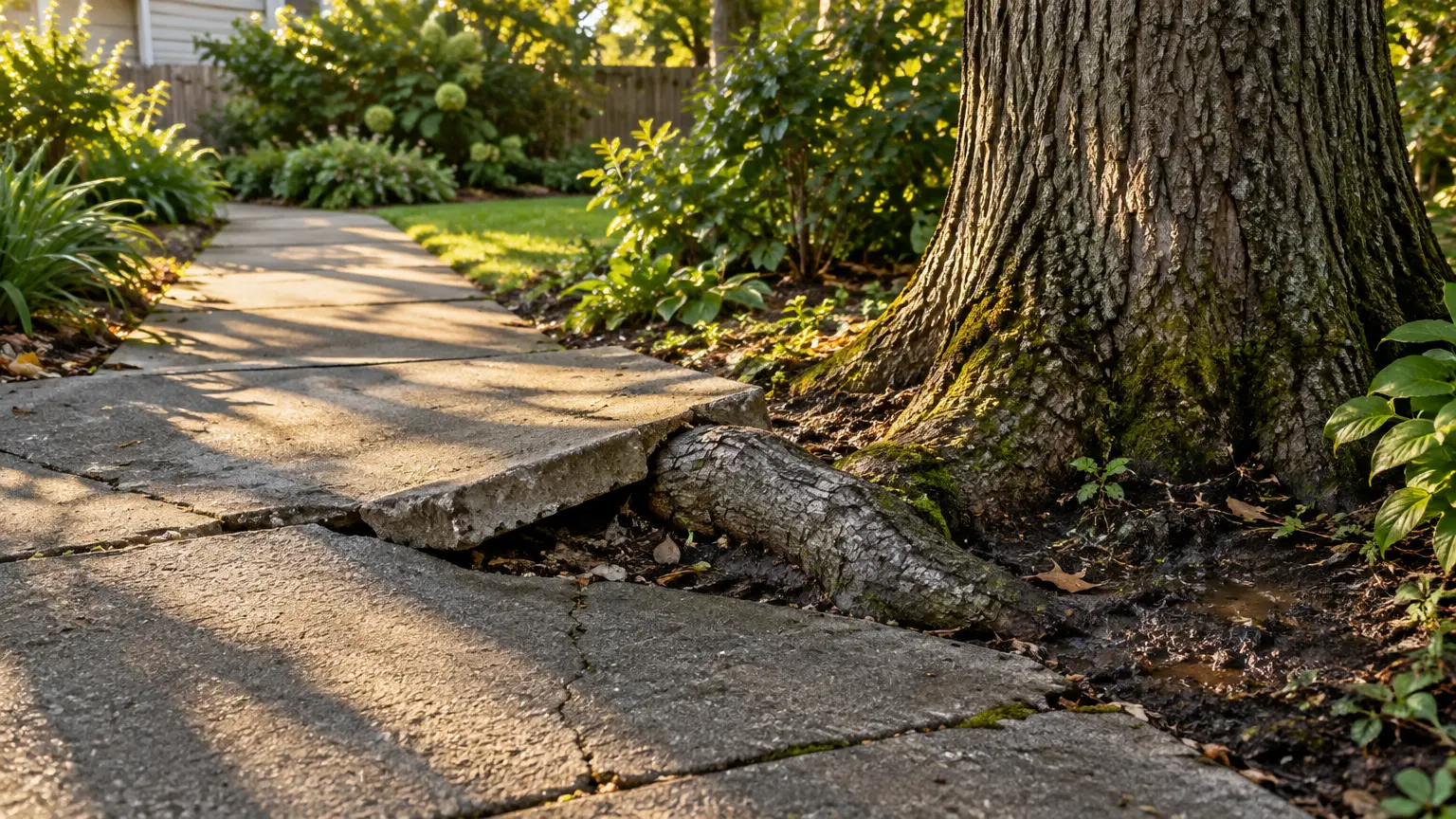
The conditions around a path can also influence where roots grow. Compacted ground may offer little space, while the material beneath paving can provide a route for roots to spread. Over time, a growing root may lift a slab or displace pavers.
Pipes present a different problem. Roots can enter a pipe through a crack, gap or faulty joint, then grow inside it where moisture is available. That is why clearing a blockage and repairing the pipe are sometimes two separate jobs.
What to do when roots lift paths or driveways
Uneven paving is often the most visible sign of a root conflict. You might notice a raised edge, a cracked concrete section or pavers that no longer sit level. If the area is regularly used, deal with the trip hazard promptly while you investigate a lasting repair.
The first step is to look at how much space the tree has. A large tree growing beside a narrow paved area may continue to conflict with it even after the surface is repaired. Replacing the same paving in the same position may only provide a temporary fix.
Depending on the site, a paving contractor may be able to adjust the path’s route or design to leave more room for the tree. In other cases, an arborist may assess whether a particular root can be pruned. This decision needs care: major roots help anchor the tree as well as supply it with water and nutrients. Cutting them without assessing the tree could weaken it or affect its stability.
Where the tree’s position leaves no workable space for both the tree and the path, removal may need to be considered. Before arranging that work, check whether local rules protect the tree or require approval.
What to do when roots block underground pipes
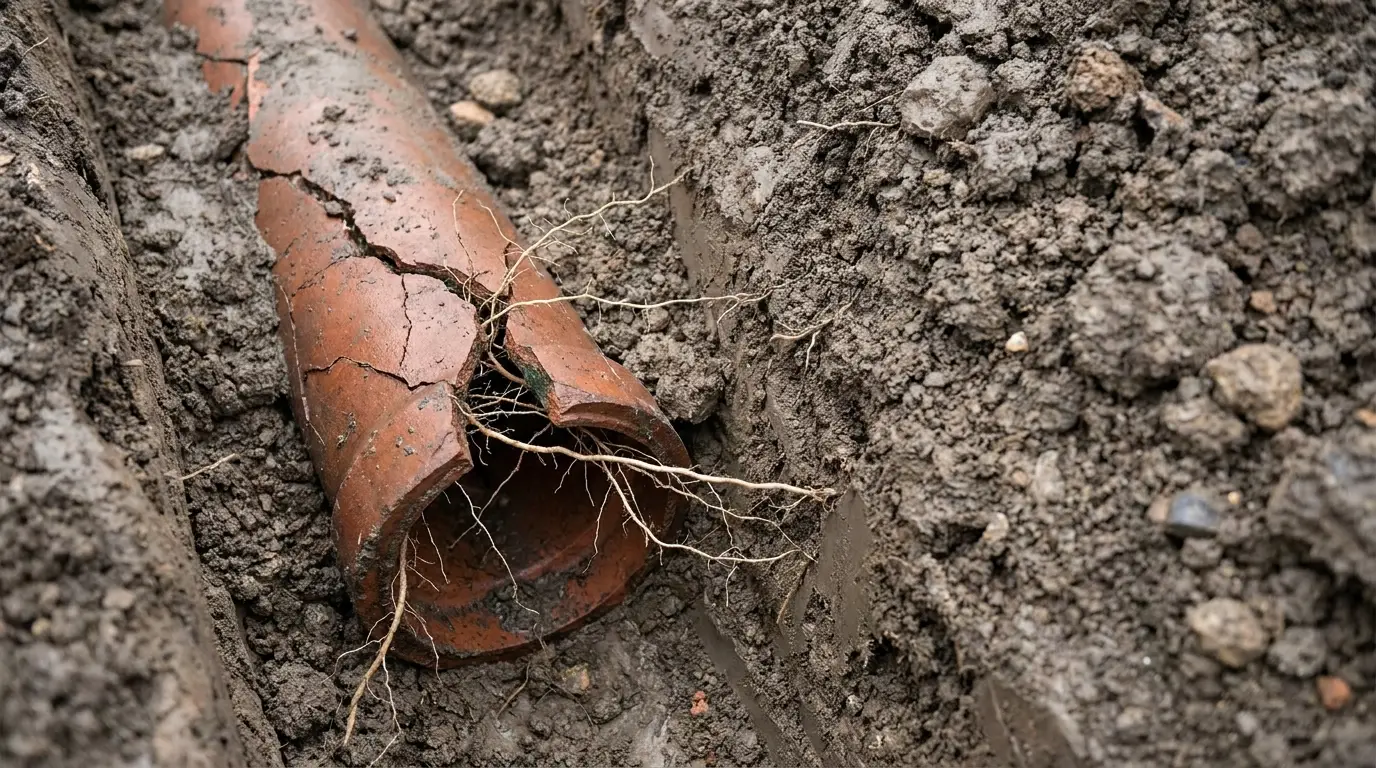
Slow drains, recurring blockages, unpleasant smells or wastewater backing up can point to a pipe problem. Roots may be involved, but symptoms alone will not show where the fault is or which tree the roots came from.
Ask a licensed plumber to inspect the line and identify the location and condition of the pipe. Clearing roots may restore flow, but if they entered through a damaged joint or crack, they can return. The plumber can advise whether the pipe needs a repair, replacement or another suitable solution.
It is also worth remembering that removing a tree does not repair an existing pipe defect. If there is evidence that roots from a particular tree are involved, a plumber and arborist can help you understand the pipe work and tree work needed. This is especially useful when excavation or trenching is proposed near the trunk, as that work may disturb important roots.
Can tree roots damage a house foundation?
Foundation concerns need a more careful diagnosis. A crack in a wall or paving beside the house does not prove that roots are pushing against the footings. Ground movement, drainage problems, soil conditions and building defects can also contribute to cracking.
Trees can sometimes affect the moisture content of soil around a building. In certain conditions, changes in soil moisture may contribute to movement. The effect depends on the soil, the building and the trees involved, so distance from the house alone is not enough to establish the cause.
If cracks are widening, doors begin sticking or floors appear uneven, arrange an assessment by an appropriately qualified building professional. They can investigate the building and advise whether further structural or soil assessment is needed. An arborist can then assess the nearby trees and the likely effects of any proposed root pruning or removal.
Avoid making a rushed decision to remove a healthy tree based solely on a crack. First find out what is moving and why.
Should you prune roots, install a barrier or remove the tree?
Each option has a place, but none is a universal fix.
Root pruning may be possible where a specific root is affecting a path or planned work area. The arborist needs to consider the root’s size and position, the tree’s condition and how the cut could affect stability.
Changing the structure may be preferable when the tree is healthy and there is room to reroute a path or use a design that accommodates its roots. For pipe problems, repairing the point of entry is essential to prevent repeat intrusion.
A root barrier may help in some planting or construction situations, but its suitability depends on the site and how it is installed. Putting one beside an established tree may require digging through the root zone, so it should be assessed before work begins.
Tree removal may be appropriate when the conflict cannot be managed safely or practically, or when the tree presents other significant concerns. If removal is chosen, discuss whether the stump should also be ground to make the area suitable for future paving or landscaping. Stump grinding does not replace a plumber’s pipe repair or a building professional’s foundation assessment.
Get the right assessment before deciding
The most effective approach is to match the specialist to the damage. A plumber can locate and assess a faulty pipe. A building professional can investigate suspected structural movement. An arborist can assess the tree, its roots and the risks of cutting or removing it.
Lakeside Trees and Stumps know a lot about problem trees, and they advise assessing the tree’s condition and its position near buildings and other structures before deciding on removal. Their team provides tree removal and stump grinding services when those are the appropriate next steps.
That assessment matters because the tree closest to the damage is not automatically responsible for it. It also gives homeowners a chance to compare solutions that may preserve a healthy tree with those that resolve an ongoing conflict.
How to reduce future root problems
Think about mature size when planting a tree, not just how it fits the garden today. Allow space between the planting position and paths, driveways, buildings and underground services. Check where pipes run before planting or digging, and choose a tree suited to the available space.
If you are planning new paving or an extension near an established tree, seek advice early. Altering the design before construction begins may be easier than dealing with damaged paving or roots cut during excavation.
Tree roots can create real problems, but the solution starts with a reliable diagnosis. Find out what is damaged, confirm the cause and assess the tree before choosing between repair, root work or removal.