
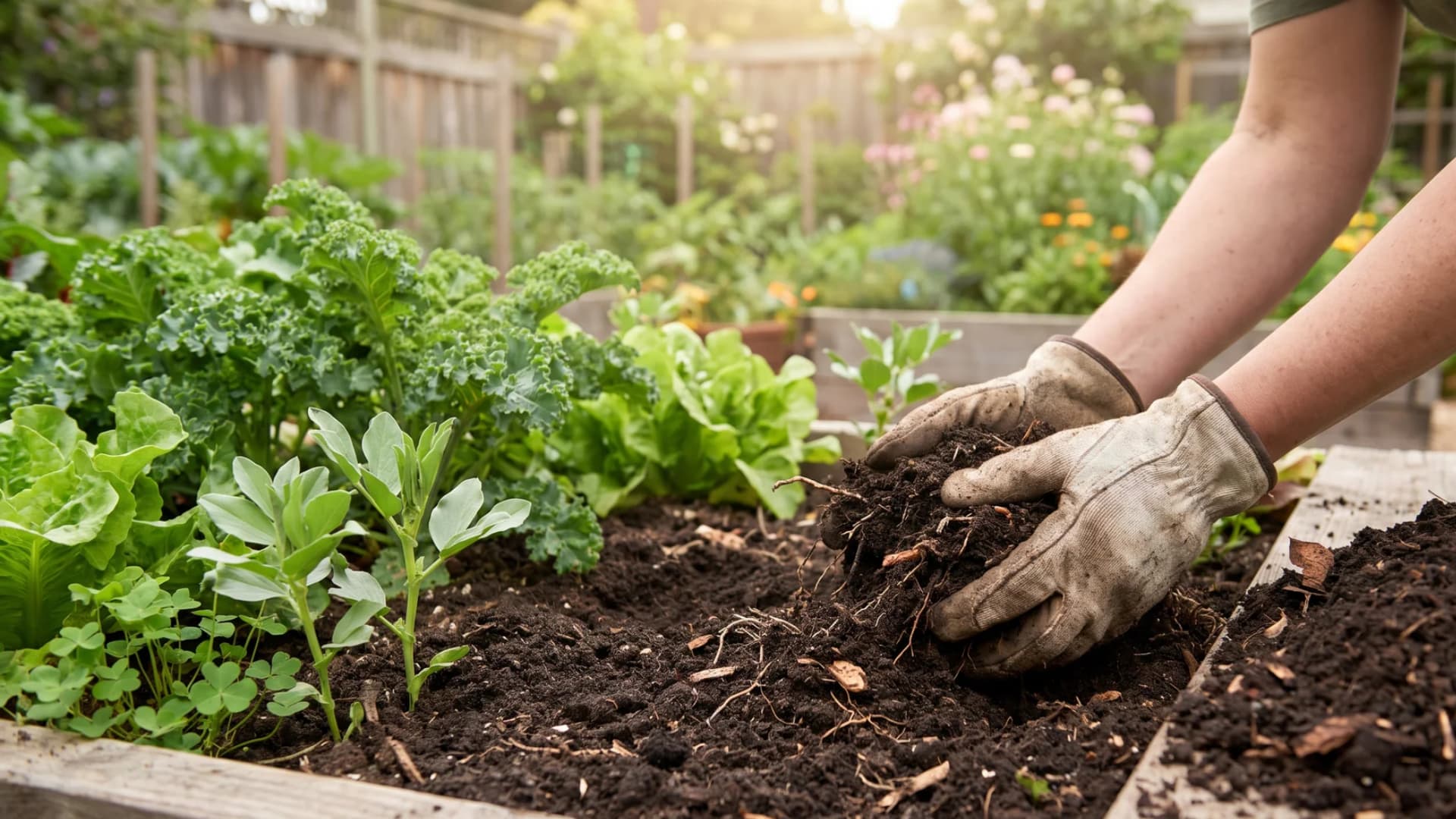
How to Add Nitrogen to Soil: 9 Ways to Build Healthier Ground
Nitrogen supports healthy leaves, stems, and steady plant growth. When soil runs low on nitrogen, plants may turn pale or grow slowly. Compost, legumes, manure, and other natural materials can restore nitrogen and improve soil health over time.
Here are nine natural ways to add nitrogen to soil.
What Nitrogen Does for Your Plants
Nitrogen is the nutrient behind every green leaf in your garden.
Plants use it to build chlorophyll, the compound that lets them turn sunlight into energy, and it also feeds protein production that supports new stems, leaves, and root growth.
Without enough nitrogen, plants slow down no matter how much water or sun they get. Get nitrogen right, and you will notice stronger leaf color and steadier growth within a few weeks.
Signs Your Soil Is Low on Nitrogen
Your plants usually show trouble before a soil test ever tells you. Watch for these four signs before you decide what to add.
- Yellowing leaves that start at the bottom: Nitrogen moves inside the plant, so older leaves turn yellow first while new growth stays green.
- Slow, stunted growth: Plants stay smaller than expected and take longer to reach normal size.
- Pale, thin new leaves: Fresh growth looks weak and light green instead of full and dark.
- Poor flowering or fruiting: Without enough nitrogen early on, plants often produce fewer flowers and smaller harvests later.
Test Your Soil Before You Add Anything
Guessing at nitrogen levels usually costs you more than a soil test does. Here is a quick look at your testing options before you buy anything.
|
Testing Method |
What It Tells You |
Best For |
|---|---|---|
|
Local extension office test |
Exact nitrogen, phosphorus, and potassium levels plus pH |
Anyone who wants lab-level accuracy |
|
Home soil test kit |
A rough read on nitrogen, phosphorus, potassium, and pH |
Quick checks between seasons |
|
Plant observation |
Early hints like yellowing or slow growth |
A first clue, not a final answer |
As a general benchmark, healthy soil should sit around 2 to 5 percent nitrogen by weight, with anything under 1 to 2 percent pointing to a deficiency, according to EZ-FLO Injection Systems.
9 Natural Ways to Add Nitrogen to Soil
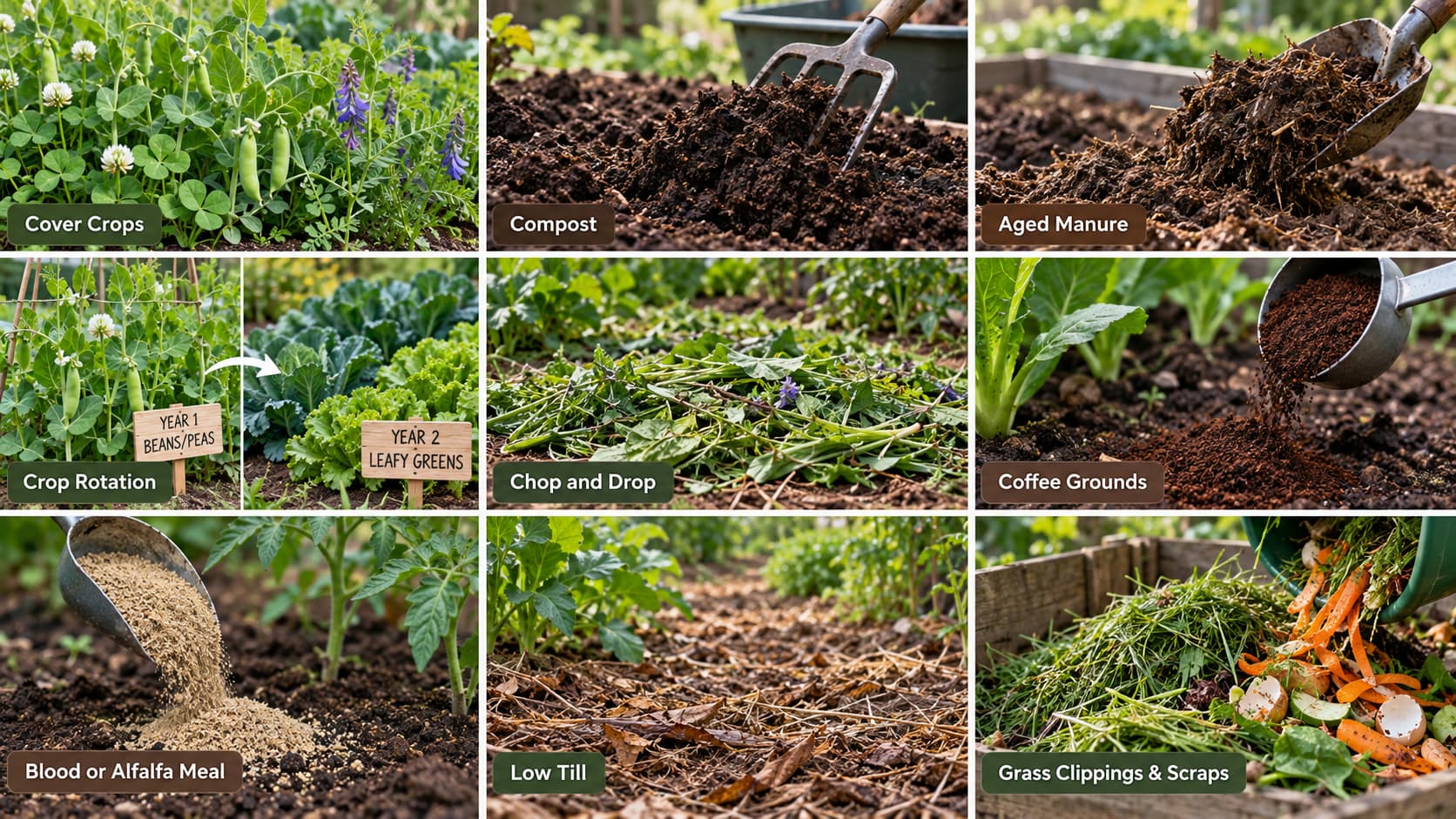
These nine methods work with your soil’s natural systems instead of against them. Pick a few that fit your garden size, then build from there.
1. Grow Nitrogen-Fixing Cover Crops and Legumes
Clover, field peas, vetch, and beans host bacteria that pull nitrogen from the air and store it in root nodules. Plant them in beds you plan to rest, then cut them down and till them in before your next crop. This method feeds soil slowly but keeps working season after season without extra input from you.
2. Add Well-Rotted Compost
Finished compost releases nitrogen at a steady pace while it also improves how soil holds water and air. Mix one to two inches into the top six inches of soil before planting, or spread it around existing plants as a side dressing. Homemade compost from kitchen scraps and yard waste works just as well as anything you would buy.
3. Use Aged Animal Manure
Chicken, cow, and horse manure all carry nitrogen, though the amount varies by animal. Chicken manure has the highest nitrogen at around 4 to 9 percent, according to MIgardener, while horse and cow manure is closer to 1 to 2 percent. Always let manure age for at least six months before adding it to soil, since fresh manure can burn roots.
4. Rotate Crops With Legumes
Plant nitrogen-hungry crops like corn, lettuce, or spinach the season after a bed of beans or peas. The legumes leave nitrogen behind in the soil for the next crop to use. This simple swap cuts down how much extra nitrogen you need to add later, and it keeps pests and diseases from settling into one spot.
5. Practice Chop-and-Drop Mulching
Instead of pulling spent cover crops or trimmings out of the bed, cut them at the base and leave them right where they fall. As the plant material breaks down in place, it feeds the same bacteria that convert organic matter into usable nitrogen. It also reduces yard waste and saves you a trip to the compost pile.
6. Add Coffee Grounds
Used coffee grounds carry roughly 2 percent nitrogen and add organic matter as they break down. Sprinkle them directly around plants or mix them into your compost pile. They also lower soil pH slightly, so use them sparingly around plants that prefer neutral or alkaline soil.
7. Use Blood Meal or Alfalfa Meal for a Fast Boost
When plants need nitrogen fast, blood meal and alfalfa meal work quicker than compost or manure. Blood meal runs high in nitrogen, so apply it at roughly one pound per 100 square feet and water it in well. Alfalfa meal releases a bit slower and adds a mild growth boost along with its nitrogen.
8. Reduce Tillage to Protect Existing Nitrogen
Tilling speeds up the breakdown of organic matter, which releases nitrogen faster than roots can absorb it. Over time, that nitrogen washes away or escapes into the air instead of feeding your plants. Switching to no-till or low-till beds keeps nitrogen locked into organic matter longer, so less of it goes to waste.
9. Recycle Grass Clippings and Kitchen Scraps
Fresh grass clippings hold about 3 to 4 percent nitrogen and break down quickly once spread as mulch or added to compost. Let them dry for a day before using them so they don’t clump into a slimy mat. Kitchen scraps like vegetable peels and coffee filters add even more nitrogen once they finish composting.
Fast vs. Slow Nitrogen Sources
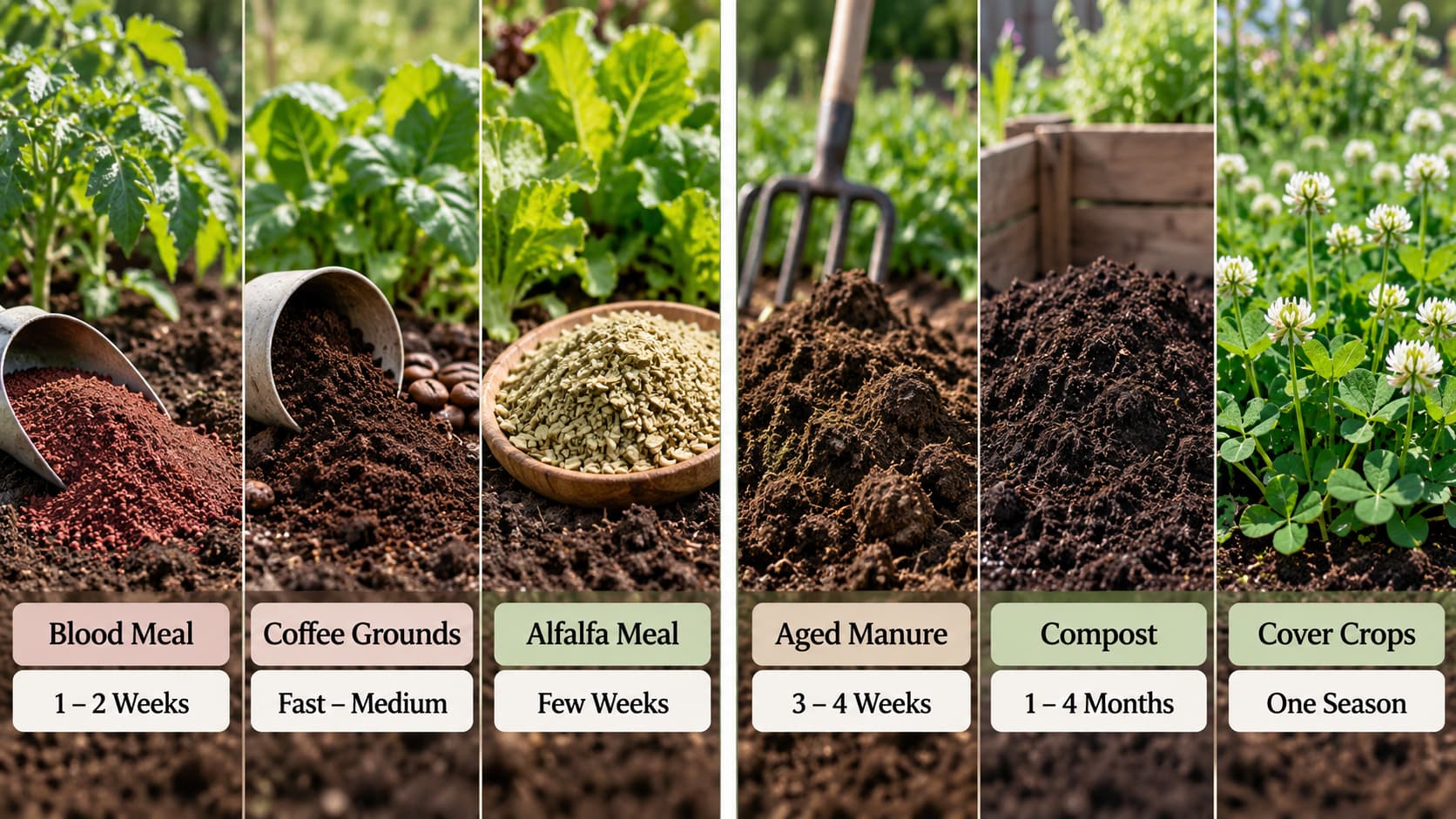
Some methods work in days; others take months to pay off. Use this table to match the right method to how quickly you need results.
|
Method |
Speed |
Best For |
|---|---|---|
|
Blood meal |
Fast, 1 to 2 weeks |
Correcting a deficiency quickly |
|
Coffee grounds |
Fast to medium |
Light, regular feeding |
|
Alfalfa meal |
Medium, a few weeks |
Steady growth support |
|
Aged manure |
Medium, 3 to 4 weeks |
General garden beds |
|
Compost |
Slow, 1 to 4 months |
Long-term soil building |
|
Cover crops and legumes |
Slow, one full season |
Building nitrogen for future crops |
How Nitrogen Actually Gets Into Soil
Plants cannot pull nitrogen straight from the air, even though nitrogen makes up most of it. Certain bacteria that live in nodules on legume roots convert airborne nitrogen into a form roots can absorb, a process called nitrogen fixation. The rest of the soil’s nitrogen comes from decay.
When leaves, roots, and other organic matter break down, soil bacteria turn that material into ammonium, then into nitrate, which plant roots take up. This is the nitrogen cycle, and every method below works by feeding one part of it.
Common Mistakes When Adding Nitrogen to Soil
A few common mistakes can make nitrogen treatments less effective or even harm your plants.
|
Common Mistake |
Why It Causes Problems |
What to Do Instead |
|---|---|---|
|
Adding nitrogen without testing |
Soil may already contain enough nitrogen, leading to excessive leafy growth or stressed plants. |
Test the soil before adding fertilizer. |
|
Applying too much nitrogen |
Excess nitrogen can encourage foliage at the expense of flowers and fruit. |
Start with a small amount and increase only if needed. |
|
Using fresh manure |
Fresh manure can contain high nitrogen and salts that may burn plant roots. |
Use well-aged or composted manure. |
|
Ignoring soil pH |
Plants may struggle to absorb available nitrogen when soil pH is unsuitable. |
Check and correct soil pH when necessary. |
|
Expecting every nitrogen source to work quickly |
Compost and legumes release nitrogen gradually, while products like blood meal act faster. |
Choose a nitrogen source based on how quickly plants need nutrients. |
|
Reapplying too soon |
Adding more before the first application has taken effect can lead to excess nitrogen. |
Watch plant growth and soil conditions before applying more. |
When Is the Best Time to Add Nitrogen to Soil?
The best time to add nitrogen is just before planting or during active growth, when plants can use it most efficiently.
Slow-release sources like compost and aged manure work well before planting, while faster options such as blood meal can be added when plants show signs of deficiency.
Avoid heavy applications late in the season, as excess nitrogen can encourage leafy growth instead of flowers or fruit.
Frequently Asked Questions
What is the fastest way to add nitrogen to soil?
Blood meal or fish emulsion work fastest, often showing results within one to two weeks of application.
What is the best source of nitrogen for soil?
Cover crops and legumes offer the most lasting source, since they keep feeding nitrogen into soil long after other methods run out.
What is the best homemade nitrogen fertilizer?
Compost tea made from finished compost and water gives you a homemade option that is cheap, safe, and easy to apply.
What is the cheapest source of nitrogen fertilizer?
Grass clippings and kitchen scraps cost nothing beyond what you already have on hand, making them the most budget-friendly source.
What is poor man’s fertilizer?
Gardeners often use the term for snow, since melting snow releases small amounts of nitrogen from the atmosphere into soil, as noted by MIgardener.
What do Amish gardeners use for fertilizer?
Amish growers commonly rely on aged animal manure, compost, and crop rotation with legumes, based on farming practices described in the Amish Baskets community blog.
Is Epsom salt a nitrogen fertilizer?
No. Epsom salt supplies magnesium and sulfur, not nitrogen, phosphorus, or potassium, according to a university extension response.


