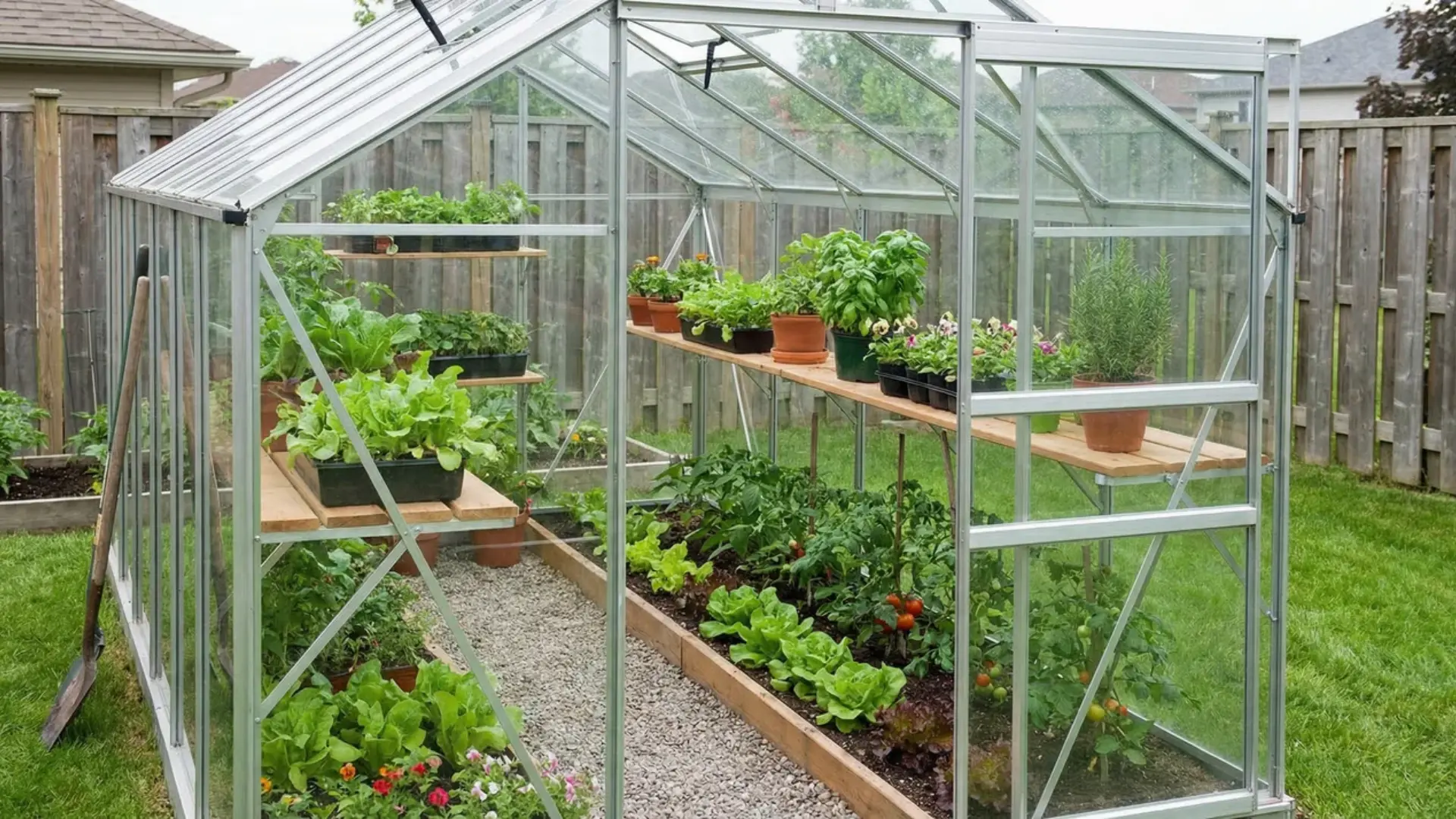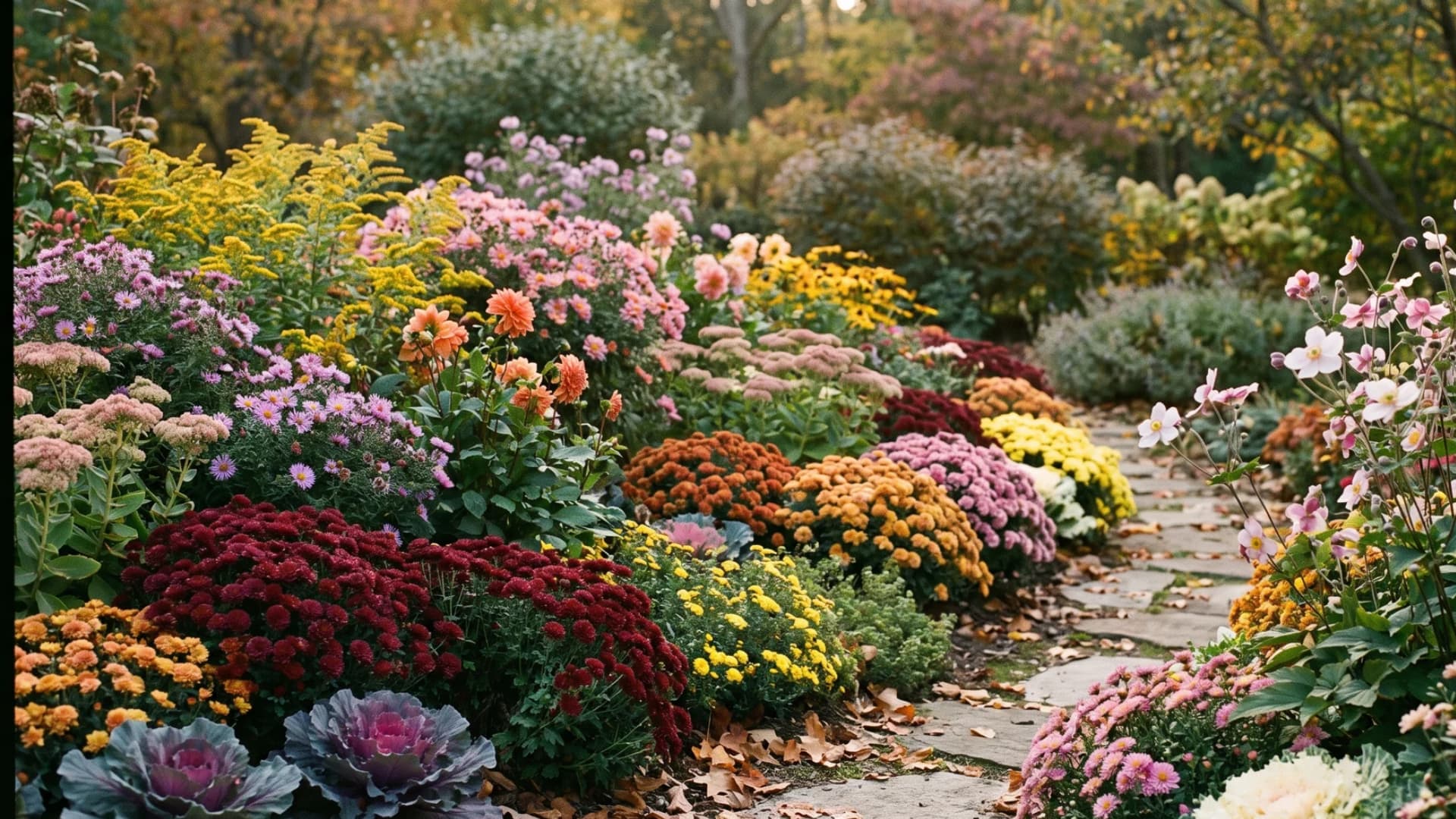
40 Flowers That Bloom in Fall for Lasting Garden Color
Think garden color ends with summer? Fall has plenty more to offer. Mums, asters, dahlias, and many other flowers thrive as temperatures cool.
Here are fall flowers in six groups: annuals, perennials, bulbs, shrubs, native wildflowers, and cut flowers for beds, pots, and vases.
What Flowers Bloom in the Fall?
Fall flowers fall into six broad groups: annuals, perennials, bulbs and corms, shrubs and vines, native wildflowers, and cut-flower annuals.
Familiar picks like mums, asters, goldenrod, sedum, dahlias, and ornamental kale keep gardens colorful long after summer ends. Many of them bloom right up to the first hard frost.
Cooler air and steady rain often make fall an easier season to grow flowers in than peak summer heat.
Fall Flowers by Month: September vs. October
Not every fall flower peaks at the same time. Knowing what tends to bloom in September versus October helps you plan color for the whole season.
|
Month |
Flowers Typically in Bloom |
|---|---|
|
September |
Black-eyed Susan, sneezeweed, toad lily, blue wood aster, Russian sage, Joe Pye weed |
|
October |
Asters, mums, goldenrod, sedum ‘Autumn Joy’, Japanese anemone, autumn crocus, camellia sasanqua, ornamental kale |
Exact timing shifts by hardiness zone and local frost dates. Use this table as a starting point, not a fixed calendar for your yard.
Fall Annuals for Instant Color

Annuals are the fastest way to add color the moment the weather cools. Replant them each fall, and most will keep flowering until the first hard frost.
1. Chrysanthemum (Mums)
Mums are the flower most people think of first when fall comes up. Garden centers stock them heavily in September, and for good reason. They bloom fast, hold their shape in pots, and come in almost every autumn shade.
-
Hardiness zones: 5 to 9
-
Colors: yellow, orange, red, white, purple, bronze
-
Bloom time: late summer through frost
-
Best use: porch pots, bed edges, quick color
2. Pansy
Pansies handle cold better than most flowers on this list. Once summer heat fades, they perk back up and often keep flowering straight through winter in milder climates.
-
Hardiness zones: 7 to 11
-
Colors: nearly every shade, often with a face-like center pattern
-
Bloom time: fall through winter, sometimes into spring
-
Best use: window boxes, borders, cool-season color
3. Viola
Think of violas as a pansy’s smaller, tougher cousin. The blooms are a fraction of the size, but there are more of them. They also shrug off a hard freeze without much trouble.
-
Hardiness zones: 3 to 8
-
Colors: blue, purple, white, yellow
-
Bloom time: fall, reviving after a summer lull
-
Best use: containers, rock gardens, underplanting bulbs
4. Ornamental Kale and Cabbage
This one is not grown for flowers at all. The colorful rosettes actually look better as the temperature drops. That makes this plant a reliable fall performer once real flowers start to fade.
-
Hardiness zones: 2 to 11
-
Colors: purple, pink, green, white foliage
-
Peak season: cool fall weather through early winter
-
Best use: pots, beds, holiday displays
5. Calendula (Pot Marigold)
Calendula starts flowering in late spring, but fall gardens often get the best blooms. Keep deadheading the spent blooms, and it will reward you with fresh flowers well into the cool months.
-
Colors: yellow, orange, cream
-
Bloom time: late spring through fall frosts
-
Care note: remove spent flowers regularly to keep new ones coming
-
Best use: cottage-style beds, cutting gardens
6. Snapdragon
Snapdragons like it cool, so many gardeners get their best blooms from this plant in early fall rather than midsummer. The tubular flowers come in a wide range of warm and cool shades.
-
Hardiness zones: 7 to 10
-
Colors: white, yellow, red, orange, pink, purple
-
Bloom time: spring to fall frosts
-
Best use: cut flowers, cottage borders
7. Petunia
Petunias often look tired by midsummer. A hard trim in late summer brings them back for a second round of flowers once the weather cools off.
-
Hardiness zones: 10 to 11 (grown as an annual elsewhere)
-
Colors: red, yellow, orange, pink, purple, white
-
Bloom time: late spring to fall frosts
-
Best use: hanging baskets, containers, border edging
Fall-Blooming Perennials
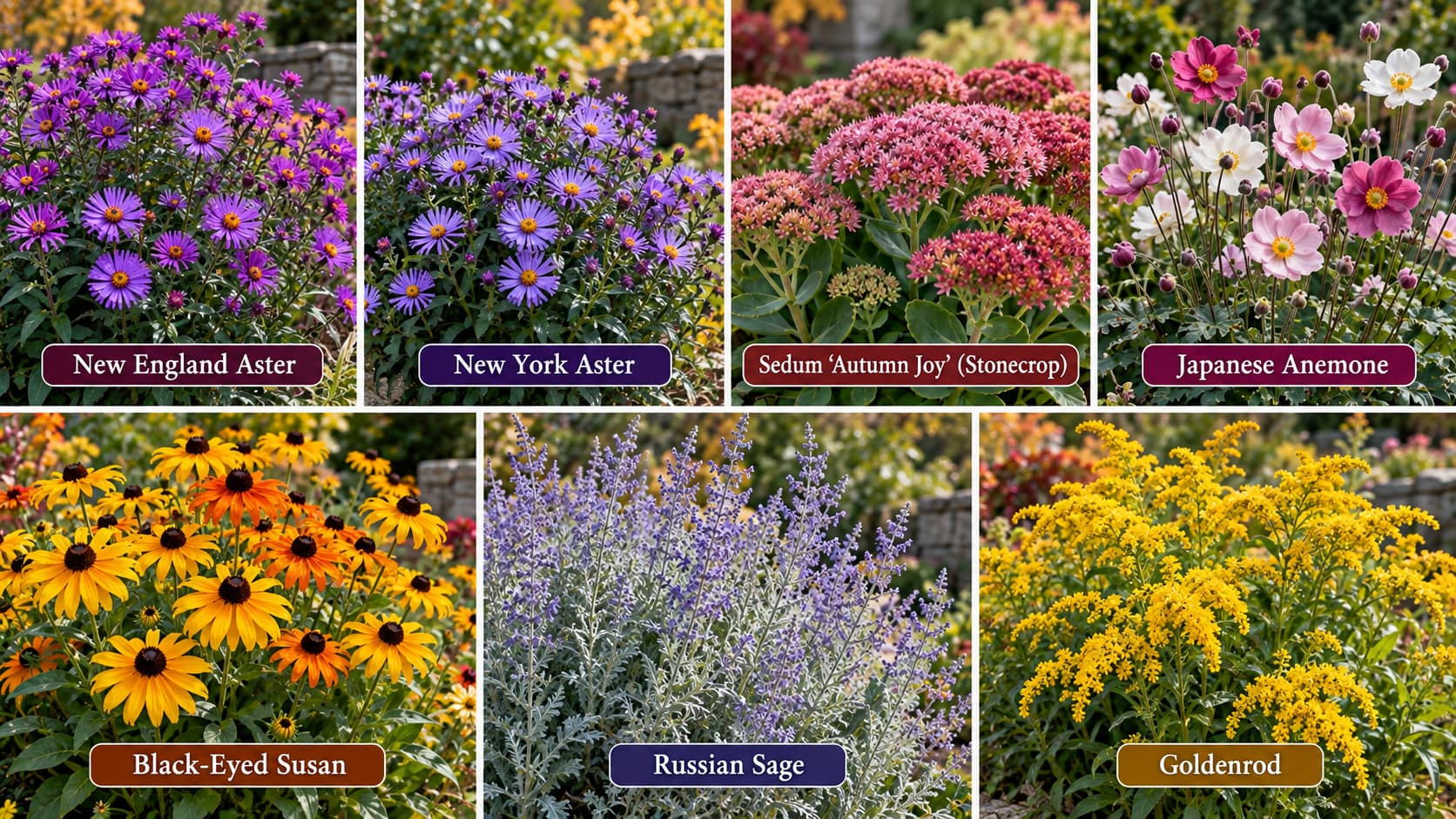
Perennials in this group aren’t just surviving into fall; nature times them to peak here. Plant one once and it should come back stronger every year after.
8. New England Aster
Few perennials announce fall quite like an aster in full bloom. New England aster carries dozens of daisy-like pink-purple flowers on tall stems. It peaks right when most of the garden is winding down.
-
Hardiness zones: 4 to 8
-
Colors: pink-purple, deep purple
-
Bloom time: late summer into early fall
-
Good to know: attracts bees and late-season butterflies
9. New York Aster
New York aster looks similar to its New England relative but tends to stay shorter and bushier. That makes it easier to fit into a smaller border.
-
Hardiness zones: 4 to 8
-
Colors: violet, lavender
-
Bloom time: late summer into fall
-
Good to know: prefers slightly drier soil than New England aster
10. Sedum’ Autumn Joy’ (Stonecrop)
This sedum earns its name. The star-shaped flower clusters open a soft pink and slowly deepen to rust red as the season goes on. They hold their shape through several frosts.
-
Hardiness zones: 3 to 9
-
Colors: pink, deepening to red
-
Bloom time: late summer to frost
-
Good to know: drought-tolerant once established
11. Japanese Anemone
Japanese anemone brings a softer look to a fall border. The cup-shaped flowers sway on tall, wiry stems and keep going after most perennials have already finished for the year.
-
Hardiness zones: 4 to 8
-
Colors: pink, white, mauve
-
Bloom time: late summer into fall
-
Good to know: tolerates partial shade better than most fall perennials
12. Black-Eyed Susan
Black-eyed Susan is one of the easiest perennials to grow well. It keeps producing gold and orange daisy-like flowers from early summer all the way into fall.
-
Hardiness zones: 3 to 9
-
Colors: yellow, orange, red centers
-
Bloom time: early summer through fall
-
Good to know: a reliable cut flower and a pollinator favorite
13. Russian Sage
Russian sage adds height and movement without much fuss. Airy purple-blue flower spikes sit above silvery foliage that stays fragrant even after the blooms fade.
-
Hardiness zones: 4 to 9
-
Colors: blue, lavender
-
Bloom time: midsummer to early fall
-
Good to know: needs full sun to avoid flopping over
14. Goldenrod
Goldenrod gets blamed for fall allergies it does not actually cause. What it does do is feed bees at a time when very little else is flowering. It also adds a bright yellow accent to the border.
-
Hardiness zones: 3 to 9
-
Colors: yellow
-
Bloom time: midsummer through fall
-
Good to know: an important late-season nectar source for pollinators
Fall Bulbs and Corms

This group works differently from the rest. Instead of planting for a spring show, these bulbs and corms are built to flower once autumn arrives.
15. Autumn Crocus (Colchicum)
Autumn crocus sends up large cup-shaped flowers on bare stems, with no leaves in sight. The foliage already came and went earlier in the year. Keep it away from pets and children, since every part of the plant is toxic if eaten.
-
Hardiness zones: 4 to 8
-
Colors: lavender-pink, lilac
-
Bloom time: early fall through frost
-
Caution: all parts are toxic if ingested
16. Saffron Crocus (Crocus sativus)
This is the true fall-blooming crocus, and the only one that gives you saffron. Each purple flower carries a few bright red-orange threads that you can harvest and dry yourself.
-
Colors: purple petals, red-orange stigmas
-
Bloom time: fall
-
Good to know: the stigmas are the source of culinary saffron
-
Best use: small beds, containers near a kitchen door
17. Dahlia
Dahlias save some of their biggest, richest-colored blooms for the last stretch before frost. Plant them in a sunny spot in spring, and you will be cutting flowers well into fall.
-
Hardiness zones: 8 to 10 (or dig up and store in colder zones)
-
Colors: red, pink, orange, yellow, purple, white
-
Bloom time: midsummer to first frost
-
Best use: cutting garden, borders
18. Nerine (Guernsey Lily)
Nerine is one of the less common picks on this list, but it is worth seeking out. Glossy pink flowers rise on bare stems in a sunny border right as summer fades.
-
Colors: bright pink
-
Bloom time: early to mid fall
-
Best use: sunny, sheltered borders
-
Good to know: prefers a spot that stays fairly dry in summer
19. Surprise Lily (Lycoris)
The strap-like leaves show up in spring, then disappear completely by summer. It looks like nothing is there until the flower stems suddenly shoot up in late summer or early fall.
-
Colors: rose-pink
-
Bloom time: late summer into fall
-
Good to know: also called resurrection lily or spider lily
-
Best use: naturalized areas, borders where the bare-stem look works
20. Canna Lily
Canna brings a tropical look to a fall garden that most other flowers on this list cannot match. Bold blooms sit above large paddle-shaped leaves and keep going until frost finally shuts them down.
-
Hardiness zones: 8 to 10
-
Colors: red, orange, yellow, pink, cream
-
Bloom time: early summer into fall
-
Good to know: pet-friendly, unlike true lilies
Flowering Shrubs and Vines for Fall
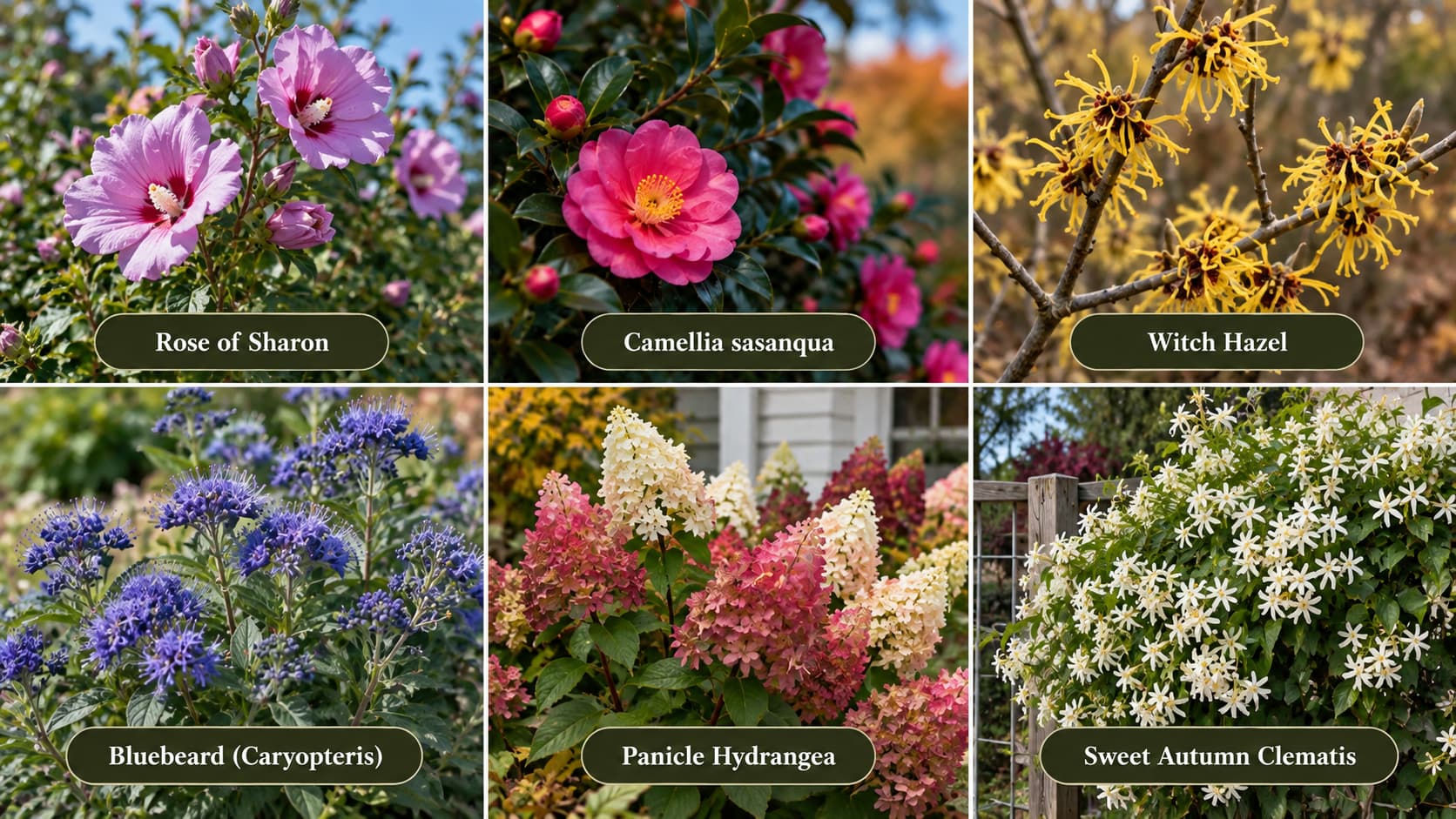
Shrubs and vines add height, structure, and sometimes fragrance to a fall garden. A few are just getting started once summer shrubs quit.
21. Rose of Sharon
Rose of Sharon is a tough shrub that keeps flowering through summer heat and straight into fall. Large, tropical-looking blooms show up even in average soil and full sun.
-
Hardiness zones: 5 to 9
-
Colors: white, pink, purple, blue, red
-
Bloom time: midsummer into fall
-
Good to know: tolerates heat, drought, and average soil well
22. Camellia sasanqua
Most flowering shrubs are finished by fall, but Camellia sasanqua is just getting started. It is one of the few shrubs that will give you flowers right through late fall and into winter.
-
Hardiness zones: 7 to 9
-
Colors: white, pink, red
-
Bloom time: fall into winter
-
Best use: hedges, foundation plantings in mild climates
23. Witch Hazel
Witch hazel produces spidery, fragrant yellow flowers on bare branches. Depending on the variety, that show happens in fall or in the dead of winter. Check bloom time before you buy.
-
Hardiness zones: 3 to 9
-
Colors: yellow (some varieties orange or red)
-
Bloom time: fall or late winter, depending on variety
-
Good to know: also valued for its fragrance
24. Bluebeard (Caryopteris)
Bluebeard is a small shrub with a big payoff. Clouds of blue-purple flowers cover the plant from late summer into early fall, right when the garden needs a lift.
-
Hardiness zones: 5 to 9
-
Colors: blue, purple, pink
-
Bloom time: late summer to early fall
-
Good to know: needs well-drained soil to avoid root rot
25. Panicle Hydrangea
Panicle hydrangea’s cone-shaped flower clusters start out white in summer. They slowly shift to pink and rust as fall settles in, giving one shrub two looks in a single season.
-
Hardiness zones: 3 to 8
-
Colors: white, aging to pink and burgundy
-
Bloom time: midsummer into fall
-
Best use: borders, cut and dried arrangements
26. Sweet Autumn Clematis
This fast-growing vine can cover a fence or trellis in a single season. By late summer it is blanketed in small, fragrant white flowers that keep going into mid-fall.
-
Colors: white
-
Bloom time: August into mid-fall
-
Best use: fences, trellises, arbors
-
Good to know: prune hard in late winter to keep it in check
Native Wildflowers and Pollinator Favorites

This group does double duty. It looks good in a fall border. It also feeds bees and migrating monarch butterflies when food is scarce.
27. Joe Pye Weed
Joe Pye weed grows tall and wide, with domed clusters of mauve-white flowers that carry a light vanilla scent. Bees and butterflies treat it like a buffet table in late summer and early fall.
-
Hardiness zones: 4 to 9
-
Colors: mauve, white
-
Bloom time: midsummer into early fall
-
Good to know: needs room to spread, best toward the back of a border
28. Ironweed
Ironweed’s bright purple flower clusters stand out against nearly any backdrop. It is a native option for spots that stay a little wet, where a lot of other perennials struggle.
-
Hardiness zones: 4 to 9
-
Colors: purple
-
Bloom time: mid to late summer into fall
-
Good to know: handles moist soil better than most fall perennials
29. Blue Wood Aster
Blue wood aster carries pale blue, daisy-like flowers, and unlike most asters, it actually does well in some shade. That makes it a useful pick for a woodland edge or a spot that does not get full sun.
-
Hardiness zones: 3 to 8
-
Colors: pale blue
-
Bloom time: August through October
-
Good to know: one of the few asters that tolerates shade
30. Helenium (Sneezeweed)
Despite the name, sneezeweed does not cause sneezing. It just flowers around the same time as ragweed, which gets the blame. Its daisy-like red, orange, and gold blooms match the fall color palette well.
-
Hardiness zones: 3 to 8
-
Colors: red, yellow, orange, gold
-
Bloom time: late summer into fall
-
Good to know: cut back mid-season to encourage more branching and flowers
31. Blazing Star (Liatris)
Blazing star sends up narrow, vertical spikes that open from the top down. That is the opposite of how most flowering spikes behave. Butterflies are drawn to it almost as reliably as they are to milkweed.
-
Hardiness zones: 3 to 9
-
Colors: purple, pink, white
-
Bloom time: mid to late summer into fall
-
Good to know: drought-tolerant and deer-resistant once established
32. Turtlehead
Turtlehead gets its name from the flower shape, which looks a bit like a turtle opening its mouth. It is a good pick for a shaded, moist corner of the garden where fall color is hard to find.
-
Hardiness zones: 3 to 8
-
Colors: pink, white
-
Bloom time: late summer into fall
-
Good to know: prefers moist soil and part shade
33. Culver’s Root
Culver’s root adds height and a different shape to a native border. Tall spikes of small white or pale purple flowers stand well above most surrounding plants.
-
Hardiness zones: 3 to 8
-
Colors: white, pale purple
-
Bloom time: midsummer into fall
-
Good to know: works well toward the back of a native or pollinator bed
Long-Blooming Annuals and Cut-Flower Favorites

If you like bringing flowers indoors, this group is built for it. Each one holds up well in a vase and keeps producing new blooms right up to the first hard frost.
34. Zinnia
Zinnias are about as low-effort as flowers get. Sow the seeds in late spring, and they will keep producing bright, layered blooms right through the first fall frost. They need almost no care.
-
Hardiness zones: 3 to 10 (grown as an annual)
-
Colors: pink, purple, yellow, orange, white, red
-
Bloom time: late spring to frost
-
Best use: cutting garden, borders
35. Cosmos
Cosmos grows fast from seed and produces airy, daisy-like flowers on tall stems that sway in the wind. Once established, it tends to self-sow, so you may see it return on its own next year.
-
Colors: white, pink, magenta, orange, chocolate
-
Bloom time: early summer to fall frost
-
Good to know: self-sows readily in most gardens
-
Best use: cutting garden, informal beds
36. Marigold (Tagetes)
Marigold is a dependable, low-care pick that keeps producing gold and orange flowers from summer straight through the first frost. Some gardeners plant it near vegetables to help keep pests away.
-
Hardiness zones: 2 to 11 (grown as an annual)
-
Colors: orange, yellow
-
Bloom time: summer through fall frost
-
Good to know: often planted alongside vegetables as a companion plant
37. Celosia (Cockscomb)
Celosia’s feathery or crested flower heads hold their color for weeks, both in the garden and after cutting. That makes it a favorite for dried arrangements as much as fresh ones.
-
Colors: red, orange, burgundy, gold
-
Bloom time: midsummer to frost
-
Best use: fresh or dried arrangements
-
Good to know: thrives in heat, so it is often still going strong in early fall
38. Sunflower
Sunflowers are not just a summer flower. Several varieties are timed to keep blooming well into fall. The big yellow heads make an easy, cheerful addition to a fall bouquet.
-
Colors: yellow, red, brown centers
-
Bloom time: midsummer to fall frost
-
Best use: cutting garden, back-of-border height
-
Good to know: seeds left on the plant feed birds through fall
39. Strawflower
Strawflower’s papery petals hold their shape and color even after they’re cut and dried. That makes it one of the better choices for fall flowers that last well beyond the season.
-
Colors: yellow, orange, red, white, pink
-
Bloom time: late spring to frost
-
Best use: dried arrangements, wreaths
-
Good to know: deadhead regularly to keep new blooms coming
40. Amaranth
Amaranth’s tall, upright red flower spikes stand out in any bed. The plant does double duty, since you can harvest and eat both the leaves and seeds.
-
Colors: red
-
Bloom time: midsummer through first frost
-
Best use: back-of-border height, edible landscaping
-
Good to know: needs good airflow and drainage to avoid disease
Fall Flower Care Basics
A little basic care goes a long way toward keeping fall flowers going as long as possible. Here are the basics that matter most this time of year, drawn from guidance shared by Penn State Extension.
-
Best planting window: Get perennials, bulbs, and shrubs in the ground by mid to late summer. This gives roots time to settle before the cold sets in.
-
Watering: Fall rain usually covers established plants, but new plantings still need regular water until the soil turns cold.
-
Deadheading: Removing spent blooms on annuals like petunias, snapdragons, and calendula keeps them flowering longer into the season.
-
Frost protection: Covering tender annuals and dahlias on the first light frosts can buy a few more weeks of bloom.
-
Winter prep: Once perennials, bulbs, and shrubs finish flowering, cut back or mulch as needed so they come back strong next year.
How to Choose Fall Flowers for Your Garden
Choose fall flowers based on your climate, sunlight, soil, and how you want to use them. Annuals such as mums and pansies provide quick seasonal color, while perennials like asters and sedum return each year.
Add shrubs or vines if you need height and structure, and native wildflowers if you want to support bees and butterflies. For bouquets, choose long-blooming flowers such as zinnias, dahlias, and cosmos.
Always check your USDA hardiness zone and each plant’s light and moisture needs before planting.
Conclusion
Fall gardens have more going on than most people realize.
Once you know what flowers bloom in the fall, color gets much easier to find. Classic mums, native asters, and surprising bulbs like nerine keep it going strong well past summer.
Pick a few from each group in this guide. Check your hardiness zone, and plant with the season, not against it. Your beds, pots, and vases will thank you long after summer flowers have finished for the year.
Frequently Asked Questions.
What is the most popular flower in fall?
Chrysanthemums, usually just called mums, are the best-known and most planted fall flower in home gardens.
Which flowers bloom the longest in the fall?
Sedum, asters, and mums often keep flowering from late summer through the first hard frost, longer than most fall flowers.
What are the hardiest fall flowers?
Goldenrod, sedum, and asters handle frost well and need very little care once they are established in the ground.
Which plant gives 12 months of flowers?
No single outdoor plant flowers non-stop all year in most climates. Camellias and cyclamen come close, together covering fall through spring in mild zones.
What are the seven flowers of autumn?
There is no official list. Chrysanthemum, aster, goldenrod, sedum, dahlia, marigold, and Japanese anemone are commonly named as classic autumn flowers.