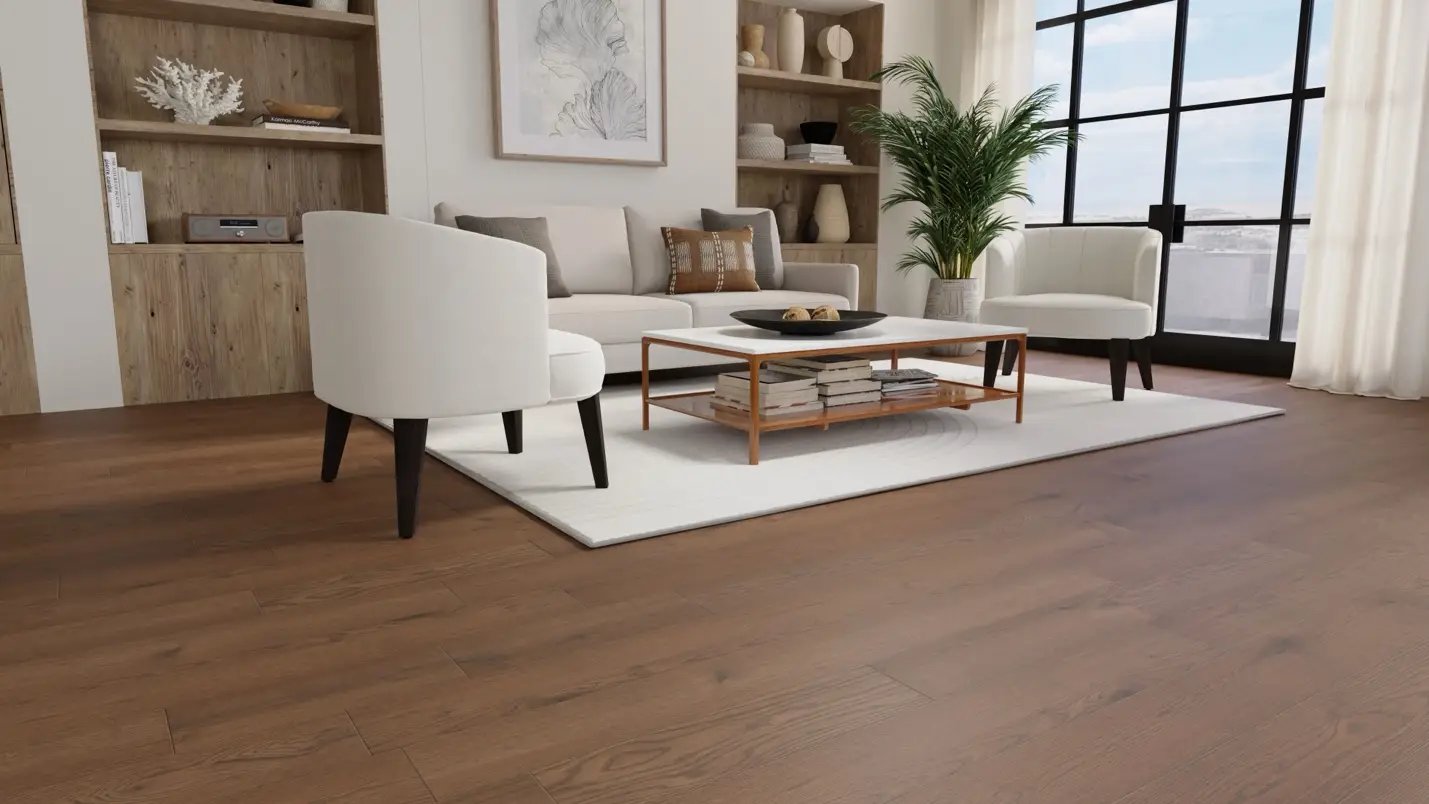
Most Durable Wide Plank Wood: The Best Species and Construction
A generous floorboard can make a room feel calmer, larger, and more connected to nature.
Durability, however, depends on more than selecting the hardest species available.
The right answer balances dent resistance, dimensional stability, finish quality, installation, and maintenance.
Table of Contents
Use this guide to compare the factors that matter before ordering a new floor.
- What durability means
- The case for hickory
- Why oak remains popular
- Engineered construction
- Board dimensions
- Protective finish systems
- Installation details
- Household priorities
- Shopping questions
- Routine floor care
- Common questions
- A practical recommendation
What Makes Wide Plank Hardwood Truly Durable?
Hardwood hardness measures resistance to indentation, while stability describes movement as indoor humidity changes.
A high Janka rating in your hardwood helps prevent damage from high heels, dropped objects, active children, and large pets.
Yet a hard board can still cup or gap when moisture control and the final installation are poor.
Real durability is a system combining species, construction, finish, subfloor, and responsible care. Many installers recommend engineered hardwood for increased prevention of these common hardwood problems.
Five Measures Beyond the Planks Surface Hardness
Evaluate each candidate against the conditions inside the home rather than one laboratory number.
- Dent resistance
- Seasonal stability
- Scratch visibility
- Finish repairability
- Moisture tolerance
- Refinishing potential
Hickory for Maximum Dent Resistance
Among widely available domestic choices, hickory offers exceptional hardness and lively natural character.
Its varied color and grain can disguise small dents better than a uniform, dark surface.
Because dense wood still moves, acclimation and humidity management remain essential for wide plank installations.
Where This Tough Species Excels
Busy residential rooms benefit greatly with a tough-as-nails species selection. Physical wear resistance in these homes typically matters more than perfectly quiet color variation.
- Family rooms
- Open kitchens
- Pet-friendly homes
- Country interiors
- High-traffic hallways
- Active households
White Oak Flooring for Balanced Performance
White oak flooring combines dependable hardness, broad availability, and a versatile linear appearance.
Its pores are relatively closed, and quartersawn material offers especially good dimensional behavior.
Compared with red oak, white oak hardwood flooring has subdued grain for traditional and contemporary rooms.
Why White Oak Is the Practical Favorite
White oak accepts many finishes, allowing visible wear to become patina instead of distraction.
- Strong everyday performance
- Flexible color options
- Attractive ray fleck
- Reliable availability
- Refinishing flexibility
- Timeless visual appeal
Engineered Hardwood Adds Dimensional Stability
Engineered hardwood uses a real-wood wear layer over a stable, cross-laminated core or a composite core.
This construction is made to limit seasonal movement, which becomes increasingly important as a hardwood board width grows due to its natural reactions to moisture in the air.
Although solid hardwood planks are heavy duty, a quality layered product may perform better in humid spaces.
When a Layered Core Makes Sense
Choose a substantial wear layer and a reputable core instead of judging by total thickness alone.
- Concrete slabs
- Radiant heat
- Below-grade rooms
- Seasonal climates
- Extra-wide planks
- Renovation projects
Board Width, Cut, and Grade Matter
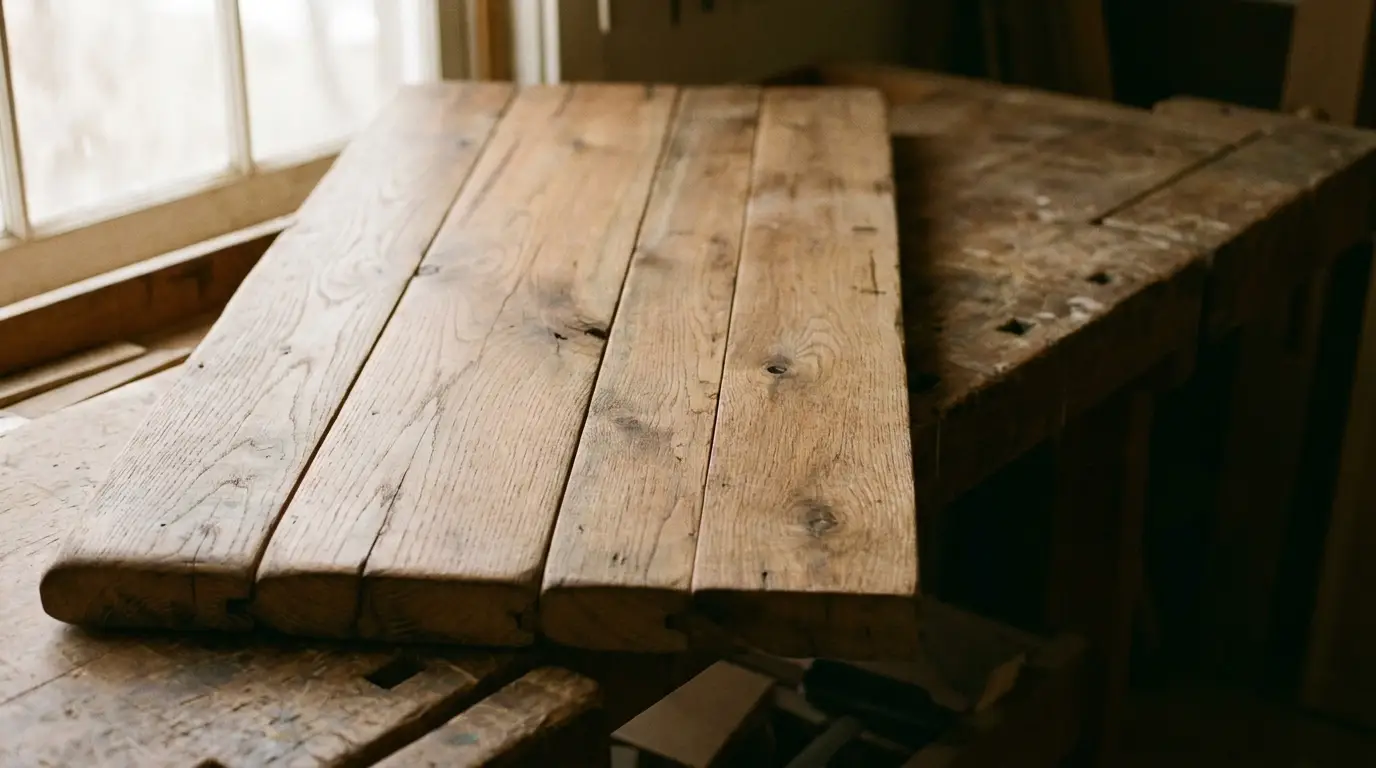
Hardwood with wider boards reveal more character but also experience greater movement across each board.
Quartersawn and riftsawn cuts are generally more stable than flatsawn hardwood material of equal width.
The hardwood grade affects knots and color variation, not simply whether a floor will endure.
Specifications Worth Comparing
Ask for written tolerances and installation guidance before committing to a wide plank hardwood package.
- Nominal width
- Wear-layer depth
- Average board length
- Milling tolerance
- Moisture content
- Sawn orientation
- Character variation
- Core construction
- Edge profile
- End matching
- Warranty terms
- Refinishing limits
Finishes Protect the Surface
A durable factory finish provides controlled curing and consistent coverage before installation begins.
Matte sheens and textured surfaces usually conceal scratches more effectively than high-gloss finishes.
Site-finished floors create a continuous surface and can be easier to renew uniformly later.
Finish Choices for Long Lasting Results
For long lasting performance, appearance should complement daily wear and the household’s cleaning habits.
- Matte polyurethane
- Low-sheen urethane
- Hard-wax oil
- Wire-brushed texture
- Natural color variation
- Repairable topcoats
Installation Determines Long-Term Performance
Even premium plank flooring can fail when installers skip acclimation or moisture testing.
The subfloor must be dry, flat, clean, and compatible with the fastening or adhesive method.
Follow the manufacturer’s expansion guidance and keep indoor humidity within its recommended range.
Preparation Before the First Board
A qualified installer should document site readings and correct problems before opening every carton.
- Check room humidity
- Test subfloor moisture
- Verify floor flatness
- Inspect delivered material
- Blend boards visually
- Confirm expansion space
Match the Floor to Your Household
Families with dogs may prioritize hardness and scratch-camouflaging grain over perfectly consistent color.
Dry climates reward stable construction and disciplined humidification more than extreme surface density.
For quieter rooms, softer species can remain beautiful when protected by sensible daily habits.
Choose According to Real-Life Risk
List the room’s likely hazards before choosing a species, surface texture, or construction.
- Large pet claws
- Tracked-in grit
- Rolling furniture
- Direct sunlight
- Frequent spills
- Humidity swings
How to Shop for Quality Materials
Request samples large enough to show natural variation under the room’s actual lighting.
Compare milling, lengths, wear layers, finish warranties, and installation requirements across products.
Browse available wide plank floors to evaluate species, colors, widths, and constructions together.
Questions to Ask Before Ordering
Clear answers reveal more about quality than a species name or promotional hardness claim.
- Is it solid or engineered?
- How thick is the wear layer?
- What lengths are typical?
- Which installation is approved?
- What humidity range applies?
- Can it be refinished?
Care Habits That Extend Floor Life
Preventive maintenance costs less and preserves more material than aggressive restoration after damage.
Use breathable mats, felt pads, and a vacuum head designed for hardwood flooring.
Wipe spills promptly and avoid steam, flooding, harsh abrasives, or excessive cleaning solution.
A Simple Maintenance Rhythm
Consistent light care beats occasional deep cleaning for protecting both finish and wood.
- Sweep visible grit
- Vacuum weekly
- Clean with approved products
- Replace worn felt pads
- Monitor indoor humidity
- Refresh finish when advised
Frequently Asked Questions
Which Species Offers the Best Everyday Durability?
Hickory leads many common domestic options in dent resistance, while oak offers excellent balance.
For many homes, stable construction and a forgiving finish matter as much as raw hardness.
- Choose hickory for hardness
- Choose oak for balance
- Choose texture to hide wear
- Choose matte for subtle scratches
- Choose stability for broad widths
- Choose installers with moisture expertise
What Is the Safest All-Around Recommendation?
Wide plank white oak with engineered construction is a strong choice for changing indoor conditions.
Where dents dominate the risk, hickory may win; where stability dominates, construction should decide.
- Assess room conditions
- Compare certified samples
- Review technical specifications
- Plan professional installation
- Control indoor moisture
- Protect high-traffic zones
- Maintain the approved finish