Hibiscus Care Made Simple: What Your Plant Needs
Hibiscus can fill a garden or patio with color that stops people mid-step. But the same plant that looks incredible one week can drop every bud the next, and most growers have no idea why.
I have seen it happen repeatedly. The care looks right on the surface, but something small is off underneath.
Good hibiscus care comes down to reading your plant and your conditions, not following a rigid routine. Soil type, pot size, climate, and variety all change what the plant actually needs.
Knowing how often to water hibiscus in pots alone can make or break your results. This blog covers watering, sunlight, soil, feeding, pruning, and seasonal upkeep so you have the full picture.
Why Most Hibiscus Plants Struggle
Hibiscus care looks simple at first. But most plants fail before they get a real chance.
The three biggest problems are watering mistakes, wrong soil, and too little sun. Each one quietly damages the plant before any visible sign appears.
Overwatering is the most common issue. Hibiscus roots rot fast in soggy soil, and most gardeners catch it too late. Poor sunlight is the second culprit.
Unlike other indoor plants, hibiscus needs at least six hours of direct sun daily to bloom well. Soil that holds too much water makes both problems worse. Good hibiscus care starts with fixing these three things first.
Know Which Type of Hibiscus You Have
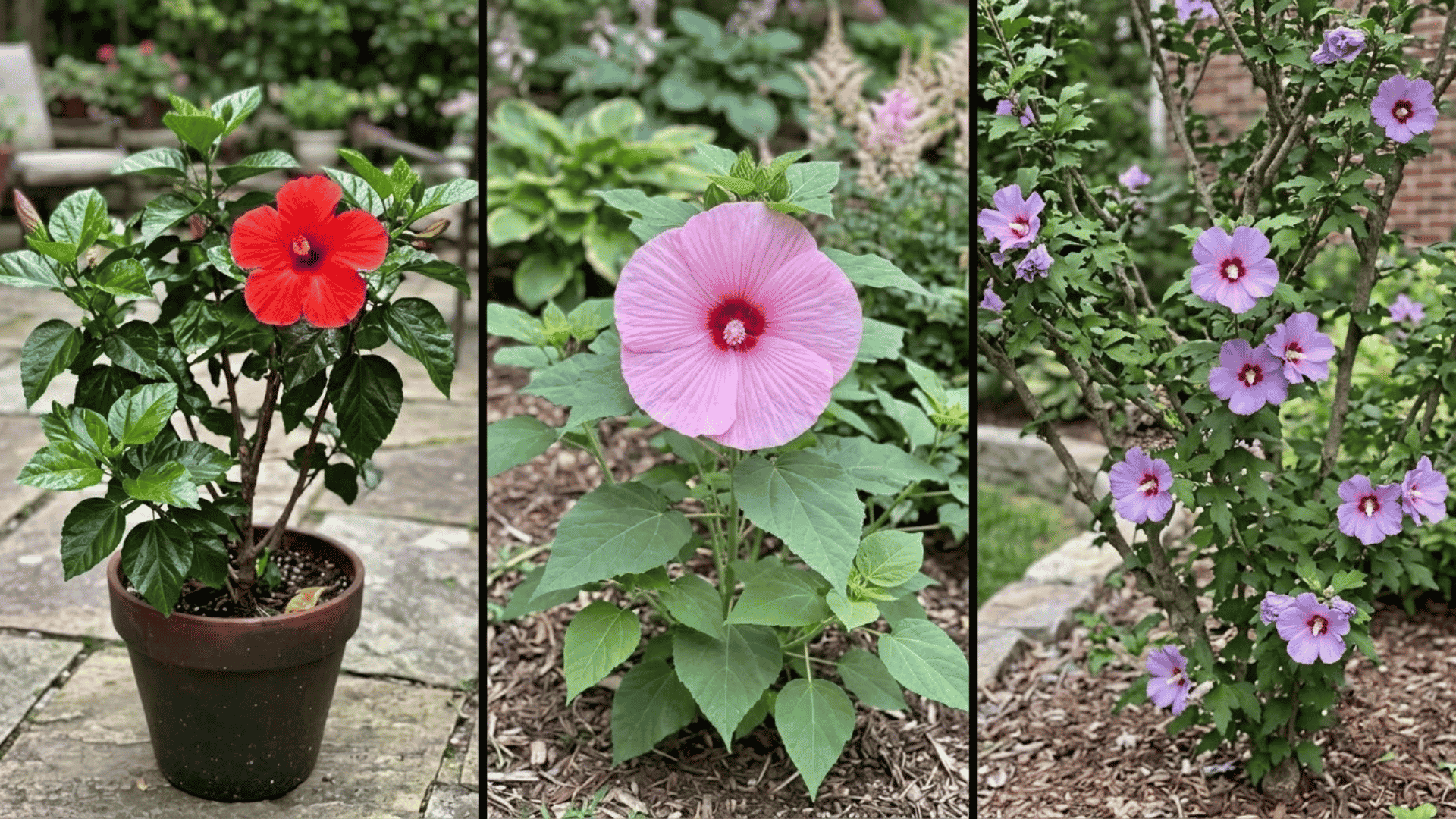

Most hibiscus care advice online treats all hibiscus the same. That is where most people go wrong. Tropical hibiscus and hardy hibiscus have completely different needs. What works for one can seriously harm the other.
Knowing your hibiscus type changes everything about how you care for it. Watering frequency, fertilizer choice, winter prep, and pruning timing all shift depending on which variety you have.
| Feature |
Tropical Hibiscus |
Hardy Hibiscus | Rose of Sharon |
|---|---|---|---|
| Foliage | Glossy, evergreen | Dies back in winter | Deciduous, woody |
| Flower Size | Medium | Very large (up to 12″) | Small to medium |
| Cold Tolerance | Very low (frost-sensitive) | High (root-hardy) | High |
| Growth Habit | Evergreen shrub | Herbaceous perennial | Woody shrub |
| Winter Behavior | Needs indoor shelter | Full dormancy | Bare branches |
| Best Setting | Containers, indoors, patio | Garden beds | Landscape, hedges |
| Dry Soil Tolerance | Low | Moderate | High |
How to Grow Hibiscus Plant

Growing hibiscus successfully comes down to matching care to your variety and climate.
Tropical hibiscus thrives in containers and needs winter shelter, while hardy varieties settle into garden beds and return each spring on their own.
Start with the right variety for your setting, give it a stable environment, and the plant does most of the work.
- Choose your variety: Pick tropical hibiscus for containers and patios, or hardy hibiscus for permanent garden beds
- Prepare the soil: Plant in well-draining, fertile soil with a slightly acidic to neutral pH
- Set the right location: Position in a spot that gets at least six hours of bright light daily
- Water correctly: Water deeply each time and always check soil moisture before the next session
- Feed during growth: Apply a balanced fertilizer every two to four weeks through the active growing season
How to Care for Hibiscus Plants

Hibiscus isn’t difficult once you understand what it actually needs. Most problems come from applying the same routine regardless of climate, pot size, or variety.
1. Give Hibiscus the Right Amount of Sunlight
Sunlight is the single biggest driver of hibiscus flowering, but the right amount depends on your climate rather than one universal rule.
Leggy stems and sparse blooms signal too little light; scorched or bleached leaves point to too much.
- Full sun suits cooler climates; filtered light or afternoon shade works better in hot regions
- Indoors, place near a south- or west-facing window for maximum light
- Acclimate container plants gradually after bringing them out of winter storage
- Adjust exposure based on leaf and flower cues, not a fixed formula
2. Water Hibiscus Deeply but Avoid Soggy Soil
Watering mistakes cause the majority of hibiscus problems. The goal is deep, thorough watering followed by a proper dry-down period.
- Check soil moisture an inch below the surface before each watering
- Water slowly across the full soil surface until it drains freely from the holes
- Empty the saucer after every session to prevent standing water
- Allow soil to partially dry before watering again
3. Use Rich Soil That Drains Well
Soil quality affects how well everything else works, from watering to fertilizing.
Container hibiscus need a loose, fertile mix – never straight garden soil – with added perlite or bark to keep water moving through freely and organic matter to retain just enough moisture between waterings.
- Use a loose, fertile potting mix; never use straight garden soil in containers
- Add perlite or bark to improve drainage and prevent compaction
- Include organic matter to support moisture retention and steady nutrient supply
- Aim for a slightly acidic to near-neutral pH for best results
4. Fertilize During Active Growth
Hibiscus feeds heavily while actively growing and blooming. Timing and formula selection matter more than frequency.
A balanced fertilizer or specialist tropical blend, applied on a diluted schedule, gives the plant what it needs without pushing excessive leafy growth at the expense of flowers.
- Use a balanced or specialist tropical fertilizer every two to four weeks during the growing season
- Keep nitrogen moderate to avoid leafy growth; prioritize potassium for roots and flower production
- Avoid high-phosphorus formulas, which can suppress blooming
- Reduce feeding as growth slows in autumn and never fertilize a dry or stressed plant
5. Maintain Suitable Temperature and Humidity
Tropical hibiscus reacts quickly to temperature shifts – bud drop, leaf loss, and stalled growth are common stress signals.
Indoor heating during winter lowers humidity significantly, and misting alone is rarely enough to compensate.
- Keep temperatures consistently above 60°F and bring plants indoors before any frost risk
- Avoid placing hibiscus near cold drafts from windows, vents, or exterior doors
- Use a humidity tray or nearby humidifier to counter dry indoor air
6. Prune Hibiscus at the Right Time
Pruning any plant, especially hibiscus, at the wrong time delays flowering by weeks, so timing matters as much as technique. Different hibiscus types follow different schedules.
Always use clean, sharp tools to reduce disease risk and make cuts that heal faster.
- Remove dead, damaged, and crossing stems first before any shaping cuts
- Prune tropical container plants in late winter; cut hardy hibiscus back after dormancy ends
- Prune Rose of Sharon hard in late winter for best results
- Pinch stem tips to encourage fuller, more branching growth
Tip: Refer to the variety table above if you’re unsure which type you have.
7. Remove Spent Flowers and Clean Around the Plant
Individual hibiscus flowers naturally last only one to three days, so debris accumulates quickly.
Regularly remove dropped blooms, damaged leaves, and surface debris to keep the growing environment cleaner and make it easier to spot pest activity early before it spreads.
- Keep the soil surface clear to reduce pest harborage and disease risk
- Check bud and leaf undersides regularly for early signs of pest activity
- Avoid removing any healthy growth during routine cleaning sessions
How Often to Water Hibiscus in Pots
Potted hibiscus dries out at different rates depending on several factors. Use this table to understand what speeds up or slows down moisture loss in your setup.
| Factor | Soil Dries Faster When |
Soil Dries Slower When |
|---|---|---|
| Weather | Hot, sunny, or windy | Cool or cloudy |
| Pot Size | Container is small | Container is large |
| Pot Material | Terracotta is porous | Glazed or plastic retains moisture |
| Plant Size | Large plant fills the pot | Small plant has more unused soil |
| Root Condition | Plant is root-bound | Roots have adequate space |
| Location | Outdoors in direct sun | Indoors with lower light |
| Season | Active summer growth | Winter growth slows |
Consistent checking protects potted hibiscus far better than any fixed schedule. Once it becomes a daily habit, you stop guessing and start responding to what the plant actually needs.
Indoor and Outdoor Hibiscus Care

Hibiscus grows well in both settings, but each comes with its own set of conditions to manage. Knowing which challenges apply to your setup helps you respond before problems develop.
1. Caring for Hibiscus Outdoors
Outdoor hibiscus benefits from natural light and airflow, but open conditions bring challenges that indoor growing avoids entirely. But with proper care, they can create a healthy outdoor oasis.
- Wind exposure: Strong wind damages stems, snaps new growth, and pulls moisture from soil far faster than heat alone
- Pot material: Terracotta dries out quickly outdoors – glazed or plastic containers hold moisture longer and need less frequent checking in summer heat
- Pest pressure: Outdoor plants attract significantly more pest activity; inspect leaves, stems, and buds at least twice a week during the growing season
- Soil temperature: Direct sun on dark or metal pots heats the root zone rapidly, stressing roots even when the air temperature feels manageable
2. Caring for Hibiscus Indoors
Indoor hibiscus faces a quieter but equally demanding set of challenges. Light quality and air circulation are the two areas that need the most consistent attention.
- Supplemental lighting: Natural window light is rarely enough in winter; a grow light positioned 6 to 12 inches above the plant fills the gap without burning foliage
- Airflow: Stagnant indoor air encourages fungal issues and spider mites; a small fan on low keeps air moving without creating a cold draft
- Even growth: Rotate the pot a quarter turn every week so all sides receive equal light, and the plant grows symmetrically rather than leaning toward the window
- Pest monitoring: Spider mites, whiteflies, and aphids thrive in warm, dry indoor conditions; check leaf undersides weekly since indoor infestations spread faster without natural predators
Common Hibiscus Problems and How to Fix Them
Most hibiscus problems look alarming but trace back to one or two fixable causes. The mistake most growers make is treating the symptom instead of finding what triggered it.
| Problem |
Likely Cause |
First Response |
|---|---|---|
| Yellow leaves |
Overwatering, cold, or nutrient shift |
Check soil moisture and recent care changes |
| Dropping buds | Temperature swing, moisture stress, or pests | Stabilize conditions and inspect buds closely |
| No flowers |
Low light or excess nitrogen |
Review daily light and current fertilizer |
| Wilted leaves |
Dry or saturated roots |
Check moisture an inch below the surface |
| Sticky leaves |
Aphids, whiteflies, or scale |
Check undersides of leaves and new growth |
| Fine webbing |
Spider mites |
Isolate, rinse leaves, use a labeled treatment |
Most problems resolve once the root cause is corrected and care is held steady for a week or two. Hibiscus recovers well when given stable conditions and time.
Tip : I always check the soil and the temperature near the plant before touching anything else. Nine times out of ten, one of those two things is the problem.
Conclusion
Hibiscus is not a demanding plant once you understand what it responds to. The problems most people face come from small gaps in care, not from anything complicated.
I find that once you stop following a fixed routine and start reading the plant and the pot, things improve quickly.
Checking soil before watering, matching conditions to your climate, and knowing your variety makes hibiscus care far more manageable than it first appears.
If you’re unsure how often to water hibiscus in pots, start with daily checks during warm months and adjust from there. Try one change at a time and give the plant a week to respond before making another.
Frequently Asked Questions
Can Hibiscus Grow In Shade?
No. Hibiscus survives in partial shade but produces very few flowers. It needs consistent bright light to bloom reliably.
How Long Does a Hibiscus Plant Live?
Tropical varieties grown indoors can last a decade or more. Hardy varieties die back each winter and return reliably from the roots every spring.
Can You Grow Hibiscus From Cuttings?
Yes. Take stem cuttings in late spring or summer. A cutting with two to three nodes roots within a few weeks in moist soil.
Is Hibiscus Safe Around Pets?
Most varieties are mildly toxic to cats and dogs. Ingestion can cause vomiting or digestive upset. Keep plants out of reach.