Where Do Household Pests Come From (And How to Stop Them)
Every pest problem has a starting point. Nothing shows up in a house by accident, ants, roaches, spiders, mice, they all arrive because something specific drew them in and something specific let them stay. Understanding where common pests actually come from makes prevention a lot more targeted than just spraying the perimeter and hoping for the best. According to EcoForce Pest Management, most calls they get trace back to one of a small handful of root causes, not bad luck.
Tracing a pest back to its actual source, rather than just treating the symptom, is what separates a problem that goes away for good from one that keeps coming back every few months.
Ants: Following a Food Trail Back Outside
Ants inside the house are almost always connected to a colony living somewhere outside, in a wall void, under a slab, or in the soil near the foundation. A few ants on the counter are scouts, and if they find something worth reporting back, a full trail will follow within hours. Cleaning up the immediate mess only removes the current signal, it does nothing to the colony sending more scouts the next day. Sealing the gap they used to get in, usually around a utility line or a gap in a threshold, does far more to stop the pattern.
Fruit Flies: A Kitchen Problem, Not an Outdoor One
Fruit flies are a great example of a pest whose source is almost always indoors rather than outdoors. They breed in anything with a thin film of fermenting residue, overripe produce on the counter, the inside of a recycling bin, or a drain that has not been cleaned in a while. A related piece on this site, where do fruit flies come from, walks through exactly how quickly a few flies can turn into dozens once they find a breeding spot, which is usually within a day or two of the right conditions showing up.
| Pest | Common Source | Fix That Actually Works |
| Ants | Outdoor colony near foundation | Seal entry gap, not just clean the trail |
| Fruit flies | Fermenting produce or dirty drains | Remove ripe produce, clean drains weekly |
| Cockroaches | Moisture and food debris | Fix leaks, store food sealed |
| Spiders | Following other insect prey indoors | Address the insects they are hunting |
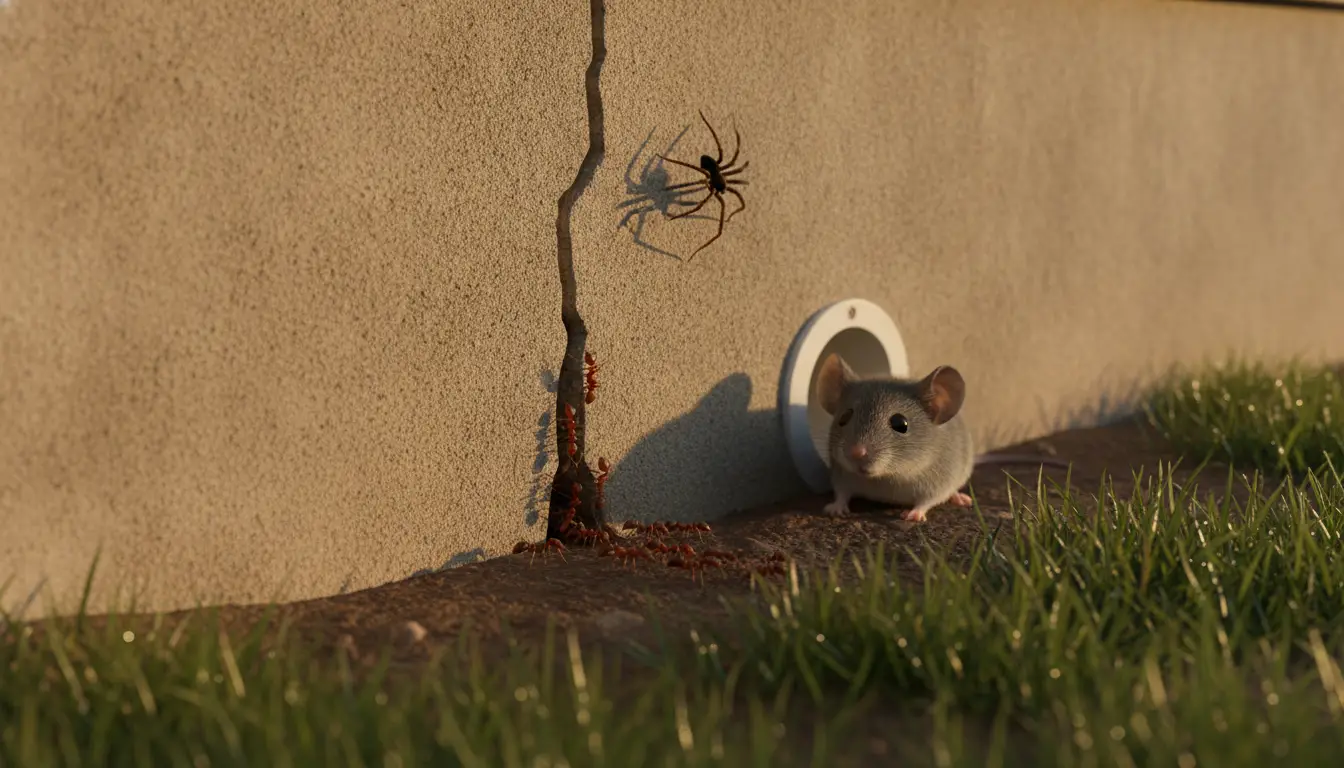
| Mice | Gaps at utility lines or foundation | Seal openings a quarter inch or larger |
Spiders Are a Symptom, Not the Real Problem
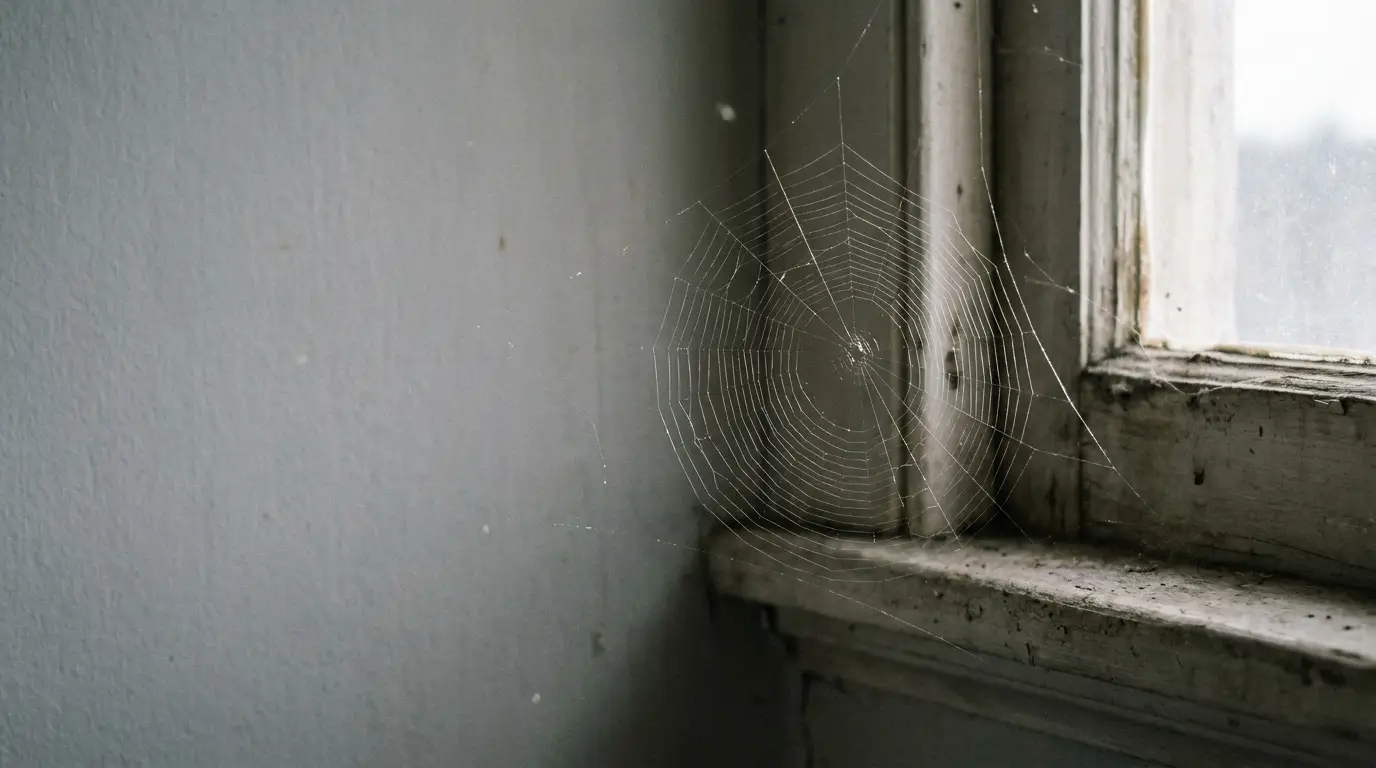
Spiders showing up inside are usually a sign of a different pest problem rather than one of their own. Spiders follow their food source, and if there are enough small insects indoors to sustain a web, that is worth investigating on its own. Reducing the insect population a house is unintentionally supporting almost always reduces the spider population that follows it, without ever needing to treat spiders directly.
Mice: Smaller Gaps Than Most People Expect
According to the Building America Solution Center, mice can squeeze through gaps as small as a quarter inch, roughly the width of a pencil, which is smaller than most homeowners assume when they are checking for entry points. Common spots include gaps around where utility lines enter the foundation, worn weatherstripping under garage doors, and vents that have lost their screening over time. A visual inspection focused specifically on these areas, rather than a general walk around the house, tends to turn up the actual opening far faster.
Treating the Source, Not Just the Sighting
The pattern across almost every common household pest is the same: something specific is drawing them in, and something specific is letting them stay. Treating only the visible sighting, wiping up ants or swatting a fly, addresses the moment but not the underlying cause, which means the same problem tends to resurface within weeks. Tracing the actual source takes a little more effort upfront, but it is the difference between a pest problem that gets solved and one that just gets managed on repeat.
This same logic applies across every pest listed above. A colony feeding an ant trail does not disappear because the counter got wiped down. A drain feeding fruit flies does not clear itself because the fruit bowl got emptied once. Finding the actual source usually takes a slightly closer look than most people expect, checking under sinks, behind appliances, and along the foundation rather than just where the pest happened to be spotted, but it is the only approach that actually breaks the cycle instead of restarting it every few weeks.
For lasting results, pair source-focused fixes with scheduled professional support. Safeguard your home with year-round pest control from All American Pest Control for consistent, dependable protection.