
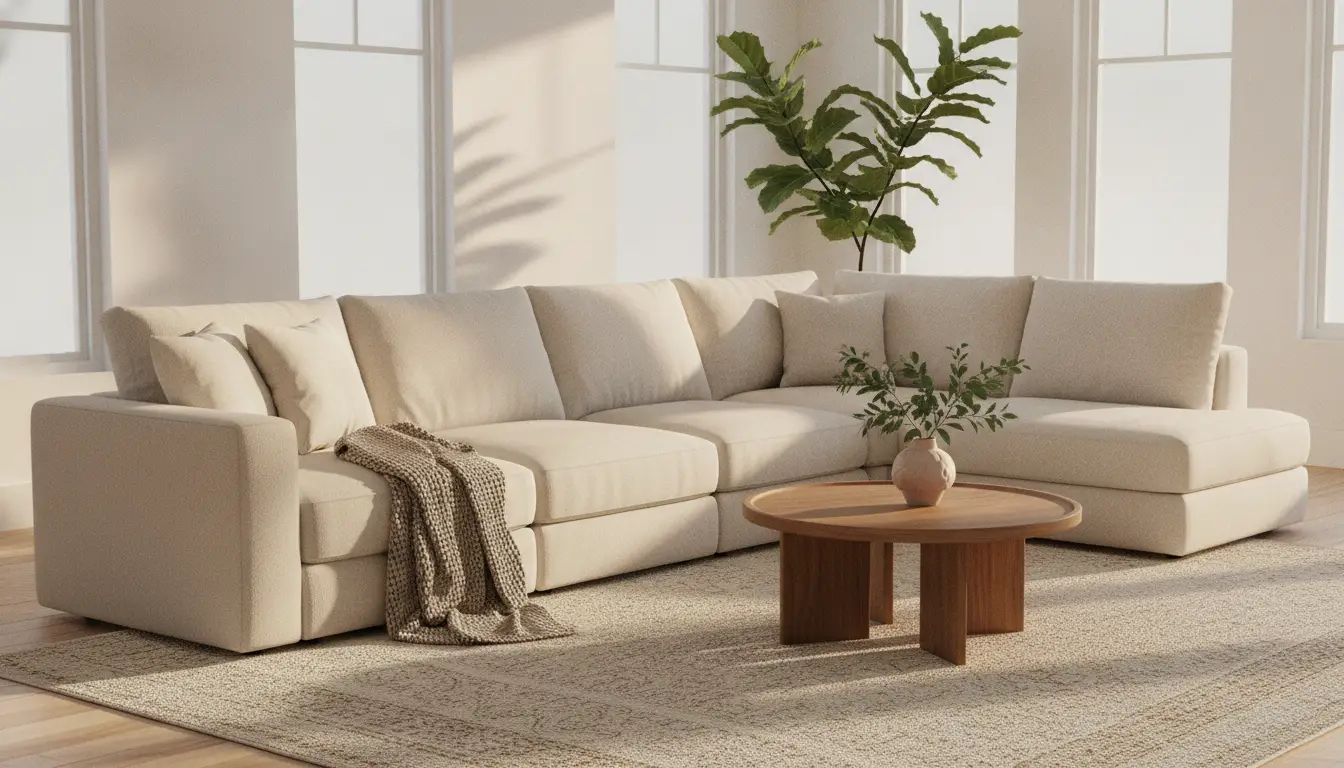
The Modular Sectional Sofa, Made for How You Really Live
Living rooms rarely stay the same. Families grow, roommates come and go, apartments get swapped for houses, and the way we relax shifts with every phase. A traditional fixed-frame couch cannot keep up with that kind of movement, which is why the modular sectional sofa has quietly become the most practical seating solution in modern homes. It is built to bend around your life instead of forcing your life to bend around it. Rearrange pieces for a movie night, split them apart for a party, or reshape the layout entirely after a move. This guide takes a direct look at what a modular sectional really offers, how to choose one that lasts, and where it fits best. No fluff, no filler, just the essentials that make this style of seating worth the space it takes.
What Makes a Sofa Truly Modular
The word modular gets used loosely, so it helps to define it clearly. A modular sectional is built from independent, self-contained sections that connect through clips, brackets, or interlocking rails. Each piece functions on its own as an armless chair, a corner, an ottoman, or a chaise. When linked together, they form a unified seating surface without the compromises of a permanent frame. That means you can start with a compact three-piece configuration in a starter apartment and expand into a wraparound layout when you eventually move somewhere larger. The frame does not go to waste, and nothing needs to be replaced.
The appeal is not only flexibility. Modular construction also makes delivery, assembly, and future repairs far easier. Individual sections fit through narrow doorways and up tight staircases where a bulky one-piece couch would never survive. If a cushion cover fades or a section takes heavy wear, that single piece can be swapped or reupholstered without replacing the entire sofa. For anyone who has ever regretted a bad furniture purchase, this kind of adaptability is a quiet form of insurance. It also lowers the emotional cost of decorating decisions, because nothing about the layout is truly locked in. The couch you buy today is the same couch you can reshape three years from now when the room, the household, or your taste has moved on.
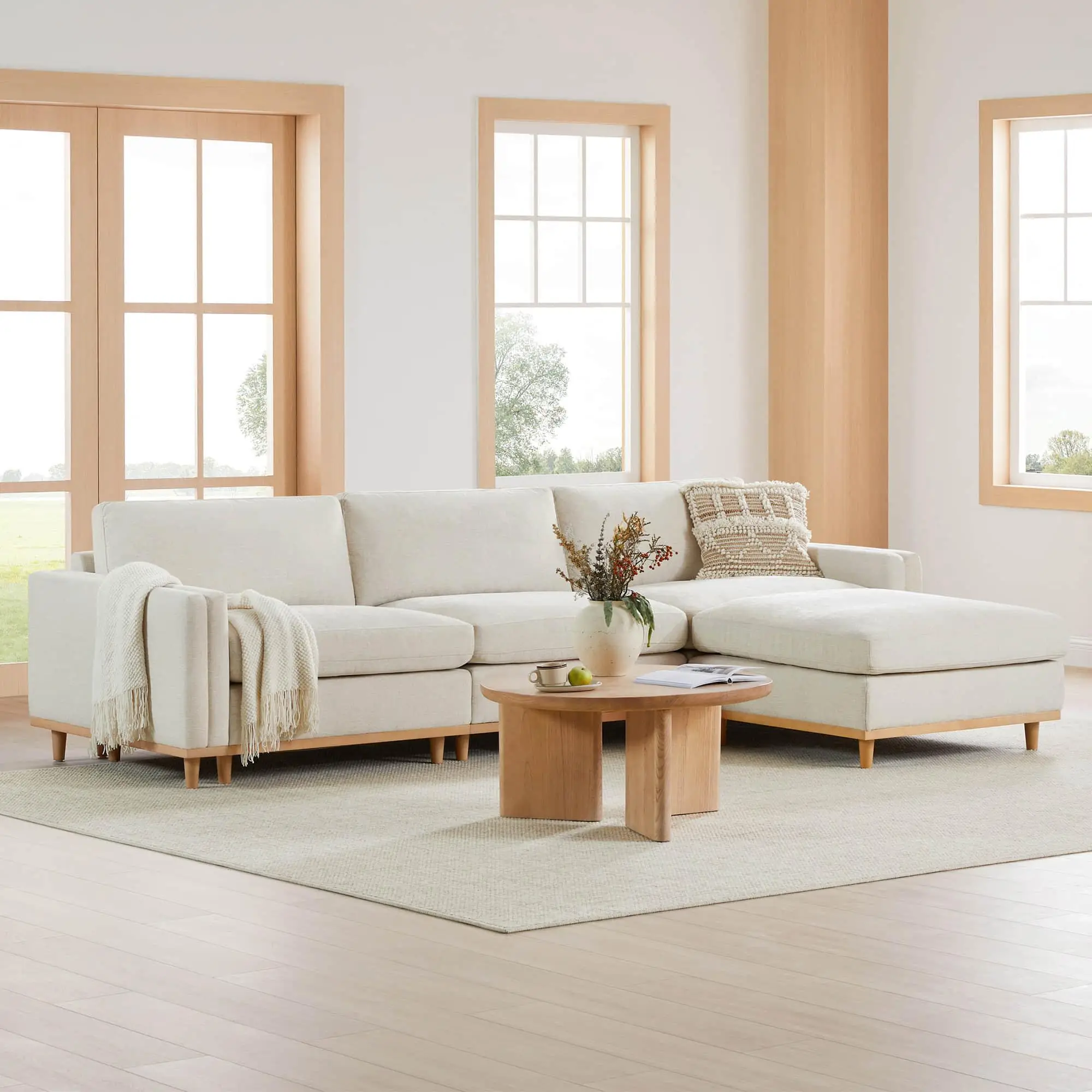
Before diving into shapes and fabrics, it helps to understand why the category has grown so quickly. Renters who move often need furniture that travels well. New homeowners want pieces that grow with them. Multigenerational households need seating that flexes for different bodies and different moods. A well-chosen modular sectional sofa answers all of those needs at once, which is why it has moved from a niche category into the default choice for many living rooms.
Choosing the Right Configuration
Configuration is where most buyers get stuck. The core shapes are straightforward once you break them down. An L-shape uses a single chaise or corner piece and works well against two walls or in an open-plan room where you want a natural boundary between the lounge and the kitchen. A U-shape adds a second chaise or return, creating a conversational pit that suits larger families and frequent hosts. A pit or island layout ignores walls entirely, floating in the middle of the room to create a dedicated gathering zone.
The right choice depends less on square footage and more on how you actually use the space. Measure the room, then map out the sofa footprint with painters tape on the floor. Walk the path from the doorway to the windows. Sit on the tape line and imagine reaching for a coffee table. If the tape blocks a walkway or crowds a media unit, adjust before you buy. Most modular systems let you add or remove one section without redesigning the whole layout, so err toward a slightly smaller starting configuration and grow into it. It is much easier to add a piece later than to reckon with a sofa that swallows the room the day it arrives.
Depth matters just as much as length. Deeper seats, sometimes called overstuffed or lounge depth, invite lying down and encourage a more casual posture. Standard-depth seats support upright sitting and work better for conversation-heavy households. If you cannot decide, look for systems that offer both depths within the same collection, so different sections can serve different purposes. A shallower end for reading and hosting, a deeper corner for weekend movie marathons, all inside one continuous silhouette. Height of the seat from the floor is worth checking too, because it affects how easily children, older family members, or shorter guests can settle in and rise again without effort.
Materials, Cushions, and Long-Term Comfort
The frame is the part you never see, and it is the part that decides how long your sofa lasts. Kiln-dried hardwood frames with reinforced corner blocks outperform composite alternatives by a wide margin. Suspension systems matter next. Sinuous springs offer firm, resilient support, while webbed or eight-way hand-tied systems produce a softer, more traditional feel. Neither is objectively better, but you should know which you prefer before you buy. Sit on a few examples in person if you can, and pay attention to how the seat responds after you stand up. A well-built suspension recovers immediately. A tired one leaves a lingering dip.
Cushion fill is a personal decision. High-resilience foam holds its shape and springs back quickly, which suits people who dislike the sunken look that develops on softer couches. Feather-and-down blends deliver that iconic sink-in feeling but require regular fluffing to stay tidy. Hybrid cushions with a foam core wrapped in feather offer a middle path and have become the standard for premium modular systems. If your household includes long readers, afternoon nappers, and upright conversationalists in equal measure, hybrids tend to keep the widest group content without leaning too far in any direction.
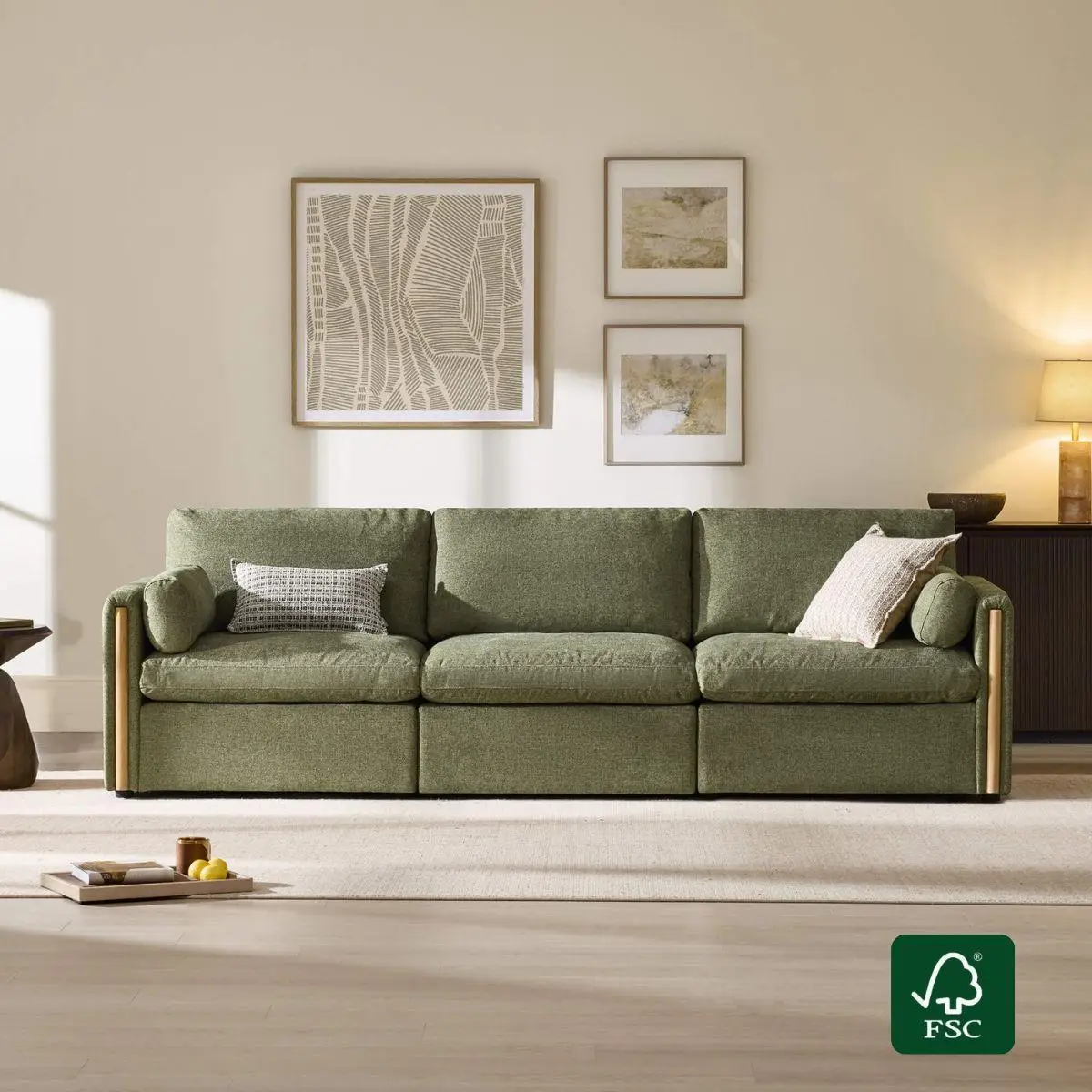
Upholstery is where lifestyle enters the equation. Performance weaves and boucle blends resist spills and pet claws better than pure linen or velvet. Chenille adds warmth and texture without sacrificing durability. Leather ages beautifully but demands conditioning and a stable indoor climate. If children, dogs, or frequent guests are part of the picture, removable and washable covers save a lot of grief. Brands like CHITA LIVING have built entire collections around this idea, pairing hardwood frames with cover systems that unzip for cleaning, which is the kind of small engineering choice that pays off after the first spilled glass of red wine. Color choice deserves the same honest thinking. A lighter, brighter tone looks fresh in showroom photos but demands more upkeep in a busy home, while mid-tone neutrals hide daily life without dulling the room.
Making the Sofa Work in Small Spaces
Modular does not automatically mean massive. Some of the most useful configurations live in studios and one-bedroom apartments. A two-piece armless plus chaise setup gives the visual weight of a proper sectional without stealing the room. Look for sections with hidden storage under the seat cushions, which quietly absorb throws, extra pillows, and streaming remotes. Ottoman pieces that double as coffee tables or guest sleepers punch far above their weight in tight square footage.
Placement tricks also help. Floating the sofa a few inches from the wall creates a visual pocket that makes a small room feel intentional rather than crammed. Choosing a lifted wood base instead of a skirted frame lets light travel underneath, which visually lightens the entire piece. Pale upholstery in a compact space keeps the mood open, while a deeper tone in a large room grounds the layout without shrinking it. A well-placed rug that anchors the front legs of every section ties the layout together and makes even a modest configuration read as a proper composed room rather than a collection of pieces set down at random.
Care That Extends the Lifespan
A modular sofa rewards a little regular attention. Rotate seat and back cushions weekly during the first few months to break in the fill evenly. Vacuum with a soft brush attachment every couple of weeks to lift dust before it embeds in the weave. Address spills within minutes rather than hours, blotting rather than rubbing. Check the connectors between sections every few months, especially after moves or vigorous use, and tighten anything that has loosened. These small habits keep a modular system looking assembled and intentional rather than drifting into the disheveled look that pulls the whole room down. Keep the sofa away from direct, unfiltered sunlight when you can, since even the most durable upholstery will fade unevenly if half of it lives in a sunbeam and the other half sits in shadow.
Seating That Grows With Your Life
A modular sectional is not just a couch with extra parts. It is a rethink of what living-room seating should do over the long arc of a home. When the layout of your space changes, the sofa changes with it. When one section wears faster than the others, that piece alone can be refreshed. When the household expands or contracts, the configuration adjusts without a full replacement. That kind of longevity is rare in furniture, and it is the reason this category continues to reshape how people furnish their homes. Pick a configuration that matches how you actually live, insist on a solid frame and thoughtful upholstery, and the sofa will keep earning its place in the room for many years to come.


