What Does a Professional Mold Remediation Services in Raleigh, NC Include?
Mold problems rarely announce themselves. By the time you spot a dark stain on a wall or catch that musty smell drifting up from the crawl space, the colony has typically been growing for weeks. Raleigh’s humid, subtropical climate leaves homes here especially vulnerable after storms, plumbing leaks, or poor attic ventilation, and knowing what professional mold remediation services in Raleigh, NC actually include helps you ask sharper questions before you hire anyone.
Here are six things a qualified remediation company should deliver from start to finish.
Initial Inspection and Mold Assessment
A reputable company doesn’t start work with a guess. The first step is a structured inspection that maps every affected area, not just the visible patches on a surface. Technicians check wall cavities, subfloor materials, HVAC ducts, and insulation, because mold spreads along moisture pathways that aren’t always visible to the naked eye. Moisture meters and infrared cameras are commonly used to find hidden wet zones that standard visual checks miss, an approach used by https://www.summitmoldremediationnc.com/ and similar companies. That kind of technology is worth watching when comparing companies. Air sampling and surface swabs collected during the inspection go to a certified lab, and those results shape the entire remediation plan. Skip this step, and workers risk leaving behind colonies that rebound within weeks.
Containment of the Affected Area
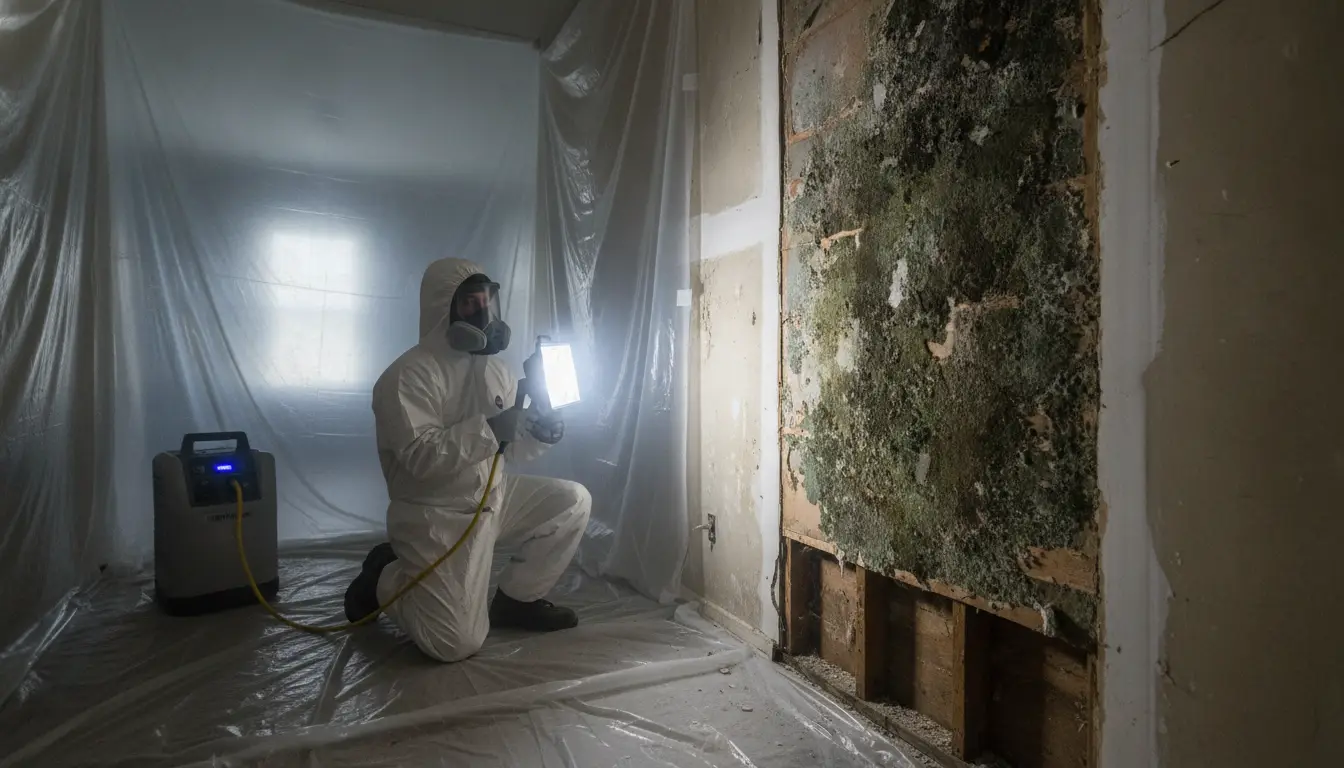
Once the scope of the problem is clear, stopping spores from migrating into unaffected parts of your home becomes the immediate priority. Professionals set up physical containment using heavy-gauge plastic sheeting that seals doorways, vents, and any other openings between the work zone and the rest of the living space. Negative air pressure machines run continuously inside that contained area so air flows inward rather than outward. This detail really does matter. If a contractor skips containment or puts up flimsy barriers, agitation during cleanup can push millions of spores into your HVAC system, your furniture, and your lungs. Proper containment is one of the clearest signals that a company follows IICRC standards rather than racing through the job.
Air Filtration and HEPA Scrubbing
Mold remediation stirs up airborne spores even under the best conditions; that’s just the reality of the work. Professional crews run HEPA-filtered air scrubbers throughout the entire process, not just at the end. HEPA filtration captures particles as small as 0.3 microns, which covers the full range of mold spore sizes found in residential environments. Air scrubbers cycle the air inside the containment zone multiple times per hour, pulling contaminated air through a series of filters before exhausting it outside the structure. Some companies also deploy negative air machines that exhaust directly to the exterior through a window or duct. But the combination of containment plus continuous air scrubbing is what keeps spore counts manageable for workers while protecting occupants who may be in adjacent rooms during a multi-day project.
Mold Removal and EPA-Registered Treatment
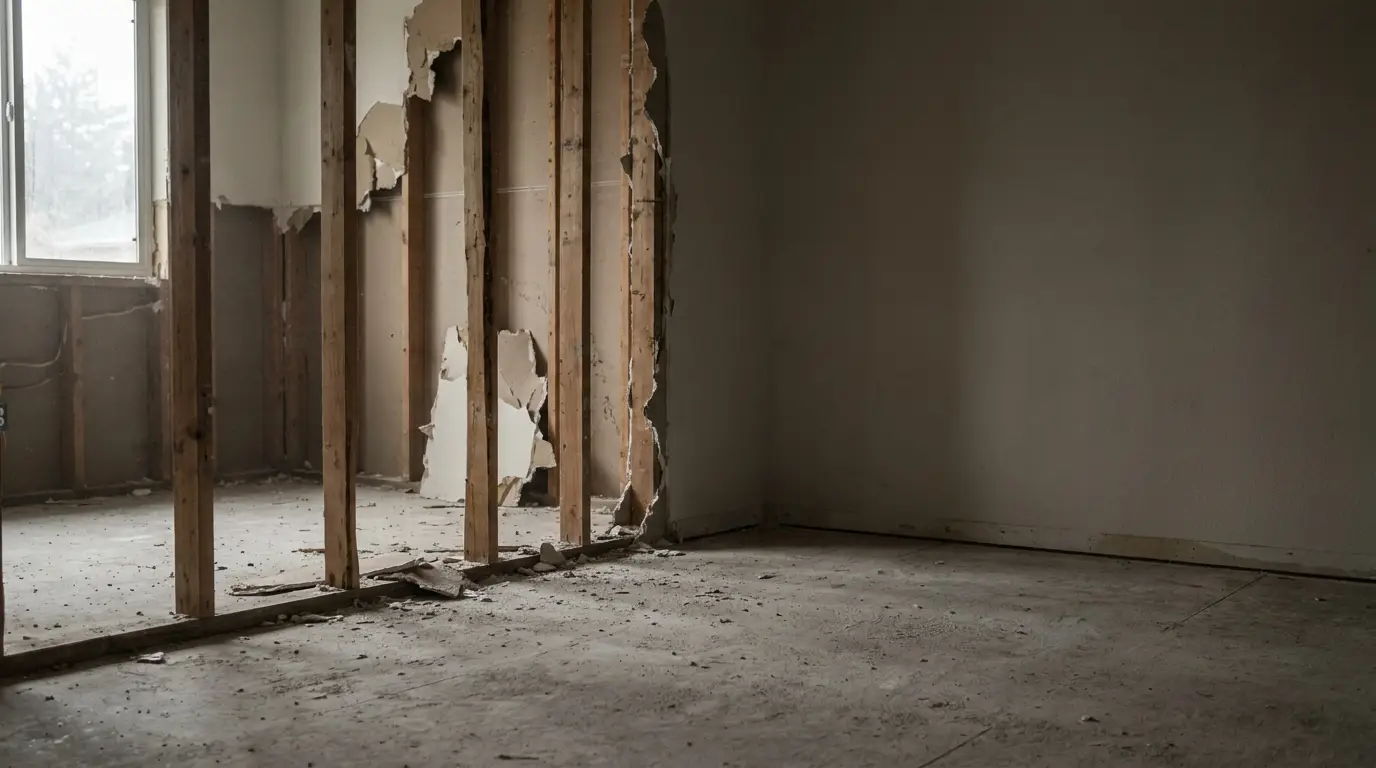
Physical removal is where the real work happens. Porous materials, drywall, insulation, and carpet that are saturated with mold growth can’t be cleaned; they need to come out entirely, disposed of in sealed plastic bags according to local waste guidelines. Non-porous and semi-porous surfaces like concrete blocks, wood framing, and tile get scrubbed mechanically and then treated with EPA-registered antimicrobial products. These treatments kill active mold and leave behind a surface that resists re-colonization. Bleach alone doesn’t meet this standard on porous materials, even though it’s still marketed that way in plenty of DIY guides. Professional-grade biocides penetrate deeper and carry the regulatory approval that bleach products simply don’t hold for remediation applications.
Moisture Source Identification and Repair
Here’s the thing: removing mold without fixing the moisture problem that caused it is like mopping the floor while the faucet’s still running. Any professional mold remediation service worth hiring treats source identification as non-negotiable. Technicians trace moisture back to its origin, whether that’s a slow roof leak, a failed vapor barrier in the crawl space, condensation from an oversized air conditioner, or a cracked foundation wall. In some cases, the company handles minor repairs in-house; in others, they document the source clearly and coordinate with a plumber or waterproofing contractor. Either way, you walk away with a written explanation of what caused the mold and what needs to happen to keep it from coming back. And that documentation carries real weight for insurance claims and property disclosure purposes.
Post-Remediation Clearance Testing
The job isn’t finished when the containment comes down. Clearance testing is the final confirmation that the remediation actually worked; an independent inspector, or sometimes the same company using separate personnel, collects air and surface samples from the treated area and compares the results against pre-remediation baseline data and exterior control samples. If spore counts fall within acceptable ranges and no active growth is visible, the area receives a clearance certificate. That document matters enormously if you’re selling a home, filing an insurance claim, or renting out a property. Some contractors skip this step to close jobs faster. But without clearance testing, you’ve got no objective proof the work succeeded; you won’t know a problem colony was left behind until it becomes visible again.
Conclusion
Professional mold remediation services in Raleigh, NC go far beyond spraying a surface and calling it done. A thorough process covers inspection, containment, air filtration, physical removal, moisture correction, and documented clearance testing, each step building on the last. So if a quote you receive doesn’t mention all of them, ask why before you sign anything.