Washing Machine Buying Guide: How to Choose the Right Capacity
Modern washing machines are packed with features that all seem to be designed with a single goal in mind: making doing laundry a whole lot less of a chore. Between the quick wash cycles and steam functions to smart controls and energy-saving gizmos, today’s machines can do a lot to save you both time and elbow grease. Sure, all these advances can make a real difference, but when it comes to buying a new machine, there’s one factor that beats them all: getting the right size for your household.
Whatever how fancy a washing machine might be, it won’t perform anywhere near its best if it’s just too small for what you need it for. A drum that’s all too small will leave you running around doing multiple loads a week, and on the other hand, a drum that’s too large is just wasting water and energy on smaller washes. Getting it just right gives you cleaner clothes, greater efficiency, and better value in the long run.
But how do you figure out the right size of machine to go for? Well, it’s not rocket science. It all depends on a few factors, such as how big your household is, how often you do laundry, and just what you wash most often. Whether you’re just replacing an old machine or upgrading to something bigger, here is how to go about finding the right washing machine capacity for your laundry needs.
Work Out the Right Capacity by Household Size
One of the easiest ways to start whittling down your options is to think about how many people live in your home. For most singles or couples, a 6kg to 8kg washing machine is usually enough for the usual everyday clothes and towels. But for households with three or four people, it’s usually an 8kg to 9kg model that you are going to find works best. This size is big enough to cope with those bigger weekly loads.
If you have a family of five or more, or have a tendency to wash bedding frequently, or simply want to tackle more laundry in one go, then a larger washing machine of 10kg can be the way to go. A larger drum lets you wash bigger loads without overcrowding the machine, and helps the clothes get a cleaner wash by being able to move freely inside the drum.
Washing Frequency – Do You Wash Little & Often or Less Often
Your laundry routine matters almost as much as the size of the household you’re washing for. Some people prefer to wash small loads at a time while others let it pile up and do a big load or two at the weekend.
If you’re one of those busy beavering people who get their washing in nearly every day, then you might be able to get away with a smaller capacity as there’s just not time for clothes to build up and overflow. But if, on the other hand, you have a fairly relaxed schedule and just like to do fewer but bigger loads, then a bigger drum can be a real lifesaver. Instead of having to split lots of loads into multiple cycles, you can get a whole heap more in at once and knock them all out in one go.
The point is, think about your daily life and choose a capacity that fits in with your routine – rather than the other way round.
What You Wash Most Often – Everyday Clothes or Big Items
The type of laundry you do is also important. Everyday clothes take up relatively little room, but bulky items can quickly fill an entire drum. If you’re one of those people who regularly washes things like duvets, blankets, towels, pet bedding, sports gear or your heavy winter gear, you’ll really benefit from having a bigger capacity. That’s because these kinds of items need loads of room to be able to move around in the wash so that water and detergent can get right into the fabric. Overloading the drum can be a disaster – it reduces cleaning performance and puts a load of strain on the machine.
A washing machine of 10kg gives you a load of flexibility. You can wash both your daily stuff and the bigger household items without having to do a trip to the laundrette or breaking them into loads.
Measuring Up Before Buying
Before deciding on drum capacity, make sure the machine will actually fit in where you are going to put it. Although many larger-capacity models have similar dimensions to standard machines, this isn’t always the case.
Take a tape measure to the spot where you’re planning to put it and measure the width, height and depth. Don’t forget to leave room for the door to open fully and behind it for water hoses and ventilation, as well as enough clearance to get the machine in place. It’s a bit of a pain to take these measurements before you start shopping, but it’s much less of a pain to do that now rather than when your new washing machine arrives, and you have to send it back because it’s too big!
Front-Load Washers vs Top-Load Machines
The type of washing machine you buy will also affect the size of the machine that’s right for you.
Front-loading machines are a favourite in UK homes. They usually come with bigger capacities, use less water and generally cost less to run, so they’re a good fit if you often need to wash big loads. This makes them pretty ideal for households thinking about a 10 kg washing machine.
Top-loading machines are pretty handy if you struggle bending down, and you can pop stuff in the wash even if you forget it. However, they usually don’t have as many high-capacity options and can take up more space in kitchens or utility rooms.
If it’s all about washing big loads efficiently and keeping the cost down, a front-loading model is usually worth the investment.
Other Things to Think About When Buying a Washing Machine
Choosing the right capacity is just one part of the puzzle; there are loads more things to think about when buying a washing machine.
Energy efficiency is definitely worth considering, especially if you use your washing machine a lot. More efficient models use less electricity and water, which can save you cash in the long run. Look for models with top energy ratings and eco-friendly wash programmes.
Wash programmes are also something to think about. Different fabrics need different care, so things like delicate cycles, quick washes and programmes for sports kit or clothes that get dirty really quickly are really useful. Having a selection of different settings can get your clothes cleaner and make them last longer.
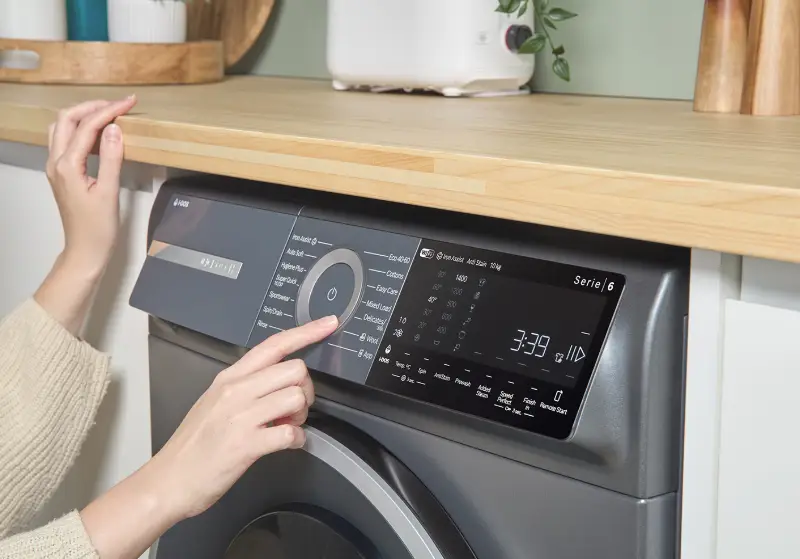
New washing machines also offer smart features such as apps to control the machine, delayed starts and notifications when the cycle’s done. These can be super useful if you lead a busy life and want just a bit more control over your washing.
Noise levels are also worth considering, especially if your washing machine is going to be near living areas. A quieter model with a low-noise motor will make a difference day-to-day.
Lastly, have a look at features like steam cleaning, load sensors and programmes for removing tough stains. They’re not always a must, but they can add a bit of convenience and help you find a washing machine that fits in with your lifestyle.