Large Concrete Pavers for High-Traffic Outdoor Spaces
Designing heavy-use outdoor areas requires balancing aesthetic ambition with uncompromising physical resilience. Standard surfacing materials frequently fail under the constant weight of foot traffic and vehicles, resulting in early cracking and shifting.
Specifying large concrete pavers gives architects and asset managers a sophisticated way to handle these structural demands while elevating the surrounding landscape. By opting for expansive formats, you create a surface capable of enduring rigorous daily usage without losing its premium appearance.
How Broad Dimensions Handle Heavy Structural Loads
The core structural advantage of these oversized paving slabs ultimately comes down to basic engineering. When a heavy delivery vehicle or a dense crowd moves over small paving blocks, the weight concentrates on a tiny surface area. This localised pressure forces individual pieces to tilt, sink, or wrench free from the jointing sand underneath. Before long, you are left with a thoroughly uneven, hazardous path that requires immediate, expensive remediation and regular re-levelling.
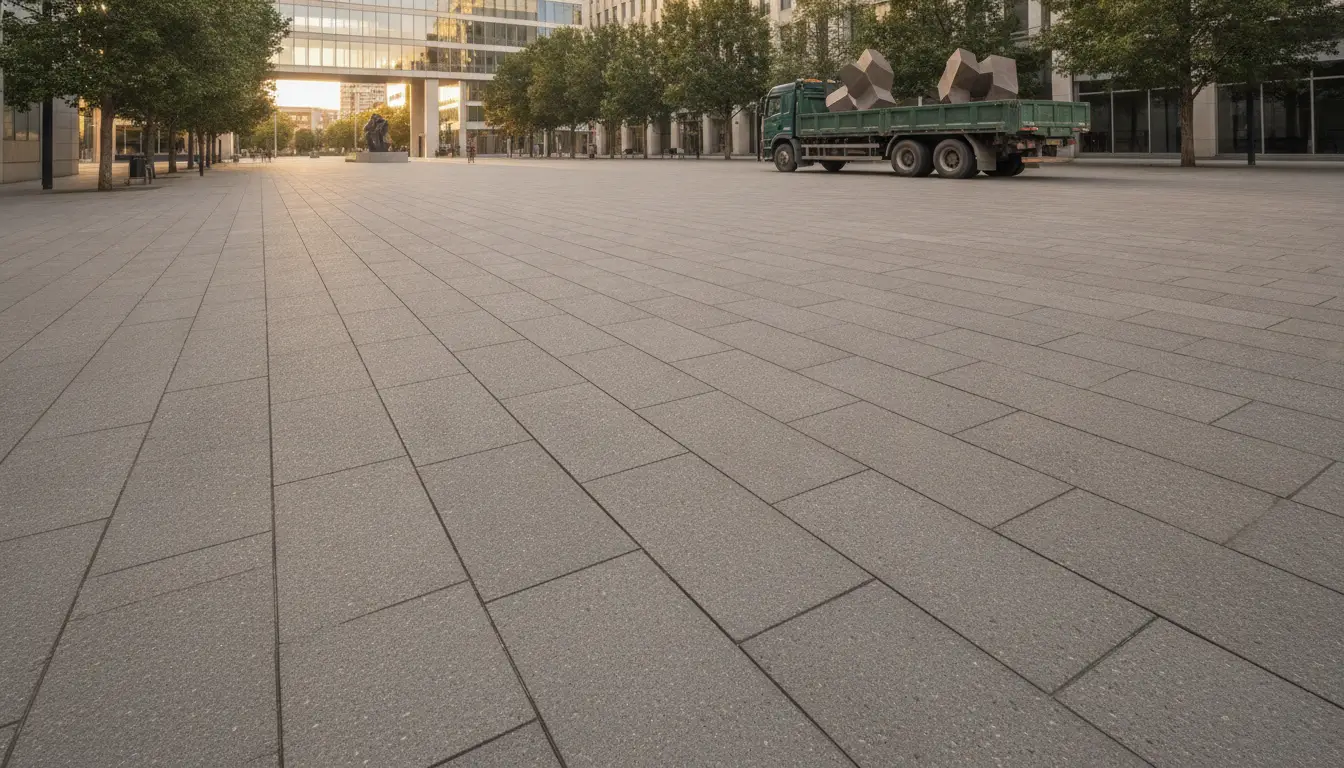
Expansive units counter this vulnerability by spreading the load over a significantly wider footprint. By lowering the pressure exerted on the underlying sub-base, these units resist the rutting and shifting that routinely destroy traditional brick paths. This makes them ideal for civic squares, busy retail precincts, and commercial driveways that must tolerate relentless, heavy traffic without structural failure.
Streamlining Maintenance by Reducing Joint Lines
Beyond pure structural strength, the long-term operational viability of any busy public space relies on how easily it can be properly maintained over time. Every single joint between pavers represents a structural weak point. Joints invite opportunistic weed growth, allow ants to mine the bedding sand, and let surface water seep into the foundation, where it gradually erodes the sub-base layer.
Choosing larger dimensions fundamentally changes this dynamic by reducing the total linear metres of joints across a site footprint. Fewer gaps mean far fewer places for weeds to take root and less jointing compound lost during routine pressure cleaning. This continuity protects the integrity of the entire pavement, ensuring the surface stays clean and safe. Ultimately, investing in wider profiles cuts down on recurring maintenance budgets, since you are eliminating the specific vulnerabilities that usually demand constant attention.
Achieving Contemporary Scale Through Cleaner Visual Planes
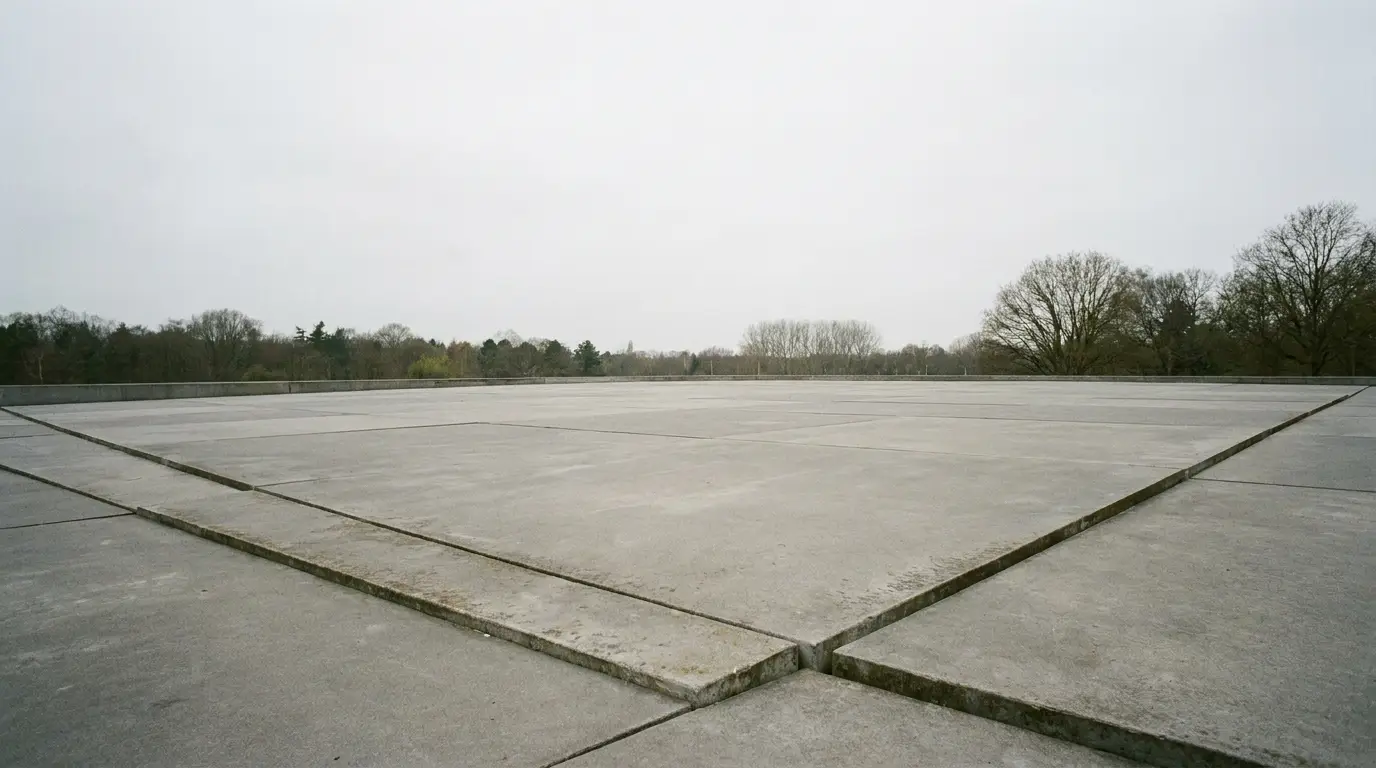
Modern landscape architecture heavily favours clean lines, minimalism, and a fluid connection between architectural structures and their surroundings. Traditional, small-scale pavers often produce a frantic, fractured visual matrix of intersecting lines that can clutter an otherwise elegant design and distract from the broader architecture.
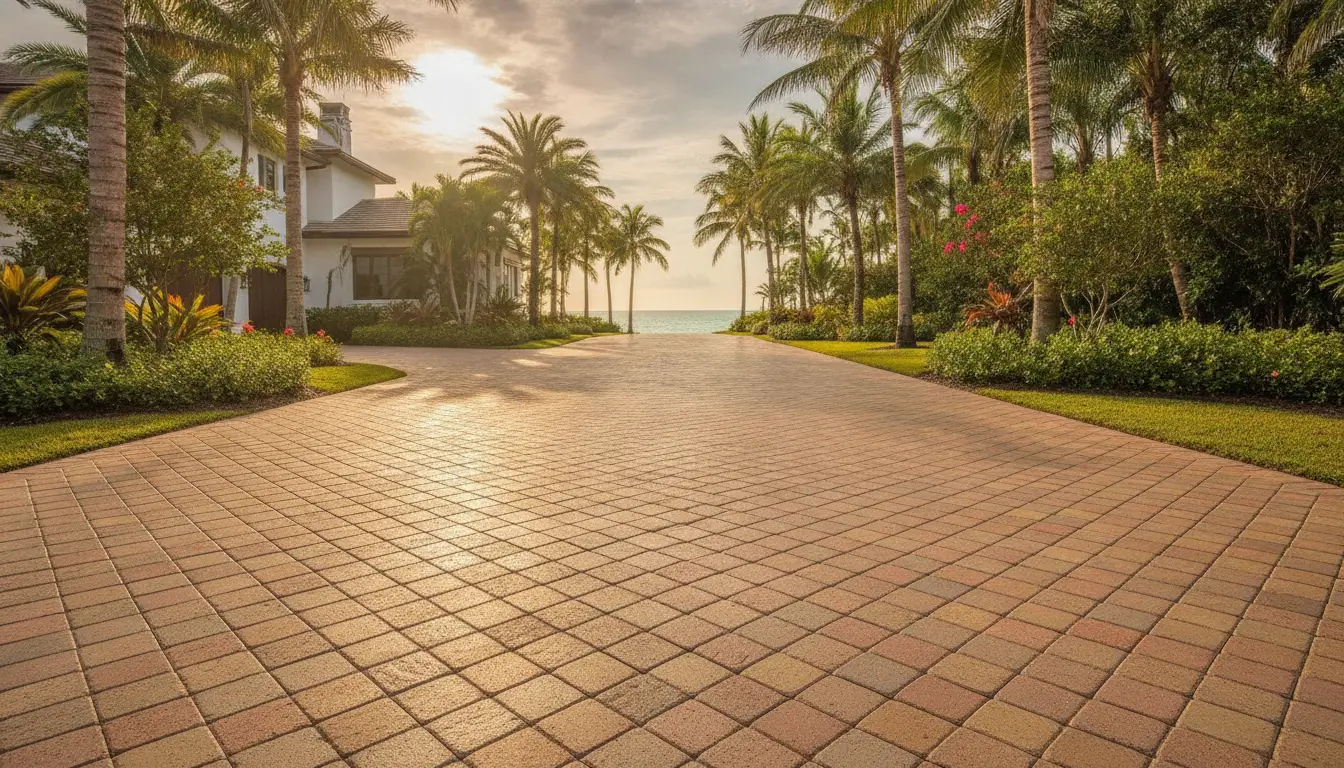
Larger formats avoid this pitfall by offering vast, unbroken planes of texture and colour. They possess a remarkable ability to alter spatial perception, making tight courtyards feel open and expansive, while bringing a sense of order to vast corporate forecourts. When you use a grander scale, the natural aggregates and refined finishes of the concrete material become the focus, rather than a distracting web of grout lines.
Improving Pedestrian Safety and Accessibility in Public Spaces
For local councils, civil contractors, and property managers, pedestrian safety is a primary risk factor that cannot be ignored. Uneven paths are notorious trip hazards, frequently leading to personal injury claims and costly legal liabilities. Because larger paving slabs are heavy and distribute weight efficiently, they are far less susceptible to the individual rocking and shifting common to smaller units.
This structural stability results in an inherently flatter, much safer walking surface underfoot for daily commuters. Furthermore, reducing the frequency of joints provides a much smoother journey for wheeled traffic like prams, wheelchairs, and delivery trolleys. Meeting modern accessibility standards becomes remarkably straightforward when the ground plane is entirely uniform, ensuring public domains remain welcoming and accessible for everyone.
Final Thoughts
Specifying materials for high-traffic environments requires a perspective that looks far beyond initial installation outlays. Long-term performance, safety, and visual endurance must dictate the final choice. The structural resilience, lower maintenance demands, and refined aesthetics of these large-format solutions represent a deeply practical investment for ambitious projects.
By bridging structural engineering necessity and modern architectural style, they deliver a highly durable foundation that consistently preserves both its utility and its premium character for many decades to come.