What a Hills Renovation Really Costs and Why the Smart Money Knows the Number First
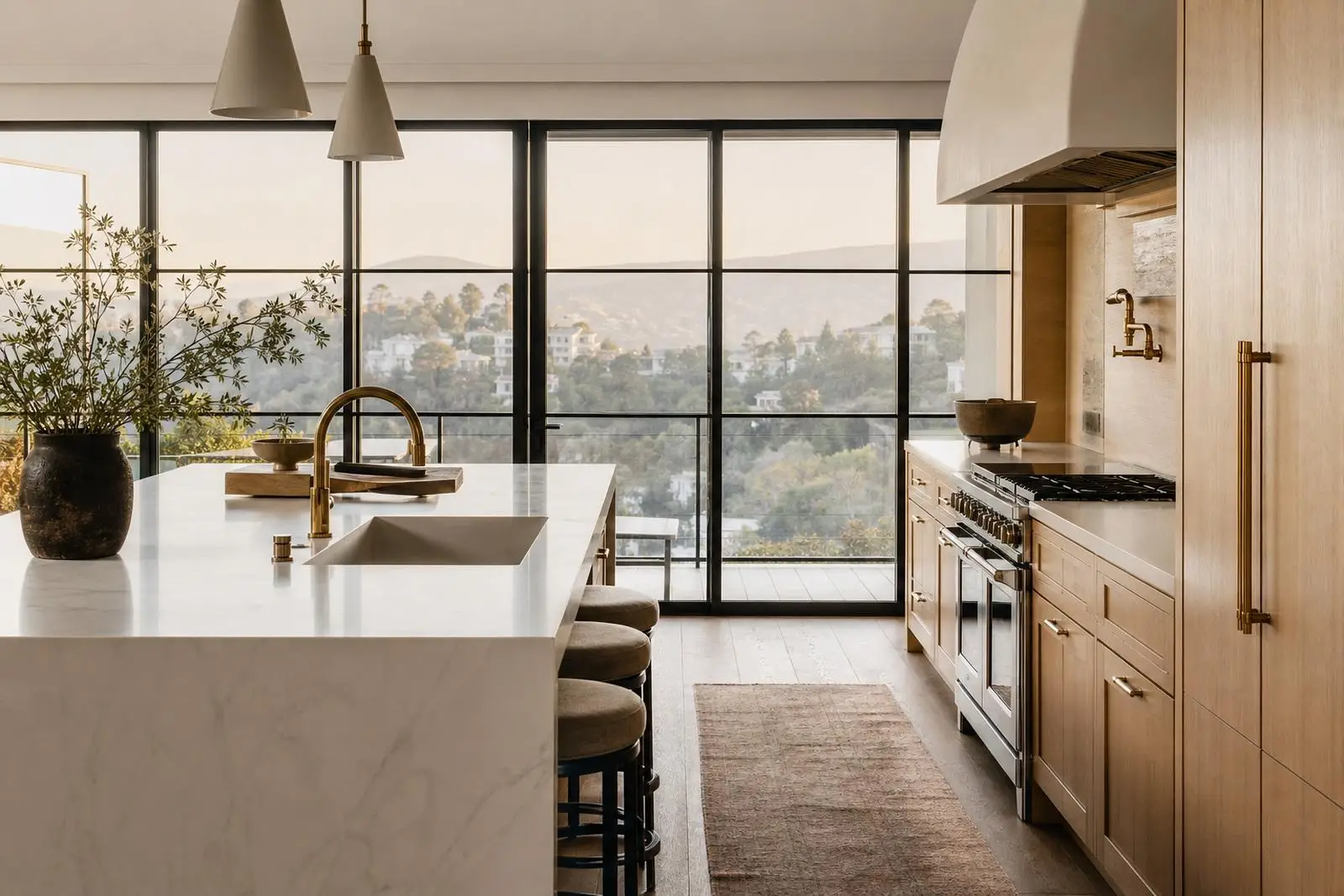
It usually starts with a saved photo. A kitchen with a marble island the size of a small boat, light pouring through steel-framed glass, a view of the canyon doing half the decorating. You show it to a contractor, he nods, he says he can do it, and somewhere in that nod is a number neither of you has said out loud yet. Six weeks later the number arrives, and it is nothing like the one in your head.
Here is the one that should have been in your head: a kitchen renovation in the Los Angeles hills typically costs between $51,000 and $115,000 in 2026, and most canyon and ridge homes land in the upper half of that range. A spa-style bathroom runs $28,000 to $65,000. Add an ADU on a sloped lot or an outdoor room built for the view, and you are comfortably into six figures. Those ranges are wide because real projects are wide. The expensive mistake is not the size of the number. It is finding out where you land only after a contractor is already standing in your kitchen with a tape measure.
That timing is backwards, and on a hillside it is brutal. The price tends to show up late, after the design boards, after the demolition, at the exact moment you have the least leverage and the most pressure to just say yes. Seeing the real range before any of that begins is the single biggest advantage you can hand yourself. That is the whole idea behind Renology, an independent renovation magazine built on one stubborn belief: a family should be able to see the number first. Here is how that plays out for a home in the hills.
Key Takeaways
- A Los Angeles hills kitchen renovation costs about $51,000 to $115,000 in 2026; hills homes usually fall in the upper half.
- A hills bathroom runs $28,000 to $65,000, and an ADU or garage conversion runs $165,000 to $415,000 on a sloped lot.
- California renovation in 2026 runs roughly 10 to 30 percent above national averages, with West Los Angeles and the Bay Area at the very top.
- Hills homes cost more because of three things flat lots avoid: difficult access, grading and structural work, and stricter hillside permitting.
- The homeowners who finish on budget are the ones who start with a real cost range and the right-fit contractor, before the first site visit.
Why the View Comes With a Premium
A renovation in the hills is not the same job as the identical renovation on a flat lot down in the valley, even when the two finished rooms would be impossible to tell apart in a photograph. The difference is everything that happens before the pretty part starts, and almost none of it shows up in the listing photos you fell for.
Access is the first multiplier. The same narrow canyon streets and tight switchbacks that make the neighborhood feel like a secret also mean every cabinet, every slab, every load of tile gets carried a long way by hand. What takes an hour on flat ground takes a morning here. Then comes the part nobody photographs: grading and structural work. Cutting into a slope or shoring up a foundation on uneven ground is a real engineering problem, not a formality, and the hills do not negotiate. Permitting is its own slow season, with hillside ordinances, geology and soils reviews, and city sign-offs that a flat-lot owner never has to think about. And the finishes that actually belong in these homes, the stone, the steel-framed glass, the millwork that frames a canyon at golden hour, naturally sit at the premium end of the catalog.
None of this is a reason to flinch. It is a reason to plan with the right number from the start, so the hillside premium is a line you chose rather than a surprise that lands in month two.
Reading the Real Range: What a California Renovation Actually Costs
Honest pricing in California is wide, and it should be. A bathroom refresh and a full gut renovation live on different planets, and any contractor who hands you one tidy figure for “a remodel” is either guessing or selling. What helps instead is a sourced, realistic range, so you can place your own project on the map before you fall for a finish you have not priced.
The figures below come from the Renology Cost Index, built from data across 39 California city guides for 2026. These are statewide ranges, and hills homes, sitting inside the West Los Angeles market and weighted by the access, grading, and finish factors above, generally land in the upper portion of each one. As a rule of thumb, California renovation in 2026 runs roughly 10 to 30 percent above national averages depending on the metro, with the Bay Area and West Los Angeles at the very top.

Independent contractor data tells the same story. Builders working Los Angeles in 2026 put a mid-range kitchen in the $60,000 to $120,000 band, and a Southern California bathroom anywhere from a $15,000 refresh to a $75,000 full renovation. For a hills home, the sloped-lot work and the view-driven finishes quietly push a project toward the top of whatever range it belongs to. The exact dollar is never the point. The point is that you can see the range, understand what moves it, and plan around it instead of being ambushed by it.
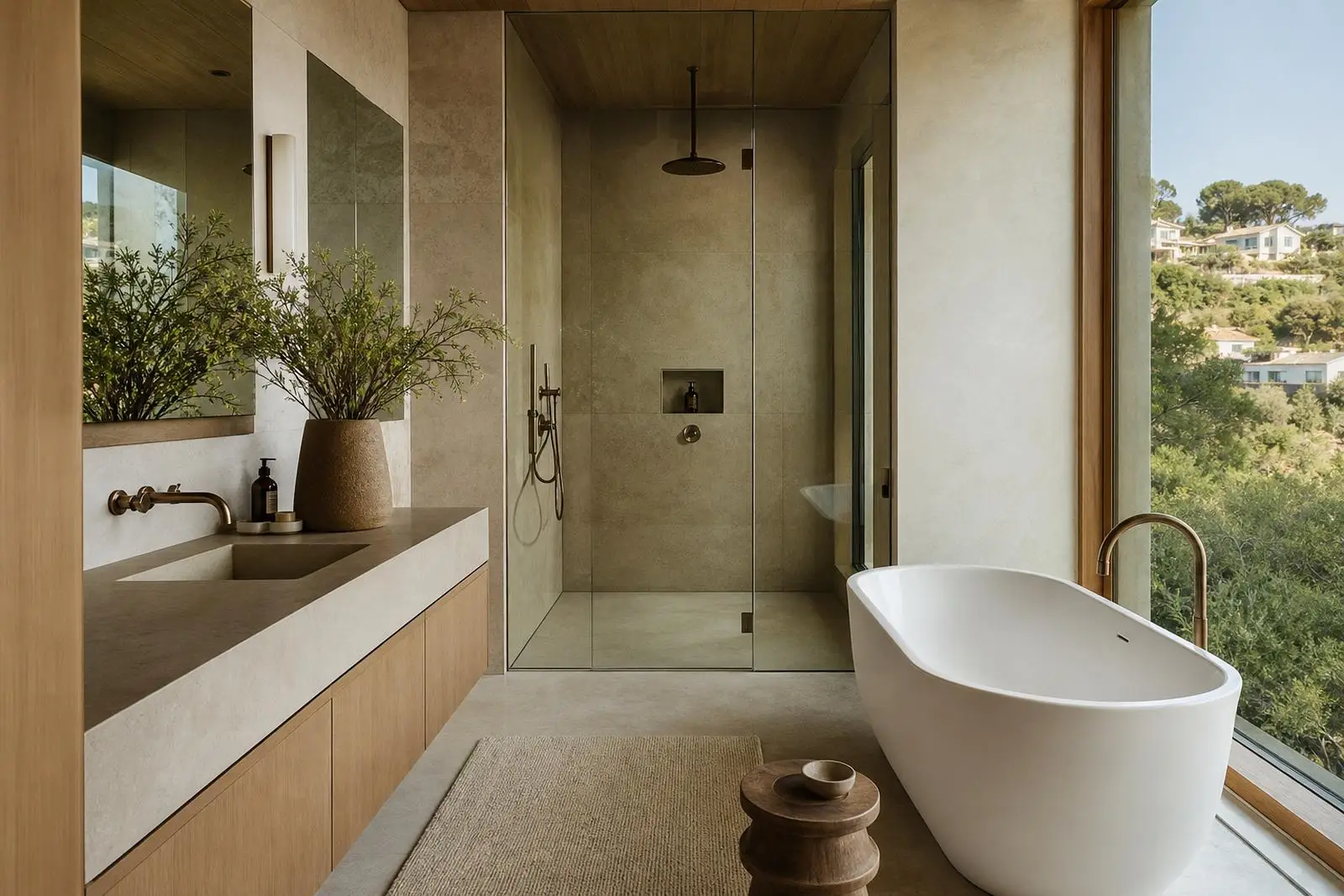
Image: Renology.
The Quiet Math of Trust
A hills home is one of the largest assets most families will ever own, and a renovation is one of the more consequential decisions they will ever make about it. That reframes the whole conversation. The question stops being how to spend as little as possible and becomes how to spend deliberately, so the work protects both the value of the home and the way it feels to live in it.
Clear numbers are what make that possible. A homeowner who understands the range walks into the first meeting ready to make decisions instead of bracing for a fight, and a budget that starts honest treats the inevitable adjustments as choices rather than ambushes. That single shift, from guesswork to clarity, is usually the difference between a project a family tells stories about and one they would rather forget. It is also what keeps a high-end renovation from quietly turning into a higher-end one that nobody actually agreed to.
The Right Pro for a Complicated Lot
A gifted tile setter is not automatically the right person to run a hillside addition, and the builder who is brilliant on flat ground may be exactly the wrong choice for grading a slope above a canyon. On a hills project, fit matters more than raw talent, because the margin for a mismatched team gets thin fast when the lot itself is the hardest part of the job.
That is why Renology focuses on getting homeowners matched with a vetted local contractor suited to their specific project, instead of handing over a generic list and wishing them luck. The right match shortens the timeline, cuts the change orders, and keeps the budget honest, because both sides understood the scope, the slope, and the access before anyone signed a thing.
Planning Like a Local: What to Do Before the First Call
Before you reach out to a single contractor, do three quiet things. Write down what you actually want the finished space to do for your life in this house, not just how you want it to photograph. Pull a realistic cost range for that scope, with the hillside premium already built in, so your expectations and your bank account meet early instead of late. And spend an evening with real finished projects, like those in the Renology design gallery, to separate the looks you genuinely love from the ones that simply look good on a screen.
Homeowners who start this way walk into that first meeting as informed partners. They ask sharper questions, they catch the vague answers, and they are far harder to oversell. None of it takes insider knowledge. It just takes knowing the number first.
Building on Solid Ground
A renovation in the hills is a financial decision dressed up as a design one, and for too long the financial half stayed hidden until it was too late to plan around. That is finally changing. The homeowners who begin with real numbers and the right professional are the ones who finish on budget, still on speaking terms with their builder, and genuinely happy in the home they invested in. On a hillside full of houses worth protecting, that kind of clarity is not a luxury. It is the smartest first step a family can take.
Frequently Asked Questions
How much does a kitchen remodel cost in the Hollywood Hills in 2026?
A kitchen renovation in the Los Angeles hills generally costs $51,000 to $115,000 in 2026, according to the Renology Cost Index. Most hills homes fall in the upper half of that range because hillside access, structural work, and premium view-driven finishes push the price up compared to a flat lot.
Why is renovating a hillside home more expensive than a flat lot?
Three factors raise the cost. Access is harder, since narrow canyon streets and long carries from the curb slow every delivery and add labor. Grading and structural work are real engineering tasks on a slope, not formalities. And hillside permitting takes longer, with geology and soils reviews and special ordinances that flat-lot projects rarely face.
Do I need special permits to renovate a home in the LA hills?
Yes, in most cases. Hillside properties are subject to additional ordinances, and structural or grading work usually triggers geology and soils review plus city sign-offs that go beyond a standard remodel. Building this review time into your schedule from the start prevents costly mid-project delays.
What does an ADU or garage conversion cost on a sloped lot?
An ADU or garage conversion in California runs roughly $165,000 to $415,000 in 2026, per the Renology Cost Index. Sloped hillside lots tend toward the higher end because of the foundation, grading, and access requirements that a flat-lot build avoids.
How do I avoid going over budget on a hills renovation?
Start with a sourced, realistic cost range for your specific scope before you meet a single contractor, and make sure the hillside premium is built into that number. Then work with a contractor whose experience fits your project type. You can see real California ranges in the California renovation costs dataset and get matched with a vetted local contractor through Renology.