
How to Clean Blinds Without Damaging Them?
Cleaning blinds often feels like a never-ending chore. Dust builds up quickly, and the wrong cleaning methods can make it look worse rather than better.
However, with the right approach, blinds can be cleaned efficiently, saving time and energy.
This guide will show you how to clean different types of blinds the right way, so you can enjoy cleaner windows and a more inviting space without unnecessary hassle.
Regular cleaning not only improves the appearance of your blinds but also helps reduce dust and allergens inside your home.
Using the proper tools and simple cleaning methods can make the process quicker, easier, and far more effective.
Why Blinds Get Dirty So Quickly?
Blinds collect dust and dirt faster than many other surfaces in the home. Their flat slats easily trap airborne particles, especially near windows where airflow constantly moves dust around the room.
A few common reasons blinds get dirty quickly include:
- Dust settling on the slats daily
- Airflow from open windows and fans
- Grease and moisture buildup in kitchens
- Static electricity attracting dust to synthetic materials
Regular light cleaning can help prevent heavy buildup and keep blinds looking fresh for longer.
Types of Blinds

When choosing the right cleaning method for your blinds, it’s important to consider the type and material.
Each type of blind requires a different approach to ensure they stay in good condition without damage:
1. Venetian Blinds
Venetian blinds feature horizontal slats made from wood, faux wood, or aluminum materials. They are popular for controlling light and privacy and are commonly used in homes and offices.
These blinds collect dust quickly between the slats and need regular cleaning to stay fresh. Wood blinds need less moisture during cleaning, while faux wood and aluminum are easier to maintain.
2. Vertical Blinds
Vertical blinds use long slats made from fabric, vinyl, or PVC and are mostly used for large windows and sliding doors. Their vertical design helps reduce dust buildup compared to horizontal blinds.
Fabric vertical blinds need gentle cleaning to avoid damage or shrinking over time. Vinyl and PVC blinds are easier to wipe clean and handle regular maintenance better.
3. Roller Blinds
Roller blinds are made from a single piece of fabric or vinyl that rolls up and down smoothly. They work well in modern spaces because of their clean and simple appearance.
Dust and grease can settle on the surface over time, especially near kitchens and windows. Fabric roller blinds may need vacuum cleaning, while vinyl blinds can be cleaned with a damp cloth.
4. Roman Blinds
Roman blinds are fabric blinds that fold into soft pleats when raised. They are often used in bedrooms and living rooms for a softer and more decorative look.
Dust can collect inside the folds, making regular vacuuming important for maintenance. Spot cleaning is usually the safest way to remove stains without damaging the fabric.
5. Cellular (Honeycomb) Blinds
Cellular blinds have a honeycomb-style design that helps improve insulation and energy efficiency indoors. They are useful for maintaining room temperature while also providing privacy.
Dust can build up both on the surface and inside the honeycomb cells over time. A vacuum with low suction works best for cleaning without damaging the material.
6. Panel Blinds
Panel blinds use large fabric or vinyl panels that slide across a track system. They are commonly installed on wide windows, patio doors, and open living spaces.
Their large surface area can collect dust and stains more easily if not cleaned regularly. Fabric panels may need occasional washing, while vinyl panels can be wiped clean quickly.
7. Mini Blinds
Mini blinds have thin horizontal slats usually made from aluminum or vinyl materials. They are lightweight and commonly used in kitchens, bathrooms, and office spaces.
Because the slats are narrow, dust can collect quickly between them during daily use. Gentle cleaning with a microfiber cloth helps prevent bending or scratching the slats.
Tools and Cleaning Supplies That Work Best
When cleaning blinds, the right tools and cleaning supplies can make all the difference.
Using the correct items ensures you get the job done quickly and effectively while avoiding damage to your blinds.
| Tool/Supply | Best Use |
|---|---|
| Microfiber Cloth | Dusting and wiping down slats to remove loose debris. |
| Vacuum with Brush Attachment | Removing dust and debris from slats without damaging the blinds. |
| Duster | Reaching hard-to-get areas and removing dust from slats. |
| Dish Soap and Water | Cleaning stubborn dirt on most types of blinds. |
| Vinegar Solution | Cleaning and sanitizing blinds without harsh chemicals, especially for vinyl or aluminum blinds. |
| Sock Method | Quick and easy cleaning of multiple slats at once. |
| Tongs with Cloth | Time-saving method for cleaning several slats efficiently. |
| Dryer Sheets | Preventing dust buildup and leaving a fresh scent after cleaning blinds. |
By using the right tools and cleaning supplies, you can keep your blinds clean effectively while avoiding damage and extending their lifespan.
How to Clean Blinds: Step-by-Step Process
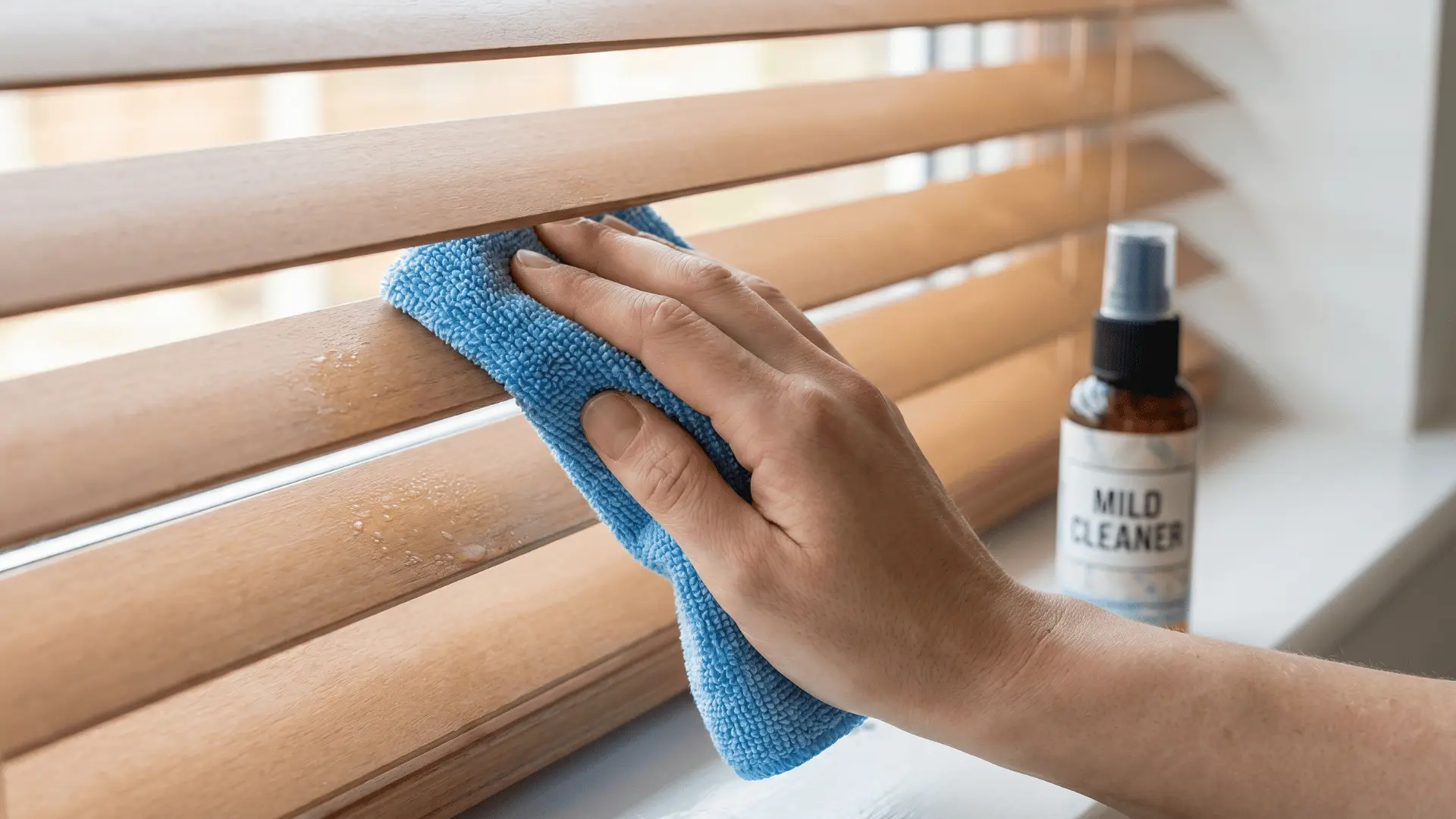
Cleaning blinds can be simple and effective when you follow a clear, structured process.
This step-by-step guide will help you clean any type of blind without causing damage, ensuring they stay in top condition.
Step 1: Remove Dust First
Close the blinds and keep the slats flat or stacked together based on the style. Use a microfiber cloth or a vacuum with a brush attachment to clean from top to bottom.
Flip the blinds and repeat the same process on the other side. This helps remove loose dust before deeper cleaning.
|
Tip:
|
Step 2: Use a Light Damp Clean
Lightly dampen a cloth with water or mild soap to clean dirt and grease marks. Wipe each slat gently without soaking the blinds.
Use a clean cloth to remove any leftover soap if needed. Avoid rubbing the same area too hard to prevent streaks.
|
Tip:
|
Step 3: Dry Each Slat Properly
Use a dry microfiber cloth to wipe each slat after cleaning. This helps prevent streaks, water spots, and dust buildup.
Drying the blinds properly also helps them stay cleaner for longer. Make sure no moisture is left behind on the surface.
|
Tip:
|
Common Mistakes That Make Cleaning Harder
Cleaning blinds can be easy, but these common mistakes can make it harder and less effective. Here are the key mistakes to avoid:
- Using Water Before Dusting: Always dust blinds first, then clean with a damp cloth. Water can cause dust to stick, making it harder to clean.
- Applying Too Much Liquid: Lightly dampen your cloth; never soak it. Excess moisture can damage blinds, especially wood or fabric.
- Skipping Drying: Always dry your blinds completely with a microfiber cloth. Skipping drying can lead to streaks, watermarks, and mold buildup.
- Using Strong Cleaners: Use mild solutions like dish soap or vinegar for cleaning. Harsh cleaners can damage delicate materials and weaken the blinds’ structure.
Tips to Keep Blinds Clean for Longer
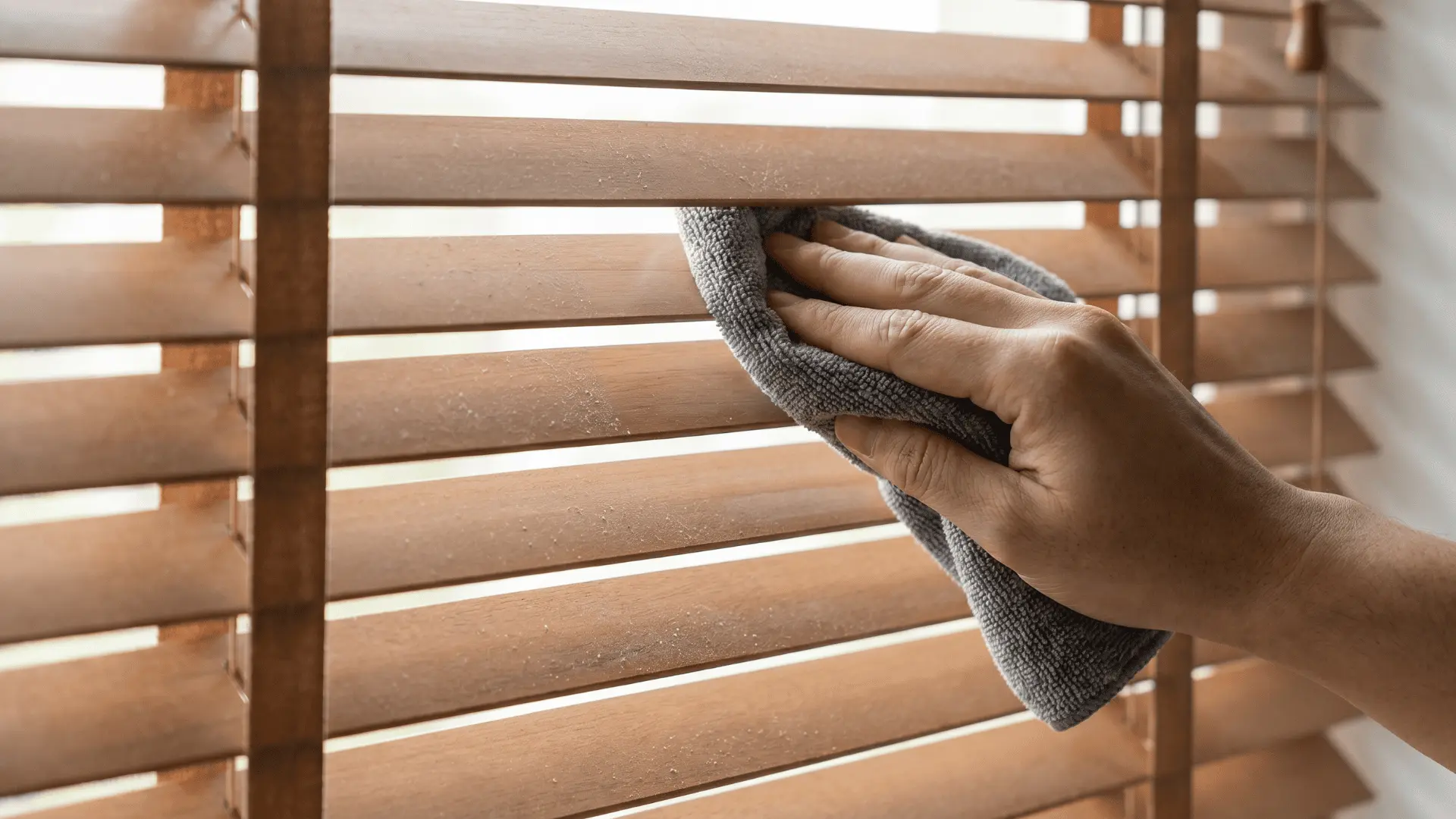
Maintaining clean blinds doesn’t have to be a chore. With these simple strategies, you can reduce the need for deep cleaning:
- Weekly Dusting: Regular dusting with a microfiber cloth or vacuum helps prevent buildup and reduces cleaning time.
- Focus on High-Use Areas: Clean areas near windows and kitchens more often, where dust and grease accumulate faster.
- Use Dryer Sheets: Wipe your blinds with dryer sheets to reduce static and prevent dust from building up.
- Manage Airflow: Keep windows closed on windy days and use air purifiers to limit dust entering your space.
Conclusion
Keeping your blinds clean is easy with a few simple steps. Regular light dusting, focusing on high-use areas, and managing airflow can help reduce dirt buildup and limit the need for deep cleaning.
Using microfiber cloths and mild cleaning solutions while avoiding harsh chemicals or too much moisture will help protect the material and keep blinds looking fresh for longer.
Adding these simple habits to your routine can save time and effort in the long run. Small and regular cleaning steps make a big difference in maintaining clean and well-kept blinds.
Have a favorite blind cleaning tip or method that works best for you? Share it in the comments below.
Frequently Asked Questions
Can You Clean Blinds Without Taking Them Down?
Yes, you can clean most blinds while still hanging them by dusting and wiping each slat in place. It’s great for regular maintenance.
How Often Should Blinds Be Cleaned?
Blinds should be dusted weekly to prevent buildup, and deep cleaned every few months, depending on how quickly dirt accumulates.
What Is the Fastest Way to Clean Blinds?
A quick method involves weekly dusting with a microfiber cloth or vacuum brush, followed by a fast spot clean with a damp cloth when needed.