Do Ferns Need Sun? Light Guide for Healthy Growth
Ferns are one of the most popular plants for homes and gardens. But there’s a lot of confusion about how much light they actually need.
Some people tuck them in dark corners. Others place them in direct sunlight. Both can lead to a struggling plant.
So, do ferns need sun? The short answer is yes, but the type of light matters more than the amount. Ferns need light to survive, just not the harsh, direct kind.
Getting this right is the difference between a lush, thriving fern and one that’s slowly fading. In this post, I’ll break down exactly what ferns need, what happens when they don’t get it, and how to find the sweet spot for your plant.
Do Ferns Need Sunlight or Shade?
Ferns need sunlight, but not in the way most people think. They do best in bright, indirect light or dappled shade, not harsh, direct sun. In practical terms, most ferns need about 4 to 6 hours of indirect light per day to stay healthy.
They are often called “shade plants,” but that doesn’t mean they can survive in dark corners. Without enough light, ferns become weak, pale, and stop growing. At the same time, direct sunlight can scorch their delicate fronds and dry them out quickly.
The goal is balance: enough light to support growth, but filtered enough to protect the plant.
Why Ferns Prefer Indirect Light Instead of Direct Sun
Ferns evolved on forest floors, growing beneath the canopy of tall trees. In that environment, they never received strong, direct sunlight, only filtered light that passed through layers of leaves above.
That origin shapes everything about how they grow today.
- Thin, delicate fronds: Fern leaves aren’t built to handle intense UV exposure. They scorch easily under direct sunlight.
- Large surface area: Fern fronds are wide and spread out. More surface area means faster moisture loss when exposed to heat and direct light.
- No sun-tolerance adaptations: Unlike succulents or drought-tolerant plants, ferns never developed thick cuticles or other traits that protect against intense sunlight.
The result? Ferns thrive in filtered, gentle light and struggle in anything harsher. More sunlight doesn’t mean better growth for ferns. It usually means more damage.
What Happens if Ferns Get Too Much or Too Little Sun
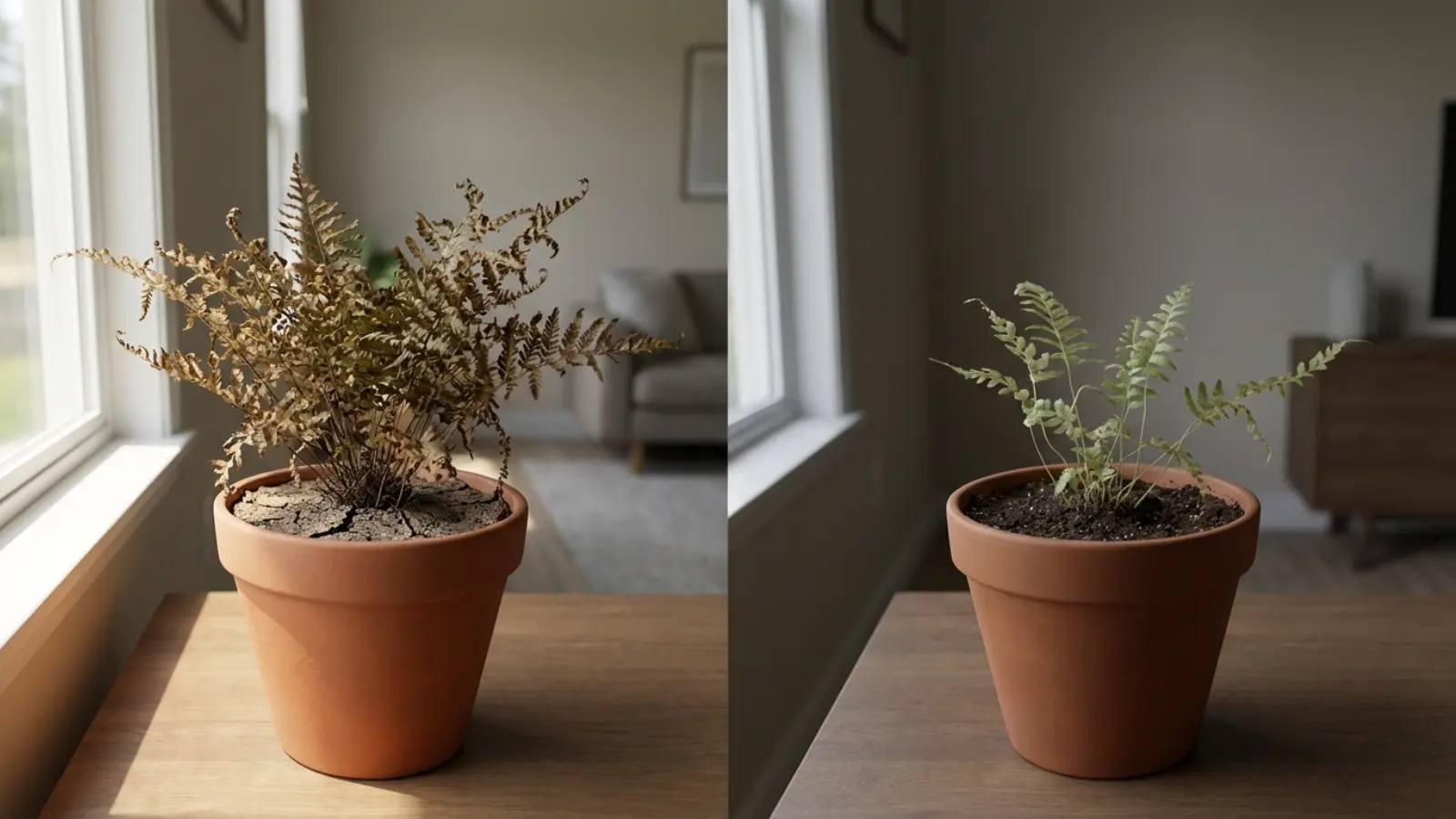
Light problems are one of the top reasons ferns decline. Knowing the warning signs can help you catch issues early.
Too Much Sunlight
When a fern gets too much direct sun, it starts to dehydrate and burn. The fronds can’t handle the intensity, and the damage shows up fast.
Watch for these signs:
- Brown, crispy edges on the fronds
- Leaves are turning yellow or faded
- Soil is drying out much faster than usual
If you’re seeing these, the plant is stressed. Move it away from the direct light source as soon as possible.
Too Little Light
On the other hand, a fern that doesn’t get enough light can’t photosynthesize properly. Growth slows down, and the plant weakens over time.
Signs to look for:
- Little to no new growth
- Fronds that look pale or washed out
- A leggy, sparse appearance, the plant stretches toward any available light
A fern in low light won’t die overnight, but it will gradually decline. Don’t mistake “still alive” for “doing well.”
How Much Light Ferns Actually Need
The right light setup looks different depending on where your fern is growing. Here’s how to think about placement in both settings:
Indoor Light Conditions
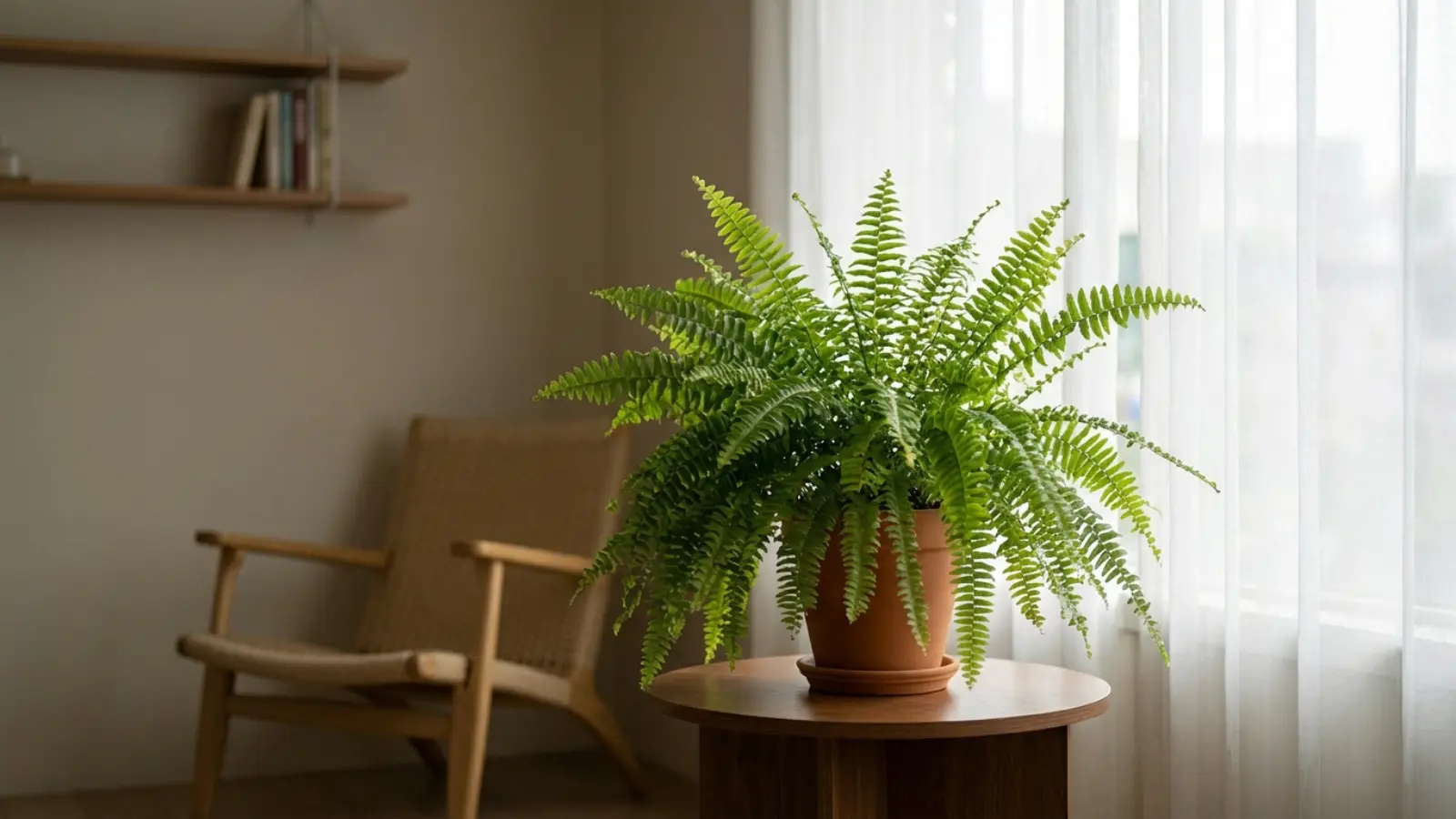
Indoors, you want a bright room without direct sunbeams hitting the plant.
The best spots are usually:
- Near a window with filtered light (a sheer curtain works well)
- East-facing windows for gentle morning light
- Bright rooms that don’t get harsh afternoon sun
Note: Avoid placing ferns in dark corners or rooms with no natural light. This is one of the most common mistakes I see with indoor ferns. The plant may survive for a while, but it won’t thrive.
Outdoor Light Conditions
Outdoors, partial shade or dappled sunlight is ideal. Think of spots under a tree canopy or on a covered porch.
A few things to keep in mind:
- Morning sun is generally fine; it’s softer and less intense
- Harsh afternoon sun, especially in summer, is too strong for most ferns
- North-facing or shaded garden beds tend to work well
If you’re growing ferns in a warmer climate, shade becomes even more important during peak summer months.
Light Intensity and Water Needs
Here’s something most people don’t connect: the more light a fern gets, the more water it needs.
Direct or intense light increases evaporation from the soil and speeds up moisture loss through the fronds. If you move your fern to a brighter spot, check the soil more frequently. It will dry out faster than you expect.
This relationship between light and water is important. Getting the light right is only half the job; hydration has to keep up.
Do All Ferns Have the Same Light Requirements?
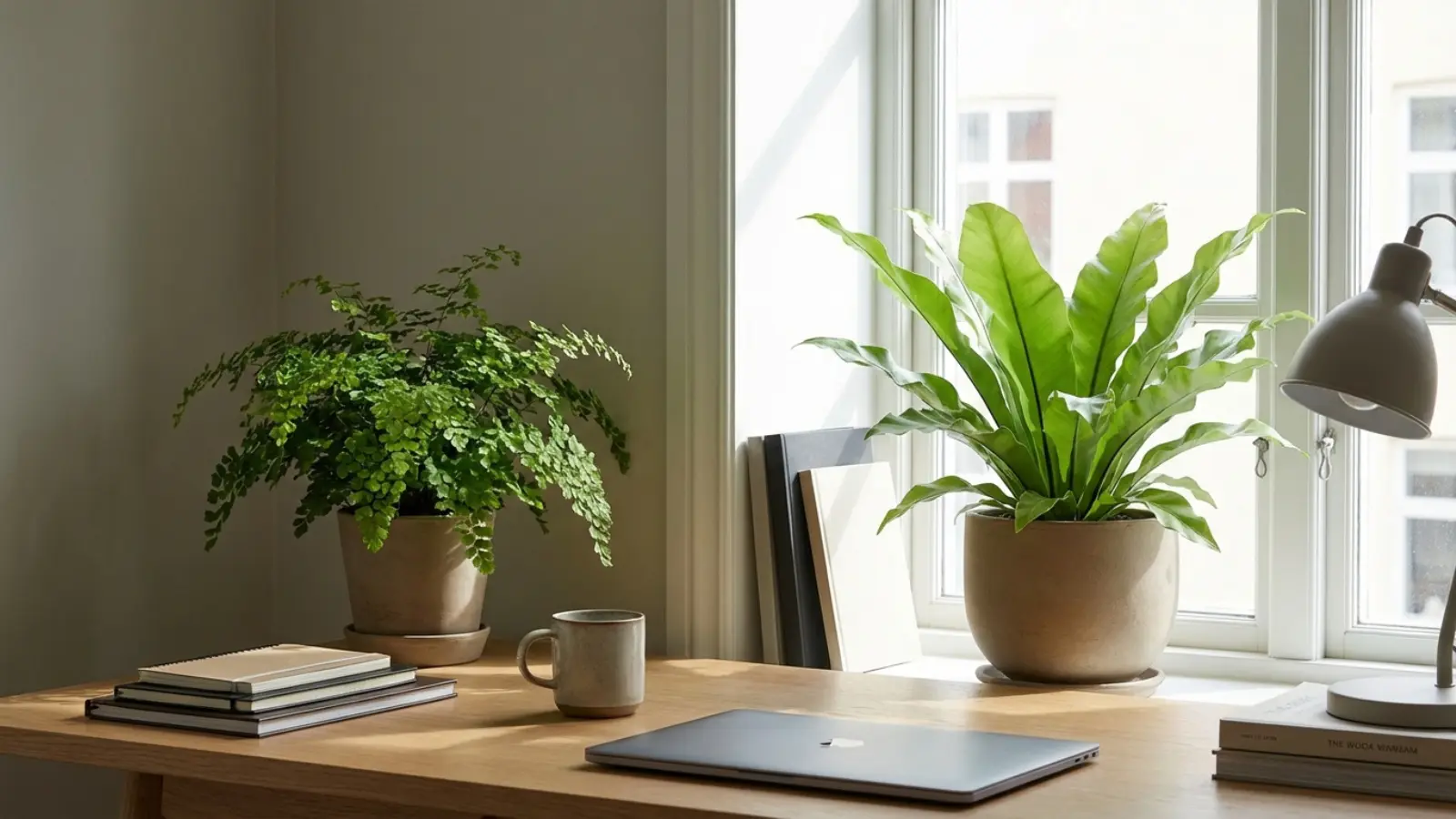
No, and this is where a lot of people go wrong. Treating all ferns the same leads to problems.
Ferns generally fall into two categories when it comes to light:
- Shade-loving ferns: These include popular varieties like the Boston fern. They do best in low to medium indirect light and can struggle even in bright indirect sun for long periods.
- Sun-tolerant ferns: The Kimberly Queen fern is a good example. It can handle more light than most, including some direct morning sun. Its fronds are slightly thicker and more resilient.
The key difference is frond structure. Sun-tolerant ferns tend to have thicker, tougher fronds that can handle more heat and light exposure without burning or drying out.
If you apply one blanket rule to all ferns, you’ll eventually damage the wrong one. It’s worth knowing your specific variety before deciding on placement.
How to Tell if Your Fern is Getting the Right Amount of Light
Your fern will tell you what it needs; you just have to know what to look for.
Signs your fern is happy with its light:
- Deep, lush green color across the fronds
- Steady new growth appears regularly
- Fronds that feel soft and flexible, not brittle
If something looks wrong, don’t overthink it. Move the plant and observe. Shift it closer to the light if it looks weak and pale. Move it further away if you’re seeing burn or crispy edges.
Ferns respond to changes in placement fairly quickly. Within a week or two, you should see whether the adjustment helped. Trust what the plant is showing you rather than sticking rigidly to a rule.
Common Misconceptions About Fern Light Needs
There’s a lot of oversimplified advice out there about ferns. Here are the ones worth correcting:
- Ferns don’t need sunlight: False. They need light to photosynthesize and grow. They just can’t handle harsh, direct sun.
- All ferns are shade plants: Incomplete. Some ferns tolerate significant light. Lumping them all together causes problems.
- Direct sun is always bad for ferns: Not exactly. It depends on the species and time of day.
- Low light is enough: This leads to poor growth over time. Ferns need adequate indirect light to stay healthy.
Quick Summary: The Ideal Light Setup for Most Ferns
If you want a simple, reliable starting point, here it is:
- Bright, indirect light is the sweet spot for most ferns
- Avoid harsh, direct afternoon sun; it burns and dries fronds fast
- Morning sun is generally acceptable for most varieties
- Light tolerance varies by fern type. Know your variety before deciding on placement
- Watch your plant and adjust based on what it’s showing you
Ferns aren’t difficult once you understand what they actually need. Light is one of the biggest factors, and now you know how to get it right.
Conclusion
Ferns do need sunlight, just not the direct, harsh kind. Most ferns thrive in bright, indirect light, which matches the shaded forest floors they naturally grow in.
Too much sun burns the fronds. Too little leaves the plant weak and pale. Once you understand that light type matters more than light amount, caring for ferns gets a lot easier.
Take a look at where your fern is placed right now. Does it match what you’ve learned here? Drop a comment below, I’d love to hear how your fern is doing!
Frequently Asked Questions
Can Ferns Grow in Artificial Light?
Yes. Full-spectrum grow lights with red and blue wavelengths work well. They’re a good option for rooms with little to no natural light.
Do Ferns Need More Light in Winter?
Yes. Winter light is weaker, so move your fern closer to a bright window. In summer, pull it back to avoid scorching.
How Many Hours of Light Do Ferns Need per Day?
Most ferns need around 4 to 6 hours of indirect light daily. Under grow lights, aim for 12 to 14 hours.
Do Ferns Need Sunlight to Stay Green?
Yes. Without enough light, ferns can’t produce chlorophyll and turn pale or yellow. Bright, indirect light keeps the color rich and healthy.