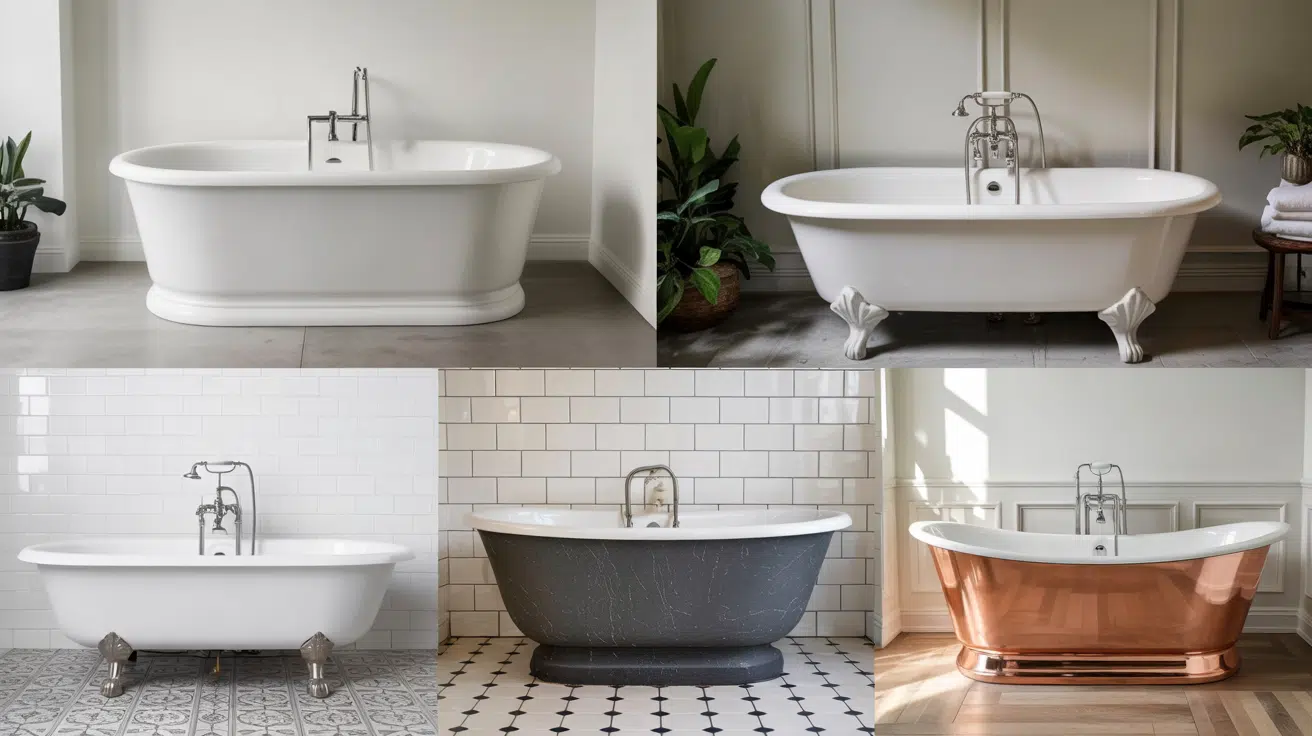
What Are Bathtubs Made Of: 8 Materials Compared
Your bathtub does more than just hold water. The material it’s made from affects how long it lasts, how much it costs, and even how warm your bath stays.
Choose the wrong material, and you might deal with cracks, rust, or constant maintenance. Choose the right one, and you’ll enjoy relaxing soaks for decades.
Most homeowners don’t realize how different bathtub materials really are. Fiberglass might save you money now, but it can crack within years.
Cast iron costs more but outlasts everything else. Acrylic feels warm, while steel feels cold.
This guide breaks down the most popular bathtub materials. You’ll learn the pros and cons of each, what they cost, and which one fits your bathroom best.
What Are Bathtubs Made Of?
Bathtubs come in many different materials, each with its own benefits and trade-offs. Lightweight options like fiberglass and acrylic are affordable and easy to install.
On the other end, premium materials like cast iron and natural stone offer unmatched durability and luxury.
The material you choose affects everything, from upfront cost and long-term maintenance to heat retention and overall design.
Some materials scratch easily, while others last for decades. Some need special care, while others are low-maintenance.
Factors to Consider Before Choosing a Bathtub Material
Picking the right bathtub material isn’t just about looks. You need to think about your budget, bathroom structure, and daily habits. Here are the key factors to consider before making your decision.
- Budget & Installation Cost: Set a clear budget that includes both the tub and installation fees, as some materials cost significantly more to install than others.
- Weight vs. Floor Support: Check if your bathroom floor can support heavy materials like cast iron or stone, or if you need lightweight options like acrylic or fiberglass.
- Heat Retention Preference: Choose materials like cast iron, copper, or stone resin if you enjoy long, hot soaks, as they keep water warm much longer than steel or fiberglass.
- Cleaning & Maintenance Needs: Choose low-maintenance materials like acrylic or stone resin for easy cleaning, or be prepared for regular sealing and special care with natural stone or copper.
- Design and Aesthetic Goals: Match your bathtub material to your bathroom style—modern spaces suit stone resin or acrylic, while vintage designs look best with cast iron or copper.
The 8 Best Bathtub Materials
Each material has unique strengths and weaknesses that affect your daily experience. Here’s a detailed look at the 8 most common bathtub materials, ranked by popularity and performance.
1. Acrylic Bathtubs

Acrylic tubs are made from vacuum-formed acrylic sheets reinforced with fiberglass. They’re one of the most popular choices in modern homes. These tubs are warm to the touch and come in a wide range of colors and styles.
| Pros | Cons |
|
|
Best For: Homes where comfort and style matter without a heavy price tag.
2. Fiberglass (FRP) Bathtubs

Fiberglass tubs are built from plastic reinforced with glass fibers. They’re the most budget-friendly option on the market. Installation is quick and straightforward, making them ideal for fast renovations.
| Pros | Cons |
|
|
Best For: Guest bathrooms, rentals, or short-term use.
3. Porcelain-Enameled Steel Bathtubs

These tubs feature a steel base coated with a smooth layer of porcelain enamel. The enamel gives them a glossy, polished finish. They offer a middle ground between affordability and durability.
| Pros | Cons |
|
|
Best For: Homeowners wanting an affordable upgrade with a polished look.
4. Cast Iron Bathtubs

Cast iron tubs are made from molten iron and coated with thick enamel. They’re the most traditional and long-lasting type of bathtub. These tubs are heavy, solid, and built to last generations.
| Pros | Cons |
|
|
Best For: Luxury or vintage bathroom remodels.
5. Stone Resin (Solid Surface) Bathtubs

Stone resin tubs are a composite of ground stone and resin. They have a smooth, matte finish that looks and feels like natural stone. These tubs are popular in spa-inspired bathrooms.
| Pros | Cons |
|
|
Best For: Contemporary bathrooms and spa-style interiors.
6. Copper Bathtubs

Copper bathtubs are handcrafted from sheets of pure copper. They develop a natural patina over time, giving each tub a unique look. Copper is naturally antimicrobial, making it a hygienic choice.
| Pros | Cons |
|
|
Best For: Rustic, vintage, or statement bathrooms.
7. Cast Polymer / Cultured Marble Bathtubs

These tubs blend natural stone particles with resin and are coated with a gel finish. They offer the look of marble without the extreme cost. Shapes and sizes can be customized to fit your space.
| Pros | Cons |
|
|
Best For: Mid-to-high-end bathrooms with a custom design focus.
8. Natural Stone Bathtubs (Marble, Granite, Limestone)

Natural stone tubs are carved from solid blocks of marble, granite, or limestone. They’re the pinnacle of luxury and craftsmanship. Each tub is one-of-a-kind, with unique veining and texture.
| Pros | Cons |
|
|
Best For: Luxury residences, resorts, and designer projects.
Expert Picks: Which Bathtub Material Is Right for You?
Still not sure which material fits your needs? Here’s a quick guide based on different priorities and lifestyles.
- Best for Budget Buyers: Fiberglass – Fiberglass offers the lowest upfront cost and easiest installation, perfect for renters or anyone working with a tight budget.
- Best for Long-Term Durability: Cast Iron – Cast iron tubs can last 50+ years with minimal maintenance, making them the smartest investment for homeowners planning to stay long-term.
- Best for Modern Design: Stone Resin – Stone resin delivers a sleek, contemporary look with smooth lines and matte finishes that complement minimalist and spa-style bathrooms.
- Best for Luxury Homes: Copper or Natural Stone – Copper and natural stone tubs serve as attractive focal points that add significant value and visual impact to high-end residences.
The Bottom Line
Choosing the right bathtub material comes down to your specific needs and budget. If you’re working with limited funds, fiberglass gets the job done.
For long-term value, cast iron can’t be beaten. Modern bathrooms shine with stone resin, while luxury homes deserve copper or natural stone.
Think about how you use your bathroom. Do you take long, hot baths? Heat retention matters. Renovating a rental? Go lightweight and affordable. Building your dream home? Invest in materials that last.
The best bathtub material is the one that matches your lifestyle, not just your Pinterest board.
Ready to upgrade your bathroom? Compare top-rated bathtubs in each material category and get free installation quotes from local contractors today.