Modern Mid-Century Kitchen: Inspiration & Design Guide
A mid-century modern kitchen is the perfect way to achieve that stylish, open, and functional space you’ve always wanted. With its sleek cabinetry, natural materials, and efficient layouts, it combines beauty and practicality.
In this guide, I’ll discuss design elements, inspiration for layouts, and sustainable materials to help you create your dream kitchen.
If you’re renovating an existing space or starting from scratch, you’ll find valuable tips on budgeting, styling, and overcoming common design challenges. Keep reading to get all the tips and tricks you need.
Mid-Century Kitchen Essential Design Elements
Mid-century modern kitchens often feature flat-front cabinetry in iconic woods such as teak, walnut, or rosewood.
For a budget-friendly option, oak or wood-look laminates provide a similar aesthetic. Geometric cabinet hardware in brass or chrome complements the minimalist style.
The color palette features warm whites, soft grays, and earthy tones, such as olive and mustard. Add bold accents such as coral or teal sparingly to maintain balance.
Introduce warmth through wood accents, such as teak cutting boards and walnut shelving. For contrast, use light quartz or terrazzo countertops.
Natural and geometric lighting pendant fixtures or wall sconces help maintain an airy, open atmosphere typical of mid-century kitchens. Layouts should be efficient and open, integrating functional zones and maximizing space without clutter.
Mid-Century Modern Kitchen Design Inspirations
Mid-century modern kitchens are known for clean lines, functional layouts, and natural materials. Here are some ideas to inspire your design:
1. Classic Wood Tones & Balanced Colors

Pair walnut or teak cabinetry with quartz or butcher block countertops. Use bold hues like mustard or turquoise in small accents to complement natural wood tones without overwhelming the space.
2. Geometric Touches & Display Storage

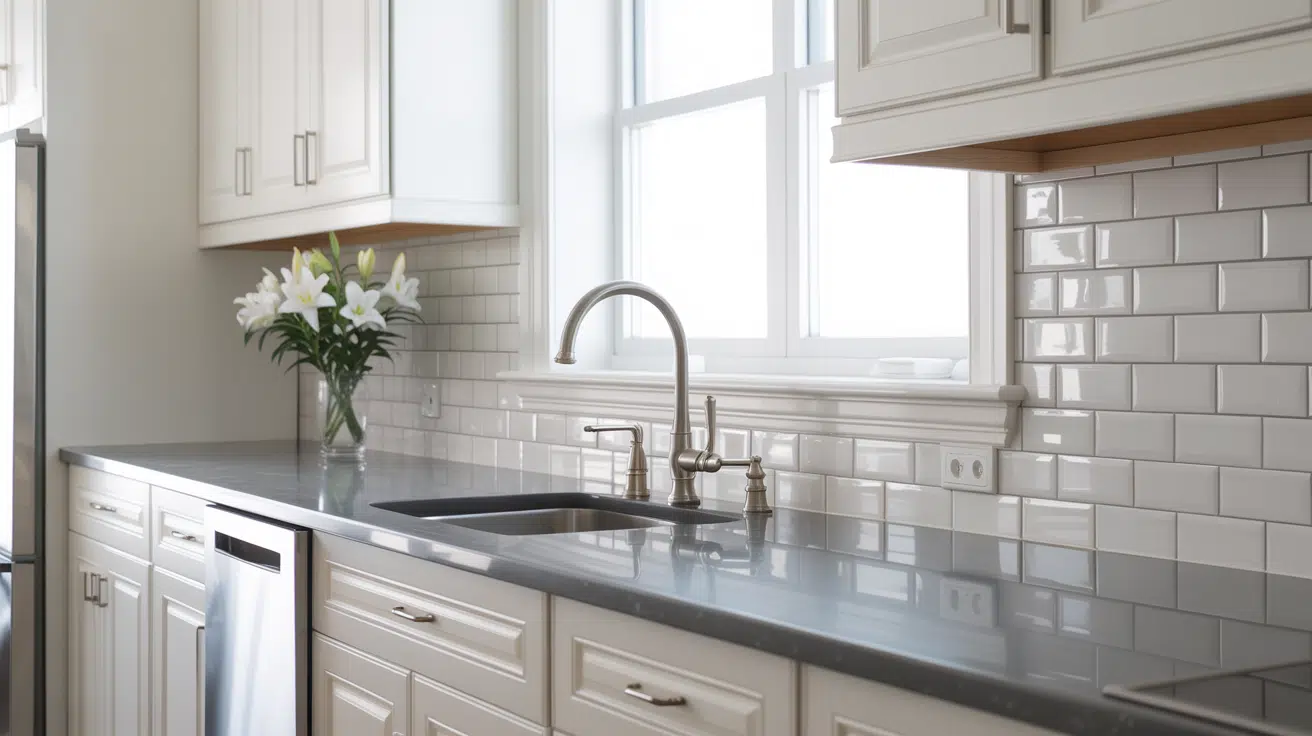
Add personality with geometric tile backsplashes and open or floating shelving. These offer both style and function, allowing you to showcase vintage glassware, plants, or cookware.
3. Light and Layout

Maximize natural light by incorporating large windows or skylights, and maintain an open-concept layout to increase the flow between dining and living areas.
This classic mid-century principle creates a bright and spacious kitchen.
4. Multifunctional Islands & Minimalist Appliances

Consider a wood-topped island that doubles as a prep and dining area. Choose panel-ready or retro-inspired appliances that blend seamlessly into the design, combining nostalgia with modern efficiency.
5. Lighting with Character

Make a statement using Sputnik chandeliers or geometric pendant lights in brass or chrome.
These lighting fixtures not only illuminate but also serve as sculptural pieces, adding a bold, artistic touch to your mid-century modern kitchen.
6. Vintage Accessories

Add authentic mid-century accessories such as ceramic bowls, retro clocks, or teak spice racks. These functional yet stylish items bring warmth and a touch of nostalgia, enhancing the overall mid-century feel.
7. Textured Materials

Incorporate terrazzo or cork materials for countertops or flooring to add texture and depth.
These materials help maintain the simplicity of the design while offering a unique visual interest, a hallmark of mid-century style.
8. Greenery and Natural Elements

Integrate plants and natural elements to bring life to the kitchen. Greenery enhances the mid-century connection to nature, creating a vibrant and fresh atmosphere while maintaining an open and organic feel.
9. Open Layouts

Design an open-concept kitchen that flows seamlessly into the living and dining areas.
This free-flowing layout is characteristic of mid-century modern style, offering a spacious and functional space that is perfect for both cooking and entertaining.
10. Bold Color Accents

Introduce color through accessories, such as artwork, pillows, or statement chairs. Bold hues such as teal, mustard, or burnt orange can energize the space while remaining in harmony with the overall mid-century modern style.
11. Floating Shelves

Install floating shelves to display decorative items or essential kitchenware.
This minimalist design choice maintains the open, airy feel of the kitchen while offering convenient, stylish storage that complements the modern style.
12. Retro Appliances with Modern Touches

Blend retro-style appliances with modern technology for a balanced look. Consider a retro refrigerator that offers energy-efficient features, merging nostalgic charm with the practical benefits of contemporary design.
13. Natural Stone Countertops

Choose natural stone, such as marble or granite, for your countertops.
These durable materials provide a timeless look that aligns perfectly with mid-century modern principles, offering both beauty and functionality for your kitchen design.
14. Integrated Storage Solutions

Utilize built-in cabinets and drawers to conceal clutter and maintain a sleek, streamlined appearance throughout the kitchen.
Integrated storage helps keep the minimalist, organized feel typical of a mid-century modern kitchen.
These ideas combine style and functionality, creating a kitchen that’s both timeless and practical. Small or large, these elements can be adapted to suit any space.
Essential Steps for Renovation
From planning your layout to adding personal touches, these steps will help you create a functional and stylish space:
Step 1: Define Your Vision
Begin by collaborating with designers to create a clear vision for your kitchen.
Focus on creating a space that blends style and function, keeping the design open and minimalist while reflecting your taste. A strong plan will guide your renovation effectively.
Step 2: Integrate Appliances Seamlessly
Choose appliances with clean lines, such as induction cooktops, wall ovens, and panel-ready fridges, that align with the cabinetry.
Look for models that offer both retro charm and modern features, such as energy efficiency.
Step 3: Durable, Stylish Flooring
Install durable flooring, such as quarry tiles, to withstand high traffic and spills. These tiles are slip-resistant, easy to clean, and perfect for a mid-century modern kitchen.
They also capture the look of the ’60s, offering a timeless yet practical solution for your space.
Step 4: Maximize Space and Storage
Open up your kitchen by removing walls or expanding doorways to create a more airy, spacious feel.
Incorporate built-in storage solutions, such as custom cabinetry or sliding doors, to keep the space organized and clutter-free, thereby maximizing both aesthetics and functionality.
Step 5: Personalize with Purpose
Add character through accessories like vintage clocks, ceramic dishware, or floating shelves that hold meaningful items. Maintain a cohesive look throughout your living spaces.
For a detailed insight, watch this video:
Planning Your Mid-Century Modern Kitchen
Budgeting for a mid-century modern kitchen varies based on the project scale. Basic updates include cabinetry, hardware, backsplash, and lighting.
Significant renovations add semi-custom cabinets, appliances, and durable countertops. High-end projects feature custom cabinetry and premium appliances.
For smaller kitchens, consider pairing light upper cabinets with darker lower cabinets and incorporating open shelving. Larger kitchens benefit from open-concept designs.
Renovations generally range from a few weeks for planning to several weeks for installation and completion. DIY tasks are manageable, but complex changes require professional help.
Mid-Century Kitchen Design Challenges & Solutions
Mid-century modern renovations can face challenges such as poor workflow or cramped spaces, which can be resolved by adjusting the layout of the islands. To avoid storage issues with open shelving, add floor-to-ceiling cabinets or pull-out drawers.
Avoid overdoing retro elements by following the 80/20 rule: 80% timeless design and 20% bold touches. Consistent wood tones and metal finishes maintain a balanced look.
Setbacks, such as delays or structural issues, can be managed with a contingency budget.
Incorporate task lighting, proper ventilation, and subtle modern appliances while maintaining the mid-century style.
Modern Adaptations in Mid-Century Kitchen
Today’s mid-century kitchens incorporate smart appliances, soft-close drawers, and clever storage while maintaining visual simplicity.
Features like hidden charging docks and integrated hardware allow convenience without sacrificing style.
In small kitchens, maximize vertical space with tall cabinetry and use light colors to create an open feel. Rounded corners, durable finishes, and minimalist materials keep the design both family-friendly and timeless.
Sustainable Materials for Your Mid-Century Kitchen
Embrace eco-conscious design with FSC-certified wood (such as teak or oak), low-VOC paints, and sustainable countertop options like recycled glass or bamboo.
Choose flooring like cork or reclaimed wood for a retro look with minimal environmental impact. Utilize energy-efficient, modern appliances that seamlessly integrate into your cabinetry. Finally, repurpose vintage accessories or upcycled decor pieces to keep your kitchen both green and stylish.
Eco-friendly flooring options, such as cork, bamboo, or reclaimed wood, provide sustainable alternatives to traditional materials.
Installing Energy-Efficient Appliances reduces energy consumption, and incorporating recycled or Upcycled Materials for decor adds unique, eco-conscious elements to your kitchen.
These choices give a beautiful, functional, and environmentally friendly space.
Maintaining Your Mid-Century Modern Kitchen
Proper maintenance is key to keeping your mid-century modern kitchen both functional and stylish for years to come. Here are some essential maintenance tips to help preserve it:
- Wood Cabinet Care: Clean wood cabinetry monthly with a microfiber cloth and mild wood cleaner.
Apply wax or oil every 6-12 months to prevent drying. For scratches, use a wood repair pen to restore the finish. - Hardware Maintenance: Clean brass fixtures every few months with brass cleaner, or allow them to develop a natural patina.
Clean chrome hardware weekly with a gentle glass cleaner to prevent water spots. - Lighting Fixture Maintenance: Dust pendant lights and chandeliers monthly using a soft brush or compressed air. Polish brass fixtures with metal cleaner to keep them shining.
- Seasonal Deep Cleaning: Deep clean the kitchen twice a year, including inside cabinets and behind appliances, to prevent buildup and maintain a pristine look.
Conclusion
A mid-century modern kitchen combines timeless design with functionality, offering a stylish and practical space for any home.
By focusing on clean lines, natural materials, and efficient layouts, you can create a kitchen that fits your needs.
If you’re renovating or starting from scratch, this guide offers key insights into design elements, sustainable materials, and practical tips. Remember, balance is key; mix pieces with bold accents.
Don’t forget to consider eco-friendly options, such as FSC-certified wood and energy-efficient appliances, for a greener kitchen. Read my other blogs for deeper insights into mid-century modern kitchens.