4 Types of Outdoor Lighting to Brighten Up Your Space
Have you ever opened the back door on a calm July night, only to shuffle toward a chair because the porch light barely reaches the steps? A tiny tweak to your lighting plan can switch that awkward shuffle to a relaxed stroll in seconds.
Good outdoor lighting does more than chase away shadows; it shows friends where to walk, highlights the features you love, and lets you unwind outside long after sunset. Two ideas guide every choice: put light only where you need it and pick a fixture designed for that job.
What Are the Different Types of Outdoor Lights?
Outdoor fixtures fit into a few simple groups, each built for a certain task. By matching the right style to the right spot, you end up with bright and durable outdoor lights that feel intentional instead of random.
Wall Lights
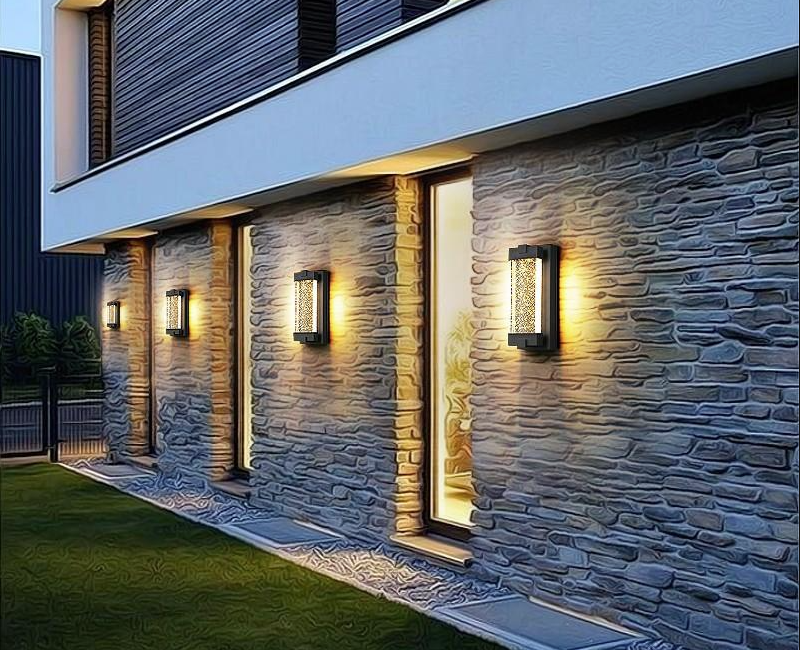
Wall fixtures rank among the most common outside lights, guiding you along façades, porches, and garage doors. LED models offer tones from warm 2700 K to neutral 4000 K, so you can pick cozy amber for a reading nook or crisper white for a side entry. Outputs range from gentle 1 W accent chips to bright 100 W equivalents for large brick walls. Aim for IP44 on covered verandas or IP65 when the unit sits fully in the rain. Black, brushed steel, powder-coated white, and even bright red finishes blend or stand out as you wish.
Check the label for a colour-rendering index over 80 so skin tones look natural in family photos. Integrated LEDs last about 50,000 h, though screw-in lamps make future upgrades easy. Many units now hide a photocell that turns lights on at dusk and cuts them at dawn; pair that with a motion sensor on service doors for extra security without waste. Use 12 AWG cable on long runs to keep voltage drop under 3 %.
Placement is straightforward: mount the centre of the fixture roughly 170 cm above the finished ground. On a single front door, a pair flanking the frame creates an even wash of light and avoids harsh shadows. For a two-door garage, keep two lamps 25 cm beyond each edge so beams overlap in the centre, and add a third above if the façade is extra wide. Tilt adjustable heads slightly downward to limit sky glow, and clean lenses once a season to maintain full output.
Garden Spike Lights
Garden spike lights, also called spot stakes, let you target beams exactly where you need them along beds or under shrubs. LED chips run at 3 W to 50 W, covering a gentle glow on flowers up to a dramatic uplight on a two-metre birch. Go with 3000 K for a warm golden look on leaves or 4000 K when you want stone textures to pop without a yellow cast. Heads pivot on a knuckle, so you can fine-tune aim in seconds.
Because these exterior lights sit close to the soil, pick at least IP65 housings to shrug off rain and sprinkler spray. Aluminium bodies arrive in matte black, dark green, sandstone, or copper that ages into a warm brown. Beam angles start at 15° for statues and widen to 60° for shrubs. Space small 3 W spikes one metre apart on a path edge, or set a single 9 W unit one metre from a two-metre ornamental tree to wash the trunk evenly. To keep fixtures steady in loose earth, choose spikes with a screw-in collar that clamps the stake firmly.
Wiring is simple. Use 2-core 2.5 mm² low-voltage cable buried 150 mm deep and seal joints with gel-filled caps to block moisture. Keep runs under 30 m or step up to 12 AWG to prevent dimming at the far end. Add a dusk-to-dawn photocell or tie the circuit into a smart hub so beds glow only after sunset. Swap clear lenses for amber in autumn or ice blue at Christmas for an instant mood shift.
Floodlights
Floodlights spread a wide beam that covers driveways, sports corners, or broad patios without leaving dark pockets. Modern LEDs deliver 9 W for a small courtyard up to 150 W for half-court basketball, so you can match power to the area. Choose 3000 K for gatherings or go as high as 6500 K for security around workshop doors. Aim for at least 80 lumens per watt, and many units reach 120.
Mount fixtures 250 cm high to keep glare out of your eyes while sweeping the ground. A two-car driveway usually needs one 30W lamp at 270 cm on the garage gable. Larger zones benefit from a pole at 4 m, tilted 30°, so the beam rests on the ground about 5 m in front. Stick with IP65 or IP66 when the housing sits fully exposed, and use die-cast aluminium bodies with a tempered-glass lens for long life. If you live near the coast, choose a marine-grade finish to prevent corrosion.
Controls save money and headaches. Many new lights include a passive infrared sensor that switches on only when movement enters the zone. Set the timeout to 60 seconds and sensitivity to medium to avoid false triggers from cats. For steady illumination during a backyard game, override the sensor with a smart switch. Add a surge protector on long outdoor runs to shield driver circuits from lightning. Some municipalities cap floodlight brightness at 1,000 lumens per square metre, so choose a model with adjustable output to stay compliant.
Post Lights and Bollards
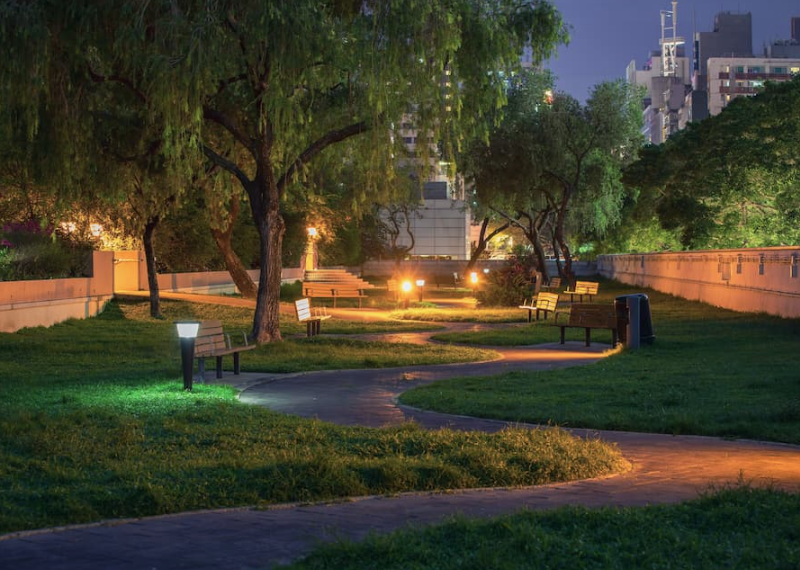
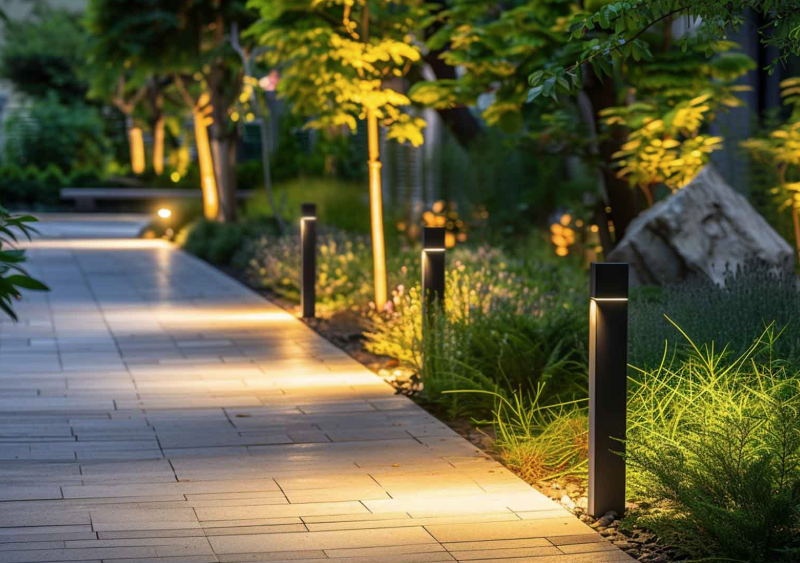
Posts and bollards bring eye-level glow along walks and outline a patio border with soft light. LED modules in this group sip power: most models draw 1.3 W to 16.4 W, yet still guide guests safely. Warm 2700 K to 3000 K echoes candlelight without flame. Heights vary; bollards stand 60–90 cm, driveway posts reach about 1.6 m.
Spacing controls the look. Keep centre-to-centre gaps at two to three times the fixture height to avoid a runway effect. A 70 cm bollard every 1.5 m feels balanced and prevents harsh pools. Anchor bases on concrete pads 20 cm deep and run conduit under soil to protect wiring from frost. Pick at least IP44 for sheltered paths and upgrade to IP65 on exposed seaside plots. Many posts feature a powder-coated finish in black, bronze, or grey, while copper gains a living patina over time. Check IK08 housings if lawn mowers or bikes pass close.
Light distribution matters. Opal diffusers wrap the beam around seats, clear lenses throw brighter circles on steps, and louvered tops hide the source so glare stays low. Solar versions work for remote corners, yet wired low-voltage designs stay bright during cloudy weeks and through winter.
With a master's in Environmental Design from Yale University, Megan Hayes has become a well-known figure in outdoor and patio design. Her career, spanning over 15 years, started in a boutique design studio in Santa Barbara, where her passion for integrating natural elements into living spaces was nurtured. She has offered readers insights into the latest trends and eco-friendly design solutions for outdoor spaces. She is an enthusiastic bird watcher and enjoys participating in community garden projects.